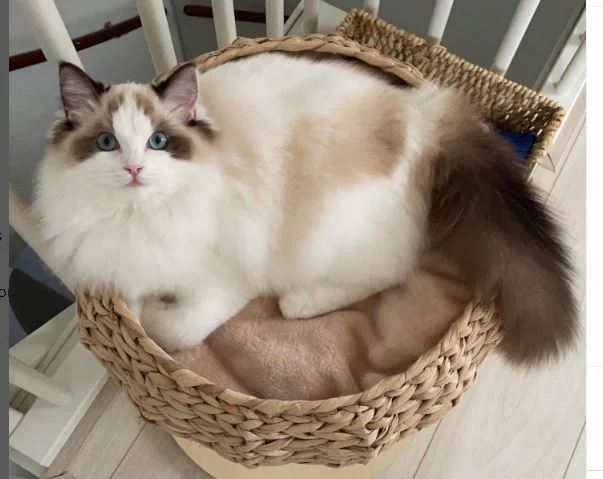
Ragdoll cats are one of the most famous cat breeds in the world. They are beloved for their gentle, affectionate nature and beautiful appearance, known for their vivid blue eyes, silky fur, and dog-like personality. They generally enjoy being held and cuddled, following their owners around like a loyal dog. But aside from their sweet temperament, what sets Ragdolls apart is the variety of colors and patterns they come in.
Understanding the various colors and patterns of Ragdolls not only helps you admire their beauty but also makes it easier to recognize a genuine Ragdoll when you see one. Whether you are planning to adopt one or just admire the breed, knowing how to recognize each color and pattern will help you understand what makes Ragdolls unique, and what to watch for when a listing uses unfamiliar terminology.
Updated September 2026.
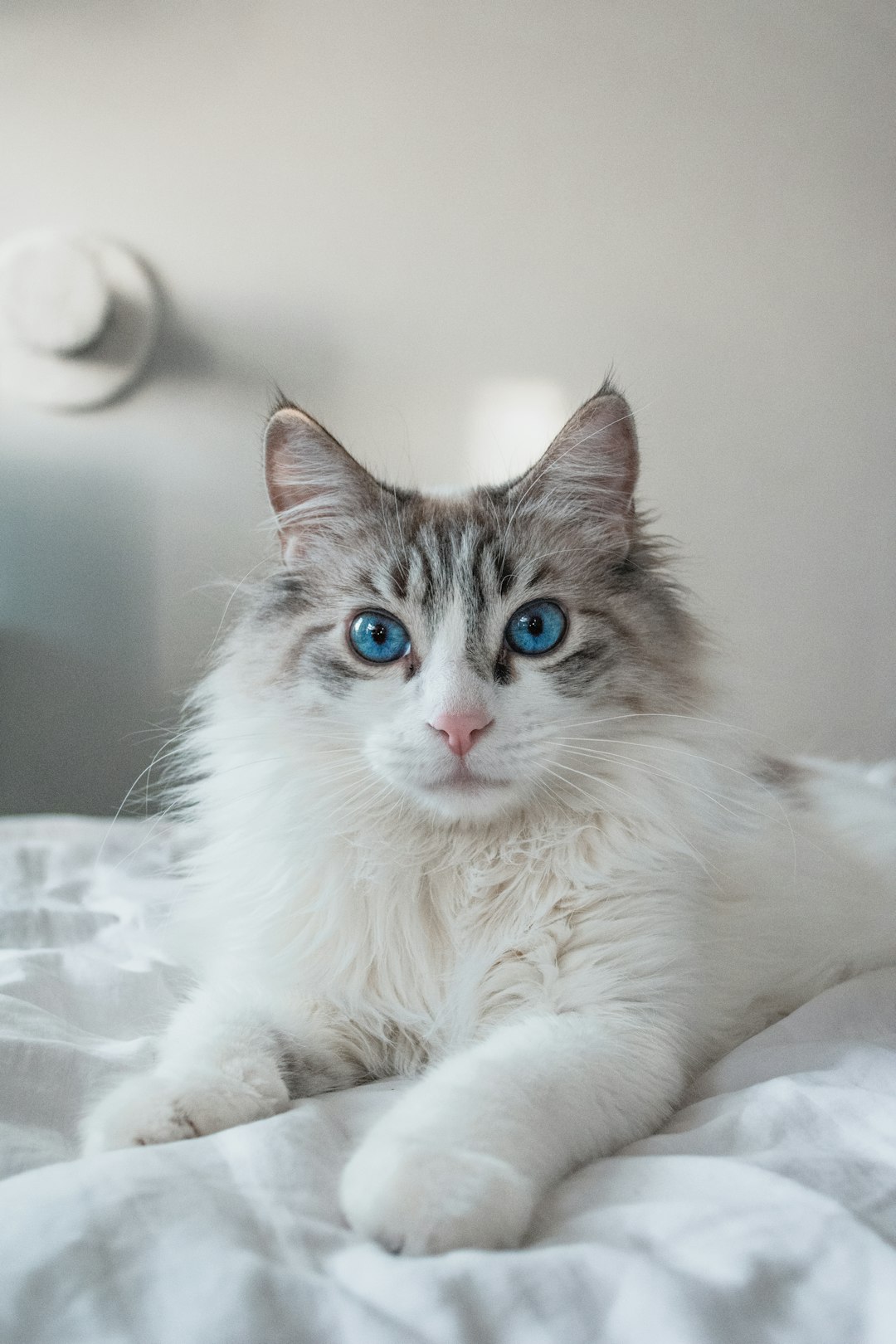
All Colors and Patterns of Ragdoll Cats
Ragdolls come in a vast range of colors and patterns. Both The Cat Fanciers’ Association (CFA) and The International Cat Association (TICA) recognize the same six core point colors: seal, blue, chocolate, lilac, red, and cream. TICA’s public Ragdoll information additionally lists cinnamon and fawn as recognized colors, though these are considerably less common and not part of the CFA standard, so a breeder describing a kitten as cinnamon or fawn is working from TICA’s broader color list specifically.
Colors may appear as solid points, or they may be modified by additional overlays, lynx (tabby striping) or tortie (a mottled mix of red and the base color), including a combination of both known as tortie-lynx. These overlays are not separate colors in their own right, they can appear on top of any of the six base colors.
A defining characteristic of every Ragdoll, regardless of color, is that the points, the darker areas of the facial mask, ears, tail, legs, and feet, should be clearly defined against a paler body. The CFA standard also disqualifies any eye color other than blue, so a cat with green, gold, or copper eyes is not a traditionally pointed Ragdoll under the show standard, whatever its coat looks like.
Point Ragdoll Cats
1. Seal Point Ragdoll
The Seal Point Ragdoll has dark brown points on the ears, face, paws, and tail, while the body remains light, usually in shades of cream or ivory. The nose and paw pads are dark brown, matching the points. Seal is the genetically dominant base color and, as a result, the most common and classic Ragdoll color.
2. Chocolate Point Ragdoll
The Chocolate Point Ragdoll has warm milk-chocolate brown points on the ears, face, paws, and tail, against a cream body. Their paw pads and nose are cinnamon pink. This color variation is rarer than Seal, since it requires a recessive gene that seal-colored cats can carry without displaying.
3. Blue Point Ragdoll
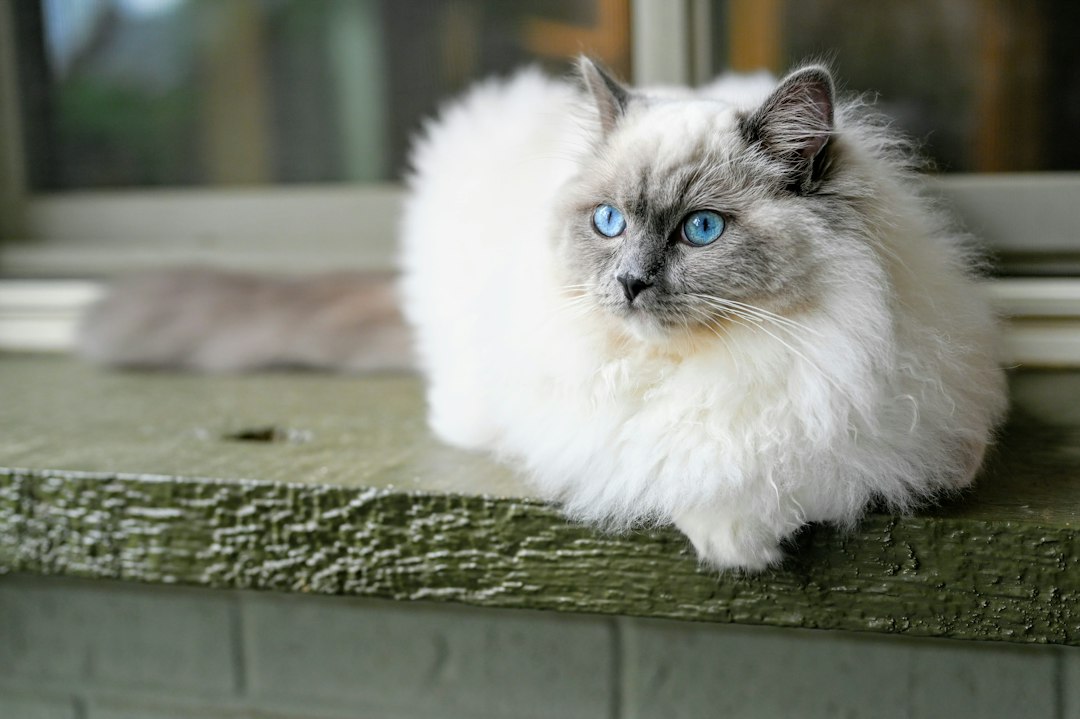
The Blue Point Ragdoll has cool grey-blue points on the ears, face, paws, and tail, with a silvery white body. Their chest and inner tummy are snow white, while their paw pads and nose are grey. Blue is a dilute version of seal, requiring one recessive gene, which is why it is common but still a step rarer than seal itself. Our guide on the Blue Mitted Ragdoll Cat covers the blue color combined with the mitted pattern in full detail.
4. Lilac Point Ragdoll
Lilac Point Ragdoll cats are a rare variety of the breed. Their fur is a soft, muted gray with light pink or lavender points on their ears, face, paws, and tail. This coloration requires two separate recessive genes together, the chocolate gene and the dilution gene, making it genuinely harder to breed than blue. Often mistaken for being “purple,” the name “lilac” actually refers to the flower, which carries a similar grayish-pink hue. Our complete Lilac Ragdoll Cat guide covers the genetics behind this color in depth.
5. Flame Point (Red Point) Ragdoll
The Red Point Ragdoll, commonly called a flame point, has reddish-orange points on the ears, face, paws, and tail, against a cream-colored body. Since the red gene is X-linked, most flame point Ragdolls are male. Depending on the depth of the point color, nose and pad color ranges from pink to red. Our Flame Point Ragdoll Kittens guide covers this color’s genetics, including why it skews heavily male, in full.
6. Cream Point Ragdoll
The Cream Point Ragdoll has soft, warm cream-colored points on the ears, face, paws, and tail against a pale body. Cream is the dilute version of red, giving a much softer, more muted version of the flame point’s orange tone. Nose and pad color ranges from pink to a slightly deeper rose depending on the intensity of the cream.
Lynx Point Ragdoll
Lynx is not a separate color, it is a tabby-striping overlay that can appear on top of any of the six base colors. Lynx point Ragdolls have visible stripes on the ears, face, legs, and tail, often with ear tufts, in addition to their underlying point color. These cats carry the same affectionate temperament and blue eyes as every other Ragdoll.
7. Seal Lynx Point Ragdoll
The Seal Lynx Point Ragdoll shows brown tabby stripes over a cream-based coat, with darker seal shading on the ears, face, paws, and tail. Their pads are seal brown, while their nose is pink with brown edging.
8. Chocolate Lynx Point Ragdoll
The Chocolate Lynx Point Ragdoll has a cream undercoat with rich chocolate-brown tabby markings and blue eyes. The striping gives a natural tabby appearance, with pale brown ticking across the body.
9. Blue Lynx Point Ragdoll Cat
The Blue Lynx Point Ragdoll has a soft, grey-toned coat with fine tabby striping and a white body carrying deep grey bars. Their pads and nose are slate-colored with pink edging.
10. Lilac Lynx Point Ragdoll Cat
The Lilac Lynx Point Ragdoll has a pale, silvery coat with lilac-toned tabby striping and bright blue eyes. Their points show grey bars with pink undertones, and their pads and nose are pinkish lavender.
11. Red Lynx Point Ragdoll Cat
The Red Lynx Point Ragdoll has orange-red tabby striping against a cream base, with intensely blue eyes. Some individuals show freckling on the nose, eyelids, and lips. Pads and nose are coral pink.
12. Cream Lynx Point Ragdoll
The Cream Lynx Point Ragdoll has a light, creamy coat with subtle tabby patterning and blue eyes. The body is bright white with soft cream shading, and the nose and pads are slightly darker than the surrounding fur.
Tortie Point Ragdoll
Tortie, short for tortoiseshell, is another overlay rather than a standalone color, produced by the X-linked orange gene, which is why tortie Ragdolls are almost always female. Our dedicated guide on the Tortoiseshell Calico Ragdoll Cat covers the genetics of this pattern in depth.
13. Seal Tortie Point Ragdoll
The Seal Tortie Point Ragdoll has a creamy undercoat with mottled seal-brown and red patches on the ears, face, legs, and tail. The leather of the pads and nose is seal brown.
14. Chocolate Tortie Point Ragdoll
The Chocolate Tortie Point Ragdoll has a warm cream-colored body with mottled chocolate and red patches on the ears, face, paws, and tail. Their coat is semi-long and silky with warm red highlights running through the chocolate points. Their pads and nose are cinnamon to coral pink.
Cream-Blended Tortie Point Ragdolls
15. Blue Cream Point Ragdoll Cat
The Blue Cream Point Ragdoll has a light greyish-blue body with pale cream patches on the ears, face, paws, and tail, and large, round blue eyes. The chest and belly are lighter still, and the nose and pads are slate grey.
16. Lilac Cream Point Ragdoll Cat
The Lilac Cream Point Ragdoll has a pale ivory body with soft lilac points carrying pink-cream mottling on the ears, face, paws, and tail. The nose and pads are pink.
Tortie-Lynx Point Ragdolls
17. Seal Tortie Lynx Point Ragdoll Cat
The Seal Tortie Lynx Point Ragdoll combines a cream base, seal and red tortie patches, and visible tabby striping on the face and legs. The pads and nose range from seal brown to pink.
18. Chocolate Tortie Lynx Point Ragdoll Cat
The Chocolate Tortie Lynx Point Ragdoll is a warm cream-colored cat with chocolate and red mottling overlaid with tabby striping on the face and legs, and large blue eyes. Nose and pad colors vary between pink, cinnamon, and flesh tones.
19. Blue-Cream Lynx Point Ragdoll Cat
The Blue-Cream Lynx Point Ragdoll has a light bluish-grey coat with cream mottling and visible tabby striping, plus large, striking blue eyes. The nose and pads are pinkish cream.
20. Lilac Cream Lynx Point Ragdoll Cat
The Lilac Cream Lynx Point Ragdoll has a pale, ash-grey tabby coat mottled with warm cream and cool blue eyes. The facial and leg striping is distinct, and the nose and pads are coral to lavender-pink.
The Three Ragdoll Coat Patterns
Separately from color, every Ragdoll also has a pattern, which determines how much white appears and where. TICA recognizes three core patterns, colorpoint, mitted, and bicolor. CFA uses the same three but additionally names Van as a distinct, high-white extreme of the bicolor pattern in its own documentation. Each pattern can appear in any of the six colors above.
21. Colorpoint Pattern Ragdoll
The colorpoint pattern is the most basic and easily recognizable pattern in Ragdolls, with no white markings at all. The body is pale cream or fawn, with the ears, face, paws, and tail in a darker, uniform hue. The chin, bib, and chest are slightly paler than the rest of the darker coat, but there is no true white.
22. Mitted Pattern Ragdoll Cats
Mitted Ragdolls have white “mittens” on the front paws, white “boots” up the back legs, a white chin, and typically a white stripe running down the belly, with no white on the face. The body is otherwise colored according to the cat’s point color.
Interesting fact: Mitted Ragdolls are often confused with bicolor Ragdolls because both carry white markings, but the distinction is the face. A mitted Ragdoll has a solid-colored face with no white V, while a bicolor Ragdoll always has one.
23. Bicolor Pattern Ragdoll
Bicolor Ragdolls have a mostly white body with a distinctive white inverted “V” running from the forehead down over the nose. Color is confined to the ears, tail, and a saddle of color across the back. The chest, chin, and underside are pure white, and the nose and paw pads are pink. Our complete Bicolor Ragdoll guide covers the full spectrum, from mitted through true bicolor to the rare Van pattern.
Van: The Most Extreme Bicolor
Van is not a fourth, separate pattern so much as the far end of the bicolor spectrum. In a Van-patterned Ragdoll, roughly 80 percent or more of the coat is pure white, with color limited to just the top of the head, the ears, and the tail. CFA documentation names Van directly, while TICA generally treats it as the high-white extreme within its bicolor category rather than a standalone pattern name.
Are Mink and Sepia Ragdoll Colors
You may see Mink, Sepia, or solid-coated cats advertised as Ragdolls elsewhere, and it is worth understanding why they do not appear in the lists above. As of May 1, 2025, TICA formally reclassified Mink, Sepia, and solid-coated cats into a separate breed group called Cherubim, distinct from the pointed Ragdoll (RD) breed group covered in this guide. CFA has never recognized Mink, Sepia, or solid coloring under the Ragdoll standard at all.
This does not make Mink or Sepia cats any less genuine or any less wonderful as pets, it simply means they are judged and registered under a different category than a traditional pointed Ragdoll. Our guides on the Mink Ragdoll Cat and the Sepia Ragdoll Cat cover both classifications in full, including how to tell them apart from a traditional pointed color at a glance.
Other Named Colors You May Encounter
A few other color names circulate among breeders and owners that are worth a brief, honest mention. “Dark gray” is typically just another name for blue or a deeply shaded blue, covered in our Dark Gray Ragdoll Cat guide. A “tuxedo” Ragdoll generally refers to a black and white bicolor pattern that falls outside the traditional pointed standard, explored in our Tuxedo Black and White Ragdoll Cat guide. A “calico” Ragdoll is the common name for a tortie bicolor, covered in our Calico Ragdoll Cat guide. A fully white-coated cat with no points at all is covered separately in our Pure White Ragdoll Cat guide, since true whiteness works differently from the standard colorpoint pattern.
Does Color or Pattern Affect Health or Eye Color
No. Coat color and pattern genes are inherited independently from both health genes and eye color genetics, so no color or pattern on this list carries a higher or lower health risk than another. Every purebred, pointed Ragdoll carries the same vivid blue eyes, governed by the colorpoint gene itself rather than any specific color variant. For the breed-wide health picture that applies regardless of color, see our guides on HCM in Ragdoll Cats and PKD in Ragdoll Cats, or our full Common Ragdoll Health Problems overview. Our Ragdoll Eye Color Chart covers the specific shades of blue in more depth.
Frequently Asked Questions About Ragdoll Colors and Patterns
How many official colors do Ragdolls come in
Both CFA and TICA recognize six core point colors: seal, blue, chocolate, lilac, red, and cream. TICA’s public information additionally includes cinnamon and fawn, which are rarer and not part of the CFA standard.
What is the difference between a color and a pattern in Ragdolls
Color refers to the shade of the points, such as seal or blue. Pattern refers to how much white appears and where, colorpoint (no white), mitted (white paws, chin, and belly), or bicolor (a white facial V and mostly white body). Any color can appear in any pattern.
Is lynx a separate Ragdoll color
No. Lynx is a tabby-striping overlay that can appear on top of any of the six base colors, not a color in its own right.
Are Mink and Sepia Ragdolls real Ragdolls
They share the same Ragdoll foundation genetics and breed history, but as of May 1, 2025, TICA classifies them separately under the Cherubim breed group rather than the traditional pointed Ragdoll standard, and CFA has never recognized them under the Ragdoll standard at all.
Which Ragdoll color is rarest
Lilac and chocolate are generally considered the rarest of the six core colors, since both require a recessive chocolate gene that seal and blue cats do not carry.
Does coat color affect a Ragdoll’s temperament or health
No. Coat color and pattern genes are inherited separately from temperament and health genes, so every color and pattern carries the same general temperament and the same breed-wide health considerations.
Related Topics and Search Terms Covered in This Guide
Secondary Keywords: Ragdoll Cat Colors, Ragdoll Cat Patterns, Ragdoll Point Colors, Ragdoll Coat Colors Chart, Ragdoll Color Genetics, Ragdoll Breed Standard Colors.
Related Topics: Blue Mitted Ragdoll Cat, Lilac Ragdoll Cat, Bicolor Ragdoll, Calico Ragdoll Cat, Mink Ragdoll Cat, Sepia Ragdoll Cat, Tortoiseshell Calico Ragdoll Cat.
Semantic (LSI) Keywords: Colorpoint Gene, White Spotting Gene, Lynx Tabby Overlay, Tortie X-Linked Gene, TICA Cherubim Classification, Dominant Vs Recessive Color Genes.
Long-Tail Keywords: How Many Official Ragdoll Colors Are There, Difference Between Colorpoint Mitted And Bicolor Ragdoll, Is Mink A Ragdoll Color, Which Ragdoll Color Is Rarest.
Question-Based Keywords (People Also Ask): How Many Official Colors Do Ragdolls Come In. What Is The Difference Between A Color And A Pattern In Ragdolls. Is Lynx A Separate Ragdoll Color. Are Mink And Sepia Ragdolls Real Ragdolls. Which Ragdoll Color Is Rarest. Does Coat Color Affect A Ragdoll’s Temperament Or Health.
Sources and Further Reading
- The Cat Fanciers’ Association (CFA) – Ragdoll Breed Standard
- The International Cat Association (TICA)
- UC Davis Veterinary Genetics Laboratory – Ragdoll Coat Color Testing
This article is for general informational purposes. This guide will be reviewed and updated periodically as breed standards evolve.
Conclusion
Six core colors, three core patterns, and a handful of overlays like lynx and tortie account for the entire traditional Ragdoll color palette, along with the separately classified Mink and Sepia Cherubim group. Perhaps you have found your favorite Ragdoll color and pattern in this list, or you have been able to pinpoint exactly what your own cat is. Whatever name a listing uses, cross-checking it against the six official colors and three official patterns here is the quickest way to know what you are actually looking at.
What color and pattern is your Ragdoll. Share it in the comments, it helps other owners and prospective buyers calibrate what to expect from their own search.