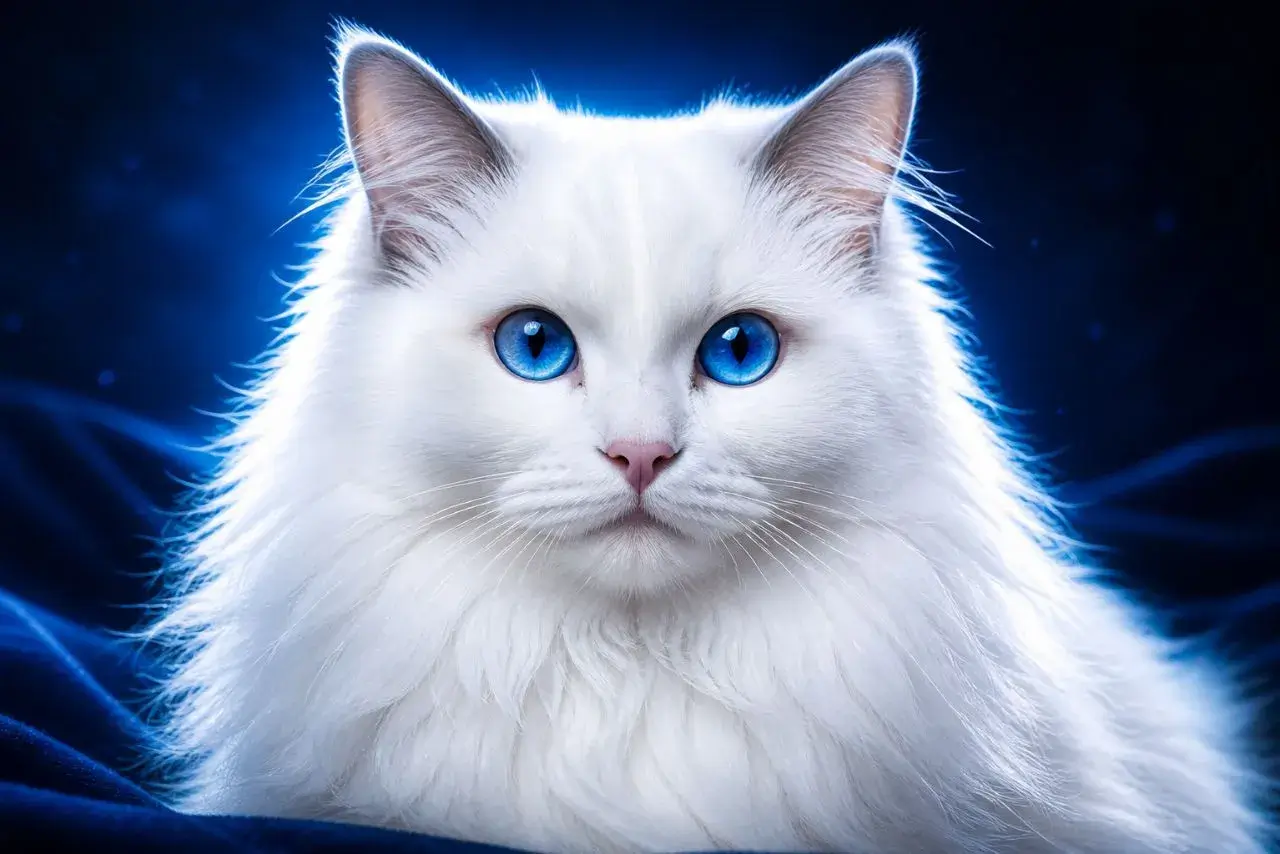
I saw my first Pure White Ragdoll Cat at a cat show and genuinely thought someone had placed a stuffed animal on the judging table. That cloud-white coat, those blue eyes, that absurd fluffiness, it stops you cold.
But once you start actually researching Pure White Ragdoll Cats, you run into something frustrating fast. The internet is packed with breeders making claims about white Ragdolls that are either wildly wrong or outright fabricated. One ad I found recently stated that all Pure White Ragdolls descended from a single cat born in the UK, that blue eyes are a “genetic disease,” and that the first kitten born in any litter is always white. Every sentence was wrong.
Geneticists, breeders, and cat judges who reviewed that ad called it “a comprehensive catalogue of absurdity.” (That’s a real quote from the Messybeast genetics resource, which spent a full article correcting it.)
So here’s the accurate version. What the White Ragdoll actually is, how the genetics work, what eye colors are possible, what the hearing situation really means (with real numbers, not vague “elevated risk” language), and what you’ll actually pay. No invented statistics. No AI-generated fluff. Updated September 2026 with deafness prevalence data, an at-home hearing check, and a source list.
What is a Pure White Ragdoll Cat?
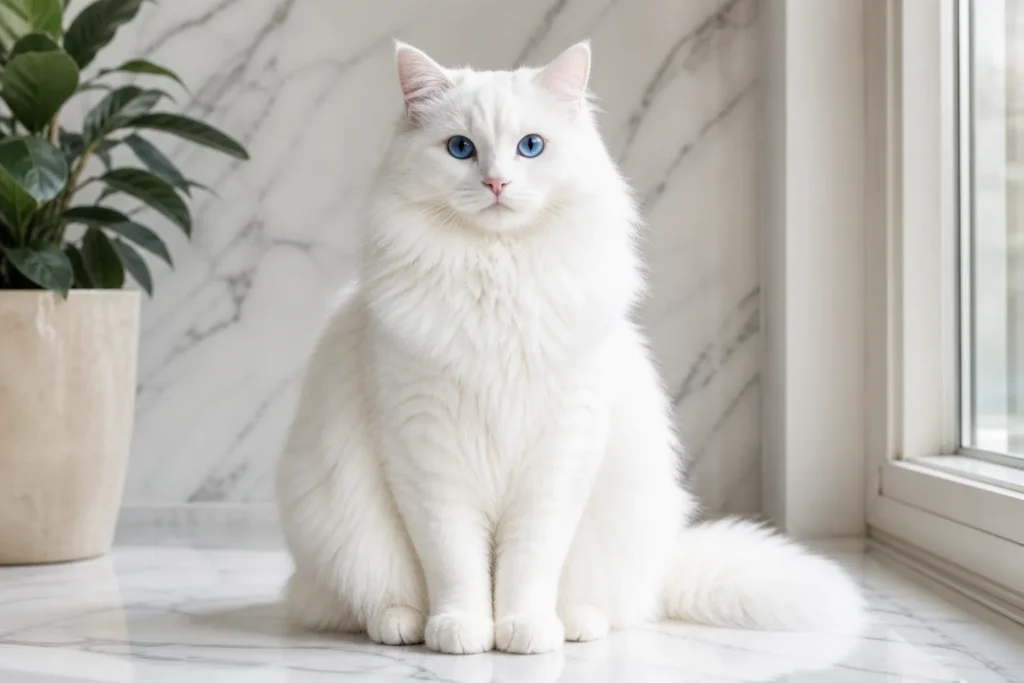
A Pure White Ragdoll Cat is not a separate breed. It’s a color variation of the standard Ragdoll breed, produced when a cat carries a dominant white gene that masks its true underlying coat color.
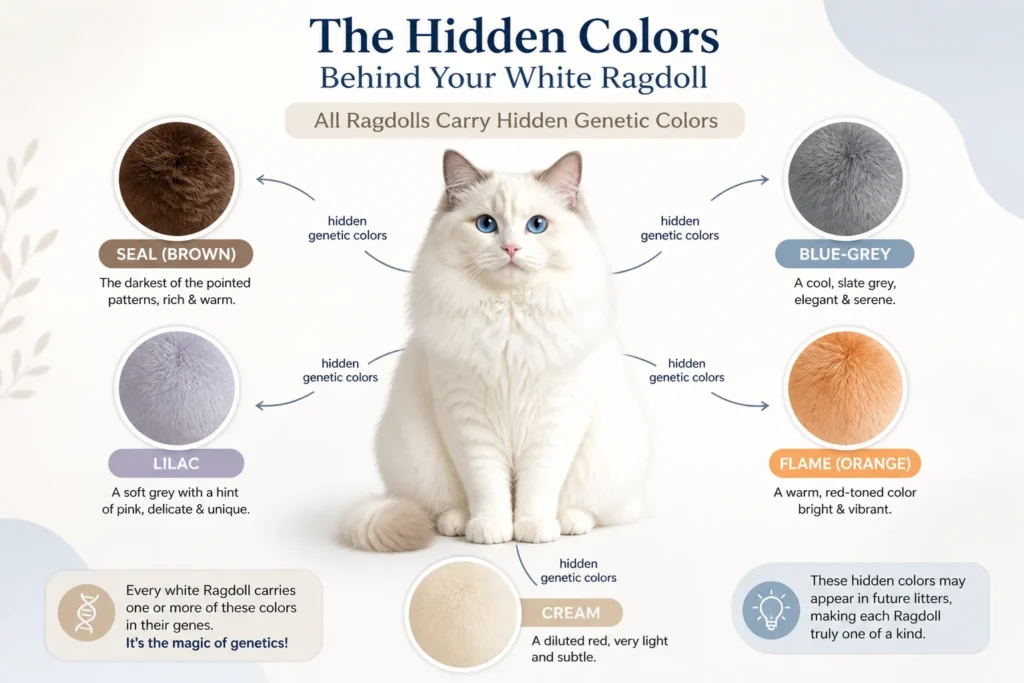
The cat underneath might genetically be seal, blue, chocolate, lilac, flame, or cream. The white gene covers all of it completely.
This trips people up. The white fur isn’t the cat’s “real” color. It’s a mask.
Key facts:
- White Ragdoll coat color is a masking trait, not a pigment color
- The cat’s underlying color is still there genetically, just hidden
- A white Ragdoll can pass that hidden color to kittens
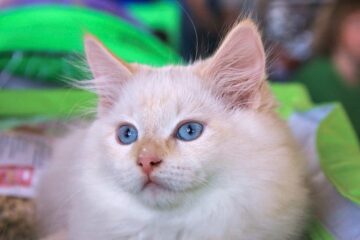
- White Ragdoll kittens are born snow-white with pink noses and paw pads
- Eye color develops between 6 and 12 weeks
The Ragdoll breed traces back to one breeder: Ann Baker, in Riverside, California. In the early 1960s, she developed the breed from a white Angora-type female named Josephine. All modern Ragdolls trace to Josephine, which means white Ragdolls were always part of the breed’s genetic story, even when registries were slow to acknowledge it.
Are White Ragdolls Purebred? What the Registries Actually Say
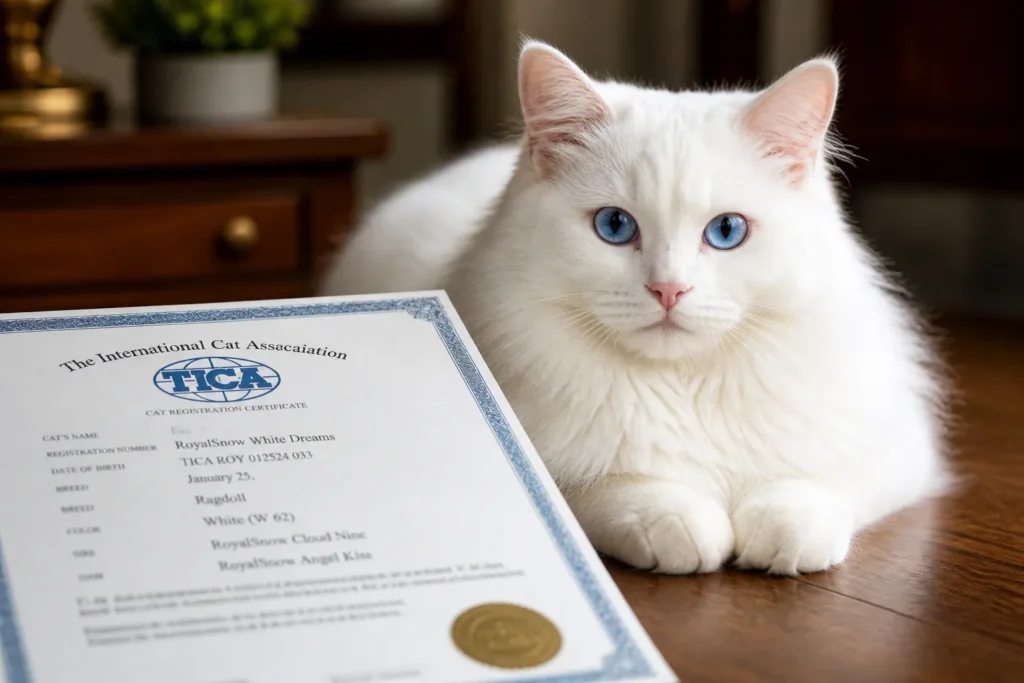
This is the most searched question about the white Ragdoll, and the answer depends on who you ask.
The Cat Fanciers’ Association (CFA) set its Ragdoll standard around the classic pointed Ragdoll pattern, lighter body, darker face, and extremities. Under CFA rules, accepted Ragdoll colors are seal, chocolate, blue, flame, lilac, and cream. White isn’t on that list. So, solid white Ragdolls can’t compete for a championship at CFA shows.
TICA is different. TICA registers non-pointed, mink, and sepia Ragdolls, all descended from Ann Baker’s foundation cats, as variants. White Ragdolls can receive full TICA pedigree papers and are considered purebred when both parents are registered Ragdolls. You can verify breed standards and registration rules directly on the TICA official website.
The dominant white gene doesn’t change breed status. It only changes how the coat looks.
| Registry | Accepts White Ragdolls? | Notes |
|---|---|---|
| CFA | No championship | Ann Baker’s original registry accepts all colors |
| TICA | Yes, as variants | Full pedigree papers; no championship competition |
| IRCA | Yes | Ann Baker’s original registry; accepts all colors |
The Real Genetics Behind the White Coat
This is where most online content gets embarrassingly wrong. Let’s be specific.
The Dominant White Gene (W)
The most common cause of a solid white Ragdoll coat is the dominant white gene (W). One copy is all it takes. The gene suppresses pigment production across the entire coat.
What this means practically:
- One white parent can produce white kittens
- The cat’s true color is present but hidden; DNA testing can find it
- Breeding 2 white cats together can actually produce BIPOC kittens if both carry only 1 copy
- Dominant white is not “carried.” Recessive genes are carried. Dominant genes express whenever present; this is basic genetics that those viral breeder ads consistently get wrong
The White Spotting Gene
Some white Ragdolls, specifically the blue-eyed white (BEW) Ragdolls bred by breeders like Eileen M. Pickett of Villaroyal Ragdolls in New York, carry the white spotting gene expressed at very high levels instead.
When white spotting is extreme enough, the cat appears entirely white. This matters because:
- White spotting is less strongly linked to deafness than dominant white
- Breeding a BEW Ragdoll to a colourpoint Ragdoll (not another white) is the recommended practice
- DNA testing can tell the two gene types apart
For breeders (or curious owners), the UC Davis Veterinary Genetics Laboratory offers a dedicated DNA test that distinguishes the dominant white gene from the white spotting gene, and can identify a white cat’s hidden underlying color. It’s a straightforward cheek-swab test and is the most reliable way to know exactly which genetic mechanism produced your cat’s white coat.
What White Ragdolls are NOT
White Ragdolls are not albino. Albinism is a completely different trait. Albino cats have pink or very pale pink eyes because they produce zero pigment, including in the iris. A white Ragdoll has normal iris pigmentation and can have blue, gold, copper, green, or odd eyes.
Also, birth order has zero effect on coat color. The claim that “the first kitten born is always white” is not genetics; it’s nonsense.
White Ragdoll Eye Colors: What’s Actually Possible
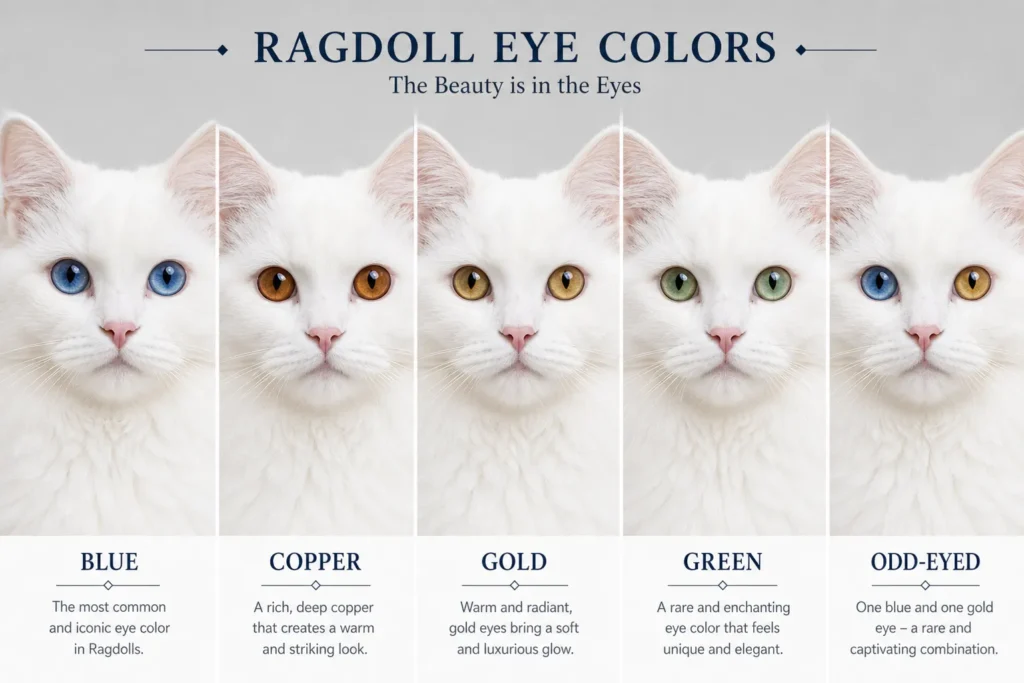
Eye color is one of the most asked-about features of the white Ragdoll cat. Because the white gene blocks pigment in the iris as well as the fur, white Ragdolls can have more eye color variety than any other Ragdoll color.
Possible eye colors:
- Blue eyes: white gene blocks pigment from forming in the iris; most sought after
- Gold eyes: common in non-blue white kittens as they mature
- Copper eyes: deepen as the cat ages
- Green eyes: occur when some pigment returns to the iris
- Odd eyes (heterochromia): one blue, one gold or green; rare, extremely photogenic
All white Ragdoll kittens are born with blue eyes. Every kitten starts with blue eyes regardless of color. Between 6 and 12 weeks, some white kittens shift to gold, copper, or green. Those with strong dominant white gene expression are more likely to keep blue eyes permanently.
| Eye Color | How Common | Key Notes |
|---|---|---|
| Blue | Common in white Ragdolls | Highest demand; linked to white gene’s pigment-blocking |
| Gold | Common | Develops as pigment returns to iris |
| Copper | Moderate | Deepens through the first 2 years |
| Green | Less common | Partial pigment return |
| Odd eyes | Rare | One blue, one gold or green |
Blue-eyed and odd-eyed white Ragdolls get the highest prices, full stop.
Do White Ragdolls Have Hearing Problems?
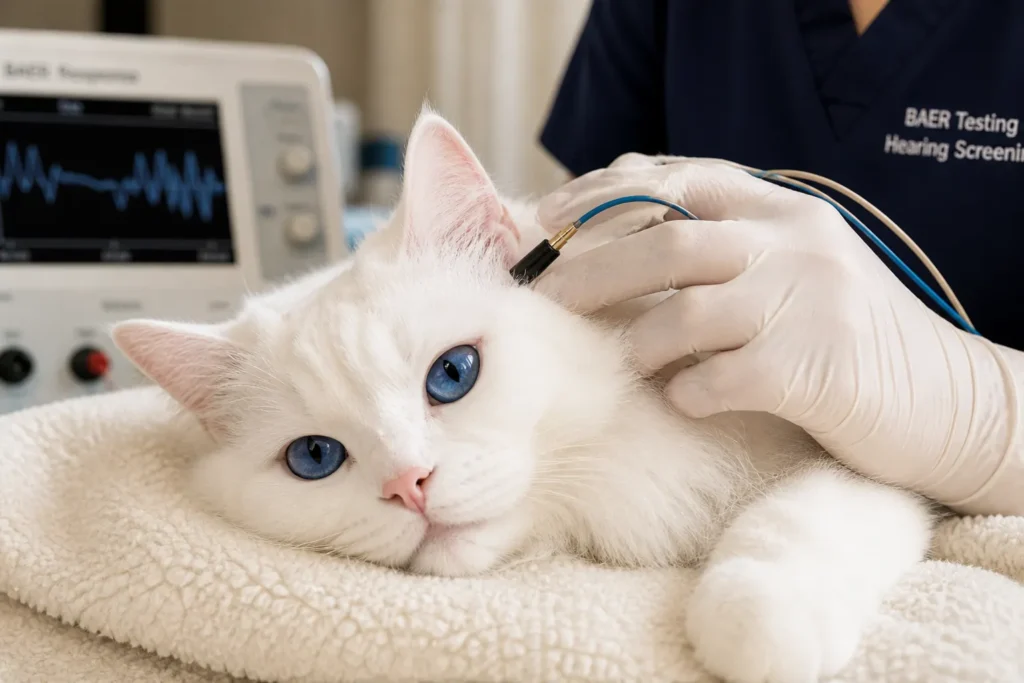
This is a real concern. Take it seriously.
White cats with blue eyes have a statistically higher chance of congenital deafness in one or both ears. The dominant white gene blocks pigment in the cochlea (the inner ear’s hearing structure), which can prevent normal hearing development.
Research by Dr. George M. Strain, published in the Journal of Veterinary Internal Medicine, documented this link between the dominant white gene, blue eyes, and hearing loss in cats. His work is the standard reference for this topic. Louisiana State University’s School of Veterinary Medicine also maintains a BAER testing resource and clinic locator if you need to find a test site near you.
Here are the actual numbers, since vague “elevated risk” language doesn’t help you plan. Strain’s data and the wider feline genetics literature put congenital deafness at roughly 17 to 22% in white cats with non-blue eyes, around 40% in odd-eyed white cats (usually deaf only on the blue-eyed side), and 65 to 85% in white cats with two blue eyes. These figures come from white cats generally, since white Ragdoll-specific studies don’t exist at this sample size, but the same dominant white gene and the same cochlear mechanism apply.
What you need to know:
- Many blue-eyed white Ragdolls hear perfectly in both ears; deafness is a risk, not a guarantee
- Odd-eyed white cats are often deaf on the blue-eyed side only, with normal hearing on the other side
- The white spotting gene (used in BEW Ragdolls) carries a lower deafness risk than dominant white
- A BAER test (Brainstem Auditory Evoked Response) is the standard hearing check; good breeders run this before placing kittens
- Deaf cats live full, happy lives indoors, but you deserve to know going in
Ask any breeder for BAER test results before committing. A good one will have them ready.
A Simple At-Home Hearing Check
This isn’t a substitute for a BAER test, but it’s a reasonable first check while you’re at home:
- Wait until your cat is asleep or facing away from you, so it can’t see or feel your movement.
- Make a sudden but non-startling sound out of its line of sight, a clap, a treat bag crinkle, a specific word you don’t normally use.
- Watch for an ear twitch, a head turn, or a change in posture. Avoid stomping or vibrating the floor, since cats can feel vibration even when fully deaf.
- Test each side separately if you suspect one-sided hearing loss (common in odd-eyed cats).
- Repeat on a few different days, since a single missed response doesn’t confirm deafness.
If your cat consistently doesn’t respond, book a proper BAER test with your vet or a veterinary neurology clinic. Deaf cats adapt extremely well, especially indoors, but knowing early helps you adjust: closing doors more carefully, using visual cues instead of calling, and never letting them outside unsupervised.
White Ragdoll Personality and Temperament

Here’s something that surprises people: coat color has zero effect on Ragdoll temperament. A white Ragdoll behaves exactly like any other Ragdoll.
Same floppy, go-limp-when-picked-up behavior. Same clingy, follow-you-room-to-room personality. Same patience with kids.
What Ragdolls are like:
- Docile and calm by nature
- Very people-oriented, they track you around the house
- Good with children and dogs that respect them
- Trainable; they pick up names and some commands
- Low aggression; they go limp rather than scratch
- Slow to mature, a full personality shows at 3 to 4 years
White Ragdolls bond hard with their families. They don’t do well alone for long stretches. If you work long hours, seriously consider getting a second cat.
Curious how this compares to a Ragdoll mixed with another breed? The Ragdoll Himalayan Mix personality is a great read if you’re weighing your options. It shares a lot of the same gentle traits, but with some Himalayan independence layered in.
White Ragdoll Size and Growth
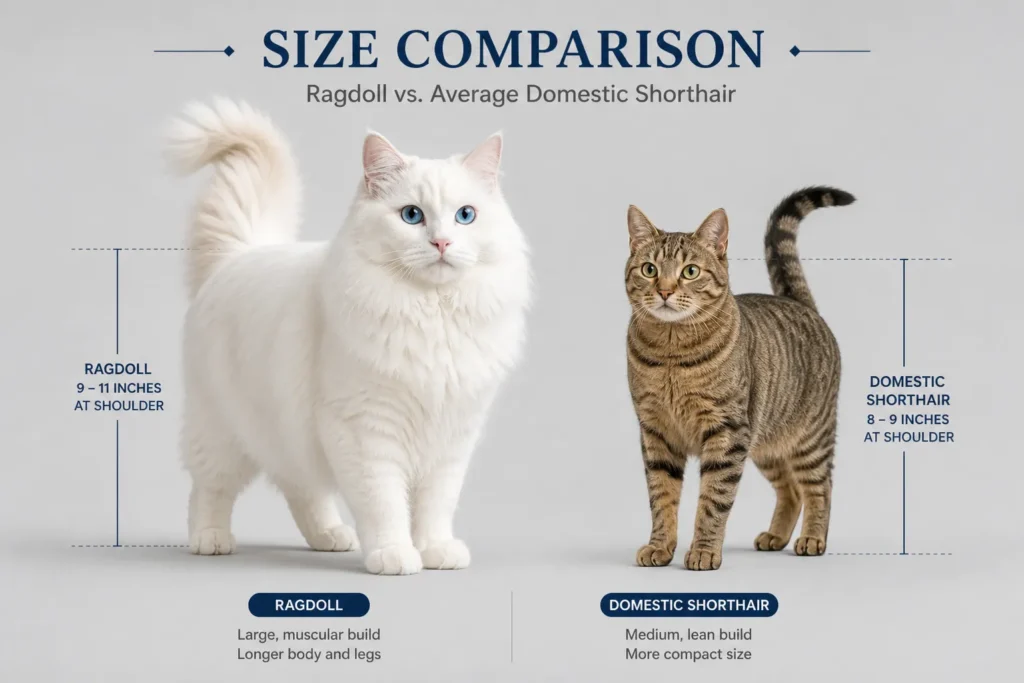
White Ragdolls grow to the same size as all Ragdolls, one of the largest domestic cat breeds.
Adult size:
- Males: 15 to 20 pounds at full maturity
- Females: 10 to 15 pounds at full maturity
- Height: 9 to 11 inches at the shoulder
- Full maturity: 3 to 4 years
A White Ragdoll Kitten may look fully grown at 1 year old, but still has 2 to 3 years of filling out ahead. Their final size genuinely surprises owners who weren’t expecting it.
Grooming a Pure White Ragdoll Cat
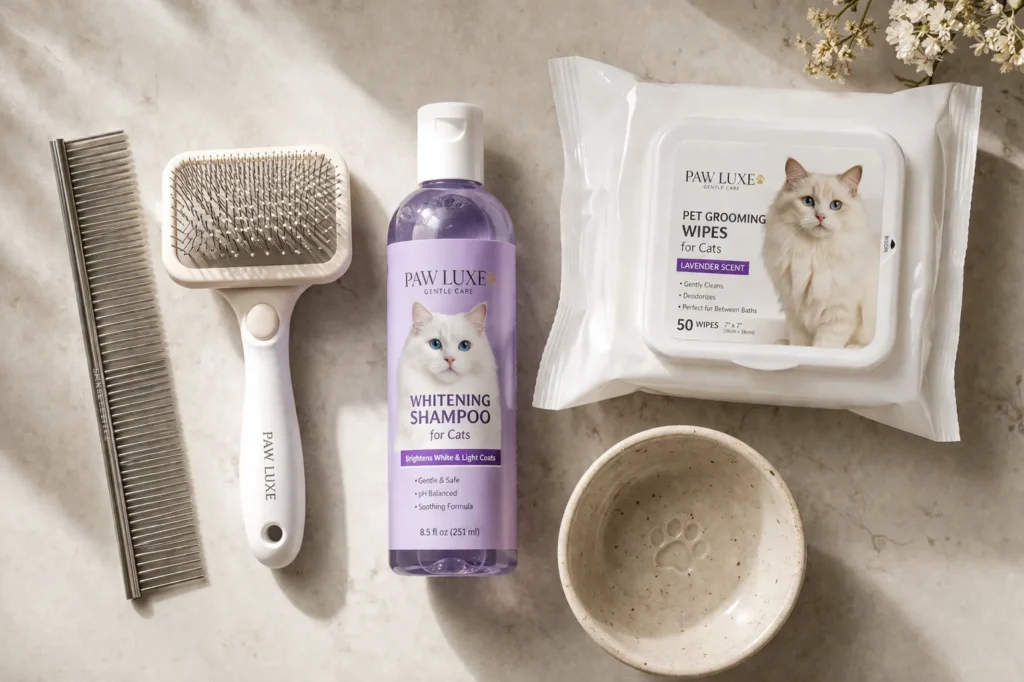
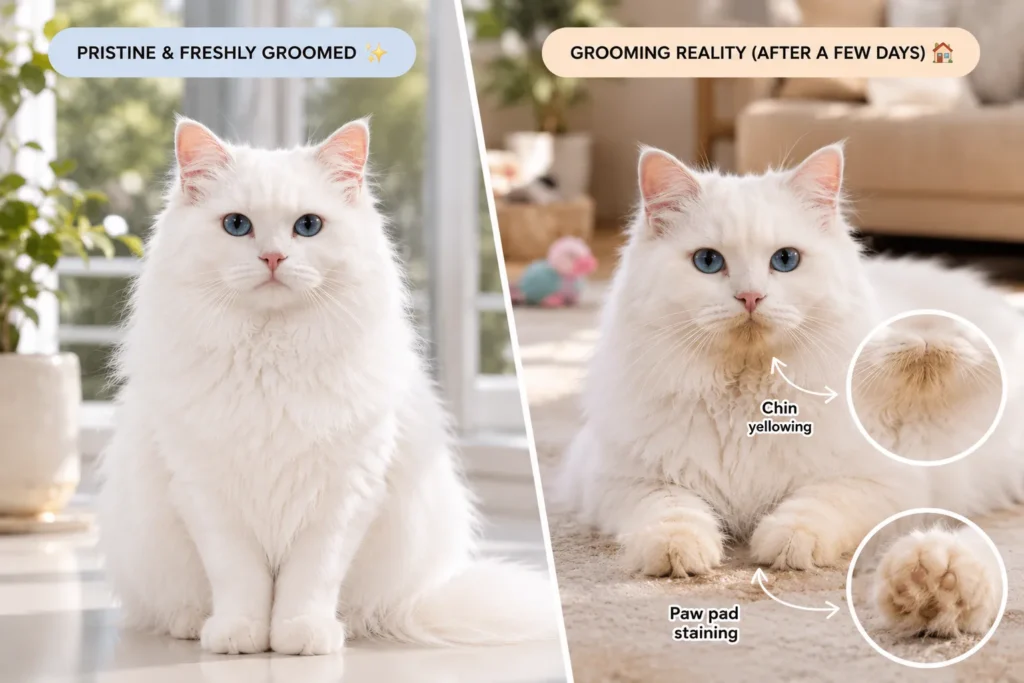
White Ragdolls don’t need more grooming than other Ragdolls. They need more consistent grooming because stains and discoloration show immediately on white fur. A bicolor with a dark mask hides a lot. A white Ragdoll cannot.
Weekly Grooming Routine
Every week:
- Full brushing with a stainless steel comb and soft slicker brush removes loose fur and catches tangles before they mat
- Eye area cleaning to prevent tear staining around the inner corners
- Chin wipe to clear natural oils that cause yellowing
- Paw wipe litter dust stains white paws fast
- Ear check for wax buildup
Monthly or Seasonal Grooming
- Full bath with whitening or brightening shampoo, purple and blue-toned formulas neutralize yellowing better than white shampoos
- Deep brush-out during seasonal shedding
- Grooming powder or chalk between baths for stubborn staining
Chin and Oil Management
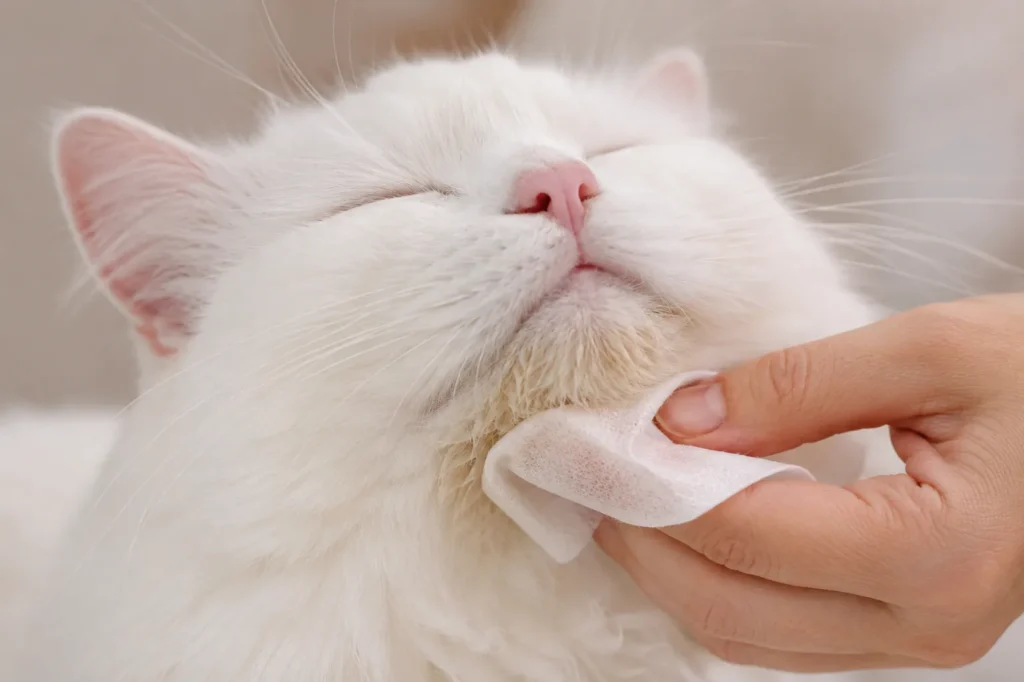
White fur shows chin oil buildup fast. The area goes yellowish or dull without regular cleaning.
What works:
- Daily or every other day, wipe your chin with a pet-safe cleanser
- Stainless steel or ceramic food bowls, plastic traps bacteria and makes chin staining worse
- If mild feline acne appears, a vet-recommended medicated wipe handles it
Sun Safety for White Ragdolls
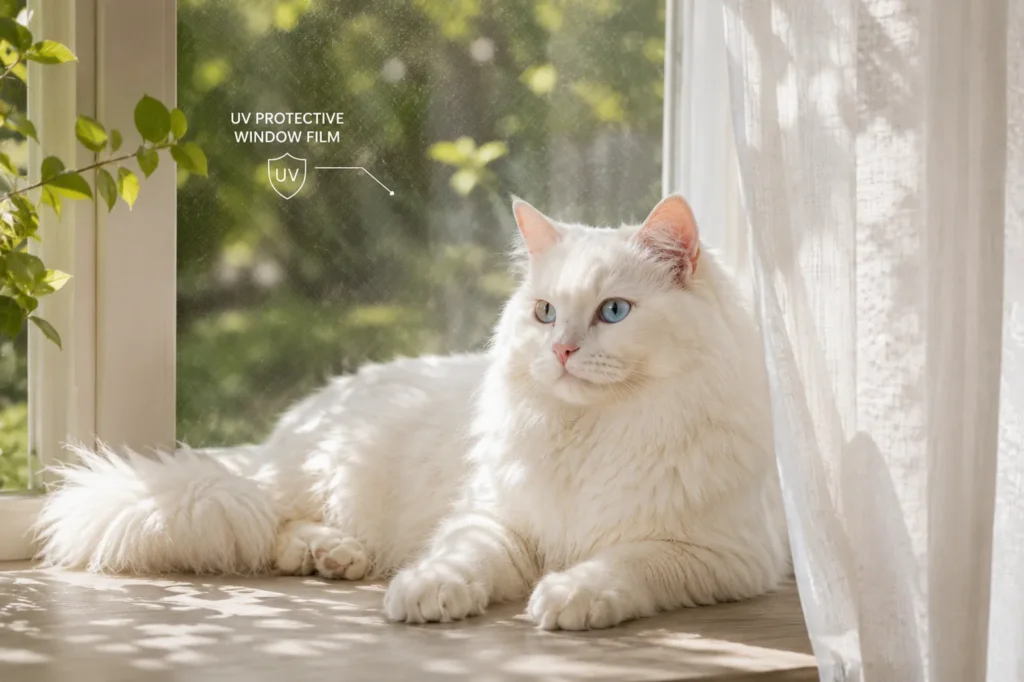
White Ragdolls burn. Their skin has less protective pigment. Ear tips, nose, and eye rims are the highest-risk spots.
Steps that actually help:
- Install UV-filtering window film on windows where the cat naps
- Limit midday direct sun
- Check ears and nose after sunny days for redness or peeling
- Indoor-only living is the safest long-term choice
Pros and Cons of Owning a Pure White Ragdoll Cat
| Pros | Cons |
|---|---|
| Striking, photogenic appearance | Stains show immediately on white fur |
| Gentle, patient, family-friendly temperament | Needs consistent grooming attention |
| Good with children, dogs, and other cats | Higher price than standard Ragdoll colors |
| Full TICA pedigree registration available | Some blue-eyed cats have hearing differences |
| Coat stays white for life | Sun sensitivity requires UV window management |
| Widest eye color variety of any Ragdoll color | Fewer reputable specialist breeders available |
How Much Does a White Ragdoll Cat Cost?
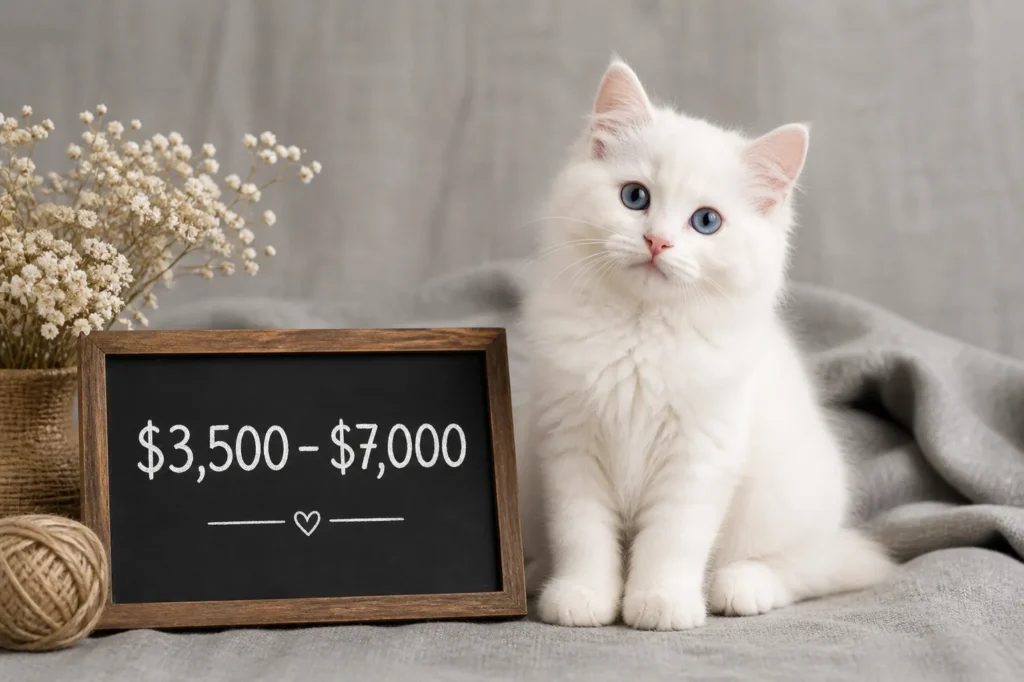
White Ragdolls cost more than standard Ragdolls. They’re a specialty color with high demand and limited breeders who work with them properly.
Price Ranges:
- Pet-quality white Ragdoll: $3,500 to $5,500
- Show-quality or odd-eyed white Ragdoll: $5,500 to $7,000
Eye color is the biggest driver. A blue-eyed white Ragdoll costs more than a gold-eyed white. An odd-eyed white Ragdoll is at the top of the range.
What affects the final price:
- Eye color (blue and odd-eyed get premiums)
- TICA or CFA registration
- Breeder reputation and health testing
- Geographic location
- Pet quality vs show quality
Prices well below $3,000 from a breeder claiming all the right things are a red flag.
How to Find a Reputable White Ragdoll Breeder
This color attracts bad breeders. The Messybeast genetics resource documented an online breeder ad for pure white Ragdolls that geneticists and cat judges described as “a comprehensive catalogue of absurdity”, wrong about birth order, wrong about gene inheritance, wrong about the origin of white Ragdolls, and wrong about blue eyes being a disease. Every paragraph had multiple errors.
What a real breeder will have:
- TICA or CFA registration for both parents
- HCM (hypertrophic cardiomyopathy) testing records, echocardiograms, and DNA tests
- BAER hearing test results for any blue-eyed or odd-eyed white kittens
- Clear answers about which white gene the parents carry
- Kittens raised in-home, not in cages
- No evasiveness when you ask detailed questions
Walk away if:
- They claim white Ragdolls all trace to a single UK cat, they trace to Josephine in California
- No BAER test records for blue-eyed kittens
- Prices are dramatically below market, with no clear reason
- They describe blue eyes as a “genetic disease”, but it isn’t
- No registration paperwork
What to Expect from a White Ragdoll Kitten in the First Year
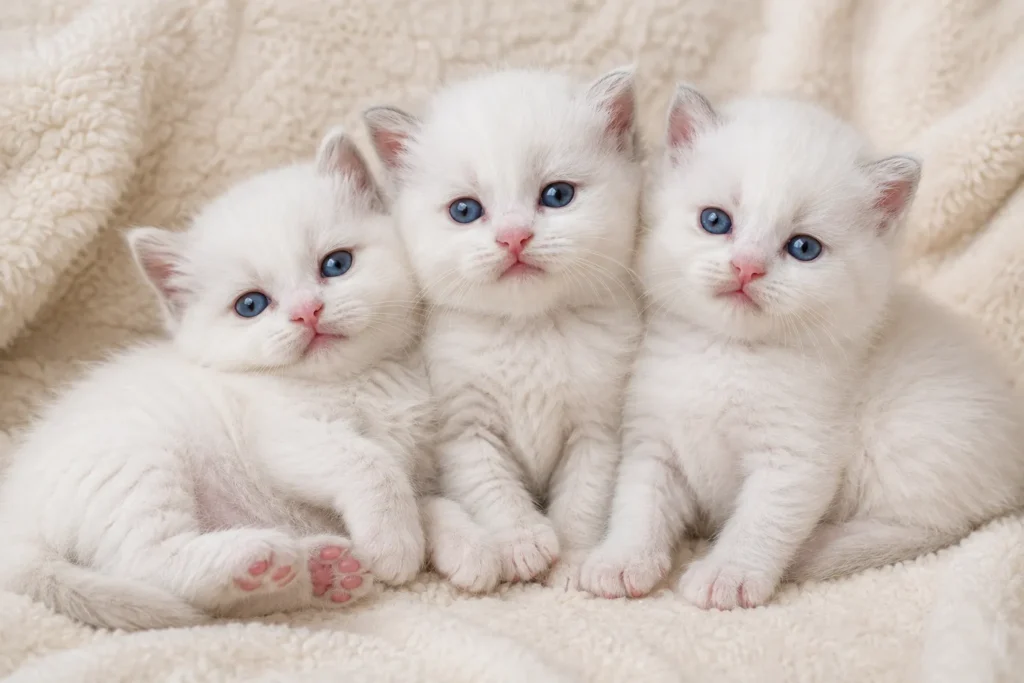
White Ragdoll Kittens are born snow-white with blue eyes, pink noses, and paw pads. Eye color may start shifting at 6 to 12 weeks. Strong dominant white gene expression means the cat is more likely to keep blue eyes permanently.
First year timeline:
- 0 to 8 weeks: With mother; early socialization
- 8 to 12 weeks: Eye color stabilizes; BAER testing if needed
- 12 to 16 weeks: Standard release age, reputable breeders don’t place earlier
- 6 months: Basic adult personality visible; still growing
- 1 year: Looks adult; still 2 to 3 years from true maturity
- 3 to 4 years: Fully mature in body and temperament
Tear staining is common in white kittens and usually fades as they grow. It’s especially obvious on white fur but isn’t typically a health concern unless you see discharge or redness.
White Ragdoll Health Considerations
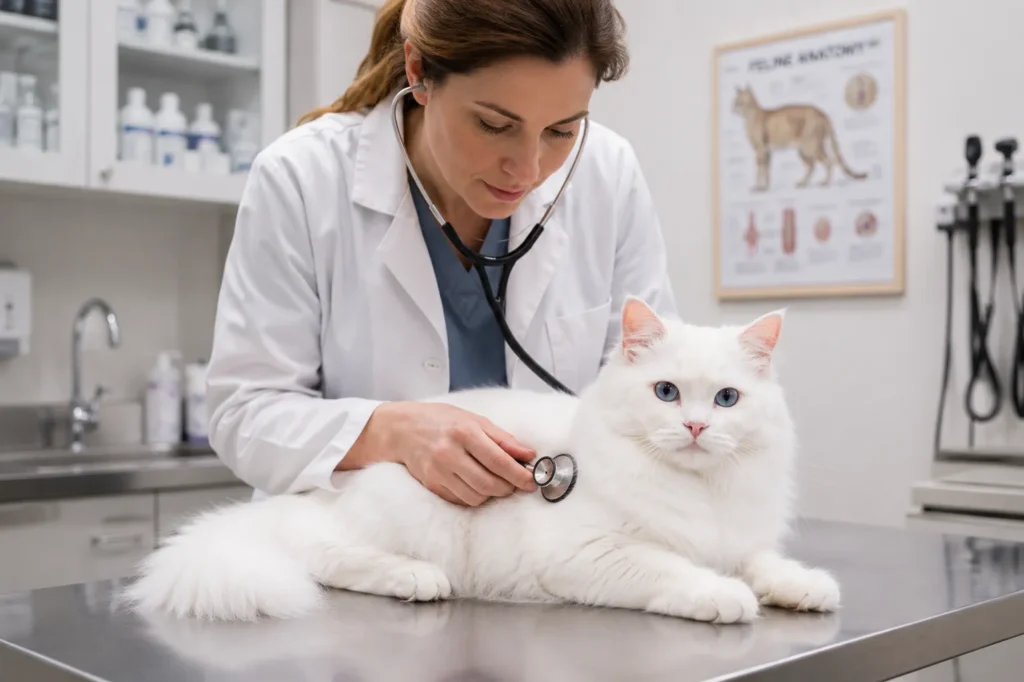
White Ragdolls share the same health profile as all Ragdolls, plus 2 specific areas to watch.
Standard Ragdoll health concerns:
- HCM (Hypertrophic Cardiomyopathy): The main genetic heart concern. Good breeders test with annual echocardiograms and DNA panels
- Urinary tract issues: Bladder stones and lower urinary tract disease appear at slightly higher rates. Wet food and good hydration help
- Obesity: They’re calm and indoor-only. Weight monitoring matters
White Ragdoll-specific concerns:
- Congenital deafness: Blue-eyed whites have an elevated risk. BAER testing is the standard check
- Sun sensitivity: Less pigment in the skin means a real burn risk on the ears, nose, and eye rims
Lifespan: Ragdolls typically live 15 to 20 years with proper care.
White Ragdoll vs Cream Ragdoll: What’s the Difference?
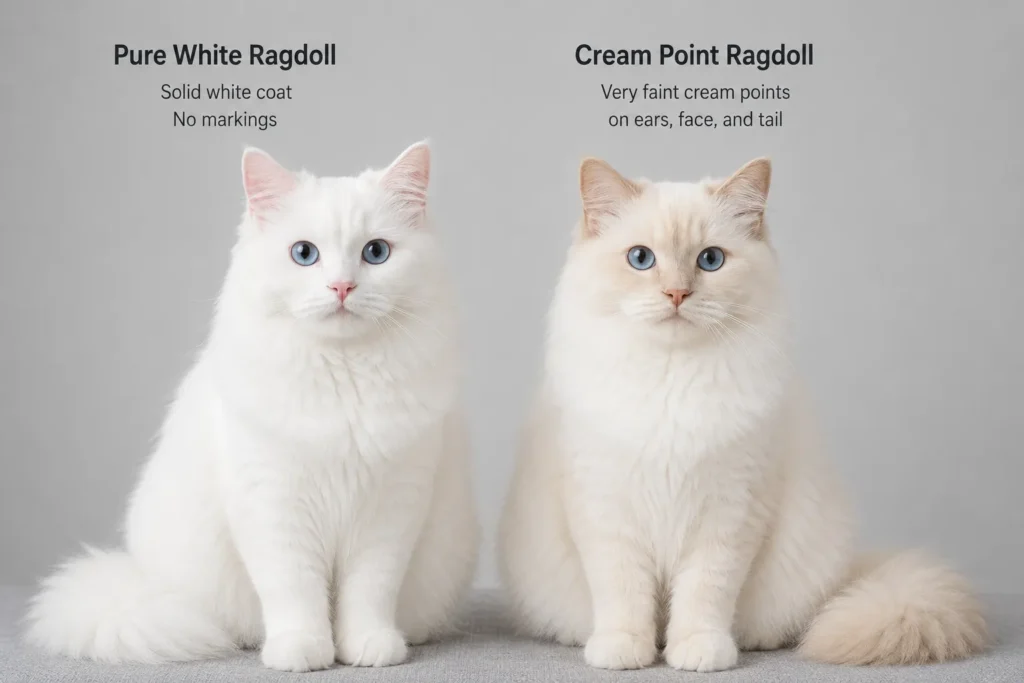
People mix these up constantly in photos. Here’s the clear answer:
- A pure white Ragdoll is fully white from root to tip, no pointing, no shading, no color variation anywhere
- A cream Ragdoll has a white body with pale ivory or cream points on the face, ears, legs, and tail, and still follows the pointed pattern
Cream is actually considered the rarest of the CFA-accepted Ragdoll colors, with roughly 3% of Ragdoll owners having one. They look nearly identical to white Ragdolls in casual photos.
Quick test: Check the ears and face closely. Any faint color around the extremities means cream-pointed, not solid white Ragdoll.
People also ask: FAQs about the Pure White Ragdoll Cat

1. Are pure white Ragdoll cats rare?
White Ragdolls are less common than traditional pointed, bicolor, and mitted Ragdolls. They’re a specialty color, high demand, limited number of breeders working with the genetics responsibly. Odd-eyed and blue-eyed white Ragdolls are the rarest within the color type. They’re not impossible to find, but expect a waitlist from a good breeder.
2. Do Pure White Ragdolls always have blue eyes?
No. All white Ragdoll kittens are born with blue eyes, as are all kittens. Eye color shifts between 6 and 12 weeks. Some white kittens keep blue eyes permanently. Others move to gold, copper, or green depending on how much pigment returns to the iris. Blue-eyed and odd-eyed white Ragdolls command the highest prices.
3. Are white Ragdoll cats deaf?
Some are, some aren’t. White cats with blue eyes have a higher statistical risk of congenital deafness because the dominant white gene can affect cochlear development. Many blue-eyed white Ragdolls hear perfectly. Odd-eyed white cats may be deaf on the blue-eyed side only. The BAER test is the standard check. Ask your breeder for results.
4. What causes a Ragdoll to be pure white?
The most common cause is the dominant white gene (W), which masks all other coat colors. Some white Ragdolls, particularly BEW types, carry extreme white spotting instead. Both produce white cats. The cat’s true underlying color (seal, blue, lilac, etc.) is still genetically present. DNA testing can identify it.
5. How much does a Pure White Ragdoll Cat?
Pet-quality white Ragdoll kittens from health-tested, registered breeders run $3,500 to $5,500. Show-quality or odd-eyed white Ragdolls run $5,500 to $7,000. Eye color is the biggest price variable. Blue-eyed and odd-eyed combinations are at the top of the range.
6. Do White Ragdolls need special grooming?
Same grooming type as any Ragdoll, regular brushing, ear checks, and nail trimming. But the white coat shows staining faster, so consistency matters more. Weekly brushing, chin wiping, eye cleaning, and paw maintenance handle most discoloration. Monthly baths with whitening cat shampoo (purple or blue-toned) keep the coat bright.
7. Can a White Ragdoll compete at cat shows?
Under TICA, white Ragdolls are registered as variants and can enter some classes. Under CFA, white isn’t in the accepted breed standard, so white Ragdolls can’t compete for championship titles at CFA shows.
8. Are White Ragdolls good family pets?
Yes. A white Ragdoll’s temperament is identical to that of any other Ragdoll: gentle, patient, affectionate, and family-oriented. They do well with children, respectful dogs, and other cats. Their go-limp reaction when startled makes them easier to handle than most breeds.
9. How big do white Ragdoll cats get?
Males typically reach 15 to 20 pounds. Females reach 10 to 15 pounds. Full size isn’t reached until 3 to 4 years old. They stand 9 to 11 inches at the shoulder. This is a genuinely large cat.
10. Can white Ragdolls go outdoors?
Technically yes. Practically, it’s a bad idea for white Ragdolls specifically. Their skin has less pigment, making the ear tips, nose, and eye rims real sunburn targets with prolonged outdoor exposure. Indoor-only with UV window film is the safest setup. A screened, shaded porch works as a compromise.
Sources and Further Reading
This guide draws on published feline genetics research and veterinary and registry resources, corrected against inaccurate breeder marketing rather than repeating it. For deeper reading:
- The International Cat Association (TICA) – Ragdoll Breed Standard and Variants
- LSU School of Veterinary Medicine – BAER Testing Resource
- UC Davis Veterinary Genetics Laboratory – White and White Spotting DNA Test
- Messybeast Genetics – White Ragdoll Cats: Fact and Fiction
This article is reviewed and refreshed periodically as feline genetics research evolves. It’s for general informational purposes and isn’t a substitute for advice from a licensed veterinarian, particularly regarding BAER hearing testing or HCM screening. Last updated September 2026.
Conclusion
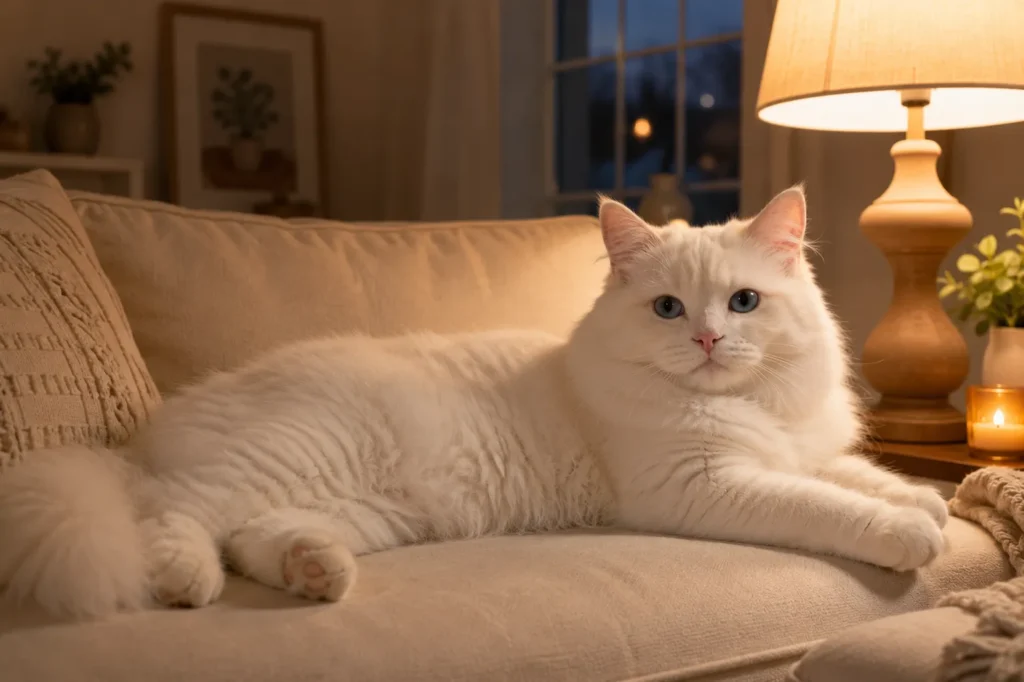
The Pure White Ragdoll Cat earns every bit of the attention it gets. The coat, the eye color options, the giant floppy personality, it all adds up.
But buy one with your eyes open. The white Ragdoll has specifics that other Ragdoll colors don’t: the hearing check, the grooming consistency, the sun sensitivity, and the reality that good breeders for this color are genuinely harder to find. Do the homework first. Ask for BAER test documentation on any blue-eyed white Ragdoll kitten. Get registration paperwork. Walk away from anyone who can’t explain which white gene their cats carry.
Find the right cat from the right breeder, and you’re looking at 15 to 20 years with one of the most people-oriented cat personalities in the breed world. They follow you from room to room and go limp in your arms. They get along with your kids and your dog.
If you own or have owned a Pure White Ragdoll Cat, drop your experience in the comments. What caught you off guard? What would you tell someone who’s just starting to look?