Last Updated: October 15, 2026
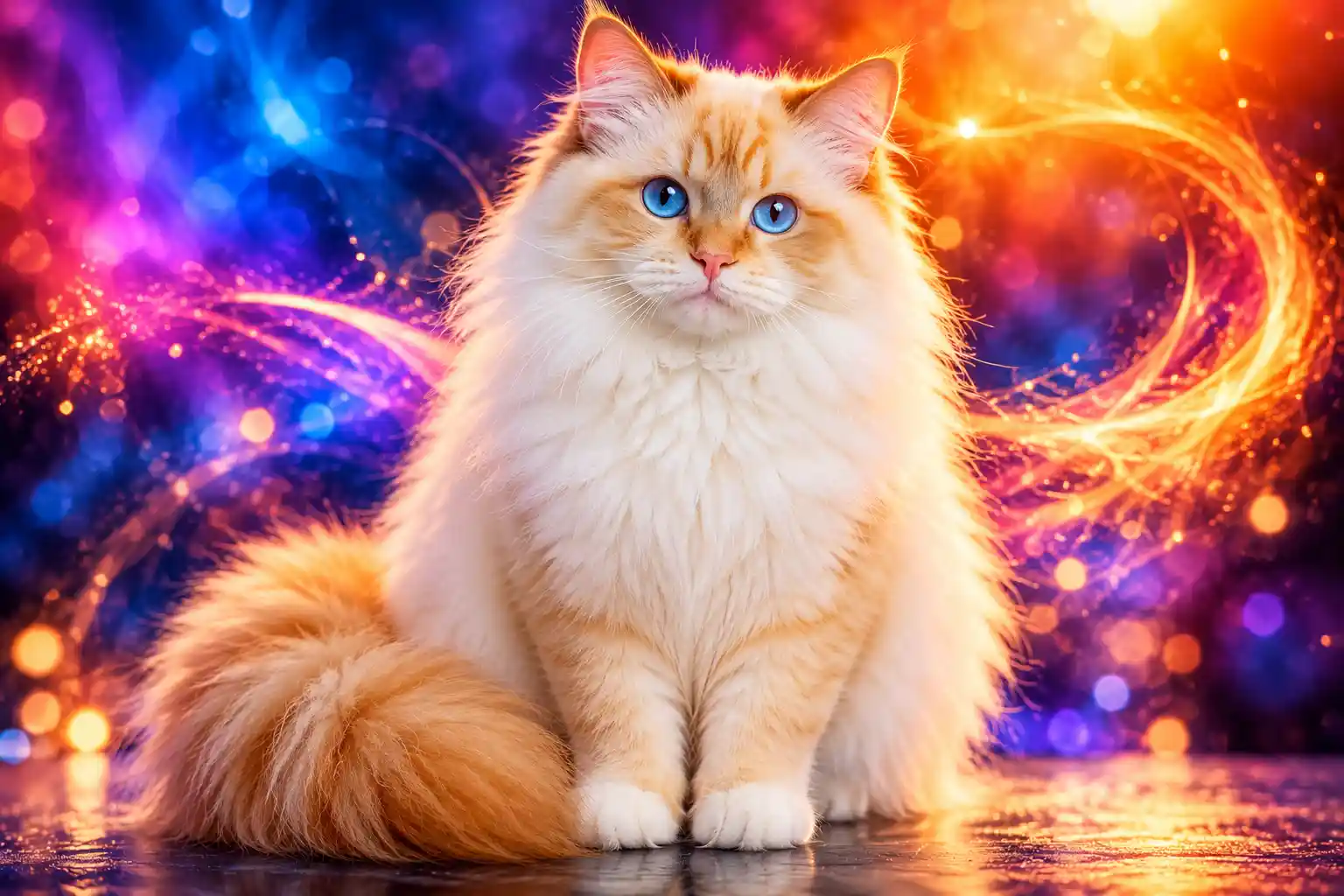
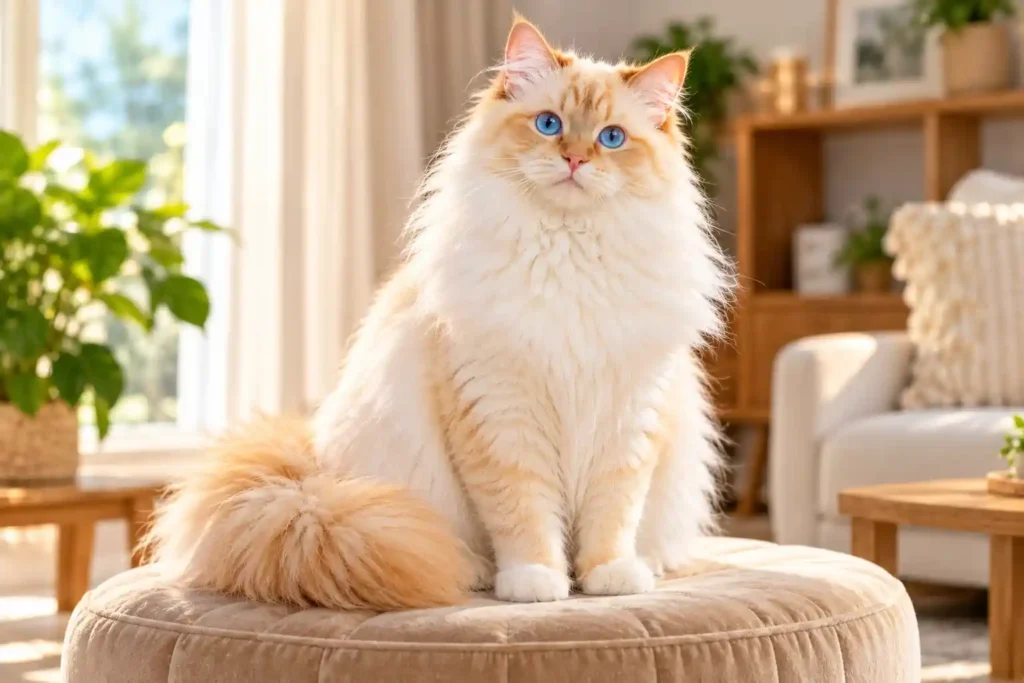
A Flame Point Ragdoll is a Ragdoll cat with warm red, orange, or apricot colouring on its ears, face, legs, and tail, set against a much lighter cream or ivory body. These cats are also commonly called Red Point Ragdolls. The colour is striking, but it does not make the cat a separate breed or guarantee a different personality.
This guide explains how to recognise a Flame Point Ragdoll, how red-point colour is inherited, why most are male, how their coat develops, and what to consider when choosing and caring for one. It separates established breed information from claims that are difficult to verify, so you can make a more informed decision.
Flame Point Ragdoll Cat: Quick Facts
| Feature | What to Know |
|---|---|
| Breed | Ragdoll |
| Colour name | Flame Point or Red Point |
| Coat | Semi-long, soft coat with red, orange, or apricot points |
| Body colour | Usually pale cream or ivory, with individual variation |
| Eyes | Traditional pointed Ragdolls have blue eyes |
| Pattern variations | Colourpoint, mitted, and bicolour |
| Personality | Often sociable and people-oriented, although each cat is an individual |
| Grooming | Regular combing, with extra attention to areas prone to tangles |
| Health | Needs the same routine care and breed-relevant screening as other Ragdolls |
What Is a Flame Point Ragdoll?
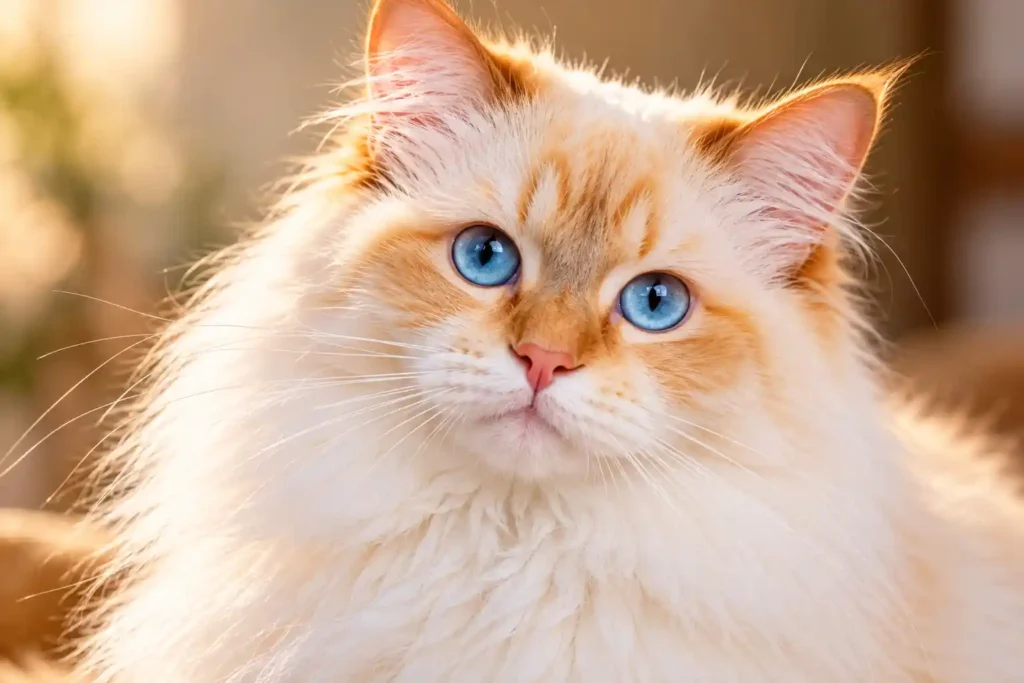
A Flame Point Ragdoll is a Ragdoll whose colourpoint markings are red-based rather than seal, blue, chocolate, or lilac. The word “point” refers to the coloured areas on the face, ears, legs, and tail. Because the colourpoint pattern develops differently across the body, these areas are generally darker or warmer in colour than the pale torso.
“Flame Point” is a familiar name among breeders and owners, while major breed references also use “red” for this point colour. The Cat Fanciers’ Association lists red among Ragdoll point colours, and The International Cat Association describes red and cream among the breed’s recognised colours. Naming can vary by registry and breeder, so ask which registry terminology appears on a kitten’s pedigree.
A Flame Point is a colour variation, not a separate Ragdoll breed, a guaranteed mix, or a special temperament type. For a broader overview of the available coat colours and patterns, read our Ragdoll Cat Colors and Patterns Guide.
What Does a Flame Point Ragdoll Look Like?
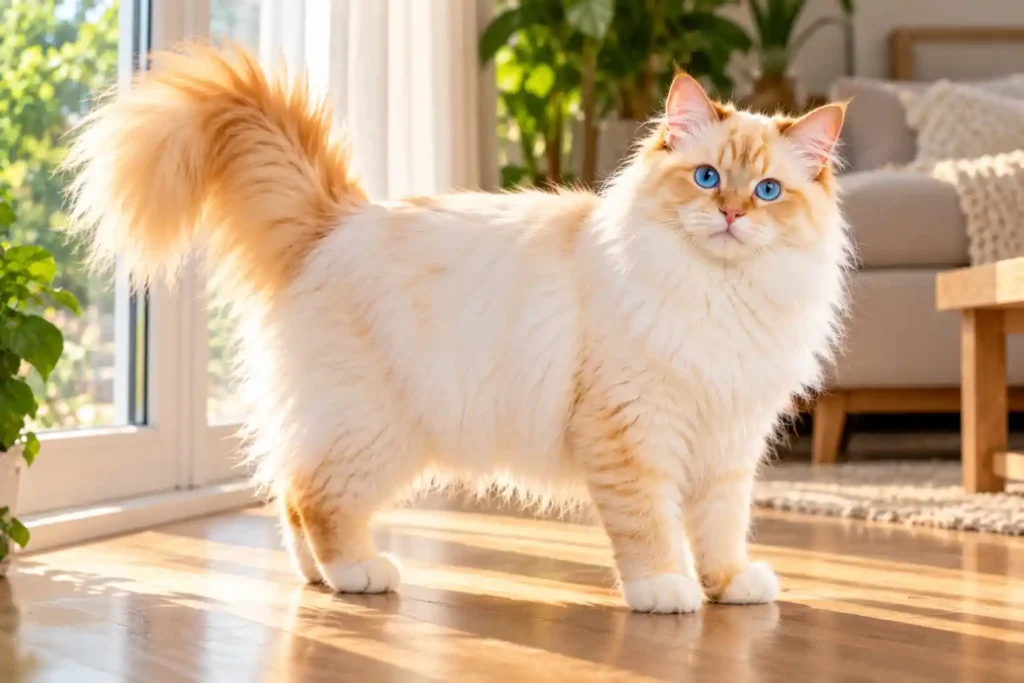
The typical Flame Point Ragdoll has a light body and warm red-toned points. The exact shade can range from pale apricot or orange to a deeper reddish tone. The intensity and distribution of colour differ between individual cats, and the coat often becomes more developed as the cat matures.
Coat Colour and Markings
- Face and ears: Red, orange, or apricot shading, sometimes with faint tabby-like markings.
- Legs and tail: Warm-coloured points that may become more noticeable with age.
- Body: Usually white, ivory, or pale cream, with some shading possible.
- Nose and paw pads: Often pink or coral-toned, though details vary with the individual’s markings.
- Coat texture: A semi-long coat that needs regular combing to prevent tangles.
Flame Point Colourpoint, Mitted, and Bicolour Patterns
Flame colouring can appear with different Ragdoll patterns. A colourpoint has coloured points without white markings on the body; a mitted Ragdoll has white feet and other characteristic white markings; and a bicolour has more extensive white areas, often including an inverted white V on the face. The amount of white can make two Flame Point Ragdolls look quite different even when their point colour is similar.
Flame Point vs Cream Point Ragdoll: What Is the Difference?
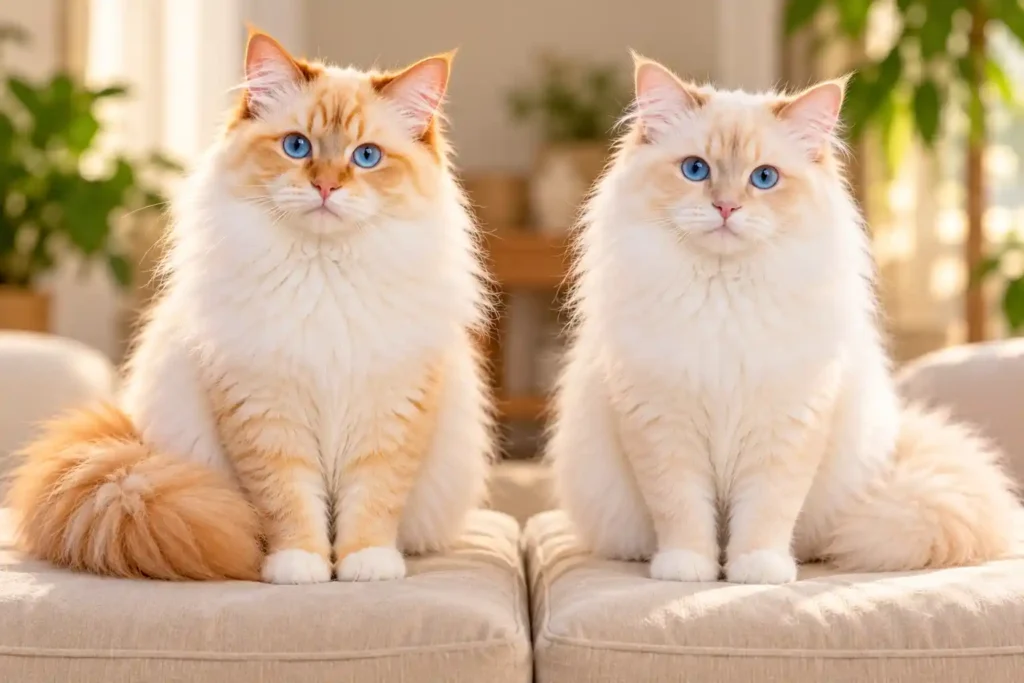
Flame Point and Cream Point Ragdolls both have red-based colour genetics, but the visible shade differs. Flame or red points are generally warmer and more noticeable, while cream points are paler, softer, and less saturated. Lighting, camera settings, age, and coat development can make this distinction difficult to judge from a photograph alone.
If you are choosing a kitten, ask the breeder for the registered colour description, pedigree details, and photographs taken in natural light. A photo or online listing by itself cannot confirm a kitten’s pedigree or precise colour classification.
Flame Point Ragdoll Genetics: Why Are Most Male?
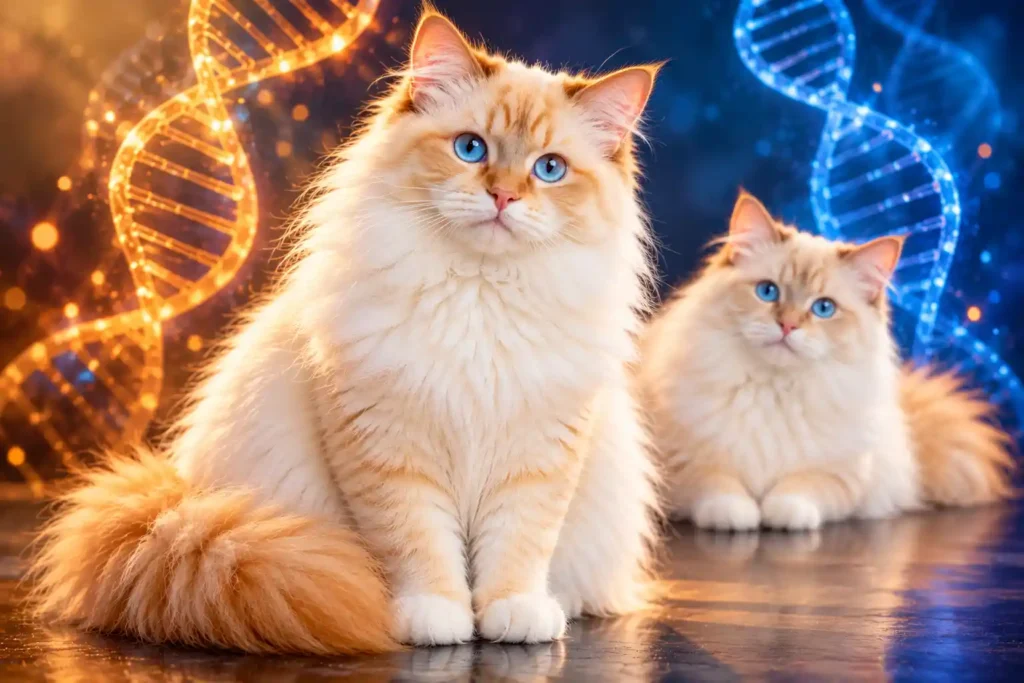
The orange pigment associated with red or flame colouring is linked to the X chromosome. Male cats usually have one X chromosome, so a single orange-colour allele on that chromosome can produce red-based colouring when the cat also inherits the colourpoint pattern. Female cats usually have two X chromosomes and generally need the orange allele on both to show a fully red-based pattern; females can also show mixed red and other colours, such as tortoiseshell patterns.
This X-linked inheritance helps explain why red or flame-point cats are more often male, but it does not mean female Flame Point Ragdolls are impossible. A breeder should be able to explain the parents’ colours and the kitten’s pedigree without making absolute promises based only on appearance.
When Do Flame Point Ragdoll Kittens Develop Their Colour?
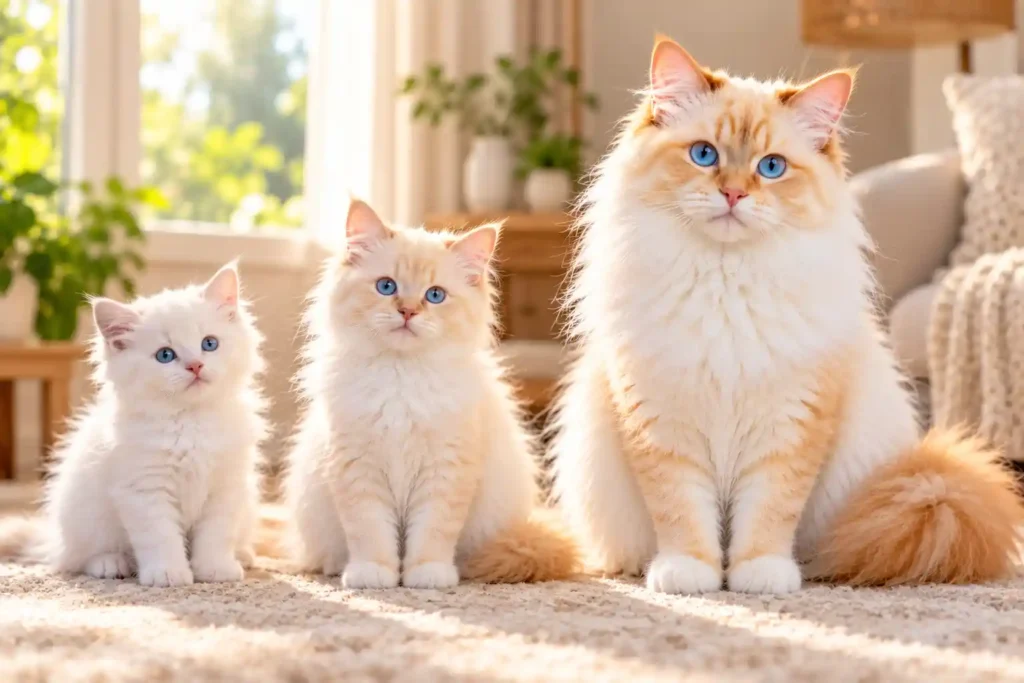
Ragdoll kittens are often born very pale, and their point colour becomes more visible as they grow. The colour develops gradually rather than appearing all at once. Coat and colour can continue changing through adolescence and into adulthood, so a young kitten may look lighter than it will later.
Do not use one exact age as a guarantee of final colour. Genetics, individual development, and lighting all affect what you see. If colour classification matters for registration or breeding, rely on appropriate pedigree records and registry guidance rather than a visual guess.
Flame Point Ragdoll Personality and Temperament
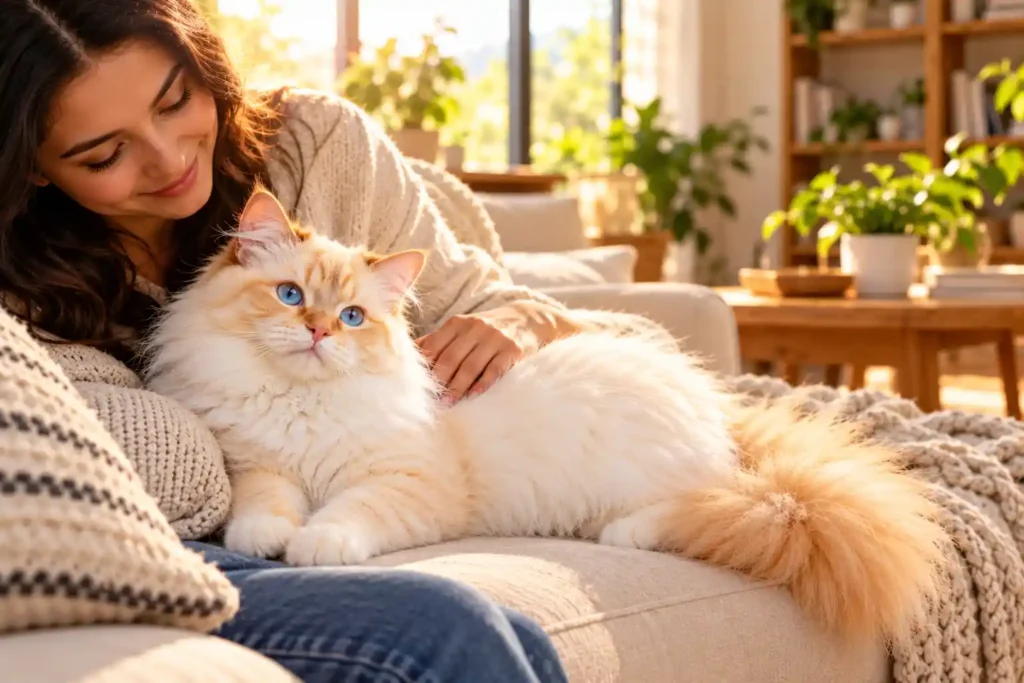
Flame Point Ragdolls are expected to share the general temperament traits of the Ragdoll breed, not a separate personality caused by their colour. Ragdolls are commonly described as affectionate, relaxed, and people-oriented. Some enjoy following family members, playing fetch, or resting nearby, while others are more independent or reserved.
Early socialisation, the cat’s individual temperament, health, and home environment all influence behaviour. Do not assume every Ragdoll will enjoy being picked up or will tolerate handling. Children should be taught to support a cat gently, allow it to leave, and never carry or restrain it against its wishes.
Are Flame Point Ragdolls Good With Children and Other Pets?
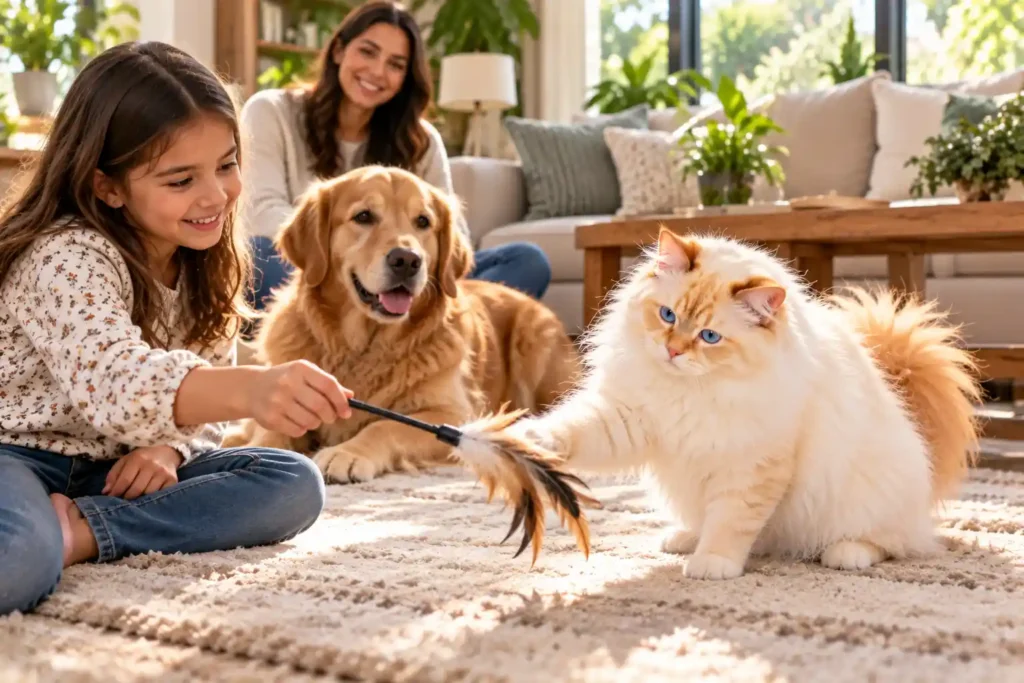
Many Ragdolls can adapt well to family homes and other pets when introductions are gradual and each animal has safe space. Supervise young children, provide separate feeding and resting areas, and introduce dogs on a lead or behind a barrier at first. Breed reputation is not a substitute for observing the individual cat’s comfort and behaviour.
Are Flame Point Ragdolls Rare?
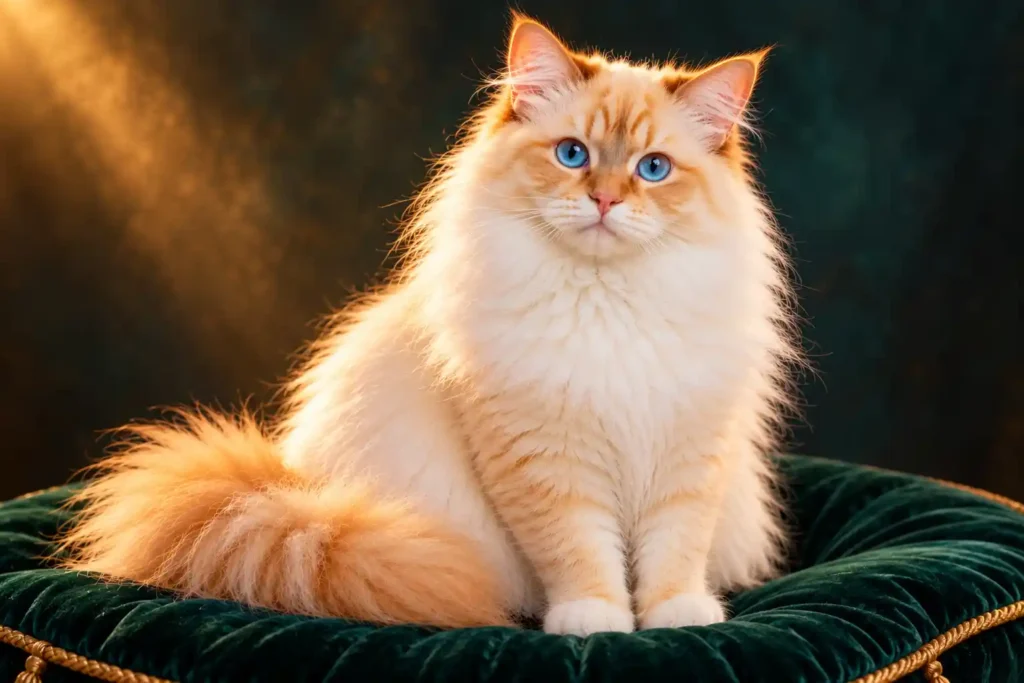
Flame Point Ragdolls may be less commonly advertised than some traditional colours in certain locations, but “rare” is not a consistent measure of quality, health, or suitability as a pet. Availability depends on the breeder, region, planned litters, and the colour patterns present in their breeding cats. A high price or a claim that a colour is rare does not prove that a kitten is well bred.
Choose a breeder based on transparent health records, appropriate socialisation, clean living conditions, a written contract, and willingness to answer questions. Avoid sellers who pressure you to pay immediately or refuse to show veterinary records and pedigree information.
Flame Point Ragdoll Care and Grooming
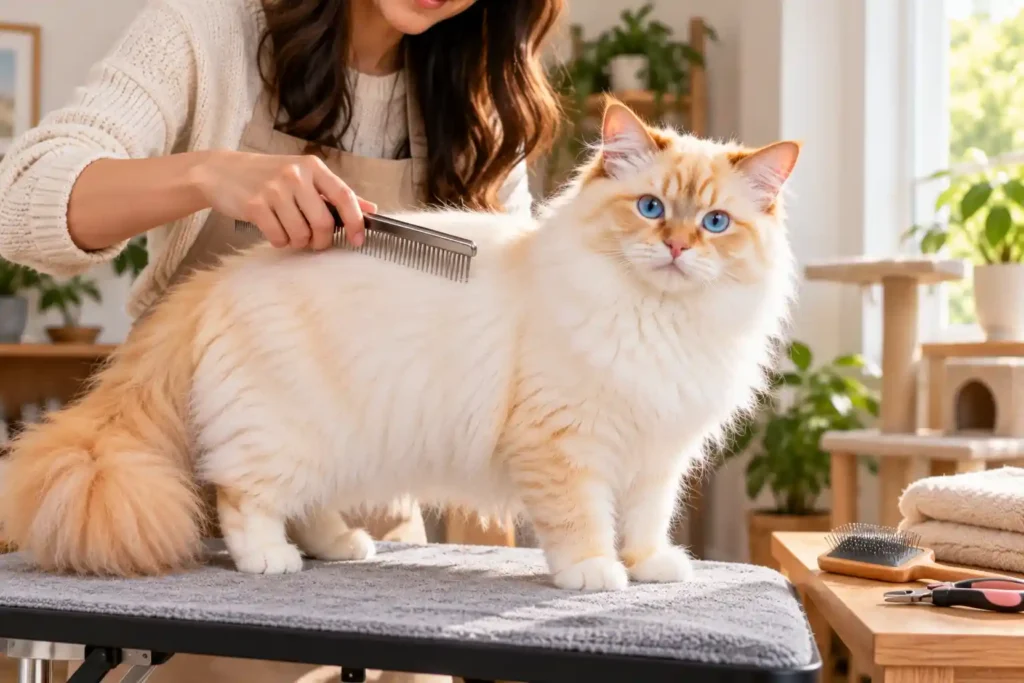
Flame Point Ragdolls need the same daily care as other Ragdolls. Their semi-long coat benefits from regular combing, but the amount of grooming required depends on the individual coat and how easily it tangles.
- Brush and comb: Start with several gentle sessions per week and increase frequency if you find knots or seasonal shedding.
- Check trouble spots: Pay attention behind the ears, under the front legs, around the collar, and near the hindquarters.
- Keep nails trimmed: Check claws regularly and use cat-safe trimming methods.
- Support dental care: Introduce tooth brushing with cat-safe products and ask your veterinarian about dental checks.
- Provide enrichment: Use daily interactive play, scratching posts, climbing options, and puzzle feeders suited to your cat.
- Monitor weight: Measure meals, keep fresh water available, and ask a veterinarian to help assess a healthy body condition.
Flame Point Ragdoll Health and Lifespan
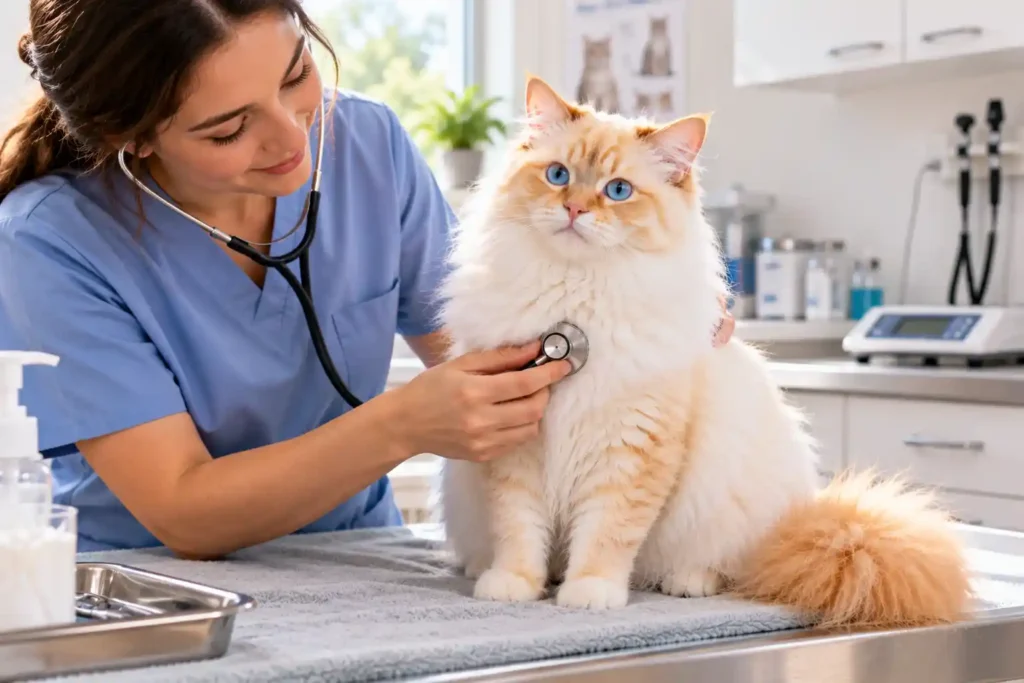
There is no good reason to assume that flame colouring itself makes a Ragdoll healthier or less healthy. Health planning should focus on the breed, the kitten’s family history, responsible breeding, routine preventive care, and veterinary advice. Ragdoll lifespan varies by individual; our Ragdoll Cat Lifespan Guide explains the factors that can affect longevity.
HCM and Responsible Breeder Screening
Hypertrophic cardiomyopathy (HCM) is a heart disease that can affect cats, including Ragdolls. Before committing to a kitten, ask the breeder about the parents’ health history and relevant HCM screening. Genetic testing can help identify certain known variants, but it does not rule out every possible cause of heart disease. A veterinarian can explain what screening is appropriate for an individual cat.
Arrange routine veterinary examinations, vaccinations, parasite prevention, and prompt assessment of unusual symptoms. Breathing difficulty, collapse, or sudden painful weakness in the back legs requires urgent veterinary attention. This article is educational and does not replace diagnosis or treatment from a veterinarian.
How Much Does a Flame Point Ragdoll Cost?

There is no reliable single price for a Flame Point Ragdoll. Cost depends on the country and city, breeder reputation, pedigree and registration, age, health care already provided, and whether the cat is being sold as a pet or for breeding and showing. Prices can change, so compare current local listings carefully rather than relying on a universal figure.
Questions to Ask Before Buying a Flame Point Ragdoll
- Can I review the kitten’s registration or pedigree documents and the parents’ information?
- What veterinary examinations, vaccinations, deworming, and parasite prevention has the kitten received?
- What health screening has been completed for the parents, including discussion of HCM?
- At what age can the kitten leave, and how has it been socialised?
- Will I receive a written contract, veterinary records, and a clear return or support policy?
- Can I meet the kitten in person or have a live video call showing its living conditions and, where possible, its mother?
Be cautious of sellers who advertise a kitten as “rare” to justify an unusually high price, will not provide records, or ask for a deposit before answering basic questions. Adoption and rescue organisations may also occasionally have Ragdolls or Ragdoll-type cats, although the exact colour and pedigree may not be known.
How to Choose the Right Flame Point Ragdoll Kitten
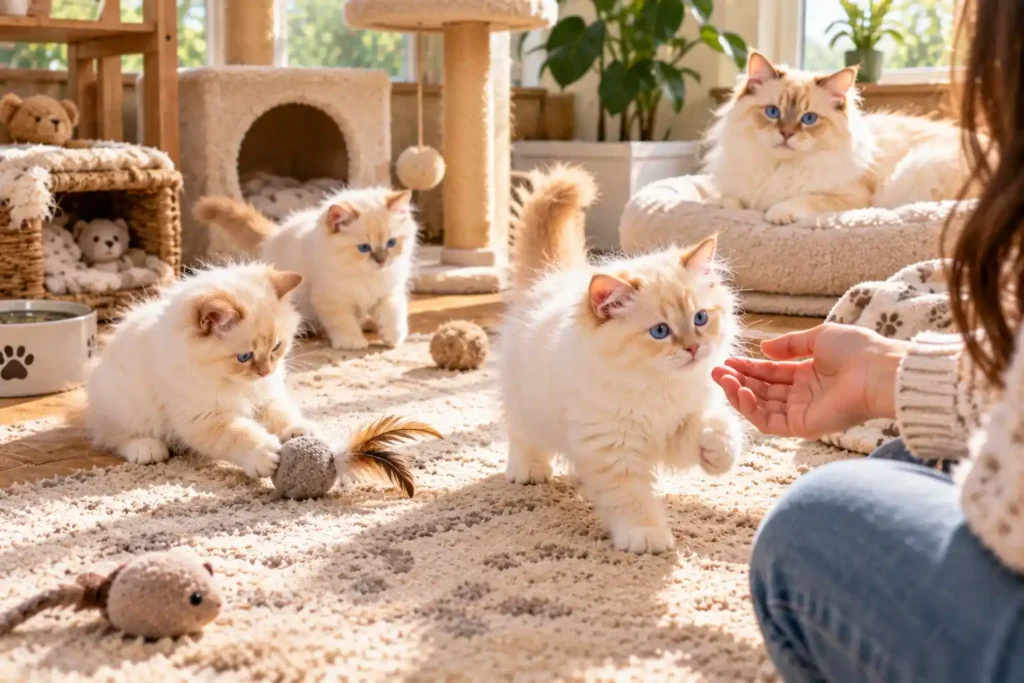
Look beyond coat colour. A healthy kitten should be alert, curious in an age-appropriate way, comfortable with gentle handling, and kept in a clean environment. Ask to see veterinary documentation and give the kitten time to approach you. The breeder should also ask questions about your home and explain how they support their kittens after adoption.
If the kitten’s colour is your main reason for choosing it, remember that the shade can change as it matures. Temperament, health history, socialisation, and whether you can meet the cat’s long-term care needs are more important than a particular shade of orange.
Flame Point Ragdoll Cat FAQs
What is a Flame Point Ragdoll cat?
It is a Ragdoll with red, orange, or apricot colourpoint markings. The same colour is also commonly called Red Point, depending on the registry or breeder terminology.
Are Flame Point Ragdolls always male?
No. They are more often male because the orange-colour gene is linked to the X chromosome, but female Flame Point Ragdolls are possible.
Are Flame Point Ragdolls purebred?
Flame Point describes colour, not pedigree. A cat can only be verified as a pedigreed Ragdoll through reliable registration and lineage records, not appearance alone.
Do Flame Point Ragdolls have blue eyes?
Traditional pointed Ragdolls have blue eyes under major breed standards. If eye colour or breed authenticity is important, check the pedigree and applicable registry standard rather than relying on a photograph.
What is the difference between Flame Point and Cream Point Ragdolls?
Flame points usually have stronger red or orange tones, while cream points are paler and less saturated. Lighting and age can make the colours difficult to distinguish in photos.
Do Flame Point Ragdolls change colour as they grow?
Yes. Point markings often become more visible as a kitten matures, and the coat can continue to develop into adulthood. The exact timing and shade vary between cats.
Are Flame Point Ragdolls rare?
Availability varies by region and breeder. A “rare” label does not prove pedigree, health, or breeding quality, so verify the records and the seller’s practices.
Are Flame Point Ragdolls good family cats?
Many Ragdolls adapt well to families, but individual temperament varies. Teach children respectful handling, supervise interactions, and provide quiet places where the cat can retreat.
How often should you groom a Flame Point Ragdoll?
Start with several combing sessions per week and adjust based on the coat, tangles, and shedding. Regular short sessions are usually easier than waiting until mats form.
Do Flame Point Ragdolls have special health problems?
There is no established reason to attribute a unique health problem to flame colouring itself. Ask about Ragdoll-relevant health history and screening, including HCM, and maintain routine veterinary care.
Sources and Editorial Note
This guide uses established breed references for colour terminology and general Ragdoll characteristics. For current standards, consult the Cat Fanciers’ Association Ragdoll Breed Profile and The International Cat Association Ragdoll Breed Profile. For general information about feline heart disease, see the Cornell Feline Health Center’s HCM Guide.
Ragdoll Care World provides educational breed and care information. This article is not a substitute for veterinary advice, and colour or pedigree claims should be verified through appropriate records and recognised breed organisations.