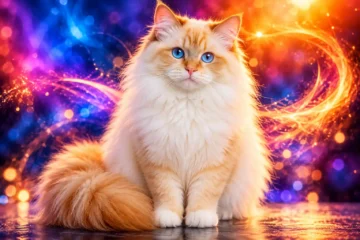
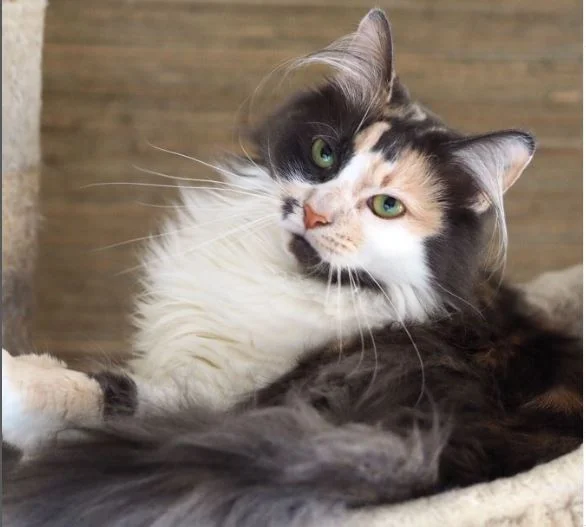
Search for a calico Ragdoll cat, and you will find plenty of stunning photos, plenty of confident claims, and surprisingly little agreement on what the term actually means. The short version is this: “calico Ragdoll” is an everyday phrase people use for a Ragdoll that shows white, orange, and dark patches together, and the closest official match in the breed standard is the tortie bicolor or tortie mitted Ragdoll. This guide explains exactly how that works, what is officially recognized, how the kitten’s color develops, and how to avoid paying a premium for a label that does not match the cat.
Quick answer: calico is a color pattern, not a breed. Purebred Ragdolls are not registered as “calico” under the CFA or TICA standards, but they can be tortie points with white markings, which look very much like a calico to most owners. Nearly all of them are female.
Updated September 2026. This guide was corrected and expanded to reflect current breed standard terminology, the genetics behind the pattern, and practical buying advice.
What Is a Calico Ragdoll Cat
A Ragdoll is a large, semi-longhaired breed known for a docile, people-oriented temperament and vivid blue eyes. Ragdolls are often called “puppy cats” because many follow their owners from room to room and enjoy being handled. Calico, on the other hand, is not a breed at all. It is a coat pattern that appears across many breeds, defined by three elements: white, an orange-based color, and a black-based color.
Put those together and you get the cat most people are picturing when they search for a calico Ragdoll: a Ragdoll body with patches of white, red or cream, and black, brown, or blue-gray.
The Genetics of Calico in Plain Language
Two separate mechanisms create a calico. The orange gene sits on the X chromosome, and a cat that carries one orange version and one non-orange version on its two X chromosomes shows both colors in patches, because each patch of skin randomly switches one X off. That produces the tortoiseshell effect. A second, independent gene, the white spotting gene, then leaves some areas completely unpigmented, which is what adds the white and turns a tortie into a calico.
How This Works in a Colorpoint Breed Like the Ragdoll
Ragdolls carry the colorpoint gene, a heat-sensitive form of partial albinism that limits dark pigment to the cooler extremities: the face, ears, legs, and tail. Because of this, a Ragdoll’s body is pale and only the points carry color. A tortie Ragdoll therefore shows mottled red, cream, and dark shades on its points rather than across its whole body. Add the white spotting gene expressed as a mitted or bicolor pattern, and the cat has white paws, chin, or an inverted V on the face alongside tortie points. That combination is what most people call a calico Ragdoll. To see the same idea explained for the tortoiseshell variety, read our guide to the Tortoiseshell Calico Ragdoll Cat.
Is a Calico Ragdoll Officially Recognized
Not under that name. The Ragdoll breed is recognized by both The International Cat Association (TICA) and The Cat Fanciers’ Association (CFA), and the standard covers colorpoint, mitted, and bicolor patterns in seal, chocolate, red, and their dilutes blue, lilac, and cream, plus lynx (tabby-striped) and tortie variations. Calico itself is not listed as a separate accepted Ragdoll color. What breeders register is a tortie bicolor or tortie mitted Ragdoll, for example a seal tortie bicolor or a blue cream tortie mitted.
This matters for buyers. A vet-reviewed explanation from Catster points out that a purebred Ragdoll cannot officially be calico under the breed standard, and a cat with true whole-body calico patches alongside Ragdoll traits is more likely to be a mixed-breed cat. Persians, which do come in calico, are sometimes crossed with Ragdolls, which is one way that look can appear. A seller who presents “Calico Ragdoll” as its own rare breed deserves extra questions.
Physical Traits of a Calico-Looking Ragdoll
| Feature | Description |
|---|---|
| Size | Large; males 12 to 20 lbs, females 8 to 15 lbs |
| Coat | Semi-longhaired, soft, silky, minimal undercoat |
| Color pattern | Tortie points (red or cream mixed with dark shades) with white in a mitted or bicolor pattern |
| Eyes | Vivid blue, required by the breed standard |
| Sex | Almost always female |
| Maturity | Slow; full size and coat at about 3 to 4 years |
The fur is soft and silky and does not mat as readily as many longhaired breeds, though brushing two to three times a week still keeps it in good shape. Each cat’s patch layout is unique, so two cats in the same litter can look quite different from each other. Eye color is fixed by the colorpoint gene, which is why every purebred Ragdoll, calico-looking or not, has blue eyes. Our Ragdoll Eye Color Chart explains the range of blue shades.
Calico Ragdoll Kittens: How the Color Develops
Here the original version of this guide had a common mix-up. Ragdoll kittens are born white, but that is because of the colorpoint gene, not because of the calico pattern. Ordinary calico kittens in other breeds are born with their patches visible. In a Ragdoll, the points appear gradually as the kitten’s extremities cool relative to its body.
Birth to Two Weeks
The kitten looks almost entirely white, because body temperature is uniform in the womb and in the first days of life. Nothing can be predicted reliably about the final pattern yet.
Two to Eight Weeks
Pale shading appears on the nose, ears, and tail. In a tortie kitten, hints of cream or red may start to show in patches. Breeders with experience can often tell a tortie by about this age, though it is still an educated guess.
Eight Weeks to Full Maturity
Good color is typically visible by 8 to 10 weeks, and the points keep darkening and evolving for up to two years or more, with full coat and color often settling in around three to four years. A kitten can look quite different by adulthood, so a photo at eight weeks is only a preview.
What Is the Difference Between Calico and Tortie Ragdolls
The two are closely related and often confused. The only difference in the underlying genetics is the white spotting gene: a tortie has orange and dark colors, and a calico has those same colors plus white patches.
| Feature | Tortie Ragdoll | Calico-Looking Ragdoll |
|---|---|---|
| Colors | Orange (or cream) and dark, blended together | Orange, dark, and white in distinct patches |
| White spotting gene | Absent | Present |
| Official Ragdoll name | Tortie (colorpoint) | Tortie bicolor or tortie mitted |
| Look | Mottled, “painted” points | Mottled points plus white paws, chin, or facial V |
| Sex | Almost always female | Almost always female |
If a Ragdoll shows patches of red or cream mixed into its dark points and also has white paws, a white chin, or a white inverted V on the face, it is a tortie bicolor or mitted. Without any white, it is a plain tortie. For related pattern comparisons, see our guides to the Blue Mitted Ragdoll Cat and the Tuxedo Black and White Ragdoll Cat.
Are Male Calico Ragdolls Real
Almost never, and the reason comes straight from the X chromosome genetics above. A cat needs two different X chromosomes to show both orange and dark colors, so females are the natural fit. A male calico is usually the result of a chromosome abnormality, most often XXY, known as Klinefelter syndrome, and a commonly cited estimate is that only about 1 in 3,000 calico cats is male. These males are frequently sterile and may have additional health considerations, so a seller advertising a male calico Ragdoll as a breeding cat should be asked for veterinary genetic documentation. In a Ragdoll specifically, the pattern would additionally depend on the colorpoint gene, which makes verified cases far rarer still.
Personality and Temperament
Coat color does not determine temperament, and there is no scientific evidence that it does. A calico-looking Ragdoll behaves the way a Ragdoll does: gentle, affectionate, and strongly attached to its people. Many follow their owners around the house, tolerate handling well, and get along with children, dogs, and other cats.
Playful, Curious, and Trainable
Although calm, Ragdolls are intelligent and enjoy interactive play. Many learn their names and simple routines, and puzzle feeders and wand toys keep them mentally engaged.
What About “Tortitude”
Some owners of tortie and calico cats report a feisty, sassy streak, jokingly called tortitude. This is anecdotal, not proven, and any individual Ragdoll’s personality is shaped far more by its parents, early handling, and home environment than by its coat.
5 Interesting Facts About Calico Ragdoll Cats
1. Male Calicos Are Extremely Rare
Only about 1 in 3,000 calico cats is male, and those males typically carry an extra X chromosome (XXY), which usually makes them sterile.
2. They Are Considered Lucky
In Japan, three-colored cats known as mi-ke are considered good luck, and the beckoning cat figure, Maneki-neko, is traditionally shown in calico coloring and associated with prosperity.
3. No Two Are Alike
The placement of patches is effectively random, because it depends on which X chromosome switches off in each patch of skin during development.
4. They Can Live a Long Time
With good care, a Ragdoll typically lives 12 to 17 years. Our guide on the lifespan of a Ragdoll cat covers what influences that range.
5. Calico Is a Pattern, Not a Breed
Calico appears in many breeds, including the American Shorthair and the Persian. It is not tied to any single breed, and a Ragdoll’s colorpoint gene changes how it displays.
Health and Care Considerations
Color genes and health genes are inherited separately, so a calico-looking Ragdoll faces the same health picture as any other Ragdoll. The main breed-level concern is hypertrophic cardiomyopathy, covered in our complete HCM guide, along with a lower documented kidney risk explained in our PKD guide. Routine dental care and a balanced diet also matter, and our overview of common Ragdoll health problems links to each topic in depth.
How to Check a Calico-Looking Ragdoll Before You Buy
Because “calico Ragdoll” is an informal label, a little verification protects you:
- Ask what color and pattern are written on the kitten’s registration papers. A genuine one will read something like “seal tortie bicolor,” not “calico.”
- Look for the colorpoint signs: a pale body with color concentrated on the face, ears, legs, and tail, and vivid blue eyes.
- Ask to see both parents, or clear photos of them, and confirm the mother carries tortie coloring if the kitten is a tortie.
- Request HCM genetic test results on both parents, the same standard health screening that applies to every Ragdoll.
- Be cautious if a listing calls this a separate rare breed or attaches a premium price to the word calico alone.
- If certainty matters, a DNA test through a veterinary genetics lab can help confirm ancestry and coat genetics.
How Much Does a Calico Ragdoll Cost
Purebred Ragdoll kittens from health-tested breeders commonly range from about $1,200 to $2,500, with less common colors and patterns sometimes at the higher end. There is no fixed market price for a “calico Ragdoll,” because it is not an official variety. Price alone is not proof of pedigree, so verify papers and health testing before paying a premium.
Frequently Asked Questions
Can Ragdoll cats be calico
Not officially. Purebred Ragdolls are registered as tortie bicolor or tortie mitted rather than calico, though the two look very similar. A cat with true calico patches over its whole body plus Ragdoll traits is more likely to be mixed.
Are calico Ragdolls officially recognized
Calico is not a separate accepted Ragdoll color, but tortie variations in colorpoint, mitted, and bicolor patterns are recognized within the breed.
What is the difference between calico and tortie Ragdolls
Torties have only orange and dark colors blended together. Calicos have the same colors plus distinct white patches, caused by the white spotting gene.
Are male calico Ragdolls rare
Extremely. Roughly 1 in 3,000 calico cats is male, and those males usually have an extra X chromosome (XXY) and are often sterile.
Do calico Ragdolls have blue eyes
Purebred Ragdolls do. Blue eyes are a breed standard requirement, controlled by the colorpoint gene, regardless of coat pattern.
Are calico Ragdolls friendly
Yes. Friendliness comes from the breed and the individual cat, not the color. Ragdolls are typically gentle, affectionate, and good with families and other pets.
How long do calico Ragdolls live
Typically 12 to 17 years with good preventive care, similar to other Ragdolls.
Related Topics and Search Terms Covered in This Guide
Secondary keywords: calico Ragdoll cat, calico Ragdoll kitten, tortie Ragdoll, tortie bicolor Ragdoll, Ragdoll cat colors, tricolor Ragdoll.
Related topics: Ragdoll color genetics, white spotting gene, X-linked orange gene, male calico cats, Ragdoll mitted pattern, Ragdoll bicolor pattern, Ragdoll breed standard colors.
Related terms: colorpoint restriction, temperature-sensitive pigment, Klinefelter syndrome in cats, torbie, dilute calico, TICA and CFA registration, tortitude.
People also search: can a Ragdoll be calico, are calico Ragdolls rare, how much does a calico Ragdoll cost, calico vs tortie Ragdoll, how to tell if a Ragdoll is a tortie bicolor.
People also ask: Can Ragdoll cats be calico. Are calico Ragdolls officially recognized. What is the difference between calico and tortie Ragdolls. Are male calico Ragdolls rare. Do calico Ragdolls have blue eyes. Are calico Ragdolls friendly. How long do calico Ragdolls live.
Sources and Further Reading
- The Cat Fanciers’ Association (CFA) – Ragdoll Breed Standard
- The International Cat Association (TICA) – Ragdoll Breed Standard
- Catster (Vet-Verified) – Can Ragdoll Cats Be Calico
- UC Davis Veterinary Genetics Laboratory – Ragdoll Testing
This article is for general informational purposes and is not a substitute for advice from a licensed veterinarian, particularly regarding HCM screening. This guide will be reviewed and updated periodically as breed standards and research evolve.
Conclusion
A calico-looking Ragdoll is a real and beautiful cat, just not quite the official breed variety the name suggests. Understanding that it is a tortie bicolor or mitted, that nearly all are female, and that its color keeps developing for years helps you enjoy the cat you have and shop wisely for one. With gentle temperament, striking blue eyes, and a one-of-a-kind coat, this is a wonderful companion for families, singles, and anyone who wants a loyal, affectionate cat, as long as you verify what you are actually being sold.
Do you own a tortie or calico-looking Ragdoll. Share how your cat’s colors developed in the comments, it helps other owners know what to expect.