Hypertrophic cardiomyopathy, almost always shortened to HCM, is the single most important health topic in Ragdoll ownership, more relevant than any color variation or coat pattern. This guide covers what HCM actually is, the specific genetic mutation identified in this breed, what a genetic test result really means, how the disease is diagnosed and staged, and what it means for you as a current or future Ragdoll owner.
Published September 2026. This guide is for general education and is not a substitute for an in-person veterinary or veterinary cardiology exam.
What Hypertrophic Cardiomyopathy Actually Is
Hypertrophic cardiomyopathy is a disease of the heart muscle itself, not the valves or the arteries. The walls of the left ventricle, the heart’s main pumping chamber, thicken abnormally over time. A thicker wall sounds like it should be stronger, but the opposite happens. The chamber has less room to fill with blood between beats, the muscle becomes stiffer, and over time the heart struggles to pump efficiently.
According to the UC Davis School of Veterinary Medicine, HCM is the most common feline cardiac disease overall, affecting roughly one in seven cats across all breeds. Ragdolls, along with Maine Coons, British Shorthairs, and several other breeds, are specifically flagged as higher risk due to identified genetic mutations.
The Ragdoll-Specific Mutation: MYBPC3 R820W
This is worth explaining properly, because a lot of general cat health content lumps Ragdolls and Maine Coons together as though they share the same genetic mutation. They do not. Both breeds have identified mutations in the same gene, MYBPC3, which encodes a protein involved in heart muscle structure, but the specific mutations are different. Maine Coons carry a mutation called A31P. Ragdolls carry a separate mutation called R820W, identified specifically in this breed.
This distinction matters practically. A genetic test built for the Maine Coon mutation will not detect the Ragdoll mutation, and vice versa. If you are having a Ragdoll tested, make sure the lab is specifically testing for the Ragdoll-associated R820W variant, not a generic feline HCM panel that may only screen for the Maine Coon mutation.
Genetic Testing: What Homozygous vs Heterozygous Actually Means
The UC Davis Veterinary Genetics Laboratory breaks Ragdoll HCM genetic results into three outcomes, and the difference between them is significant enough that it is worth understanding in detail before testing a cat.
- N/N (negative): the cat carries no copies of the R820W mutation, is not predicted to be at increased genetic risk for this specific form of HCM, and cannot pass the mutation to offspring.
- N/HCMrd (heterozygous, one copy): the cat carries one copy of the mutation. These cats are not likely to show signs of disease and may live a normal lifespan, but will pass the mutation to roughly 50 percent of their offspring if bred.
- HCMrd/HCMrd (homozygous, two copies): the cat carries two copies of the mutation and is at high risk of developing severe HCM, often as early as one to two years of age, with a meaningfully higher likelihood of early cardiac death.
The inheritance pattern is autosomal dominant with incomplete penetrance, meaning a single copy is enough to potentially cause disease, but not every carrier will actually develop clinical signs. This is also why responsible breeding programs avoid pairing two carrier cats, since that pairing risks producing homozygous kittens with the most severe outcome.
The Honest Limits of Genetic Testing
A genetic test is a genuinely useful tool, but it is not a complete guarantee in either direction, and reputable sources are upfront about this. Some cats that test negative for the known mutation still go on to develop HCM, since other genes and non-genetic factors can also cause the disease. Some cats that test positive as carriers never develop detectable heart changes at all. A negative genetic test lowers risk meaningfully but does not eliminate the value of routine cardiac screening throughout a cat’s life.
Symptoms and Warning Signs
This is the hardest part of HCM to manage as an owner: most cats show no symptoms at all until the disease has already progressed significantly. When signs do appear, they can include:
- Lethargy or a noticeable drop in activity and playfulness
- Reduced appetite
- Rapid or labored breathing, sometimes with an open-mouth breathing pattern, which is abnormal in cats and always worth urgent attention
- A heart murmur or an irregular heart rhythm noted by your vet, though many cats with HCM have no audible murmur at all
- Weakness or collapse
One specific emergency sign deserves its own explanation, since it is dramatic, frightening, and directly tied to HCM. Arterial thromboembolism, sometimes called a saddle thrombus, happens when a blood clot forms in the heart due to poor blood flow and travels to lodge in an artery, most often where the aorta splits toward the back legs. This causes sudden, severe pain, paralysis or weakness in the hind legs, cold back paws, and labored breathing, all appearing within minutes. This is a genuine emergency requiring immediate veterinary care, and it is sometimes the first visible sign of HCM an owner ever sees.
How HCM Is Diagnosed
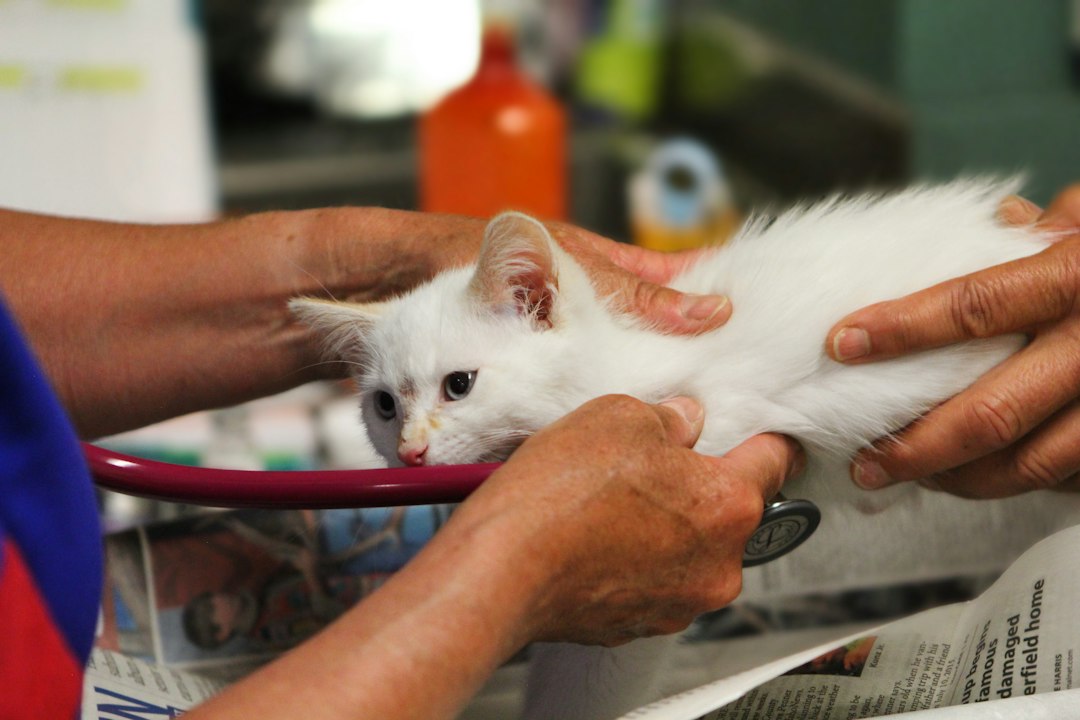
Diagnosis requires more than a stethoscope. An echocardiogram, an ultrasound of the heart, is the definitive tool, since it directly measures wall thickness and can only be reliably interpreted by someone experienced in feline cardiac imaging, typically a veterinary cardiologist. According to Cats.com, subclinical HCM is generally defined as a left ventricular wall thickness of 6 millimeters or more measured at end diastole.
A blood test called NT-proBNP can help flag cats that need further cardiac workup, and it is sometimes used as an initial screening step, though it is not a replacement for an echocardiogram. Diagnosis also requires ruling out secondary causes of heart wall thickening, including high blood pressure and hyperthyroidism, since these produce similar changes without being true genetic HCM.
How Vets Stage HCM Severity
Veterinary cardiologists commonly use a staging system, adapted from the ACVIM (American College of Veterinary Internal Medicine) consensus framework, to describe how advanced a cat’s HCM is and to guide treatment decisions:
- Stage A: a breed known to be at risk, with no current evidence of heart disease
- Stage B1: heart changes are present on echocardiogram, but the cat is not currently at high risk of heart failure or clot formation
- Stage B2: heart changes are present with a meaningfully increased risk of heart failure or thromboembolism, and this is typically the point where medication is introduced
- Stage C: the cat has current or past signs of congestive heart failure or has already experienced a thromboembolic event
- Stage D: heart failure that is no longer responding adequately to standard treatment
Knowing your cat’s stage, not just the diagnosis itself, is what actually determines a realistic treatment plan and prognosis conversation with your vet.
Treatment Options
There is no cure for HCM, and existing heart muscle thickening cannot be reversed. Treatment goals shift depending on stage, generally focused on slowing progression, managing symptoms, and reducing the risk of heart failure or clot formation once treatment is warranted. This commonly includes:
- Medications to help the heart relax and fill more efficiently, or to manage heart rate and rhythm
- Anti-clotting medication once risk of thromboembolism becomes a concern
- Diuretics and other medications if congestive heart failure develops, to help manage fluid buildup
- Regular rechecks and follow-up echocardiograms to track progression and adjust treatment over time
Newer cardiac medications, including cardiac myosin inhibitors that have shown promise in human HCM treatment, are an active area of veterinary research, though availability and evidence specific to cats is still developing as of this update.
Life Expectancy and Outlook
Outlook varies enormously depending on genetic status, stage at diagnosis, and how early treatment begins. A heterozygous carrier that never develops detectable heart changes may live a completely normal lifespan. A homozygous cat diagnosed with severe disease at one to two years of age faces a meaningfully more guarded prognosis. Cats caught and monitored at stage B1 or B2, before heart failure develops, generally do better long term than cats first diagnosed after a heart failure episode or a thromboembolic event. This is exactly why annual cardiac screening in at-risk breeds matters more than waiting for symptoms, since HCM is one of the clearest examples of a disease where early detection genuinely changes outcomes. For the broader picture of how preventive care affects Ragdoll longevity overall, see our guide on the lifespan of a Ragdoll cat.
What This Means If You Are Buying a Ragdoll Kitten
A practical checklist for prospective owners:
- Ask for HCM genetic test results on both parents, specifically confirming testing for the Ragdoll R820W mutation, not a generic feline HCM panel.
- Ask whether either parent has had an echocardiogram, since genetic testing and imaging answer different questions and both add useful information.
- Ask for PKD genetic test results as well, since it is a separate but similarly important screening question for the breed.
- A negative HCM result on both parents substantially lowers, though does not entirely eliminate, the risk to a kitten, given the genetic complexity discussed above.
- Plan for annual cardiac screening as your cat matures, even with a favorable genetic background, since HCM can still develop from causes beyond the known mutation.
People Also Ask: HCM in Ragdoll Cats FAQ
1. Are Ragdoll cats prone to heart disease
Yes. Ragdolls are one of a small number of breeds with an identified genetic mutation, MYBPC3 R820W, specifically linked to hypertrophic cardiomyopathy. This is why genetic testing and routine cardiac screening are widely recommended for the breed, particularly for cats intended for breeding.
2. Can HCM in cats be cured
No. There is currently no cure for HCM, and existing heart muscle thickening cannot be reversed. Treatment focuses on managing symptoms, slowing progression, and reducing the risk of complications like heart failure or blood clots.
3. How do you test a Ragdoll cat for HCM
There are two separate methods. A genetic test, using a blood sample or cheek swab, checks specifically for the Ragdoll-associated R820W mutation and can be done at any age. An echocardiogram, performed by a vet or veterinary cardiologist, checks for actual physical changes to the heart and is recommended as ongoing annual screening regardless of genetic test results.
4. What are the early signs of HCM in cats
Most cats show no early signs at all, which is what makes HCM particularly difficult to catch without screening. When symptoms do appear, they can include lethargy, reduced appetite, and labored breathing, though a heart murmur may or may not be present. A sudden inability to use the hind legs, caused by a blood clot, can be the first visible sign in some cats and is a medical emergency.
5. How long can a Ragdoll cat live with HCM
This varies enormously based on genetic status and stage at diagnosis. Heterozygous carriers without detectable heart changes may live a normal lifespan. Homozygous cats with severe early-onset disease face a more guarded outlook, sometimes with serious signs appearing as early as one to two years of age. Early detection through screening meaningfully improves outcomes in cats diagnosed before heart failure develops.
6. Is hypertrophic cardiomyopathy in Ragdolls genetic
Yes, in identified cases. Ragdolls carry a specific mutation in the MYBPC3 gene called R820W, inherited in an autosomal dominant pattern with incomplete penetrance. However, some cats develop HCM without carrying this known mutation, meaning other genetic or non-genetic factors can also be involved.
7. How much does HCM genetic testing cost for a Ragdoll
Cost varies by lab and location, but genetic testing for the Ragdoll R820W mutation is generally an affordable single-gene test using a blood or cheek swab sample. Checking directly with a certified veterinary genetics lab gives the most accurate current pricing, and it is significantly less expensive than an echocardiogram with a veterinary cardiologist.
Sources and Further Reading
This guide is based on published veterinary research and genetics laboratory data rather than general pet blog claims. For deeper reading:
- UC Davis Veterinary Genetics Laboratory – Hypertrophic Cardiomyopathy in Ragdolls
- UC Davis School of Veterinary Medicine – Hypertrophic Cardiomyopathy
- Cats.com – Hypertrophic Cardiomyopathy in Cats
- Clinical-Diagnostic and Therapeutic Advances in Feline Hypertrophic Cardiomyopathy (peer-reviewed)
This article is for general educational purposes and is not a substitute for an in-person veterinary examination or evaluation by a veterinary cardiologist. If your cat is showing signs of breathing difficulty, collapse, or hind leg weakness, seek emergency veterinary care immediately. This guide will be reviewed and updated periodically as veterinary research evolves.
Final Thoughts
HCM is the most serious health consideration in Ragdoll ownership, and it deserves to be treated that way, without becoming a source of constant anxiety. The disease is manageable when caught early, genetic testing and annual cardiac screening are both accessible and genuinely informative, and a diagnosis at an early stage is a very different situation from a diagnosis after heart failure has already developed. Whether you are choosing a breeder or caring for a Ragdoll you already love, making HCM screening a routine part of that relationship, rather than an afterthought, is the single most impactful thing you can do for your cat’s long-term health.
Has your Ragdoll been screened for HCM, or gone through genetic testing before you brought them home. Share your experience in the comments, it helps other owners know what to expect and what to ask.