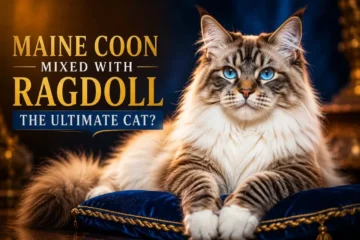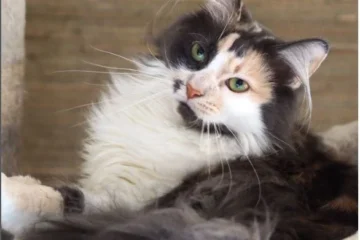
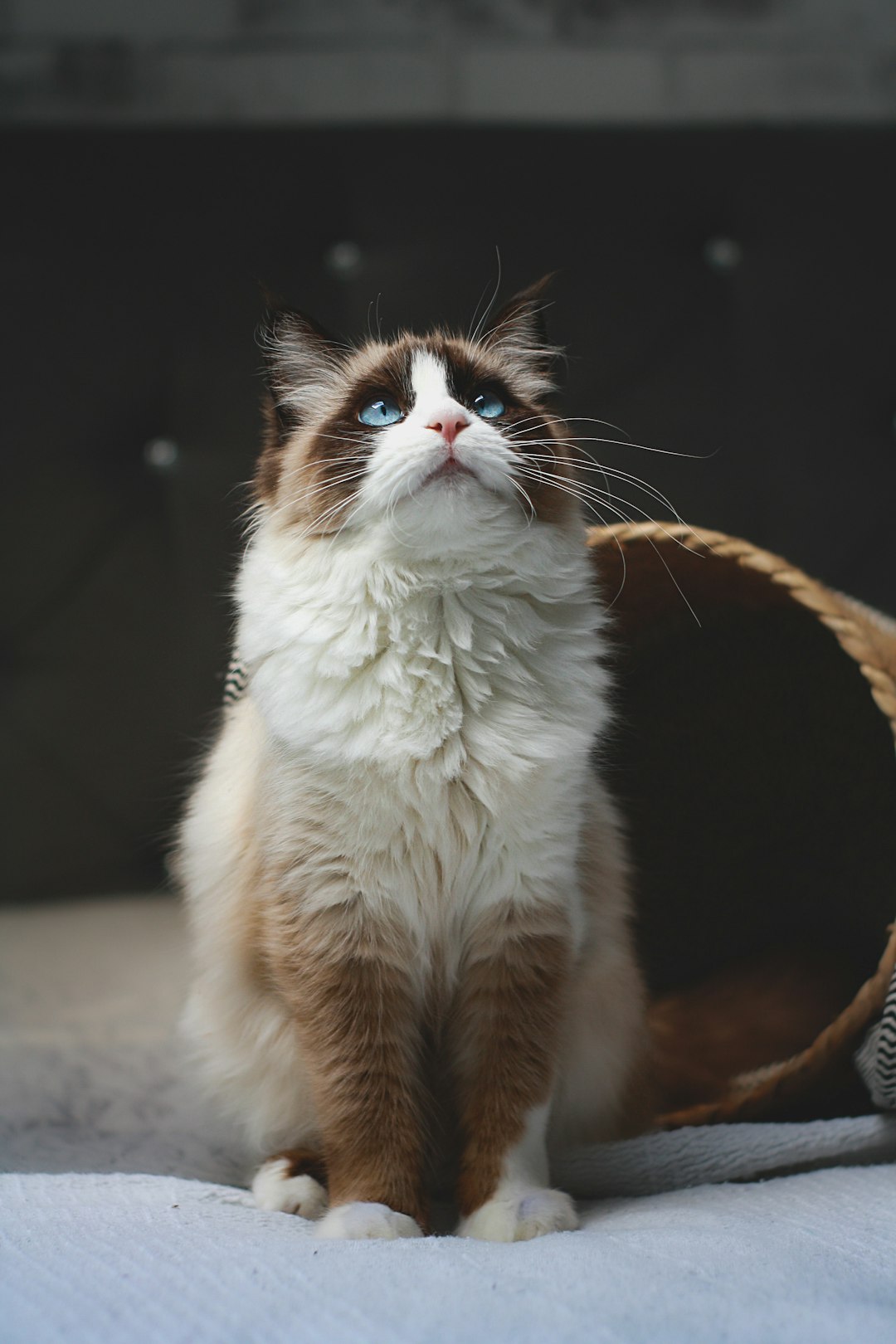
Bicolor Ragdoll cats are one of the three core patterns in the breed, known for their striking white “V” facial marking, affectionate temperament, and vivid blue eyes. This guide covers what officially makes a cat bicolor rather than mitted, every recognized color variation, the physical and personality traits shared across all bicolors, care and health considerations, and honest pricing, expanded well beyond a simple color list.
Updated September 2026.
What Is a Bicolor Ragdoll Cat
Ragdoll cats come in six recognized base colors, seal, blue, chocolate, lilac, red, and cream, combined with one of three core patterns: colorpoint, mitted, and bicolor. Both The Cat Fanciers’ Association (CFA) and The International Cat Association (TICA) recognize all three.
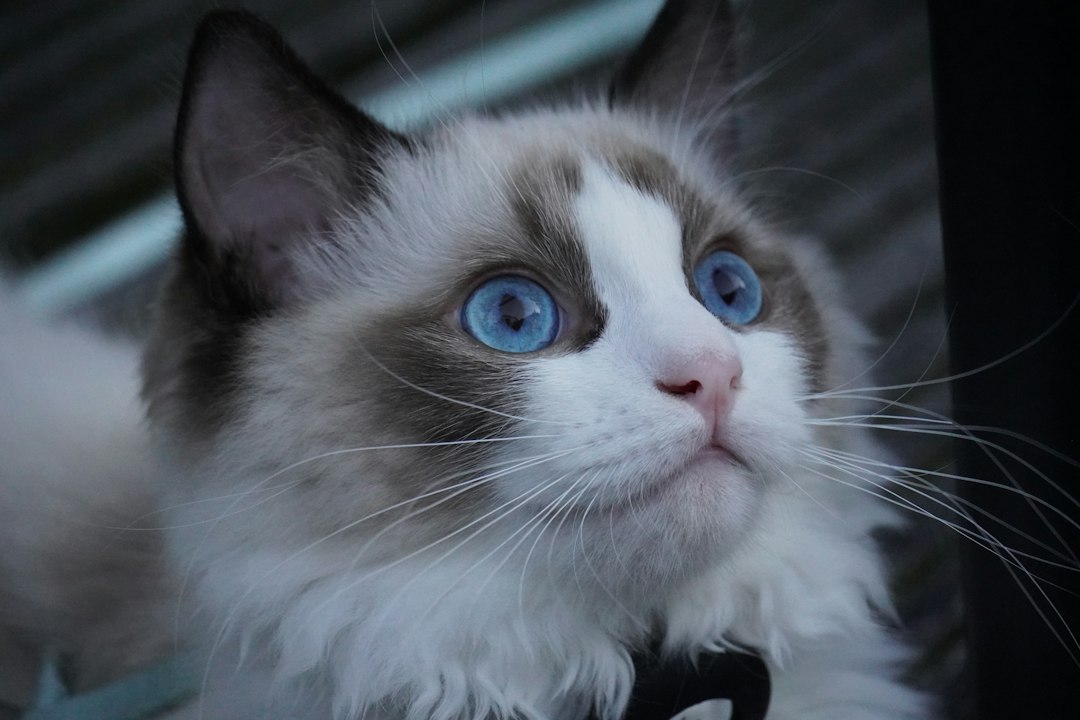
The bicolor pattern is defined by an inverted, symmetrical white “V” mask across the face, a mostly white body, and color confined to the ears, tail, and a saddle of color across the back. The nose leather and paw pads are pink. Genetically, bicolor Ragdolls carry a dominant white spotting gene expressed at a higher level than the gene responsible for the mitted pattern, which is what produces the larger white areas.
The Four Grades of White Spotting: Mitted to Van
This is the part most simple color guides skip, and it is the single most useful thing to understand if you want to correctly identify a bicolor Ragdoll rather than a mitted one. White spotting in Ragdolls exists on a spectrum, not as a strict either-or choice, and four recognized grades sit along it:
- Mitted: the least amount of white, confined to the front paws (mittens), the back legs (boots), the chin, and sometimes a thin belly stripe. No facial V. Our Blue Mitted Ragdoll guide covers this pattern in depth.
- True Bicolor (and High Mitted): a clear inverted white V on the face, a white body, and color limited to the ears, tail, and a saddle across the back. High Mitted looks visually identical to True Bicolor but comes from breeding two mitted parents together rather than two bicolor parents, a genetic difference with no visible effect on the adult cat.
- Mid-High White: a transitional grade with even more white than standard bicolor, sometimes showing a spotted or patchy back saddle instead of a solid one.
- Van (High White): the most extreme grade. Color is reduced to just the top of the head, the ears, and the tail, with the entire body, including the back, pure white. True Van Ragdolls are uncommon and not accepted for showing under every registry, though they can still be registered and bred.
The single most reliable way to tell mitted and bicolor apart at a glance is the face. A mitted Ragdoll has a solid-colored face with no white V. Any Ragdoll with a clear white inverted V running from the forehead down through the nose is a bicolor of some grade, regardless of how much white appears elsewhere on the body.
Bicolor Ragdoll Kittens
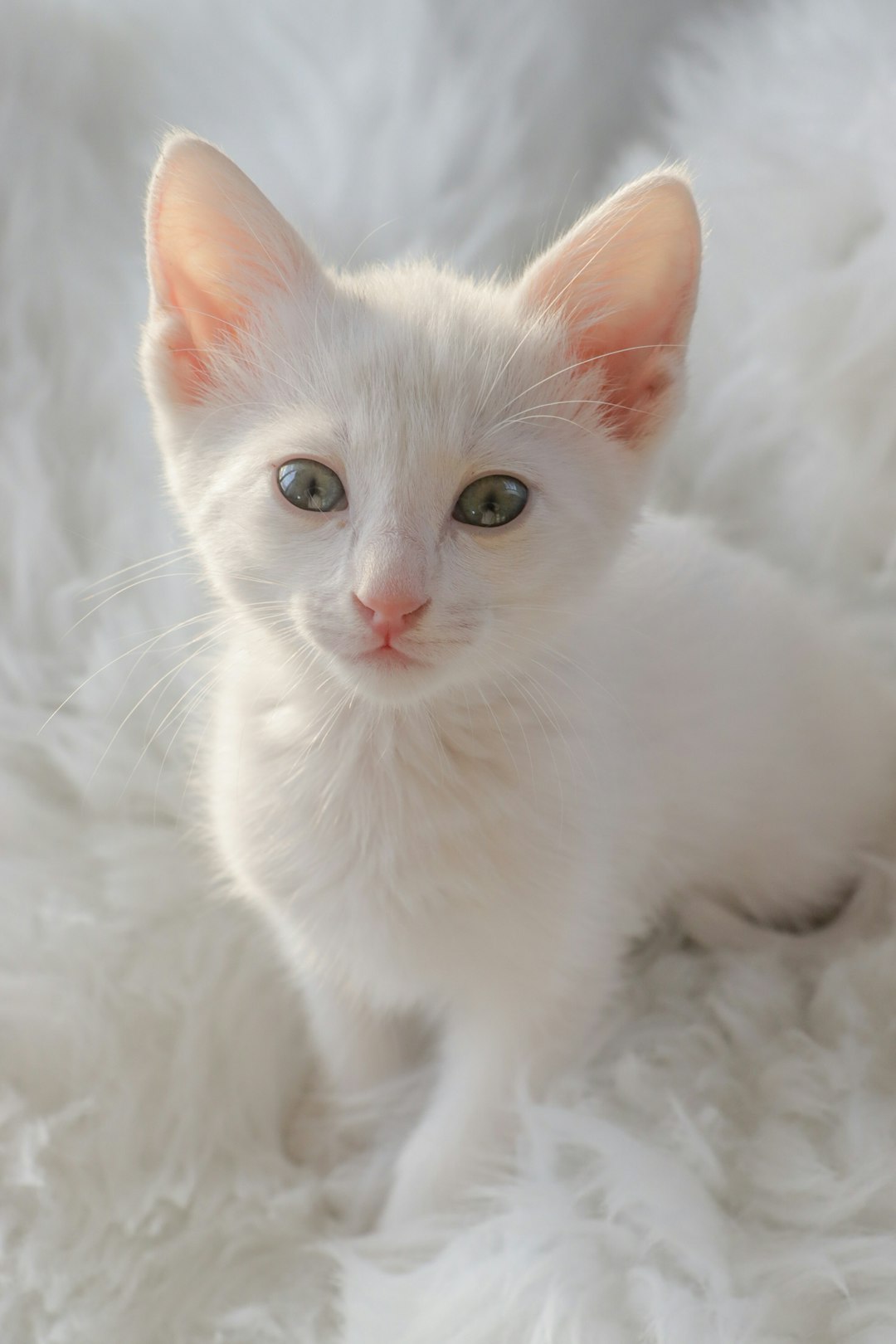
Bicolor Ragdoll kittens are born almost completely white, since the colorpoint gene responsible for point color is heat-sensitive and only activates once the kitten’s extremities cool relative to its body. Markings begin appearing gradually over the first few weeks, and the final pattern, including exactly how the white spotting settles, is not fully clear until several months in. Reputable breeders generally keep kittens until at least 12 to 16 weeks of age before sending them to new homes, allowing more time for proper socialization and a clearer view of the adult coat than a kitten sent home earlier would show.
Ragdolls are known for a notably slow growth rate compared to most breeds, and a bicolor Ragdoll may not reach full adult size, coat length, and final color depth until around three to four years of age.
Color Variations of Bicolor Ragdolls
Bicolor can appear in any of the six recognized Ragdoll base colors, with seal and blue being the two most common. Below is a closer look at each.
Seal Bicolor Ragdoll
Seal bicolor Ragdolls have dark, seal-brown markings on the ears, tail, and the saddle across the back, contrasting strongly against pristine white fur on the legs, chest, and underbelly. The seal points tend to darken further as the cat ages. Seal is the most common and easily recognized bicolor variation.
Blue Bicolor Ragdoll
Blue bicolor Ragdolls carry cooler, bluish-gray points on the ears, tail, and back saddle, against the same white body and facial V pattern. Blue is a dilute version of seal, produced when a cat inherits two copies of a recessive dilution gene.
Chocolate Bicolor Ragdoll
Chocolate bicolor Ragdolls have warm, milk-chocolate brown points, genuinely rare compared to seal or blue, since chocolate requires a recessive gene on top of the base color genetics.
Lilac Bicolor Ragdoll
Lilac bicolor Ragdolls carry a delicate, pinkish-gray point color, the dilute version of chocolate. Because lilac requires both the chocolate gene and the dilution gene together, it is one of the rarest and slowest-developing Ragdoll colors, and the full lilac point color can take a long time to settle in completely.
Red Bicolor (Flame Bicolor) Ragdoll
Red bicolor, commonly called flame bicolor, features bright reddish-orange points against the white body. Because the red gene is X-linked, most flame bicolors are male, and even “solid” red points carry faint underlying tabby striping due to the agouti gene, visible if you look closely in good light.
Cream Bicolor Ragdoll
Cream bicolor Ragdolls carry the dilute version of red, a soft, buttery-pale point color rather than the more vivid orange of a red bicolor. Cream is relatively rare compared to seal or blue.
Bicolor Combined With Other Patterns: Tortie and Lynx Bicolor
The bicolor pattern can also combine with two additional traits, which is where a lot of buyer confusion comes from.
Tortie bicolor combines the bicolor white pattern with mottled red and dark patches on the points, produced by the same X-linked orange gene responsible for tortoiseshell coloring. Because of that X-linked inheritance, tortie bicolors are almost always female. This is the pattern most people informally call a “calico Ragdoll,” covered in full in our guides on the Calico Ragdoll Cat and the Tortoiseshell Calico Ragdoll Cat.
Lynx bicolor combines the bicolor white pattern with tabby striping on the points, produced by the agouti gene. A seal lynx bicolor, for example, has the same white body and facial V as a standard seal bicolor, but with visible striped markings on the ears, tail, and back saddle rather than a solid color.
Physical Characteristics
| Feature | Description |
|---|---|
| Size | Large; males 12 to 20 lbs, females 8 to 15 lbs |
| Coat | Semi-longhaired, soft, silky, minimal undercoat |
| Eyes | Large, oval, vivid blue, required across all Ragdoll patterns |
| Nose and paw pads | Pink |
| Facial marking | Symmetrical inverted white V, unique to the bicolor pattern |
| Maturity | Full size and coat around 3 to 4 years |
Personality and Temperament
Coat pattern has no bearing on temperament, since color and pattern genes are inherited separately from personality traits. A bicolor Ragdoll carries the same gentle, easygoing nature the breed is known for.
Affectionate and People-Oriented
Bicolor Ragdolls tend to seek out physical closeness, often following their favorite person from room to room, which has earned the breed the nickname “puppy cat.”
Calm and Relaxed
Many Ragdolls go limp when picked up, the trait the breed is named for, and this bicolor pattern carries the same relaxed temperament as any other color or pattern in the breed.
Sociable With Other Pets
Bicolor Ragdolls generally adapt well to households with children, dogs, and other cats, thanks to a tolerant, low-aggression temperament typical of the breed.
Care and Grooming
Brush a bicolor Ragdoll two to three times weekly with a stainless steel comb or slicker brush. The coat has minimal undercoat and resists matting better than a Persian’s, but regular brushing still reduces shedding and hairball frequency, covered in more depth in our guide on hairballs in Ragdoll cats. White fur around the face and paws can show dirt more visibly than darker patterns, so a quick check during brushing sessions helps keep the coat looking clean.
Health Considerations
Coat pattern has no effect on health risk, so a bicolor Ragdoll carries the same breed-wide considerations as any other Ragdoll:
- Hypertrophic cardiomyopathy (HCM): an identified genetic risk in the breed. Our complete HCM guide covers genetic testing and what to ask a breeder.
- Polycystic kidney disease (PKD): a much lower documented risk than commonly assumed, covered in our PKD guide.
- Dental disease: regular brushing and checkups help manage this common concern, detailed in our dental care guide.
Our overview of common Ragdoll health problems links to each topic in more depth.
How to Verify a Bicolor Ragdoll Before You Buy
- Check for a clear, symmetrical white V on the face. Without it, the cat is mitted or another pattern, not bicolor.
- Ask what grade the breeder considers the kitten (true bicolor, high mitted, mid-high white, or van), since this affects both appearance and, for van, show eligibility.
- Ask for HCM genetic test results on both parents, the same standard health screening question that applies to every Ragdoll color and pattern.
- Ask to see both parent cats, or clear photos of them, to confirm the pattern claims match what you would expect genetically.
- Be cautious of a price well below the typical range paired with vague answers about registration or health testing.
How Much Does a Bicolor Ragdoll Cost
Purebred bicolor Ragdoll kittens from health-tested breeders commonly range from about $1,200 to $2,500, with rarer colors like chocolate and lilac, or a well-marked Van pattern, sometimes priced higher. Price alone is not proof of pedigree or health testing, always verify papers and genetic test results directly.
Frequently Asked Questions About Bicolor Ragdolls
What is the difference between a mitted and a bicolor Ragdoll
The face is the deciding factor. A mitted Ragdoll has a solid-colored face with white confined to the paws, chin, and belly. A bicolor Ragdoll has a clear white inverted V running down the face along with a mostly white body.
What is a Van bicolor Ragdoll
Van is the most extreme grade of white spotting in the breed. Color is limited to just the top of the head, the ears, and the tail, with the entire rest of the body, including the back, pure white. True Van Ragdolls are uncommon.
Can two mitted Ragdolls produce a bicolor kitten
Yes. A cat produced this way is sometimes called High Mitted, and it looks visually identical to a True Bicolor produced from two bicolor parents, even though the underlying genetic combination differs.
Do bicolor Ragdolls have blue eyes
Yes. Blue eyes are a breed standard requirement across every Ragdoll color and pattern, including bicolor, controlled by the same colorpoint gene responsible for the point coloring itself.
Is a bicolor Ragdoll the same as a calico Ragdoll
Not exactly. A tortie bicolor Ragdoll, which combines mottled red and dark points with the bicolor white pattern, is the closest official match to what most people informally call a calico Ragdoll, though calico itself is not an official Ragdoll registry term.
Which bicolor color is rarest
Lilac bicolor is generally the rarest standard color, since it requires both the chocolate gene and the dilution gene together. Chocolate bicolor and a well-marked Van pattern are also less commonly available than seal or blue.
Related Topics and Search Terms Covered in This Guide
Secondary keywords: bicolor Ragdoll cat, bicolor Ragdoll kitten, true bicolor Ragdoll, Van Ragdoll cat, Ragdoll cat patterns, mitted vs bicolor Ragdoll.
Related topics: Ragdoll color genetics, white spotting gene, Ragdoll mitted pattern, Ragdoll colorpoint pattern, tortie bicolor Ragdoll, lynx bicolor Ragdoll, Ragdoll breed standard.
Related terms: dominant white spotting gene, inverted V facial marking, high mitted bicolor, mid-high white, Van pattern cats, colorpoint restriction gene, agouti gene.
People also search: true bicolor vs high mitted Ragdoll, rarest bicolor Ragdoll color, bicolor Ragdoll price, how to tell mitted from bicolor Ragdoll.
People also ask: What is the difference between a mitted and a bicolor Ragdoll. What is a Van bicolor Ragdoll. Can two mitted Ragdolls produce a bicolor kitten. Do bicolor Ragdolls have blue eyes. Is a bicolor Ragdoll the same as a calico Ragdoll. Which bicolor color is rarest.
Sources and Further Reading
- The Cat Fanciers’ Association (CFA) – Ragdoll Breed Standard
- The International Cat Association (TICA) – Ragdoll Breed Standard
- UC Davis Veterinary Genetics Laboratory – Ragdoll Coat Color Testing
This article is for general informational purposes and is not a substitute for advice from a licensed veterinarian, particularly regarding HCM screening. This guide will be reviewed and updated periodically as breed standards evolve.
Final Thoughts
The bicolor pattern gives the Ragdoll breed one of its most visually striking looks, and understanding the real spectrum behind it, from mitted through true bicolor to the rare Van, makes it much easier to know exactly what you are looking at, whether you already own one or are choosing a kitten. Pattern and color are only the surface. What makes a bicolor Ragdoll a wonderful companion is the same gentle, affectionate temperament that defines the breed at every color and pattern.
Do you own a bicolor Ragdoll. Share which grade yours turned out to be in the comments, true bicolor, high mitted, or something closer to Van.