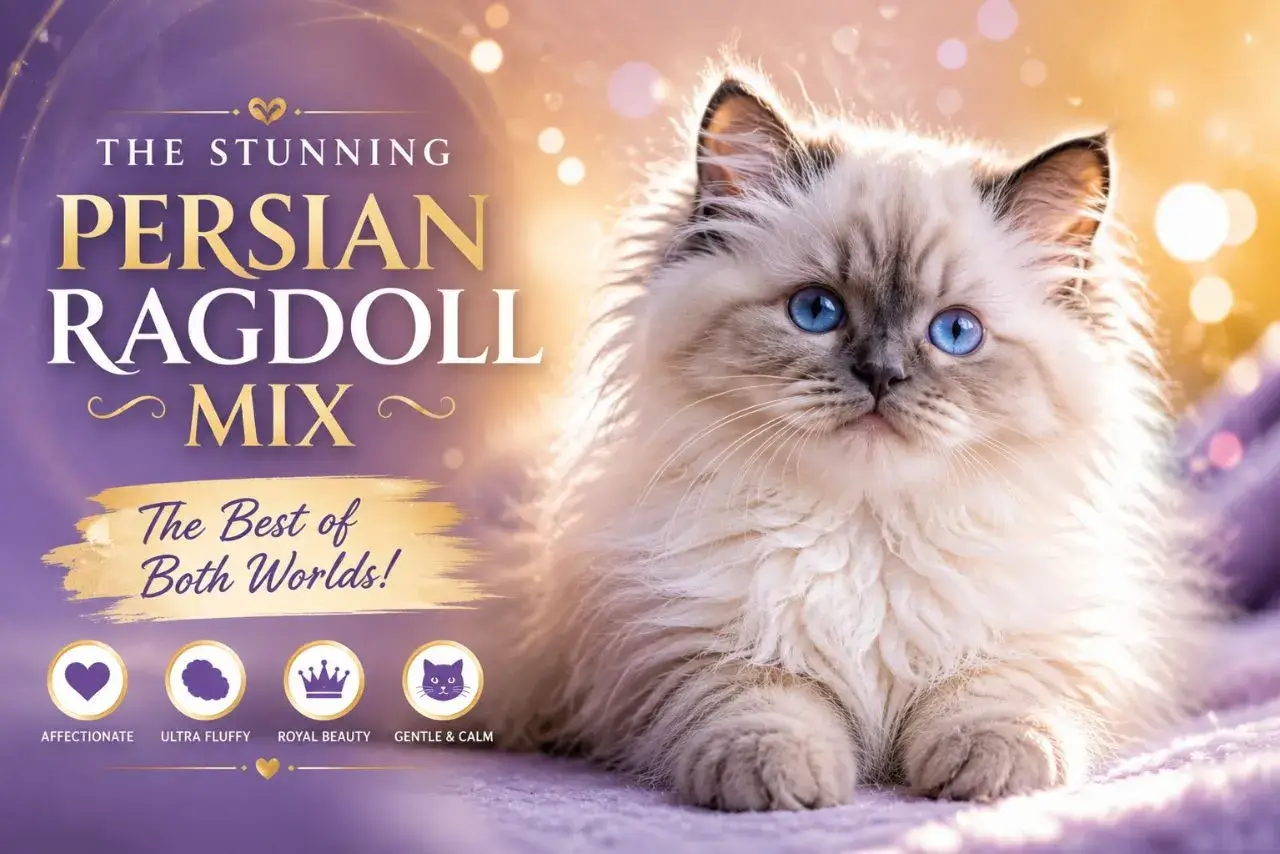
Persian Ragdoll Mix Kittens have quietly become one of the most talked-about cat breeds in the United States. They blend the Persian’s silky elegance with the Ragdoll’s warm, people-loving personality, and the result is a cat that’s hard not to fall for. Whether you’re a first-time cat owner or a lifelong enthusiast, this guide covers everything: their looks, temperament, grooming needs, health considerations, and why so many people consider them the ideal indoor companion.
Last updated September 2026: this guide now also includes a feeding schedule by life stage, a concrete grooming checklist, what to check before buying from a breeder, and a note on rescue adoption as a lower-cost alternative worth checking first. We also trimmed a few repetitive FAQ entries.
What You Should Know Before Reading
Before we get into the details, here’s a quick snapshot of what makes Persian Ragdoll Mix kittens stand out.
They’re a genuine blend of two beloved breeds: The Persian brings the long, silky coat and calm demeanor. The Ragdoll brings the floppy, affectionate, go-with-the-flow personality. Together, they produce a cat that’s both beautiful and deeply sociable.
Their appearance is hard to miss: These cats have long, flowing semi-longhair coats in a wide range of colors and patterns, from cream and gold to silver and pointed. Blue eyes show up often in this mix, especially from the Ragdoll side (blue eyes are a strict breed standard for Ragdolls) or if the Persian parent carries colorpoint ancestry, but it’s not guaranteed. Persians without colorpoint genetics typically have copper, green, or gold eyes, so eye color really depends on which genes a particular kitten inherits.
They’re a good fit for allergy-prone households: Persian Ragdoll mixes tend to shed less than you’d expect for a cat with that much fur. They’re not fully hypoallergenic, but they’re noticeably more manageable than many other longhaired breeds. For a deeper look at how Ragdoll-type cats interact with allergies, the guide on Ragdoll Cats and Allergies is worth reading before you bring one home.
They combine the best traits of both parent breeds: As a crossbreed, they often inherit what breeders call hybrid vigor, meaning they can be healthier and more resilient than either purebred parent. They’re also smart, trainable, and calm enough to thrive in an apartment.
They’ve become a top choice for cat owners across the U.S.: Their combination of looks, temperament, and low-maintenance shedding makes them a genuinely practical choice, not just a pretty one. They’re the kind of cat that fits into a household quickly and stays there for a long time.
The Enchanting World of Persian Ragdoll Mix Kittens
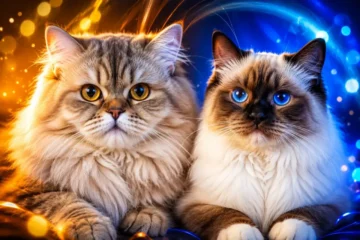
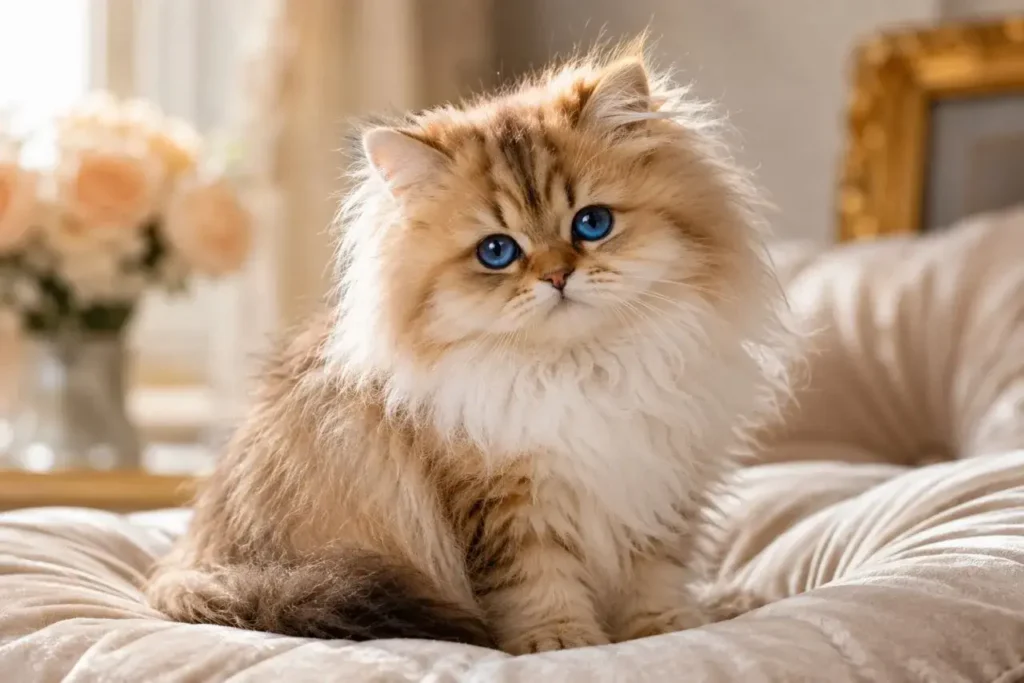
The Persian Ragdoll Mix is a stunning hybrid. It takes the beautiful looks of the Persian cat and the loving personality of the Ragdoll. The outcome is a beautiful cat friend. They have long, soft fur and big, blue eyes. These traits come from both parents. Their bodies are big and strong, but also balanced.
A Fusion of Elegance and Affection
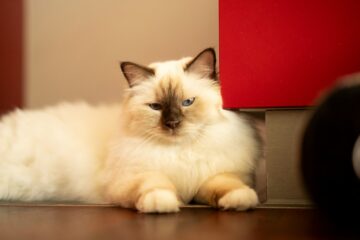
These kittens have a unique look that combines both breeds. Their fur is long and comes in many colors. You might see them in gold, cream, and silver, or with patterns like pointed and bicolor. But what really catches your eye are their stunning blue eyes.
Speaking of blue-eyed beauties, if you love the look of lighter-coated cats, you’ll also want to read about the Pure White Ragdoll Cat and the striking Tuxedo Black and White Ragdoll Cat for some coat color inspiration.
Distinctive Physical Traits
- Medium to large bodies, though build varies more than in a purebred cat
- Flowing, semi-longhair coats in a variety of colors and patterns
- Striking blue eyes that often show up, especially with Persian and Ragdoll ancestry
These cats are big and very friendly. They love being near their owners. With their long, cozy fur, they make perfect lap cats. You will enjoy their company and love for many years. According to The International Cat Association (TICA), Ragdolls are officially recognized for their large size, silky coats, and calm temperament, all traits that carry strongly into their Persian mixes.
Persian Ragdoll Mix Kittens: Personality Traits
People often seek out Persian Ragdoll mix kittens for their loving and easy-to-care-for nature. These mixes are smart and affectionate, acting like gentle dogs. They attach strongly to their owners and are great for anyone wanting an affectionate feline.
Gentle Souls with Playful Spirits
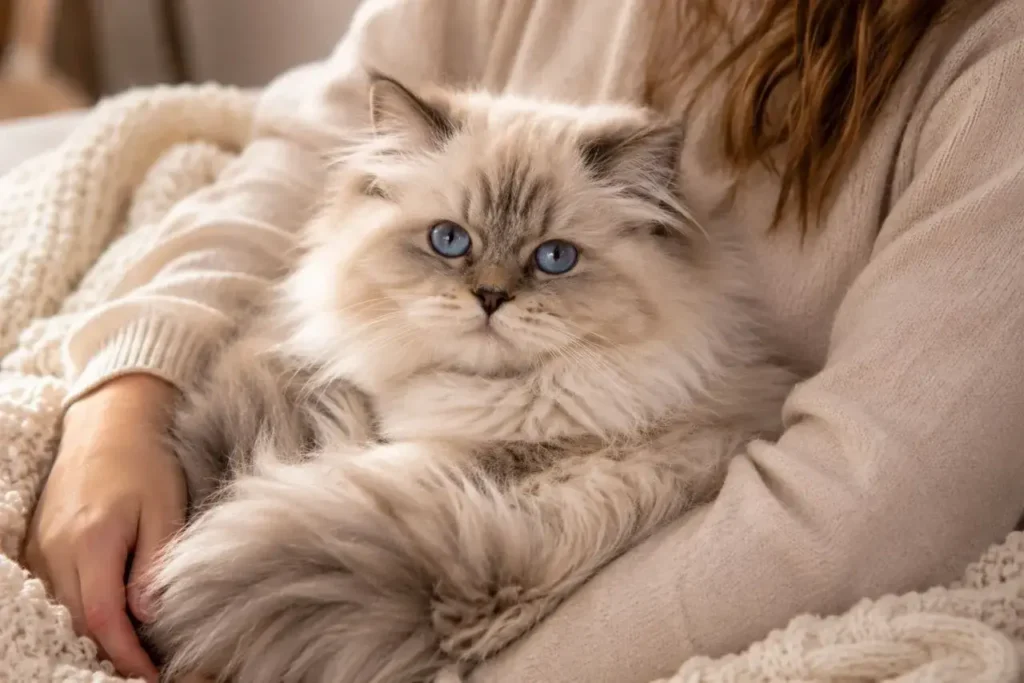
Persian Ragdoll mixes are famous for being loving and calm, showing they need people to be happy. They’re almost like dogs in their love for their owners, often following them everywhere.
Their easy-going and fun personalities are perfect for families or single people. They truly are the best of both worlds: elegance and love.
If you’re curious how this personality stacks up against other Ragdoll mixes, the Ragdoll Himalayan Mix Personality is a fascinating comparison. The Ragdoll Cat Mixed With Siamese gives you a slightly more vocal and energetic option if that appeals to you. And for those who love a bolder coat pattern, the Ragdoll Tabby Cat Mix is absolutely worth exploring.
Their easygoing nature really is the best of both worlds: the Persian’s calm elegance and the Ragdoll’s open-hearted warmth.
Grooming and Care for Your Fluffy Companion
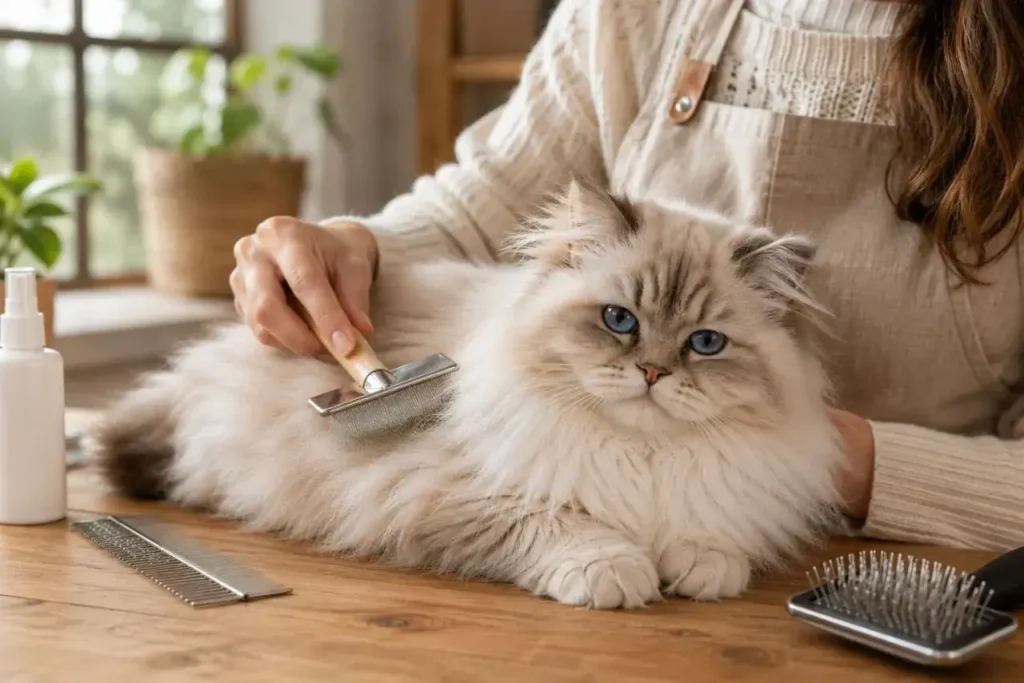
If you have a Persian Ragdoll Mix kitten, understanding how to groom and care for them is vital. These cats with semi-long hair need regular grooming to keep their coats beautiful. This care also stops health problems.
Brushing and combing are very important for this kind of kitten. Their long fur can get tangled and matted easily. Spend a few minutes each week gently brushing them. This will remove loose hair and keep their coat shiny. It also lowers the risk of them getting hairballs.
Feeding them a good, balanced diet is also key. High-quality cat food for semi-longhaired cats is best. It will keep their coat healthy by reducing shedding and keeping their fur soft.
Feeding Guide by Life Stage
- Kittens (under 1 year): 3–4 small meals a day of a kitten-formulated food. This age is also when eating habits and portion awareness get established, so avoid free-feeding even at this stage.
- Adults (1–7 years): 2 measured meals a day. Both parent breeds can be prone to weight gain once past kittenhood, so measuring portions rather than free-feeding matters more than it might for an average cat.
- Seniors (7+ years): A senior-formula food with joint and kidney support is worth discussing with your vet, especially given the Persian side’s predisposition to kidney issues.
- Always available: Fresh water. A water fountain can encourage more drinking, which supports kidney health, an especially good habit given the PKD risk on the Persian side.
Grooming Schedule Checklist
- Daily to every 2–3 days: Brush with a metal comb or slicker brush. Kittens that lean more toward the Persian side’s dense double coat need closer to daily brushing; those with a finer, more Ragdoll-like single coat can often get by with every 2–3 days.
- Weekly: Check and gently clean the eye area, especially important if the Persian parent had a flatter face, since tear staining is more common in those kittens.
- Monthly: Trim nails and check ears for wax buildup.
- Every 4–6 weeks: A bath helps maintain coat luster and cuts down on loose hair between brushings.
- As needed: A professional groomer visit if mats develop that you can’t safely work out at home. Mats pulled too aggressively can tear skin, so don’t force it.
By sticking to these simple grooming and care steps, your Persian Ragdoll Mix kitten will stay beautiful and be a manageable pet.
Despite how fluffy they look, these cats don’t shed as heavily as you might expect. Understanding coat genetics and how eye color connects to coat type is genuinely interesting territory for any Ragdoll enthusiast. The Ragdoll Eye Color Chart gives a clear breakdown of what to expect visually across different Ragdoll-type cats.
The American Association of Feline Practitioners (AAFP) also recommends regular grooming as part of a cat’s overall preventive healthcare, noting that coat care directly supports skin health and helps owners spot early signs of any issues.
Hybrid Vigor: The Benefits of Mixed Breeds
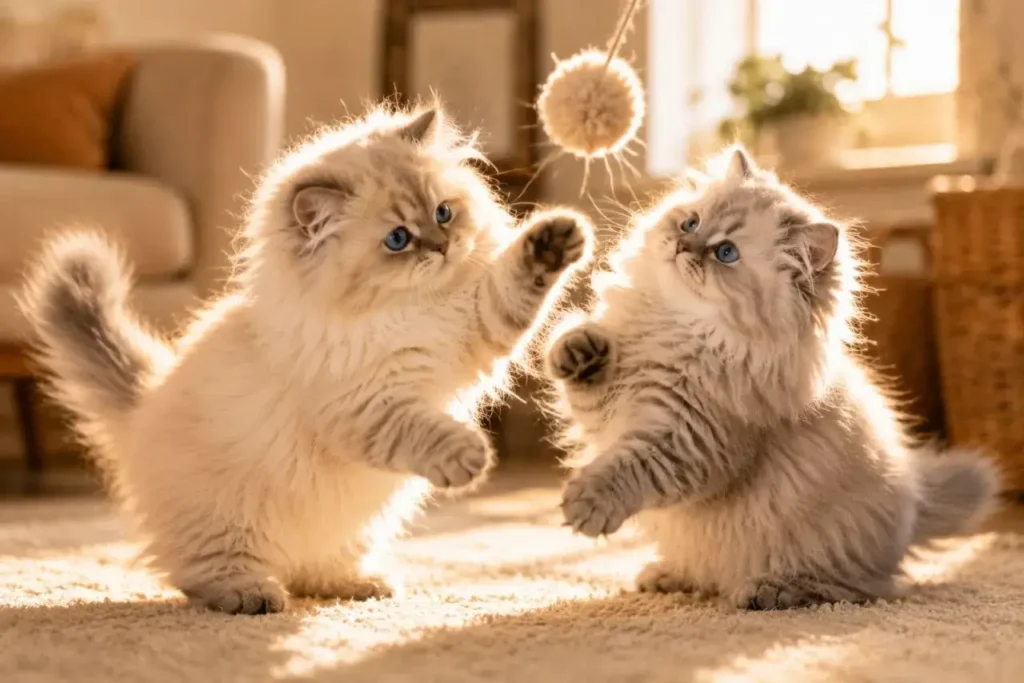
Mixing two breeds can lead to “hybrid vigor.” This means the kittens get the best traits from both parents. So, the Persian Ragdoll Mix often enjoys better health than purebreds. They tend to have a stronger immune system and be less likely to get sick. Plus, they have a better chance of staying healthy over the long run.
Healthier and Hardier Felines
Hybrid vigor is a key benefit of mixed-breed cats. It’s when the kittens show better qualities than either parent did. The Persian Ragdoll Mix, for example, can be healthier thanks to its mix of two special breeds. This mix brings unique health benefits:
- Stronger immune system: The varied genes mean a stronger immune system. This helps the kittens fight off diseases better.
- Reduced risk of genetic disorders: With gene-pool mixing, they’re less likely to get common breed-related health issues.
- Increased vitality and longevity: These mixed kittens often live longer, healthier lives, showing more energy and resilience. On average, a Ragdoll lives 12 to 17 years, and mixes often do just as well or better. The full breakdown is covered in What is The Lifespan of a Ragdoll Cat.
The Persian Ragdoll Mix is a great choice if you want a healthier and hardier cat. Their hybrid nature means better health and a longer life. Choosing them can mean a loving, long-lasting pet.
Health Considerations: What to Actually Watch For
Hybrid vigor is real, but it’s not a guarantee, and it doesn’t cancel out every inherited risk. A responsible guide has to name the specific things worth screening for, since both parent breeds carry known conditions that can pass to a mix.
Hypertrophic Cardiomyopathy (HCM): This heart condition is the most common inherited disease in Ragdolls, and it’s the single biggest reason to ask about health testing before buying. Reputable breeders screen breeding cats with an echocardiogram, not just a general vet check.
Polycystic Kidney Disease (PKD): This is a well-documented risk from the Persian side, caused by fluid-filled cysts that gradually affect kidney function. A simple DNA test can identify carriers, and any breeder working with Persian lines should be able to show PKD testing on the Persian parent.
Breathing and eye issues tied to face shape: This one depends entirely on which type of Persian is in the pedigree, and it’s worth its own section below.
None of this means a Persian Ragdoll Mix is a risky choice, most are perfectly healthy pets. It means asking a breeder or rescue directly about HCM and PKD testing on the parents is a reasonable, standard question, not an unusual one.
Doll-Face vs. Peke-Face Persian: Why It Matters for This Mix
Not all Persians look alike, and the difference matters more than most buyers realize. “Doll-face” Persians have a more moderate, traditional muzzle, closer to what Persians looked like decades ago. “Peke-face” or extreme flat-faced Persians have the very short, pushed-in muzzle popularized more recently, and that extreme structure comes with real welfare costs: breathing difficulty, tear duct problems, and dental crowding are all more common in flat-faced cats.
A Persian Ragdoll Mix kitten from a doll-face Persian parent is unlikely to inherit serious facial-structure problems, since the Ragdoll side doesn’t carry that trait at all. A kitten from an extreme flat-faced Persian parent has a higher chance of inheriting at least some muzzle shortening, even if it’s less pronounced than in a purebred Persian. If you’re able to, ask to see a photo of the Persian parent, or ask the breeder directly which type of Persian is in the pedigree. It’s a simple question that tells you a lot about what to expect.
If you’re still working out which type of Ragdoll is the right fit for your home, the Snowshoe Cat vs Ragdoll comparison is a great starting point. It’s also worth reading What Is A Mink Ragdoll Cat? and What is the Difference Between Ragdoll and Ragamuffin Cats? to understand the broader Ragdoll family. And if bold, colorful coats are your thing, the Tortoiseshell Calico Ragdoll Cat is genuinely stunning.
Sources and Further Reading
- The International Cat Association (TICA) – Ragdoll Breed Standard
- American Association of Feline Practitioners – Preventive Healthcare Guidelines
This article is for general informational purposes and isn’t a substitute for advice from a licensed veterinarian, particularly regarding HCM or PKD screening.
Conclusion
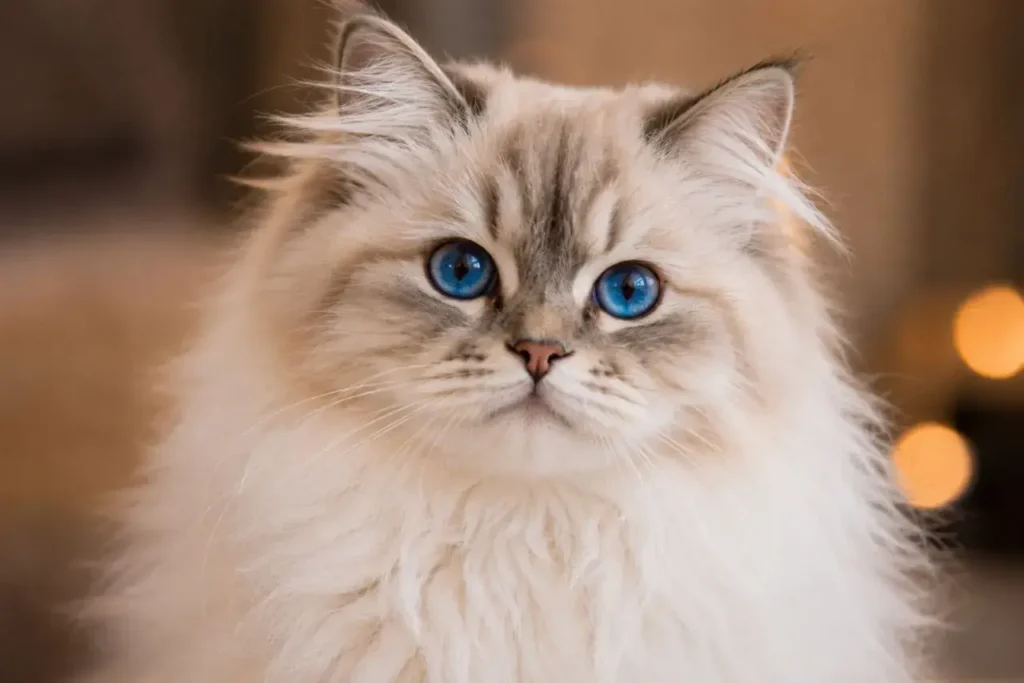
The Persian Ragdoll Mix kittens bring together the best of two stunning breeds. They have the Persian’s beautiful, silky fur and the Ragdoll’s calm nature. This mix results in gorgeous cats with blue eyes who love being around people.
These cats are not just beautiful; they’re smart and friendly, too. Their unique mix makes them a great choice for indoor life. Plus, they tend to be healthier than purebreds.
These affectionate felines will surely win your heart. They’re more than just pets; they’re docile companions who fill your home with love.
The Persian Ragdoll Mix kittens show the power of careful breeding. With their intelligent breed mix and low-shedding cat qualities, they’re like no other. They make outstanding friends for anyone looking for a loyal, adaptable, and affectionate cat.
Frequently Asked Questions ( FAQs )
1. How much grooming do Persian Ragdoll Mix kittens require?
It depends on which parent’s coat type they lean toward. A kitten closer to the Persian’s dense double coat may need near-daily brushing, while one closer to the Ragdoll’s single coat can often get by with brushing every 2 to 3 days. See the grooming schedule checklist above for the full breakdown by task.
2. Can Ragdoll Breed with Persian?
Yes, Ragdoll cats can be bred with Persians. These mixtures are often called Perdoll or Rag-a-Per.
3. What Is A Persian Ragdoll?
A Persian Ragdoll is a mix of a Ragdoll and a Persian. They have beautiful coats and are very friendly, making them great pets.
4. How Long Do Persian Ragdoll Felines Live?
Persian Ragdoll mixes tend to live a long time. Purebred Ragdolls typically live 12 to 17 years, and this mix usually falls in a similar range, sometimes longer, thanks to the genetic diversity that comes from crossbreeding.
5. Which is Bigger, a Ragdoll or a Persian?
Ragdolls are the larger of the two purebreds, typically 10 to 20 pounds versus 7 to 12 pounds for a Persian. A Persian Ragdoll Mix can land anywhere in that range depending on which parent’s genes come through stronger in a given kitten, so it’s not accurate to say the mix is simply “smaller than the Ragdoll.” Most fall somewhere in the 8 to 15 pound range as adults.
6. How much is a Ragdoll Persian Cat?
Since this cross isn’t a registered breed, there’s no standard price, and listings vary widely: informal, unscreened litters sometimes go for as little as $200 to $600, while kittens from a breeder who health-tests both parent lines typically run $500 to $2,000 or more. The lower end usually means no PKD or HCM testing was done, which is worth factoring into the “deal.” Rescue adoption, covered below, is usually $125 to $250 and worth checking first.
What to Check Before Buying From a Breeder
Because this mix has no breed standard or registry to enforce quality control, vetting the breeder yourself matters more than it would for a purebred cat.
- Ask for PKD testing on the Persian parent and HCM screening on the Ragdoll parent. A breeder working with both breeds should have this readily available, not a vague assurance.
- See the kitten with its mother, in person or on a live video call, to confirm it was actually born and raised there.
- Get a written health guarantee and proof of first vaccinations and deworming.
- Be cautious of prices at the very bottom of the range ($200–$300), since this usually signals no health testing and, in some cases, kitten-mill conditions.
- Expect to wait or travel. This specific cross isn’t common, so a reputable breeder may have a waitlist or not be local to you. That’s a normal trade-off for a healthier kitten, not a red flag on its own.
Don’t Overlook Rescue and Adoption
Because this is a mixed-breed cat rather than a registered purebred, it’s genuinely worth checking rescues before committing to a breeder waitlist. Longhaired mixes like this do show up in shelters and breed-specific rescues, sometimes as adults surrendered by owners who underestimated the grooming commitment. Adoption fees for a purebred-mix cat typically run $125 to $250, a fraction of breeder pricing, and usually include spay/neuter, vaccinations, and an initial vet check already done. Sites like Adopt a Pet let you filter by breed type, and it’s worth searching for Persian, Ragdoll, or “longhair mix” listings in your area alongside any breeder search. You won’t always find a kitten this way, but if you’re not set on getting one as young as possible, it’s a genuinely good option that a lot of buyers skip past.