
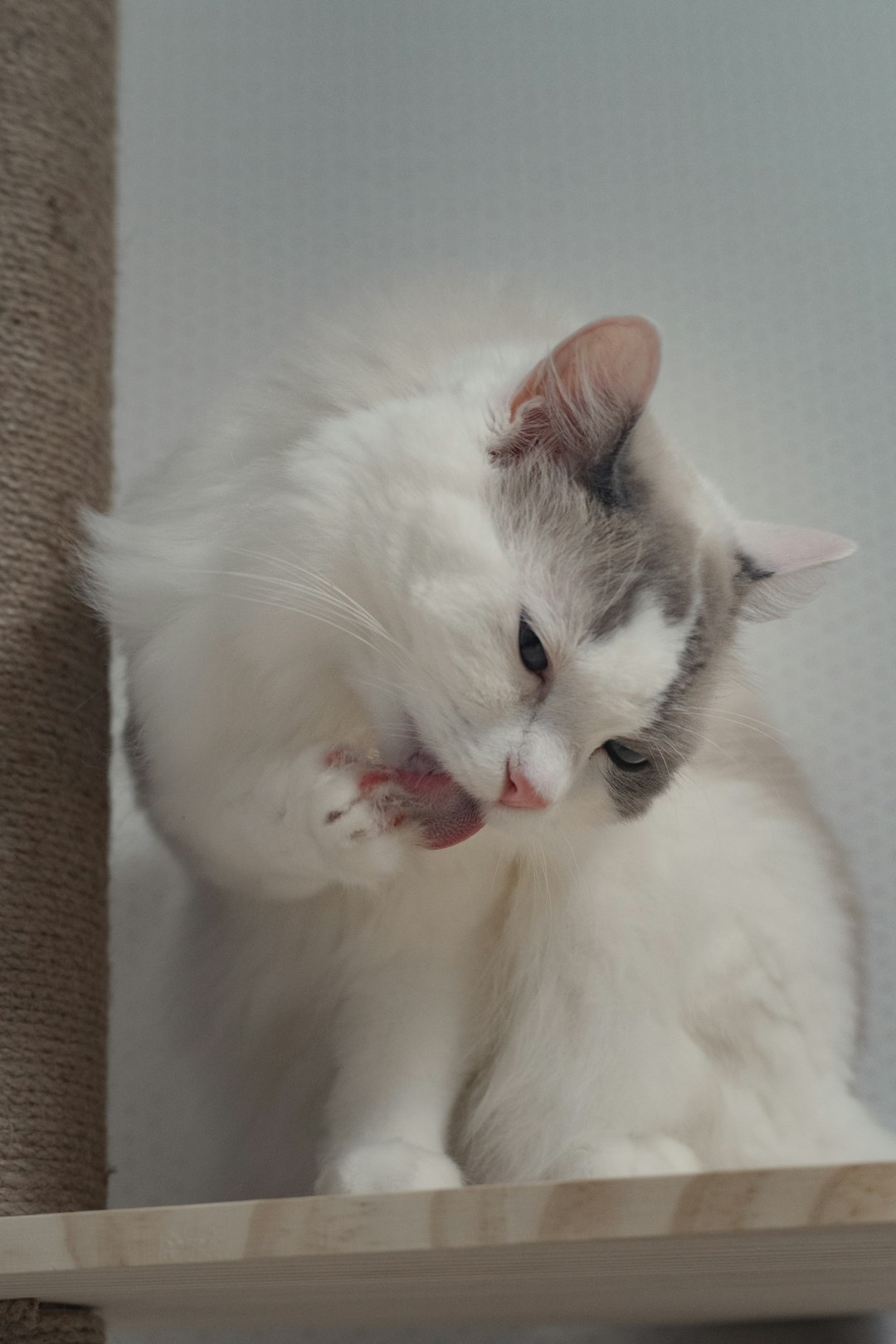
If your Ragdoll just hacked up a slimy tube of hair on your favorite rug, you’re in good company: hairballs are one of the most universal cat-owner experiences there is. Most of the time it’s exactly as unremarkable as it looks, just a normal side effect of a cat that grooms itself. But hairballs can also be a sign of something worth paying attention to, and knowing the difference is what this guide is for.
Published September 2026. This guide is for general education and isn’t a substitute for an actual veterinary exam. If your cat is showing any of the warning signs below, call your vet.
This guide covers why cats get hairballs in the first place, whether Ragdolls are more or less prone to them than other breeds, how often is “normal,” the warning signs that separate a routine hairball from a genuine blockage, and a practical prevention routine built around the Ragdoll’s specific coat type.
How Hairballs Actually Form
A cat’s tongue is covered in small, backward-facing barbs called papillae, which work like a built-in comb every time your cat grooms. Those barbs catch loose and dead hair, and rather than spitting it out, your cat swallows it. Most of that hair passes harmlessly through the digestive tract and ends up in the litter box. Some of it doesn’t, and instead collects in the stomach, where it eventually gets compacted into a mass that gets vomited back up, usually the tube-shaped wad most owners recognize immediately.
That shape is actually a clue: the tube form comes from being squeezed through the esophagus on the way up, not from anything specific to the cat that produced it.
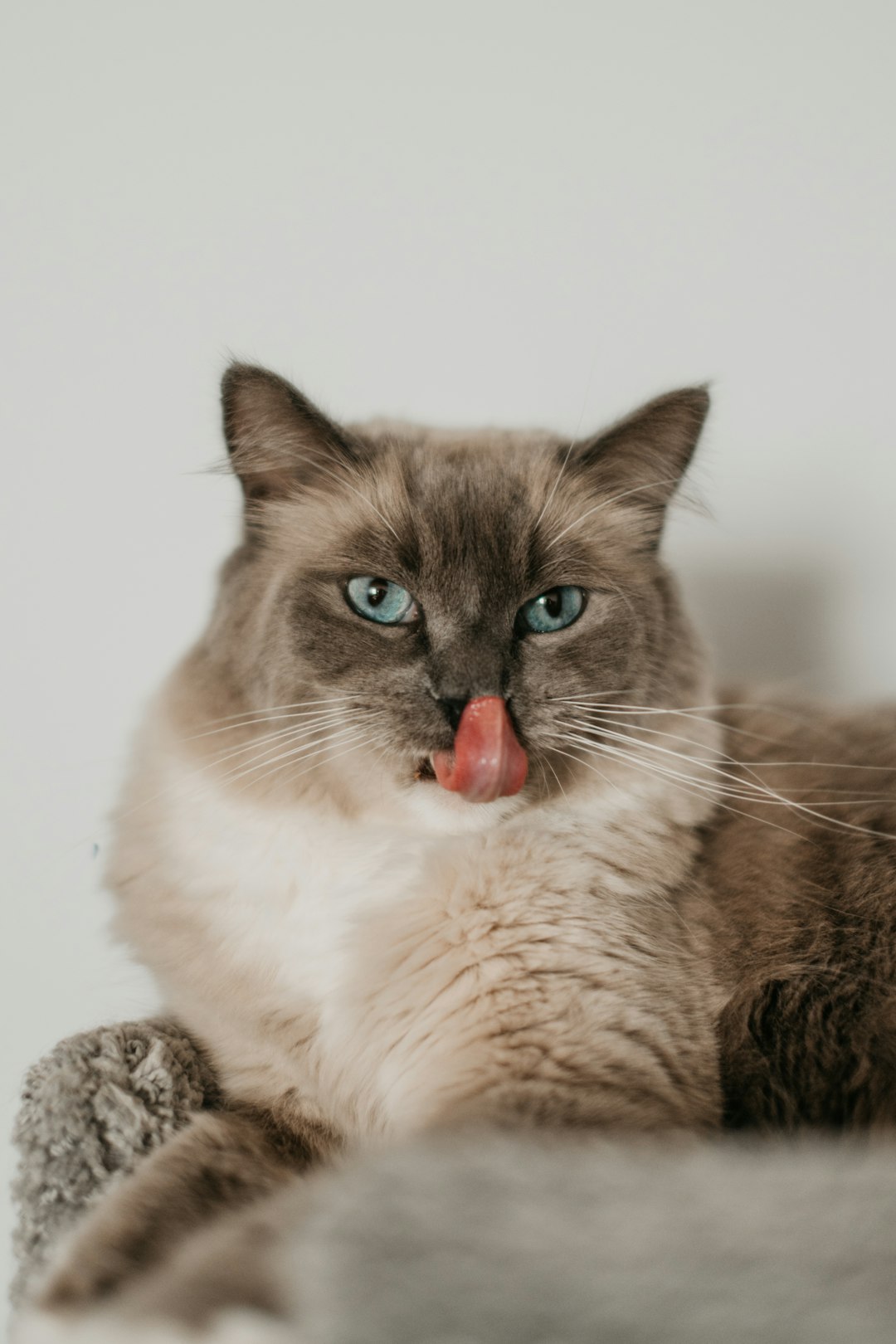
Are Ragdolls More Prone to Hairballs Than Other Cats?
Somewhat, but less than you might expect for a longhaired breed. Ragdolls have a semi-long coat but, unlike Persians or Maine Coons, they lack a dense undercoat. Less undercoat means less loose fur circulating during grooming sessions, which in practice means Ragdolls tend to produce fewer hairballs than double-coated longhaired breeds, though more than a typical shorthaired cat.
Coat type isn’t the only variable, though. Grooming habits, shedding season, skin health, and any tendency toward over-grooming all affect how much hair actually gets ingested, regardless of breed. A Ragdoll with allergies or fleas that’s licking excessively will get more hairballs than a Ragdoll with a calm, healthy coat, breed aside.
How Often Is “Normal”?
This is the number most owners actually want: a healthy cat should produce a hairball only a few times a year, not a few times a month. According to Cats.com, cats that bring up hairballs more than once or twice a month should be examined by a veterinarian, since that frequency points to something beyond routine grooming, whether that’s a diet issue, overgrooming, or a gastrointestinal motility problem.
If your Ragdoll is producing hairballs weekly or more, that’s not “just a hairy cat,” it’s worth a conversation with your vet, even if your cat otherwise seems fine.
Hairball or Something Else? The Asthma Look-Alike
Here’s a genuinely useful distinction most hairball guides skip entirely. The Cornell Feline Health Center notes that what looks like hairball hacking isn’t always a hairball at all, it can be a sign of a respiratory condition like feline asthma, which also causes crouched, hacking, coughing-like episodes that owners often mistake for a cat trying to bring up a hairball.
The distinguishing clue: with a true hairball, something eventually comes up. If your cat is repeatedly going through the hacking, crouched posture, extended-neck motion without ever producing a hairball, especially if it’s a recurring pattern, that’s worth mentioning to your vet as a possible respiratory issue rather than assuming it’s just a stubborn hairball.
Warning Signs: When a Hairball Might Be a Blockage
This is the section that matters most. A hairball becomes dangerous when it doesn’t fully pass, either getting stuck in the stomach or, less commonly, migrating into the intestines where it can cause a genuine obstruction. Call your vet right away, don’t wait it out, if your Ragdoll shows any of the following:
- Repeated retching or gagging with nothing coming up — a strong sign the hairball is stuck rather than resolving on its own
- Loss of appetite or refusing food for more than 24 hours
- Lethargy or noticeable low energy lasting more than a day
- Constipation or diarrhea, which can both signal a partial blockage despite looking like opposite problems
- A swollen, tender, or painful-feeling abdomen
- Vomiting unrelated to hairballs happening alongside these signs
According to the Embrace Pet Insurance veterinary team, a blockage can cause nausea and abdominal discomfort severe enough that a cat stops eating entirely or shows visible pain when trying to. If you see this combination, that’s an emergency vet visit, not a wait-and-see situation.
How Vets Diagnose and Treat a Stuck Hairball
If a blockage is suspected, a vet typically works through physical examination, bloodwork, and radiography (X-rays), along with a history of your cat’s hairball pattern, to confirm what’s going on and where. The Cornell Feline Health Center notes that treatment often centers on protecting the intestine through several days of supportive care, IV fluids to rehydrate the mass and a laxative to help move it along, which can run $300 to $400 in extended care. If the hairball is too large or dense to pass safely, surgical removal becomes necessary.
This is exactly why catching the warning signs early matters: supportive care catches most cases before surgery becomes the only option.
A Ragdoll-Specific Hairball Prevention Routine
Since prevention is almost entirely about reducing how much loose hair your cat swallows, here’s a practical routine that fits the Ragdoll’s coat specifically:
- Brush 2 to 4 times a week with a slicker brush or stainless steel comb. Because Ragdolls lack a dense undercoat, this is genuinely less work than maintaining a Persian or Maine Coon, but skipping it still adds up in shed fur your cat has to groom (and swallow) itself.
- Increase brushing during spring and fall shedding season, when loose fur volume goes up noticeably even without a true undercoat to blow.
- Rule out fleas, even for indoor cats. As Catster’s veterinary team points out, external parasites can cause enough itching to trigger excessive grooming, and more grooming means more swallowed hair. Monthly flea prevention is worth keeping up even for a cat that never goes outside.
- Consider a hairball-control food formulated with added fiber to help move ingested hair through the digestive tract rather than letting it compact. Ask your vet before switching, particularly if your cat has other dietary needs.
- A hairball-control gel (like Laxatone) can help lubricate the digestive tract for cats prone to frequent hairballs, typically given two to three times a week. Use only as directed, and don’t reach for a human laxative or any medication not specifically approved for cats.
- Watch for excessive self-grooming that looks more like anxiety or discomfort than routine upkeep. Stress-related overgrooming is real in cats, and Ragdolls in particular tend to be sensitive to household changes, so a stressed cat can develop a hairball problem that has nothing to do with coat type at all.
If your cat resists brushing, a reputable groomer can help, and periodic trims during heavy shedding seasons are a reasonable option even for cats that tolerate brushing fine the rest of the year.
What to Do at Home for an Occasional, Mild Hairball
For a single hairball episode in a cat that’s otherwise eating, drinking, and acting normal, there’s no need to panic or intervene aggressively. A reasonable approach:
- Let your cat rest and offer water as normal; there’s no need to withhold food the way you would after a genuine illness-related vomiting episode.
- Watch for a repeat episode within the next day or two. One hairball is routine; several in quick succession is worth noting.
- Use this as a reminder to brush, if it’s been longer than usual since the last session.
- Don’t give any over-the-counter human hairball, laxative, or anti-nausea product without checking with your vet first, even ones marketed for pets, since dosing and safety vary.
If you’re ever unsure whether what you’re seeing is a routine hairball or something that needs a vet, our guide on Vomiting in Ragdoll Cats covers the broader warning-sign checklist and how to tell true vomiting from hairball regurgitation.
People Also Ask: Hairballs in Ragdoll Cats FAQ
1. Do Ragdolls get hairballs more than other cats?
Somewhat more than shorthaired cats, but less than double-coated longhaired breeds like Persians or Maine Coons, since Ragdolls lack a dense undercoat. Individual factors like grooming habits, skin health, and stress affect hairball frequency more than breed alone.
2. How many hairballs a month is normal?
A healthy cat should produce a hairball only a few times a year, not monthly. Cats bringing up hairballs more than once or twice a month should be checked by a vet to rule out an underlying cause.
3. My cat keeps hacking but nothing comes up. Is that a hairball?
Not necessarily, and this is worth taking seriously either way. Repeated hacking that never produces a hairball can mean the hairball is stuck (a possible blockage) or that you’re actually seeing a respiratory issue like feline asthma rather than a hairball at all. Either possibility warrants a vet visit rather than continued waiting.
4. Can I give my cat a laxative for hairballs?
Only if your vet specifically recommends one for your cat. Cat-safe hairball-control gels like Laxatone are commonly used and generally safe when used as directed, but human laxatives and unapproved products can be dangerous. Always check with your vet before giving anything, especially if your cat has other health conditions.
5. Do hairball-control cat foods actually work?
They can help. These foods typically add fiber that helps move ingested hair through the digestive tract rather than letting it compact into a mass. They’re not a substitute for regular brushing, but combined with brushing, they’re a reasonable option for cats prone to frequent hairballs. Check with your vet before switching foods.
6. Can fleas cause more hairballs, even in an indoor cat?
Yes. Flea bites cause itching, itching leads to excessive grooming, and excessive grooming means more swallowed hair. This can happen even in cats that never go outdoors, since fleas can be brought in on clothing, shoes, or other pets. Monthly flea prevention is worth maintaining regardless of whether your cat goes outside.
7. How much does treating a hairball blockage cost?
Supportive care for a stuck hairball, including IV fluids and laxatives over several days, has been estimated at roughly $300 to $400. If surgery is needed to remove a hairball that’s too large or dense to pass, costs run considerably higher. This is one of several good reasons to take frequent hairballs or blockage warning signs seriously rather than waiting.
Sources and Further Reading
This guide is based on published veterinary guidance rather than owner anecdotes. For deeper reading:
- Cornell Feline Health Center – A Hairy Dilemma
- Cats.com – Cat Hairballs: Causes, Symptoms & Treatment
- Catster (Vet-Reviewed) – Cat Hairballs: How to Treat Them
- Embrace Pet Insurance – Hairball Remedies & Blockage Warning Signs
This article is for general educational purposes and isn’t a substitute for an in-person veterinary examination. If your cat is showing any warning signs described above, contact your veterinarian or nearest emergency animal hospital. This guide will be reviewed and updated periodically as veterinary guidance evolves.
Final Thoughts
An occasional hairball is just part of owning a cat, Ragdolls included, and it’s rarely something to lose sleep over. What matters is the pattern: how often, whether anything actually comes up, and whether your cat seems otherwise well. A brushing routine that fits your Ragdoll’s coat will handle most of the prevention work on its own, and knowing the real warning signs means you’ll catch the rare case that actually needs a vet, without needing to worry over every single one.
Have a hairball prevention routine that works well for your Ragdoll? Share it in the comments; it’s the kind of tip other owners genuinely use.