Last updated: October 18, 2026
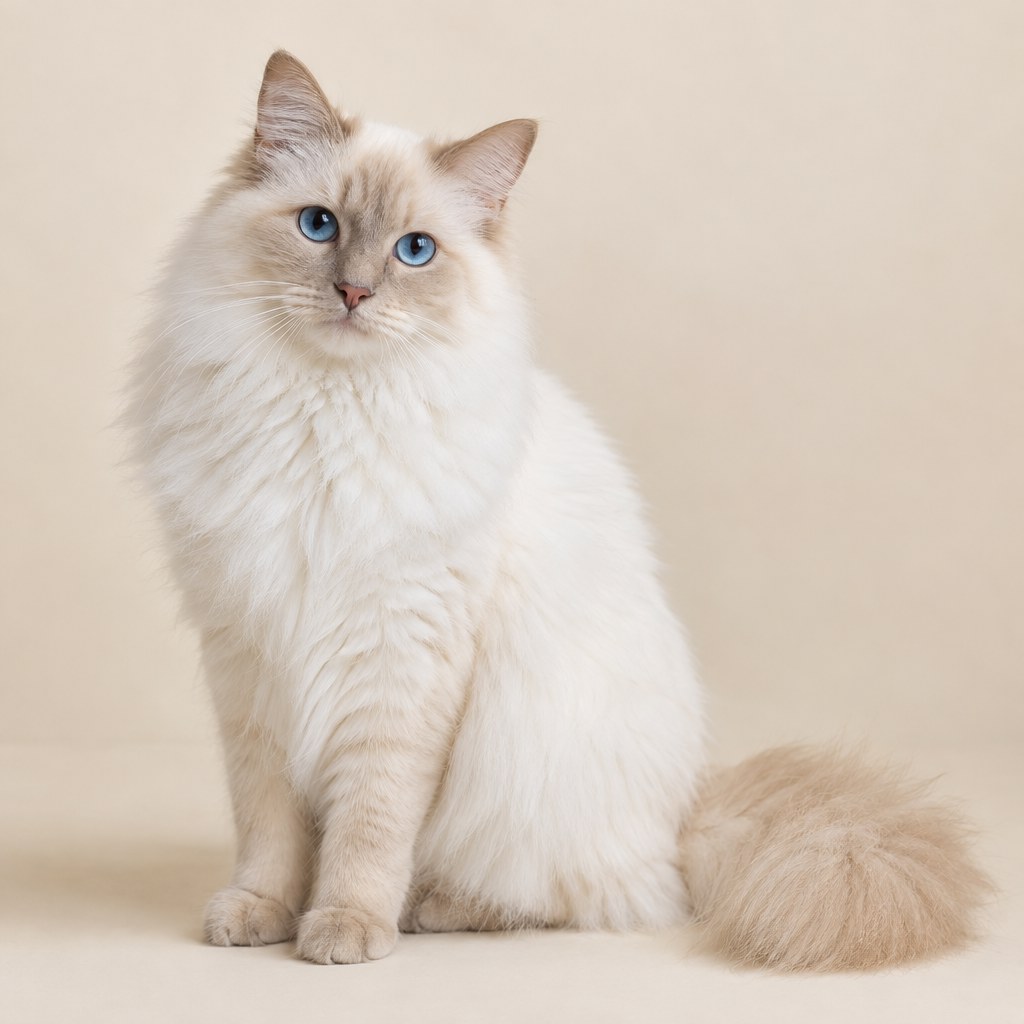
A Cream Point Ragdoll cat has a pale body with soft cream to pinkish-cream coloring on the face, ears, legs, and tail. This subtle color is one of the recognized Ragdoll coat colors, but the exact appearance depends on the cat’s pattern, age, and individual coat development.
Ragdolls are generally known for being people-oriented and relaxed, although every cat has its own temperament. A Ragdoll may enjoy being close to family without wanting to be carried, so supervise interactions with children and let the cat choose when to be handled.
This guide explains how to identify a cream point, how coat color differs from coat pattern, what to expect as a kitten grows, and how to care for a Ragdoll. It also covers health screening and practical questions to ask before adopting or buying one.
What Is Cream Point Ragdoll Cat
A cream point is a Ragdoll color variation, not a separate breed. The body is generally pale, while the cooler areas of the coat, including the face, ears, legs, and tail, develop pale buff cream to light pinkish-cream points. The exact contrast can be subtle, so lighting and the cat’s age can affect how the color appears in photographs.
Traditional pointed Ragdolls have blue eyes under the breed standards of major cat associations. The nose leather and paw pads of cream points are generally flesh to coral pink, though white markings and individual pattern details affect what you see.
Ragdoll coat descriptions combine color and pattern. Recognized colors include seal, blue, chocolate, lilac, red, and cream, with additional variations such as lynx and tortie markings. The main patterns are colorpoint, mitted, and bicolor. Cream may appear with different pattern combinations, so “cream point” describes the color rather than a single white-marking pattern. Avoid assuming a kitten is rare or more valuable based on color alone.
Major cat associations such as the CFA and TICA recognize these colors and patterns, ensuring that Ragdolls, including the Cream Point, meet specific breed standards and characteristics.
Cream Point Ragdoll Kitten
Ragdoll kittens are usually born very pale, and their point color becomes more visible over the following weeks. Cream shading can continue to develop as the cat matures, so an early kitten photo may not show the adult coat clearly. The timing and depth of color vary; ask a breeder for photos of related adult cats if you want a better idea of how a kitten may look later.
Some Cream Point Ragdolls may continue to develop a richer or darker cream color as they reach full maturity.
Patterns of Cream Point Ragdoll
Color and pattern are two different features. Color describes the shade of the points, while pattern describes where white markings appear. Lynx refers to tabby striping layered over the point color and can occur alongside other color and pattern descriptions.
Cream Point Ragdoll-Mitted
The Mitted variation of the Cream Point Ragdoll has clean lines and displays all the usual traits for this breed, with white tipping. Each Mitted Ragdoll has white mittens on the front paws and white bootees on their hind paws. They may also have a white chin and, from the touch of the upper lip to the back part of the head, down the middle single line.
Cream Point Ragdoll-Colorpoint
The colorpoint variation of the Cream Point Ragdoll follows the same pattern as all other Ragdolls; the cream coat has dark points. These points are usually situated on the ears, face, legs, and tail, with this color contrasting with the light color of the body.
Cream Point Bicolor Ragdoll
A cream bicolor Ragdoll has more extensive white markings than a colorpoint cat. A white inverted V on the face is a common bicolor feature, along with white on the chest, legs, and underside. The amount and placement of white vary, and the cream points may be soft enough that the contrast is less dramatic than in darker color variations.
Cream Lynx Point Ragdoll
A cream lynx point has tabby-style stripes or bars within the cream-colored points, especially around the face and legs. These markings are not the same as the white markings that define mitted or bicolor patterns. A lynx description can be combined with a pattern description when appropriate.
Are cream point Ragdolls rare?
Cream is a recognized Ragdoll color, but it is difficult to make a reliable claim that every cream point is rare. Availability depends on the region and the breeder’s lines. Do not pay a premium based only on a seller’s claim that a color is rare; prioritize health records, transparent breeding practices, temperament, and a clear adoption or purchase agreement.
How to buy a Cream Point Ragdoll?
If you plan to bring home a cream point Ragdoll, look for a responsible breeder or check reputable rescue organizations. Ask for veterinary records, vaccination and parasite-treatment history, pedigree information where applicable, and evidence that parent cats have been screened for relevant inherited conditions. A responsible breeder should welcome questions, explain the kitten’s socialization, and provide a written contract. Be cautious of sellers who pressure you to pay quickly or refuse to show records. Prepare for regular grooming, routine veterinary care, enrichment, and a long-term commitment.
What is the difference between Cream Point Ragdoll and Flame Point Ragdoll?
The main difference is the shade of the points. Cream points have pale buff to pinkish-cream points, while flame or red points have stronger apricot, orange, or red tones. The body remains lighter than the points in both. For more detail, read our Flame Point Ragdoll Cat Guide.
Cream Point Ragdoll Appearance at a Glance
| Feature | What to Look For |
|---|---|
| Body coat | Pale cream, ivory, or off-white shading |
| Points | Soft buff cream to light pinkish cream on face, ears, legs, and tail |
| Eyes | Blue in traditional pointed Ragdolls |
| Nose and paw pads | Typically flesh to coral pink, depending on pattern |
| Patterns | Colorpoint, mitted, or bicolor; lynx markings may also be present |
| Coat development | Point color develops after birth and can deepen with age |
Cream Point Ragdoll Personality and Family Life
Cream coloring does not determine personality. Ragdolls are commonly described as sociable and people-oriented, but individual energy levels, confidence, and handling preferences differ. Give a new cat a quiet settling-in space, provide daily play, and introduce children or other pets gradually. Teach children to support the cat’s body and never chase, squeeze, or disturb a sleeping cat.
Are Cream Point Ragdolls Good Indoor Cats?
They can adapt well to indoor living when their environment includes climbing options, scratching posts, interactive play, resting spots, and daily social contact. Use secure windows and balconies, and consider a carrier-trained cat and microchip where available. Indoor living does not remove the need for exercise and mental stimulation.
Grooming and Everyday Care
A Ragdoll’s semi-long coat benefits from gentle, regular combing to reduce tangles and check for mats, particularly around the armpits, behind the ears, and the hindquarters. Increase grooming during shedding periods and introduce it gradually with treats. Check the nails, ears, and teeth routinely, and ask a veterinarian for advice if you notice skin irritation, persistent ear debris, bad breath, or changes in grooming habits.
Feed a complete and balanced cat food appropriate for life stage, keep fresh water available, and monitor body condition rather than relying on appearance alone. Your veterinarian can help set a suitable feeding plan and weight target.
Health Checks and Responsible Breeding
Coat color does not make a Ragdoll healthier or less healthy. Ask breeders about screening for hypertrophic cardiomyopathy (HCM), a heart condition relevant to the breed, and request documentation rather than accepting a verbal assurance. Screening cannot guarantee that a cat will never develop disease, so routine veterinary examinations remain important. For background on HCM, see the Cornell Feline Health Center’s HCM Guide.
For breed information, compare the official TICA Ragdoll Breed Profile with the CFA Ragdoll Breed Standard. These sources help distinguish recognized coat colors and patterns from marketing language.
How to Choose a Cream Point Ragdoll Kitten
- Ask for veterinary, vaccination, and parasite-treatment records.
- Ask what health testing has been performed on the parents and request the results.
- Meet the kitten or arrange a live video call and observe its environment and behavior.
- Ask about the kitten’s socialization, diet, litter habits, and transition plan.
- Read the contract and understand the breeder’s return or support policy.
- Do not choose on coat shade alone; health, welfare, and temperament matter more.
Related Ragdoll Color Guides
To compare cream with other colors and markings, see our Ragdoll Cat Colors and Patterns Guide and our Seal Point Ragdoll Cat Guide. If you are comparing red and cream points, visit the Flame Point Ragdoll Cat Guide.
FAQs (Because People Keep Asking)
What does a cream point Ragdoll look like?
It typically has a pale body and soft buff-cream to pinkish-cream coloring on the face, ears, legs, and tail.
Are cream point Ragdolls purebred?
Cream is a recognized Ragdoll color. Color alone cannot prove pedigree, so check breeder documentation and relevant registration records.
Do cream point Ragdolls have blue eyes?
Traditional pointed Ragdolls are expected to have blue eyes under major breed standards. Ask a qualified breeder or veterinarian if you have concerns about a particular kitten.
Do cream point Ragdoll kittens get darker as they grow?
Yes, their points and body shading can become more visible with age. The pace and final shade vary between cats.
What is the difference between cream point and flame point Ragdolls?
Cream points are pale buff or pinkish cream, while flame points tend toward apricot, orange, or red.
Are cream point Ragdolls rare or expensive?
Availability and price vary by location, breeder, pedigree, and individual kitten. Treat claims of rarity as marketing unless the breeder can explain them clearly, and do not let color outweigh welfare and health checks.
How often should I groom a cream point Ragdoll?
Regular gentle combing several times a week is a useful starting point, adjusted to the cat’s coat and tendency to mat.
Are cream point Ragdolls hypoallergenic?
No cat breed is reliably hypoallergenic. People with cat allergies may react to allergens in saliva and skin secretions as well as to fur.
What health testing should I ask a breeder about?
Ask about screening for HCM and request the parent cats’ documented results. A veterinarian can explain what the results do and do not establish.
Editorial Note and Sources
This guide is for general breed education and is not a substitute for veterinary advice. Coat-color descriptions are based on recognized breed references; individual appearance varies. Consult a veterinarian for health, nutrition, and behavior concerns.
Final Thoughts
The Cream Point Ragdoll is a color variation with a soft, pale coat and subtle cream points. Its appearance can differ across colorpoint, mitted, bicolor, and lynx combinations, so look at both color and pattern when identifying one.
Before bringing one home, focus on responsible breeding, health records, grooming needs, and the individual cat’s temperament rather than color alone. With thoughtful preparation and regular veterinary care, a Ragdoll can be a rewarding companion.