
Last Updated: October 16, 2026
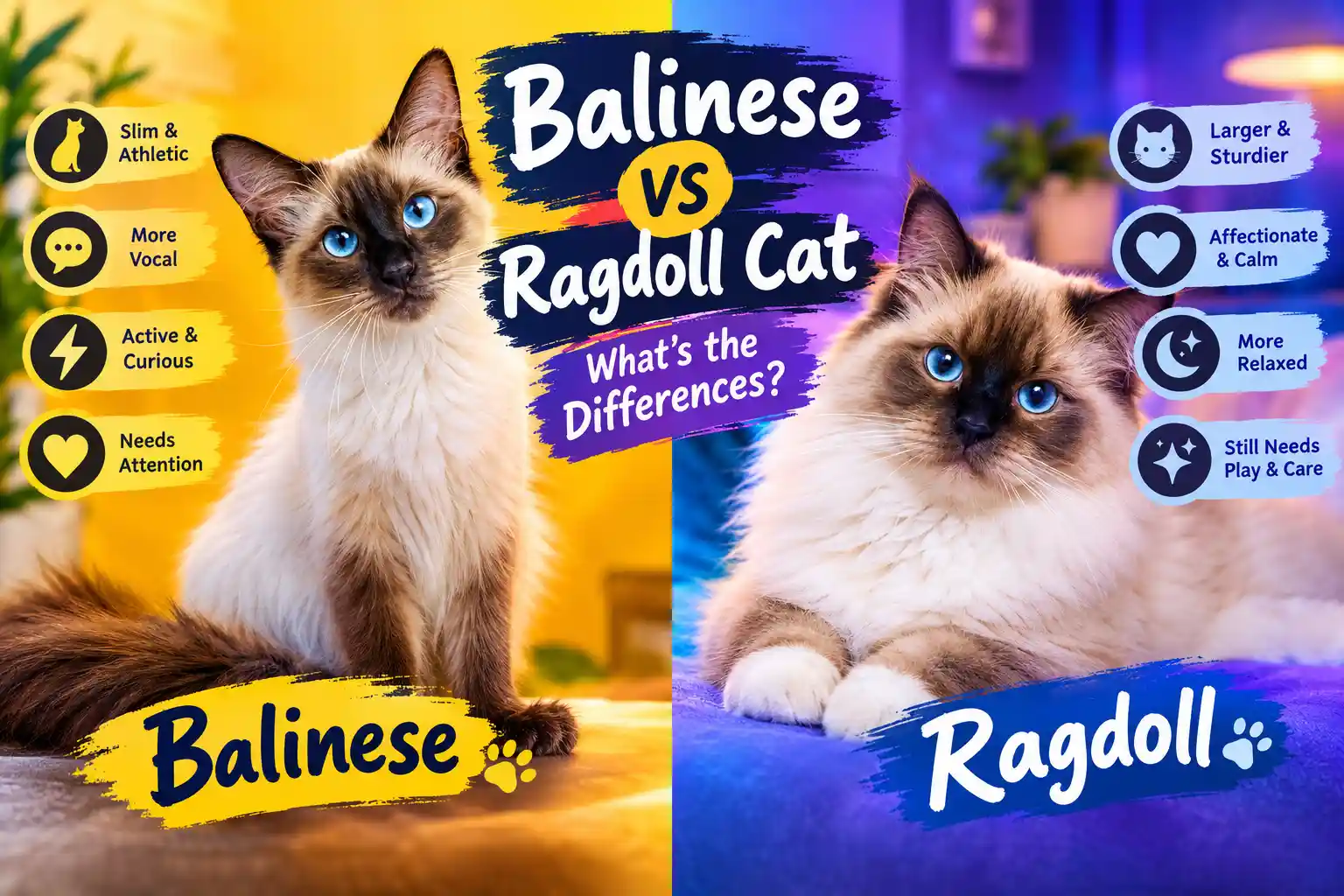
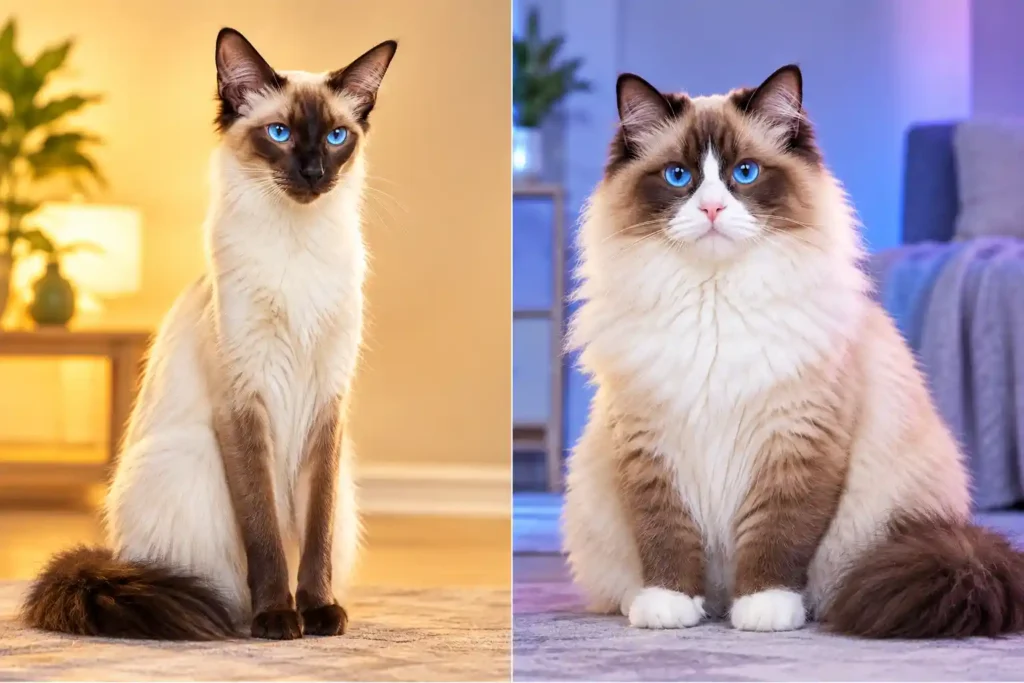
When comparing a Balinese vs Ragdoll cat, the biggest differences are body type, activity level, vocal habits, and the kind of attention each cat needs. Balinese cats are usually slim, curious, energetic, and communicative. Ragdolls are larger, sturdy, affectionate cats that often prefer relaxed company, although they still need daily play and interaction.
Neither breed is automatically better. The right choice depends on how much time you have for play, whether you enjoy a talkative cat, your grooming routine, and the personality of the individual kitten or adult cat. This guide compares their appearance, temperament, grooming, health considerations, lifespan, costs, and suitability for different homes.
Balinese vs Ragdoll Cat: At a Glance
| Feature | Balinese | Ragdoll |
|---|---|---|
| Breed background | Long-haired variety related to the Siamese | Breed developed in California in the 1960s |
| Build | Slim, fine-boned, athletic | Medium-large to large, muscular and sturdy |
| Typical adult weight | Often around 5–10 lb, with individual variation | Often around 10–20 lb; females are generally smaller |
| Coat | Silky, single coat without a downy undercoat | Semi-long, silky coat with a relatively light undercoat |
| Voice | Usually talkative and expressive | Often quieter, but individuals vary |
| Activity | Active, curious, enjoys climbing and training | Moderately active, enjoys play as well as relaxing |
| Social needs | Usually seeks frequent interaction | Usually people-oriented and affectionate |
| Grooming | Regular combing; often relatively easy to maintain | Comb at least weekly and check for tangles |
| Best fit | People who want an interactive, energetic companion | People who want a larger, affectionate companion |
These are general breed tendencies, not guarantees. Size, energy, coat, and sociability vary with sex, age, genetics, health, and the individual cat. For breed-standard descriptions, see the Cat Fanciers’ Association Balinese Breed Profile and the Cat Fanciers’ Association Ragdoll Breed Profile.
What Is a Balinese Cat?
The Balinese is the long-haired variety of the Siamese. It has a slender, athletic frame, long legs, a tapered head, blue eyes, and a fine, silky coat that is longest around the tail. Its coat is generally a single coat without the dense downy undercoat found in some long-haired cats.
Balinese cats are often bright, curious, and highly engaged with their people. Many enjoy interactive toys, climbing furniture designed for cats, puzzle feeders, and learning simple tricks. They can also be vocal, so a Balinese may regularly communicate when it wants play, food, or attention.
Balinese Appearance and Coat
The Balinese has a graceful outline rather than a broad, heavy body. Its pointed coloring typically means the ears, face, legs, and tail are darker than the body. The exact shade and contrast can vary as the cat matures.
Balinese Personality
Many Balinese cats enjoy being involved in household routines and may follow their people from room to room. They tend to suit homes where someone can offer daily interaction and enrichment. A busy home can work if the cat still gets reliable attention, play, and a safe environment.
What Is a Ragdoll Cat?
The Ragdoll was developed in California during the 1960s. It is known for a large, substantial body, semi-long silky coat, blue eyes in traditional breed-standard cats, and pointed coloring that may appear in colorpoint, mitted, or bicolor patterns.
Ragdolls are often described as affectionate and easygoing. Many enjoy staying close to family members, but not every Ragdoll likes being picked up or carried. Support the body with both hands when lifting one, and let the cat decide whether it wants to be held.
Ragdoll Appearance and Coat
Compared with the Balinese, a Ragdoll usually has a broader chest, heavier bone structure, and a more substantial frame. The coat is semi-long and can develop tangles around the collar, armpits, and hindquarters. Ragdolls mature slowly, so their adult size and full coat can take several years to develop.
Learn more in our Ragdoll Cat Colors and Patterns Guide.
Ragdoll Personality
Ragdolls are commonly sociable and affectionate, and many enjoy interactive play followed by a nap near their people. They are not simply low-energy cats, however. They need toys, movement, scratching surfaces, and regular attention to stay physically and mentally well.
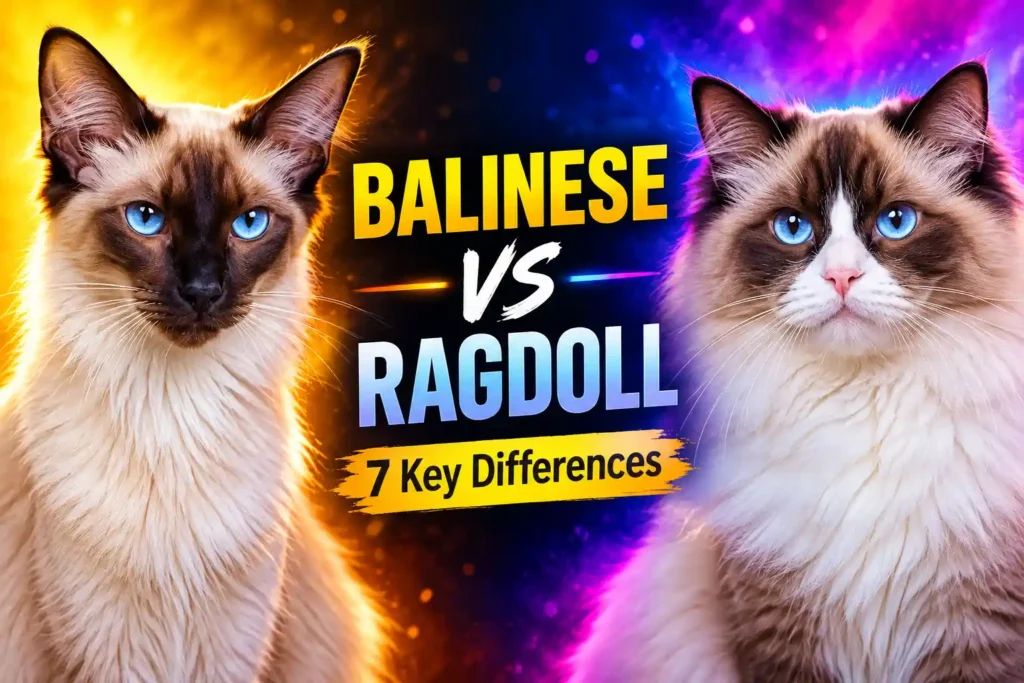
Balinese vs Ragdoll: 7 Main Differences
1. Size and Body Shape
The clearest physical difference is build. A Balinese is usually lean and long-lined, while a Ragdoll is larger, broader, and more heavily boned. Weight ranges found in breed guides are approximate, so assess a cat’s body condition with a veterinarian rather than assuming a heavier cat is healthier.
2. Personality and Energy
Balinese cats often want active participation: games, climbing, exploring, and training. Ragdolls often balance play with relaxed companionship. Both can be playful and affectionate, and kittens of either breed may be much more energetic than adults.
3. Vocalization
Balinese cats are generally the more vocal breed. They may use frequent meows and other sounds to communicate. Ragdolls are often quieter, but a quiet cat still communicates through posture, movement, facial expression, and occasional sounds. If you live in an apartment or share walls with neighbors, consider your tolerance for regular vocalizing rather than expecting either breed to be silent.
4. Coat and Shedding
Balinese coats usually lack a dense downy undercoat, which can make them easier to comb and less prone to matting. Ragdolls also have a relatively silky coat, but their longer fur may need more attention in areas where friction causes tangles. Both breeds shed, and seasonal changes, diet, health, and individual coat type affect how much hair you see at home.
5. Grooming Time
For either breed, use a cat-safe comb gently and build grooming into the weekly routine. Balinese cats may need less frequent combing, while Ragdolls usually benefit from at least weekly combing and extra checks during shedding periods. Never cut a tight mat close to the skin with household scissors; ask a groomer or veterinary professional for help.
6. Training and Enrichment
Both breeds can learn through reward-based training. Balinese cats often enjoy puzzles, target training, and more active games. Ragdolls can enjoy these activities too, particularly short sessions with treats, wand toys, and food puzzles. Provide sturdy cat trees, scratching posts, hiding places, and daily opportunities to move.
7. Home and Family Fit
Either breed may live well with children or other pets when introductions are gradual and interactions are supervised. A breed label cannot guarantee that an individual cat will tolerate being handled, share space, or enjoy another animal. Give every cat a quiet retreat, separate food and water resources, and enough litter boxes for the household.
Balinese vs Ragdoll Grooming: Which Is Easier?
The Balinese usually has the lower-maintenance coat, but neither cat is maintenance-free. A practical routine includes combing, nail checks, dental care, ear checks when needed, and regular veterinary care.
- Balinese: Comb regularly to remove loose hair and check the tail and friction areas.
- Ragdoll: Comb at least weekly, checking behind the ears, under the front legs, around the collar, and along the hindquarters.
- Both breeds: Introduce handling gradually, reward calm behaviour, and stop if the cat becomes distressed.
Do not choose a breed based only on claims that it does not shed. Both breeds shed, and neither should be described as hypoallergenic. If allergies are a concern, spend time with the specific cat before making a commitment and discuss symptoms with a healthcare professional.
Health and Lifespan: Balinese vs Ragdoll
There is no way to predict an individual cat’s lifespan from breed alone. Genetics, preventive veterinary care, nutrition, weight, dental health, indoor safety, and early treatment all influence long-term wellbeing. Ask breeders for documented health screening and veterinary records rather than relying on a general claim that a breed is healthy.
Balinese Health Considerations
Balinese cats share ancestry with Siamese cats, so a responsible breeder should understand health issues reported in related lines and explain which screenings are appropriate. Ask about family history, eye health, and any breed-relevant genetic testing. A veterinarian can advise on screening based on the cat’s age, background, and symptoms.
Ragdoll Health Considerations
Hypertrophic cardiomyopathy (HCM), a disease affecting the heart muscle, is an important inherited health concern in Ragdolls. Ask whether breeding cats have had appropriate genetic testing and cardiac evaluation. A genetic test does not identify every possible cause of HCM, so ask the breeder and veterinarian how results are interpreted. The Cornell Feline Health Center Guide to HCM explains the condition and why veterinary interpretation matters.
Ragdolls can also gain excess weight if food intake exceeds activity needs. Measure meals, monitor body condition, and use regular play to support a healthy weight. For more details, read our Guide to Common Ragdoll Health Problems.
Questions to Ask a Breeder
- What health conditions have occurred in the kitten’s parents and close relatives?
- Which genetic tests and veterinary examinations have been completed, and can I see the results?
- What vaccinations, parasite treatments, and veterinary checks has the kitten received?
- How are the kittens socialized, and at what age do you allow them to go to a new home?
- Will you provide the contract, medical records, and support after adoption?
Lifespan, Cost, and Availability
Both breeds can be long-term companions, so plan for years of food, litter, preventive care, enrichment, and emergency veterinary costs. Published lifespan estimates vary by source and individual cat; a breeder should not promise a specific lifespan.
Purchase prices depend on location, pedigree, breeder practices, age, and whether a cat is sold as a pet or for breeding or showing. Balinese cats may be harder to find in some areas, while Ragdoll availability also varies by region and desired color or pattern. Rather than relying on a generic price range, compare current local listings and include the cost of veterinary care, transport, supplies, and pet insurance if available.
Consider adoption and breed-specific rescue groups as well as breeders. An adult cat’s established personality may make it easier to judge whether its activity level and social needs fit your home.
Can Balinese and Ragdoll Cats Be Left Alone?
Neither breed should be expected to cope well with long periods of isolation without enrichment and a plan for care. Balinese cats often seek frequent interaction and may become noisy or restless when bored. Ragdolls also tend to value human company, even if they are quieter. Individual temperament, age, health, and previous experience affect how a cat handles time alone.
A Practical Daily-Care Checklist
- Schedule daily interactive play, with extra puzzle toys and climbing opportunities for an active Balinese.
- Provide a comfortable resting area, scratching surfaces, fresh water, and clean litter trays for either breed.
- Before leaving home, offer safe enrichment and remove string, small swallowable objects, and other hazards.
- Arrange a trusted person to check on the cat when you are away for extended periods, and ask your veterinarian for advice about kittens, older cats, or cats with medical needs.
- Watch for changes in appetite, litter-box habits, grooming, vocalizing, or social behaviour, and contact a veterinarian if changes persist or seem urgent.
Which Is Better: Balinese or Ragdoll?
Choose a Balinese If You Want
- A slim, athletic cat that enjoys active games and climbing.
- A companion that is often vocal and communicative.
- A cat that enjoys training, puzzle toys, and frequent interaction.
- A silky coat that is generally straightforward to comb.
Choose a Ragdoll If You Want
- A larger, sturdy cat with a semi-long coat.
- An affectionate companion that often enjoys staying close to people.
- A cat that may be less vocal on average than a Balinese.
- A relaxed companion that still receives regular play and grooming.
Before You Decide
Meet the cat if possible, ask about its behaviour in familiar situations, and consider how it responds to handling, noise, visitors, and other animals. If you work long hours, plan for enrichment and companionship rather than assuming one breed can comfortably be left alone all day. Personality and early socialization matter as much as breed tendencies.
FAQs (Because People Keep Asking) of Balinese vs Ragdoll
Are Balinese cats bigger than Ragdolls?
No, Ragdolls are usually the larger and heavier breed. Balinese cats tend to have a slimmer, more athletic build.
Are Balinese cats more affectionate than Ragdolls?
Both breeds can be affectionate. Balinese cats often show affection through close involvement and frequent communication, while many Ragdolls enjoy calm companionship. Individual temperament varies.
Are Balinese cats more vocal than Ragdolls?
Generally, yes. Balinese cats are known for being talkative, while Ragdolls tend to be quieter on average. Neither breed is guaranteed to be silent or highly vocal.
Which cat sheds less, Balinese or Ragdoll?
Balinese cats often have a coat that is easier to maintain because it lacks a dense downy undercoat. Both breeds shed, and shedding varies with the individual cat and season.
Are Balinese cats hypoallergenic?
No cat breed is truly hypoallergenic. Allergic reactions depend on proteins produced by cats, individual sensitivity, and exposure, not just coat length or shedding.
Do Ragdoll cats need more grooming than Balinese cats?
Usually, yes. Ragdolls typically need weekly combing and checks for tangles. Balinese coats are often easier to maintain, though regular grooming is still useful.
Are Balinese cats good for apartments?
They can be, provided they have vertical space, play opportunities, and daily interaction. Their vocal nature may also matter if you share walls with neighbours.
Are Ragdoll cats good for families with children?
Many Ragdolls do well in family homes, but children should be taught to handle cats gently and respect when a cat wants space. Supervise interactions with any cat.
Can Balinese and Ragdoll cats live with other pets?
Both may adapt to other cats or cat-friendly dogs when introductions are gradual. Provide separate resources and never force animals to interact.
Which breed is healthier?
Neither breed can be declared universally healthier. Ask about the health history of the individual cat’s family, appropriate screening, and veterinary records. Routine preventive care matters for both.
Which breed is better for first-time cat owners?
Either can suit a prepared first-time owner. Balinese cats may be a better fit for someone who enjoys frequent play and conversation, while a Ragdoll may suit someone seeking a larger, often calmer companion. Learn about the individual cat before deciding.
Can a Balinese Cat Live With a Ragdoll?
Yes, a Balinese and a Ragdoll may live together successfully, but compatibility depends on the cats rather than breed labels alone. Introduce them gradually, exchange scents before face-to-face meetings, provide separate food and water stations, and give each cat its own safe resting places and litter access. Do not force contact, and slow the process if either cat shows persistent fear or aggression.
How We Approach This Breed Comparison of Balinese vs Ragdoll
This guide compares typical breed characteristics and practical care needs, rather than treating breed stereotypes as guarantees. Breed descriptions were checked against the Cat Fanciers’ Association profiles for the Balinese Cat and the Ragdoll Cat, alongside The International Cat Association’s Balinese Breed Profile and Ragdoll Breed Profile. Health screening and care decisions should be discussed with a qualified veterinarian. This article is educational and is not a substitute for individual veterinary advice.