Last Updated: October 13, 2026
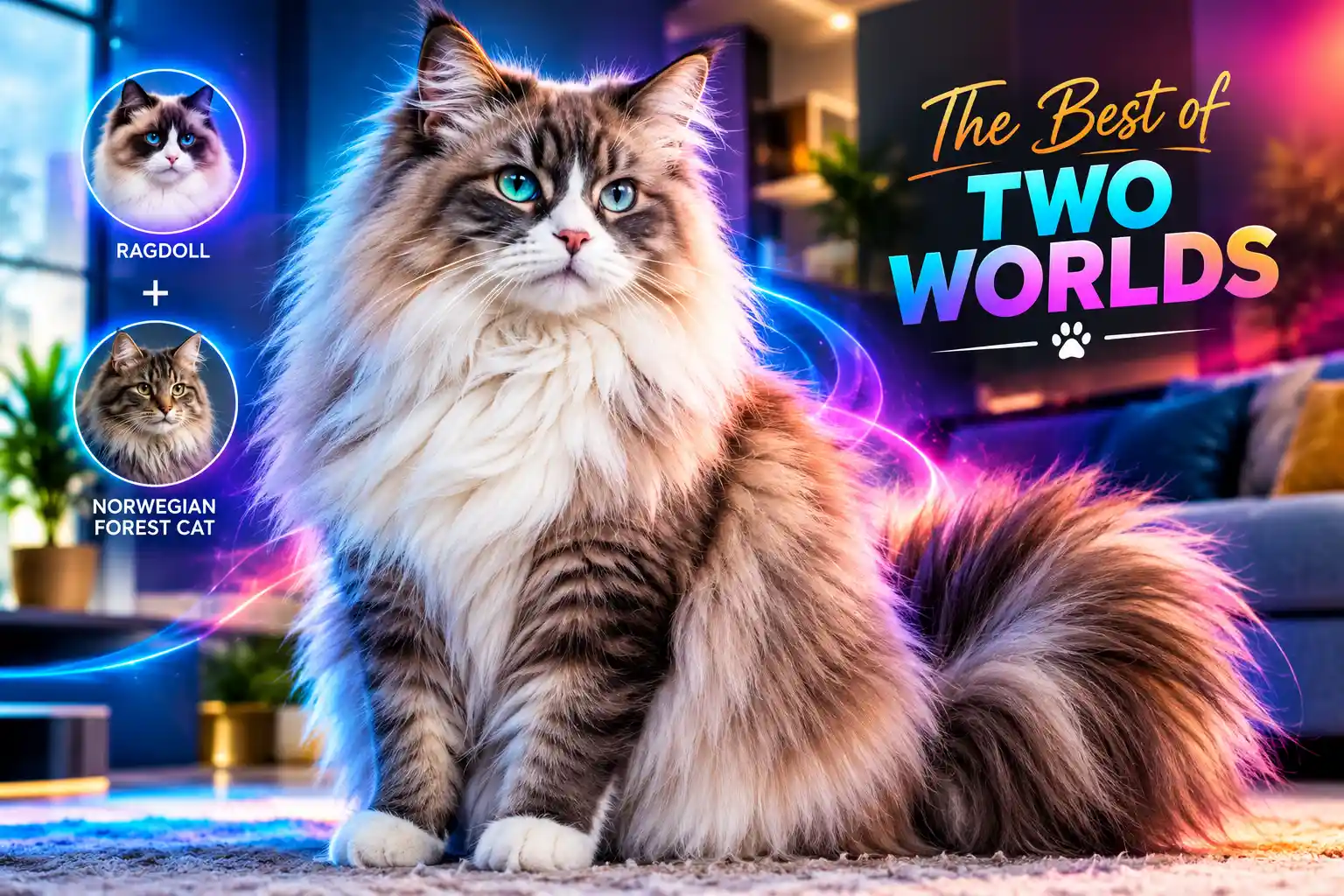
A Ragdoll Norwegian Forest Cat mix may combine the Ragdoll’s people-oriented nature with the Norwegian Forest Cat’s athletic build, climbing instincts, and thick coat. However, there is no guaranteed appearance, personality, adult size, or health profile for this cross. Each cat inherits a different mix of traits, so it is best to treat breed descriptions as possibilities rather than promises.
This guide explains what to expect from a Norwegian Forest Cat Ragdoll mix, including appearance, temperament, grooming, nutrition, exercise, health questions to discuss with a veterinarian, and what to ask a breeder or rescue before bringing one home.
Ragdoll Norwegian Forest Cat Mix: Quick Facts
| Feature | What to Know |
|---|---|
| Parent cats | Ragdoll and Norwegian Forest Cat |
| Recognition | This cross is not a separately standardized purebred cat in the major breed registries |
| Appearance | Often medium-to-large, with a semi-long or long coat, but individual traits vary |
| Personality | May be affectionate, curious, playful, or more independent |
| Grooming | Regular combing; frequency depends on coat texture and shedding |
| Exercise | Daily interactive play, climbing opportunities, and enrichment |
| Health planning | Ask about both parents’ veterinary history and breed-relevant screening |
| Best fit | Homes prepared for grooming, enrichment, routine veterinary care, and an individual cat’s needs |
These are general expectations based on the parent breeds, not guaranteed specifications for every mixed-breed cat.
What Is a Norwegian Forest Cat Ragdoll Mix?
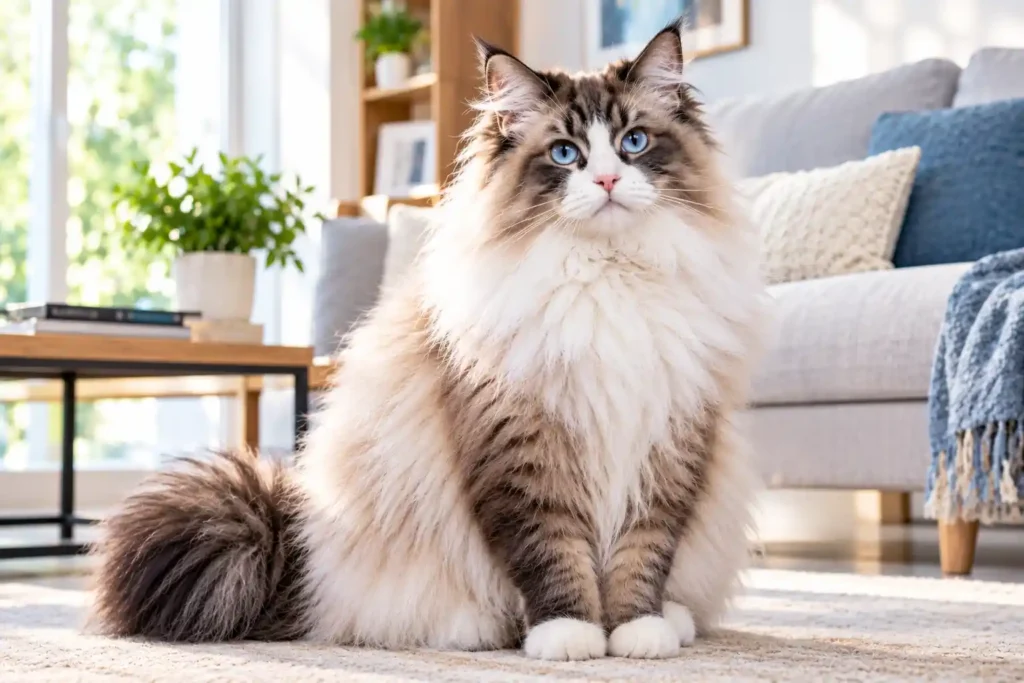
A Norwegian Forest Cat Ragdoll mix is a domestic cat with one Ragdoll parent and one Norwegian Forest Cat parent, or ancestry from both. It is sometimes described informally as a Ragdoll Forest Cat mix. Unlike established pedigreed breeds, this cross does not have one universally accepted breed standard, so there is no reliable way to predict every kitten’s coat, eye colour, temperament, or adult size.
The Ragdoll is commonly associated with a relaxed, people-focused temperament. The Norwegian Forest Cat is known for being intelligent, athletic, and comfortable climbing to high places. A kitten may inherit some traits from each parent, but genetics and early socialisation both matter.
Meet the Parent Breeds
Ragdoll Cat Characteristics
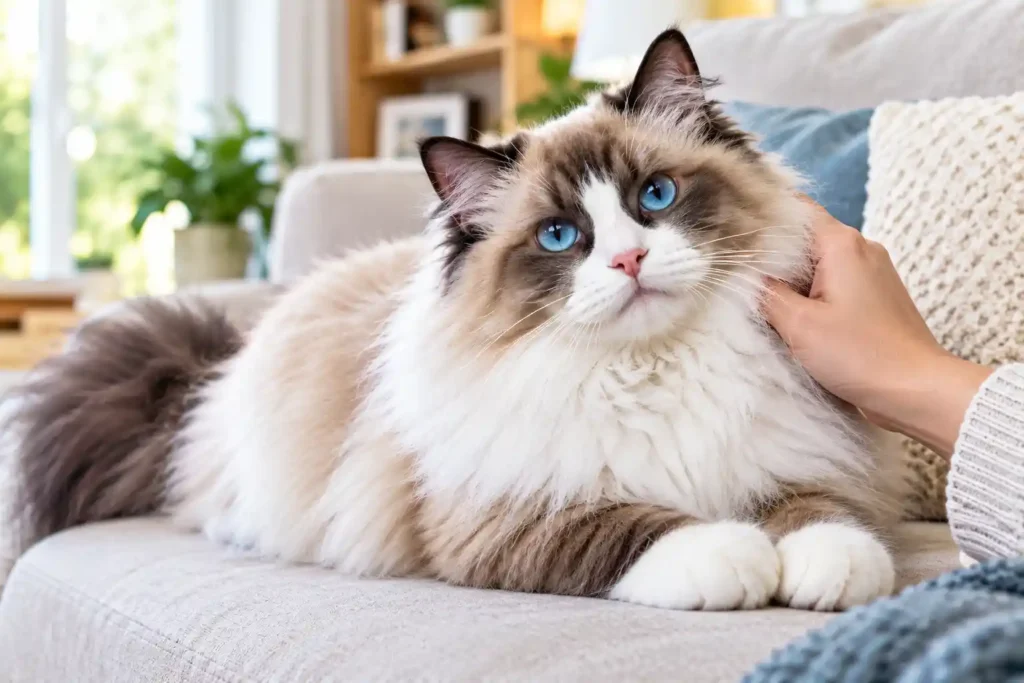
Ragdolls are large, semi-longhaired cats often valued for their affectionate, social nature. Many enjoy staying near their people, although not every Ragdoll likes being picked up or held. Their coat commonly has a silky texture and colourpoint patterns. Learn more in our guide to Ragdoll Cat Colors and Patterns.
Norwegian Forest Cat Characteristics
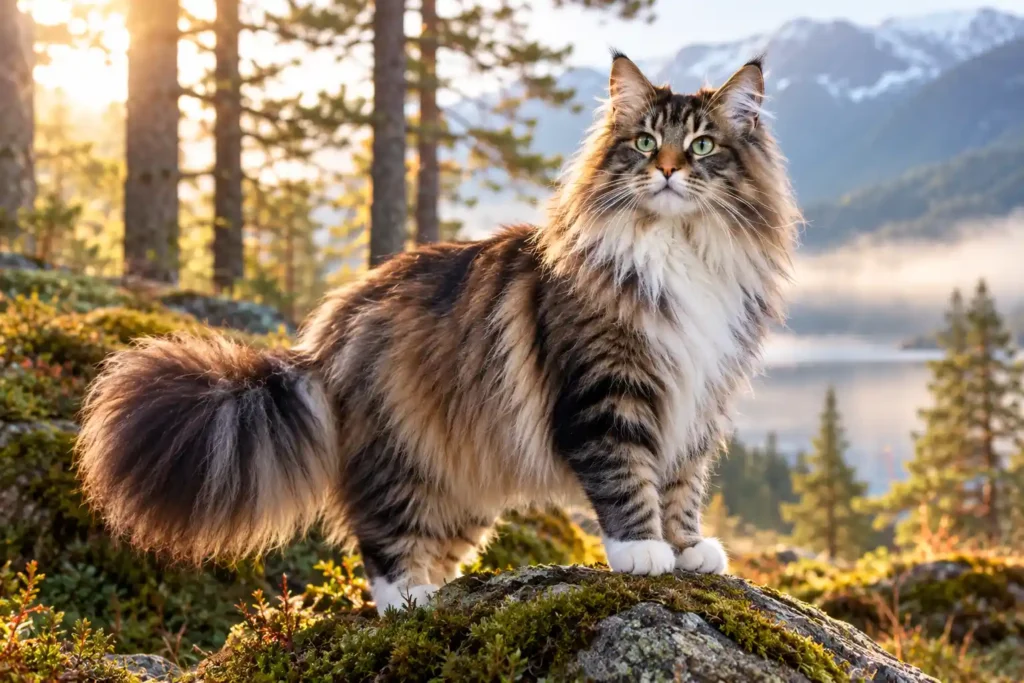
The Norwegian Forest Cat is a sturdy, slow-maturing breed with a dense double coat, a bushy tail, tufted paws, and a triangular head. Many enjoy climbing, exploring, and interactive play, while also appreciating companionship on their own terms. The Cat Fanciers’ Association describes the breed’s coat and independent, intelligent nature in its Norwegian Forest Cat Breed Profile.
Appearance: What Does a Ragdoll Norwegian Forest Cat Mix Look Like?
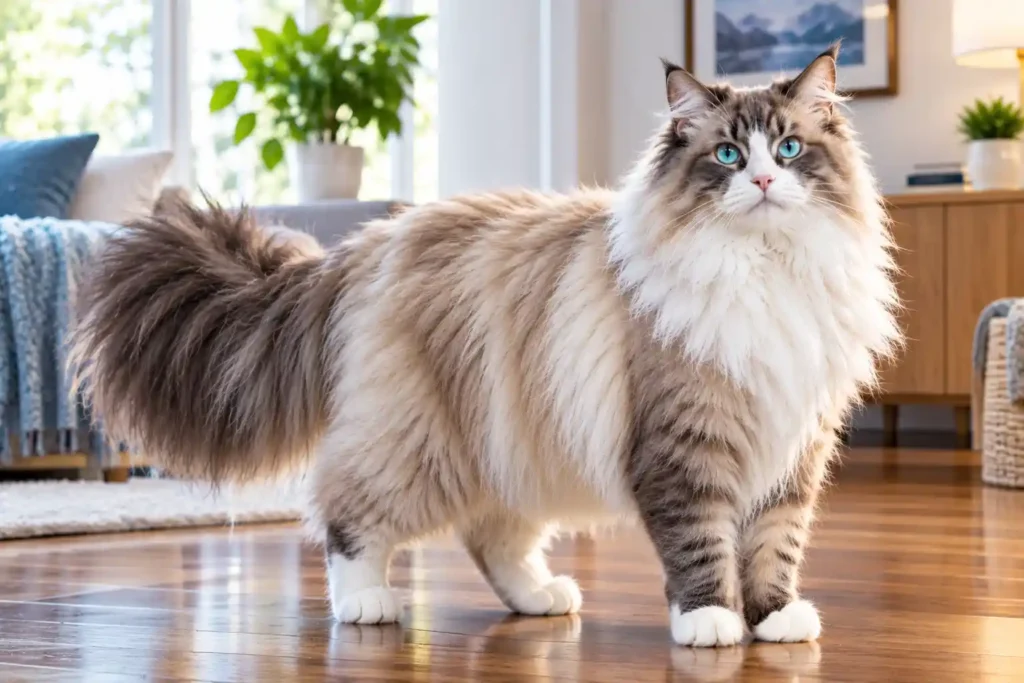
The appearance of a Ragdoll and Norwegian Forest Cat mix can vary even among littermates. Some cats have a broad face and plush coat; others may have a more triangular head, a pronounced neck ruff, or a more athletic body. Coat density and texture depend on the individual cat’s inherited traits.
Size and Weight
Both parent breeds can be substantial cats, but a mixed kitten’s adult size cannot be predicted precisely from breed names alone. Sex, genetics, nutrition, and overall health all influence growth. Ask a veterinarian to assess body condition and growth rather than aiming for a particular weight just because it appears in an online breed guide.
Coat, Colours, and Eye Colour
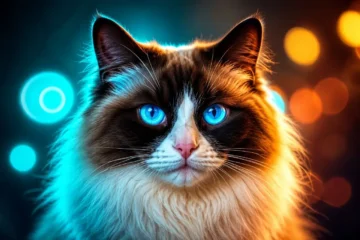
The coat may be semi-long or long and may feel silky, dense, or somewhere in between. Ragdolls are known for colourpoint patterns, while Norwegian Forest Cats appear in a wider range of colours and patterns. A mix may inherit a variety of coat colours, markings, and eye colours. Blue eyes are not guaranteed.
Does This Mix Have a Double Coat?
Not necessarily. Norwegian Forest Cats have a distinctive double coat, while Ragdoll coats are generally described as semi-long and silky. A cross may inherit a denser undercoat or a less dense coat. Check the coat itself and adjust grooming to its actual condition instead of assuming every mix has the same coat type.
Personality and Temperament
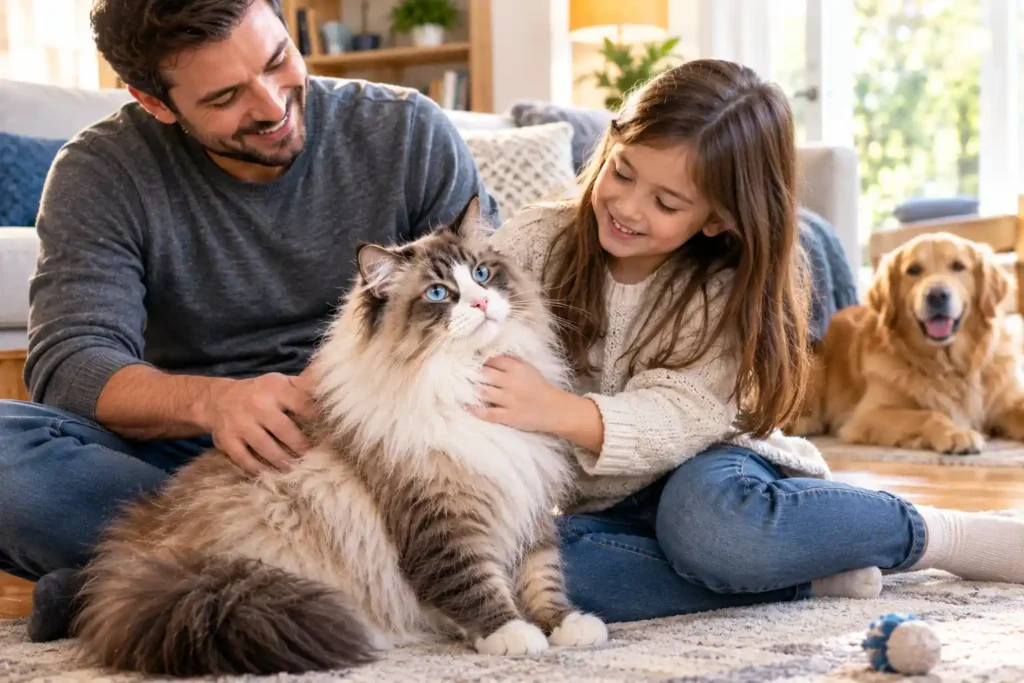
A Ragdoll Norwegian Forest Cat mix may be affectionate and people-oriented while also curious and independent. Some cats follow their family from room to room; others prefer to sit nearby and decide when they want attention. Individual temperament is shaped by genetics, socialisation, previous experiences, and the environment.
Are They Good Family Cats?
They can be a good fit for families that treat cats gently and provide safe spaces. Children should be taught not to chase, restrain, or force a cat to be held. Introduce the cat gradually to other pets and supervise early interactions. No breed mix is guaranteed to get along with every child, dog, or cat.
Do They Like Being Held?
Some may enjoy being carried, particularly if they are comfortable with handling from an early age. Others prefer petting with all four paws on the floor. Let the cat choose, watch for signs of stress, and never assume that a Ragdoll cross will automatically tolerate being picked up.
Are They Vocal or Independent?
Vocal habits vary. Your cat may chirp, meow to request food or attention, or remain relatively quiet. Provide companionship without forcing interaction, and use predictable routines to help a new cat settle.
Activity Level, Play, and Enrichment
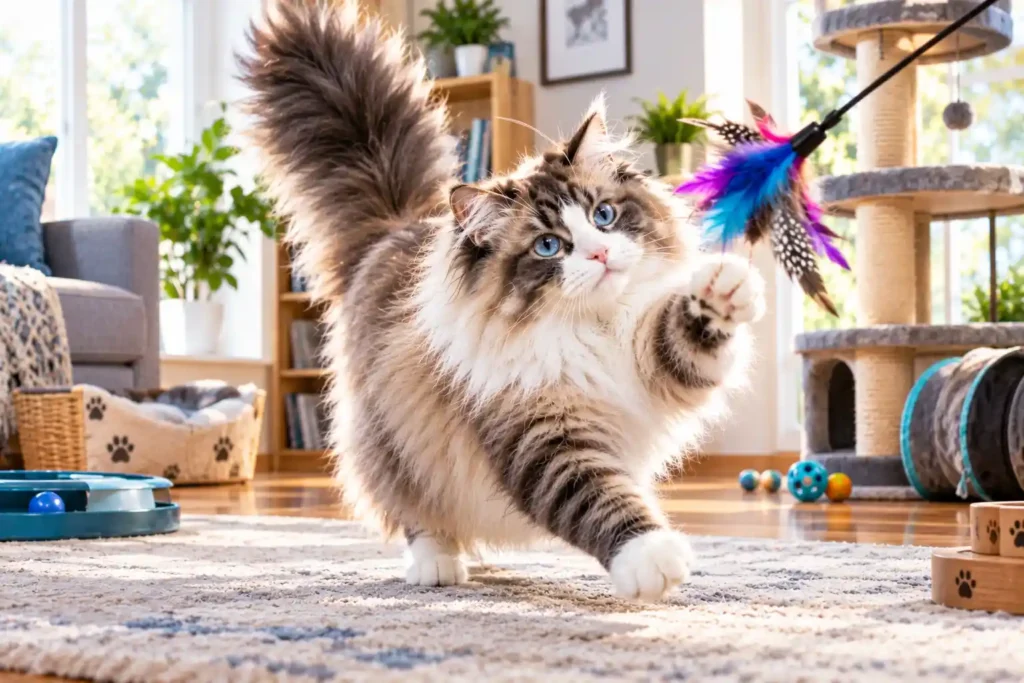
This mix may be more active than some people expect from a Ragdoll, particularly if it inherits the Norwegian Forest Cat’s climbing and hunting instincts. Offer several short play sessions each day, using wand toys, puzzle feeders, and toys that encourage chasing. Rotate toys to keep the environment interesting.
Indoor Exercise and Climbing
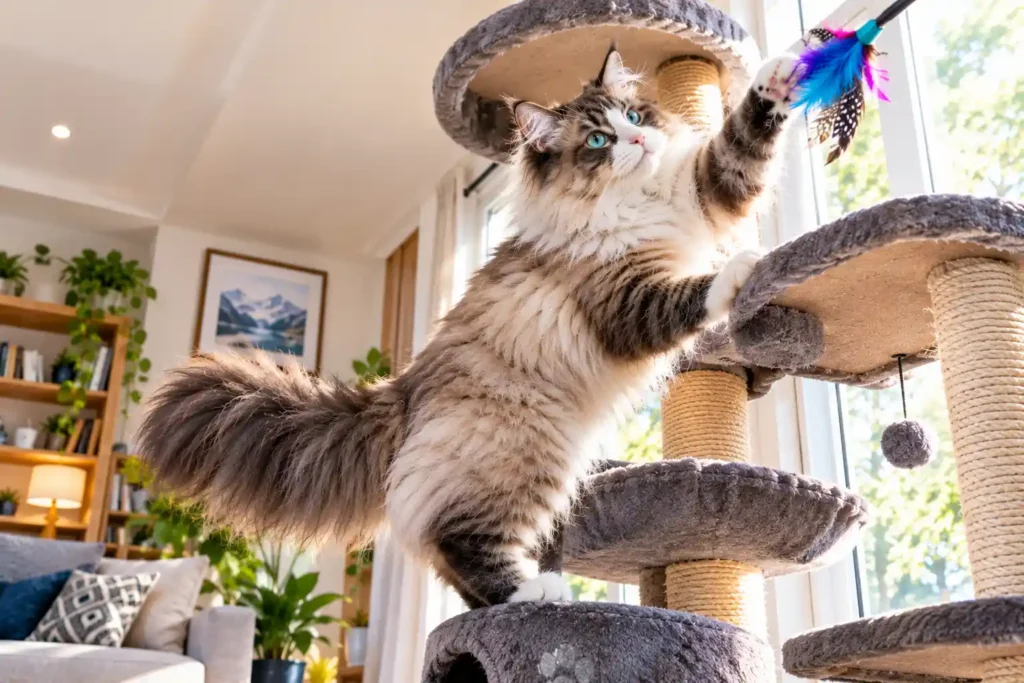
- Provide a stable cat tree or other safe vertical spaces.
- Use interactive toys that let your cat stalk, chase, and pounce.
- Offer scratching posts and hiding places.
- Use food puzzles when suitable for your cat’s age and eating habits.
- If you take your cat outdoors, use a secure enclosure or carefully train it to a well-fitted harness. Supervise outdoor time.
There is no universal exercise-minute target for every cat. Adjust play to age, fitness, health, and interest, and ask your veterinarian for guidance if your cat tires unusually quickly or has mobility concerns.
Grooming and Shedding
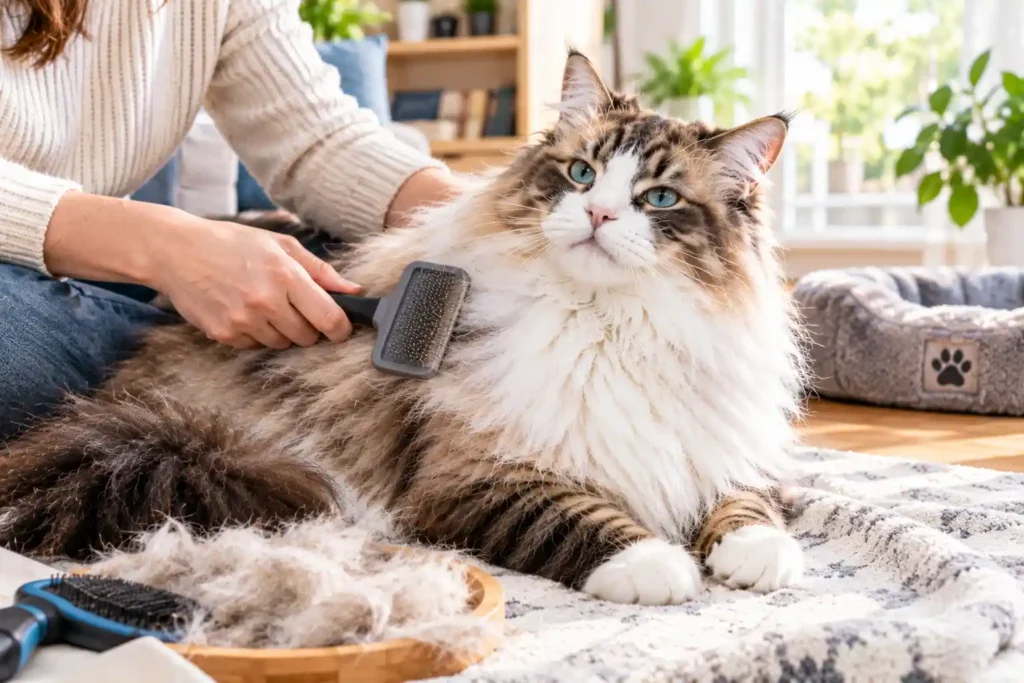
Expect to comb the coat regularly, then increase grooming when shedding or tangles make it necessary. Long-haired cats can develop mats around the armpits, behind the ears, under the collar, and around the hindquarters. Gentle, frequent sessions are usually easier than trying to remove a large mat at once.
How Often Should You Brush This Mix?
Start with several short grooming sessions a week and assess the coat. A dense coat or seasonal shedding may require daily attention, while a silkier coat may need less. Use a suitable comb, work gently, and stop if the cat becomes distressed. Seek professional grooming or veterinary advice for tight mats rather than cutting close to the skin with scissors.
Other Grooming Basics
- Nails: Check regularly and trim the tips when needed.
- Teeth: Introduce cat-safe tooth brushing gradually and ask your veterinarian about dental care.
- Ears and eyes: Check for unusual discharge, redness, odour, or irritation.
- Bathing: Most cats do not need routine baths unless they are dirty or a veterinarian recommends one.
Feeding and Nutrition
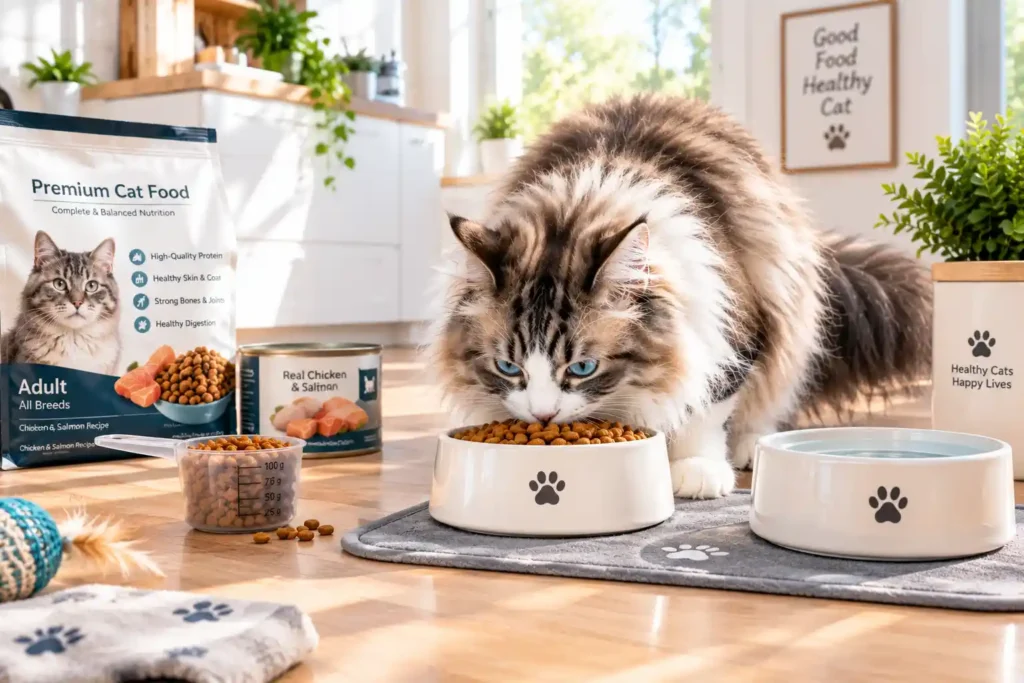
Feed a complete and balanced cat food appropriate for your cat’s life stage and health. Kittens need food formulated for growth, while adults generally need an adult maintenance diet. Follow the product’s feeding guidance as a starting point, then adjust portions with veterinary advice based on body condition and activity.
How Can You Help Prevent Excess Weight?
Measure meals, keep treats modest, and monitor body shape rather than relying only on the scale. Your cat should have a visible waist from above and ribs that can be felt without a thick layer of fat. Ask your veterinarian to recommend a target body condition and feeding plan. Avoid restrictive diets for kittens unless a veterinarian specifically advises them.
Health Concerns and Veterinary Care
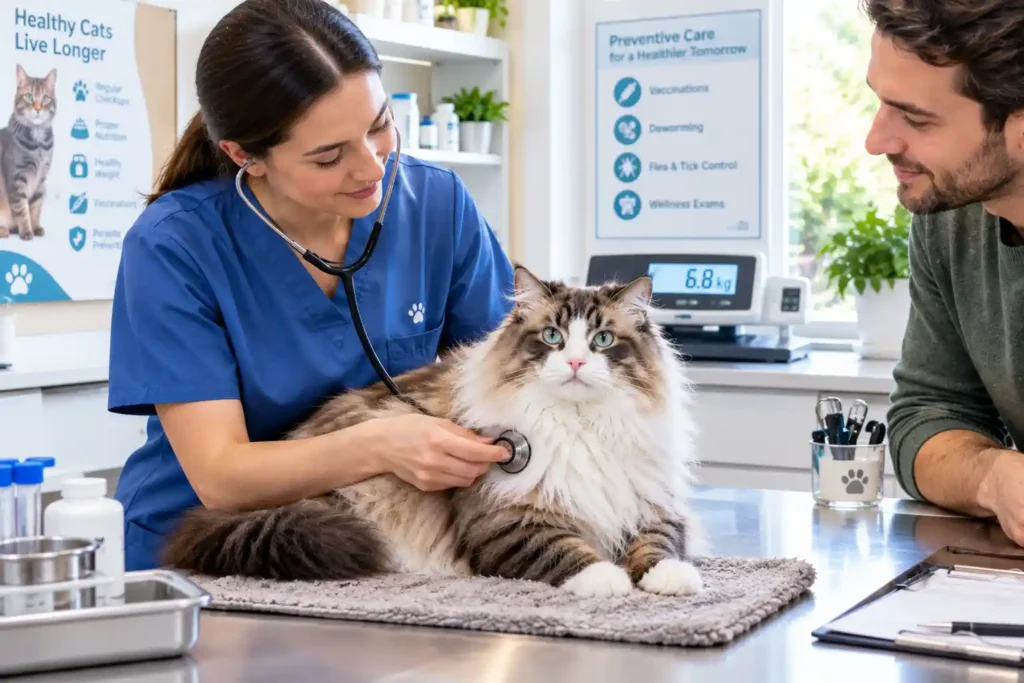
A mixed-breed background does not guarantee better health or protect a cat from inherited conditions. The most useful approach is to learn about the parents’ health, arrange routine veterinary examinations, keep vaccinations and parasite prevention up to date, and discuss any screening recommended for the cat’s family history.
Heart Disease and Hypertrophic Cardiomyopathy
Hypertrophic cardiomyopathy (HCM) is a disease involving thickening of the heart muscle and occurs in cats, including some pedigreed populations. Ask the breeder whether the parent cats have relevant veterinary evaluations and any recommended genetic testing. A genetic test does not detect every possible cause of HCM, so a veterinarian can explain what screening is appropriate. Seek urgent veterinary care if your cat has difficulty breathing, collapses, or develops sudden painful weakness in the hind legs.
Joint Health and Healthy Body Weight
Large cats can experience mobility problems, and excess weight places additional strain on joints. Provide low and high resting options, keep climbing structures stable, and consult a veterinarian if you notice stiffness, reluctance to jump, limping, or changes in grooming habits.
What Health Records Should You Ask For?
- Veterinary records for the kitten and, where available, both parents.
- Vaccination, deworming, and parasite-prevention history.
- Information about inherited conditions in the family line.
- Results of breed-relevant health screening and an explanation of what each test can and cannot show.
- A written contract, return policy, and details of the kitten’s socialisation and diet.
For general breed background, compare information from the International Cat Association’s Norwegian Forest Cat Profile and the Cat Fanciers’ Association Breed Profile. These describe the parent breed, not a guaranteed health outcome for a cross.
Is a Ragdoll Norwegian Forest Cat Mix Right for You?
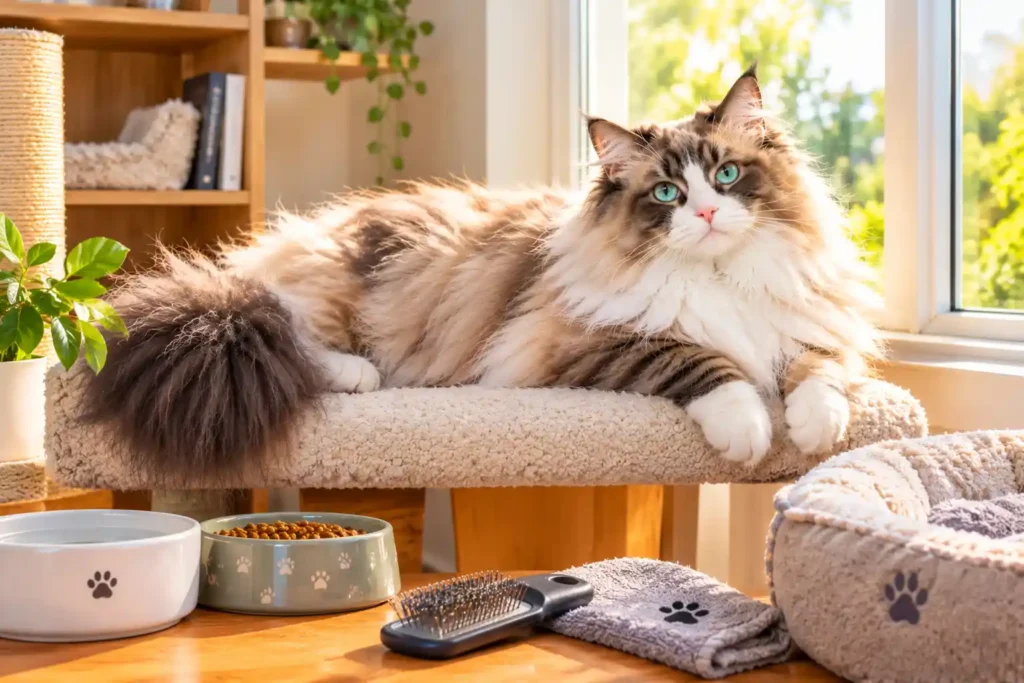
This mix may suit people who want a social, playful cat and can commit to regular grooming, enrichment, and lifelong veterinary care. It may be less suitable for someone who expects a cat to enjoy being held at all times or who cannot manage coat care if the cat inherits a dense, long coat.
Questions to Ask Before Adopting or Buying
- Can I meet the kitten and observe its behaviour in a calm setting?
- Can the breeder or rescue share reliable health and veterinary records?
- What food is the kitten eating now, and how should I transition diets?
- How has the kitten been socialised with people, handling, and household sounds?
- What support is available if a health or behaviour concern appears after adoption?
Consider adoption through a reputable rescue as well as responsible breeders. Be cautious of sellers who promise a precise adult size, a guaranteed temperament, or that a crossbreed cannot inherit health problems.
Ragdoll vs Norwegian Forest Cat vs Their Mix
| Trait | Ragdoll | Norwegian Forest Cat | Mix |
|---|---|---|---|
| Typical temperament | Often affectionate and people-focused | Often playful and independent | May show a combination; not predictable |
| Coat | Semi-long and silky | Dense double coat | Texture and density vary |
| Activity | Varies; often enjoys interactive play | Often enjoys climbing and exploring | Depends on the individual |
| Appearance | Recognisable colourpoint patterns are common | Many colours and patterns | Markings and eye colour are not guaranteed |
For another comparison, read our Birman vs Ragdoll Cat Guide. If you are researching other crosses, our guide to the Maine Coon Mixed With Ragdoll covers another large-cat mix.
Frequently Asked Questions About the Ragdoll Norwegian Forest Cat Mix
Is a Ragdoll Norwegian Forest Cat mix a recognised breed?
It is a cross between two breeds, not a separately standardised purebred breed in the major registries. Registration rules can differ, so check directly with the relevant organisation if pedigree status matters to you.
How big will a Norwegian Forest Cat Ragdoll mix get?
Adult size varies with genetics, sex, nutrition, and health. Both parent breeds can be large, but their cross does not have a guaranteed weight or height. Your veterinarian can monitor healthy growth.
How long does a Ragdoll Norwegian Forest Cat mix live?
Lifespan varies by individual and cannot be guaranteed from parent breeds alone. Preventive veterinary care, appropriate nutrition, a safe environment, and early attention to health changes can support wellbeing.
Do Ragdoll Norwegian Forest Cat mixes shed a lot?
Shedding depends on the coat the cat inherits and the season. A cat with a dense undercoat may shed more heavily than one with a silkier coat. Regular combing helps you manage loose fur and spot tangles.
Are they hypoallergenic?
No cat can be guaranteed hypoallergenic. Allergic reactions vary by person and may be triggered by proteins found in a cat’s saliva, skin, and other secretions, not simply by hair length. Spend time with the individual cat before adopting if allergies are a concern.
Are they good with children and other pets?
Some can live comfortably with children and other animals when introductions are gradual and interactions are respectful. Temperament varies, so supervise young children and give the cat places to retreat.
How often should I groom a Ragdoll Forest Cat mix?
Begin with several gentle combing sessions per week and adjust to the coat. Increase frequency if you notice shedding, knots, or mats. A veterinarian or professional groomer can advise on difficult coat problems.
What health tests should a breeder provide?
Ask for veterinary records and any screening relevant to the parents’ breed backgrounds and family history, including discussion of heart disease such as HCM where appropriate. A responsible breeder should explain test results honestly and avoid promising that any cat is free of all inherited risk.
Editorial Note and Sources
This article provides general educational information and is not a substitute for a veterinarian’s diagnosis or treatment. The Ragdoll Norwegian Forest Cat mix can vary substantially, so advice should be tailored to the individual cat. We used established breed-organisation information to describe the Norwegian Forest Cat parent breed and recommend discussing individual health questions with a qualified veterinarian.