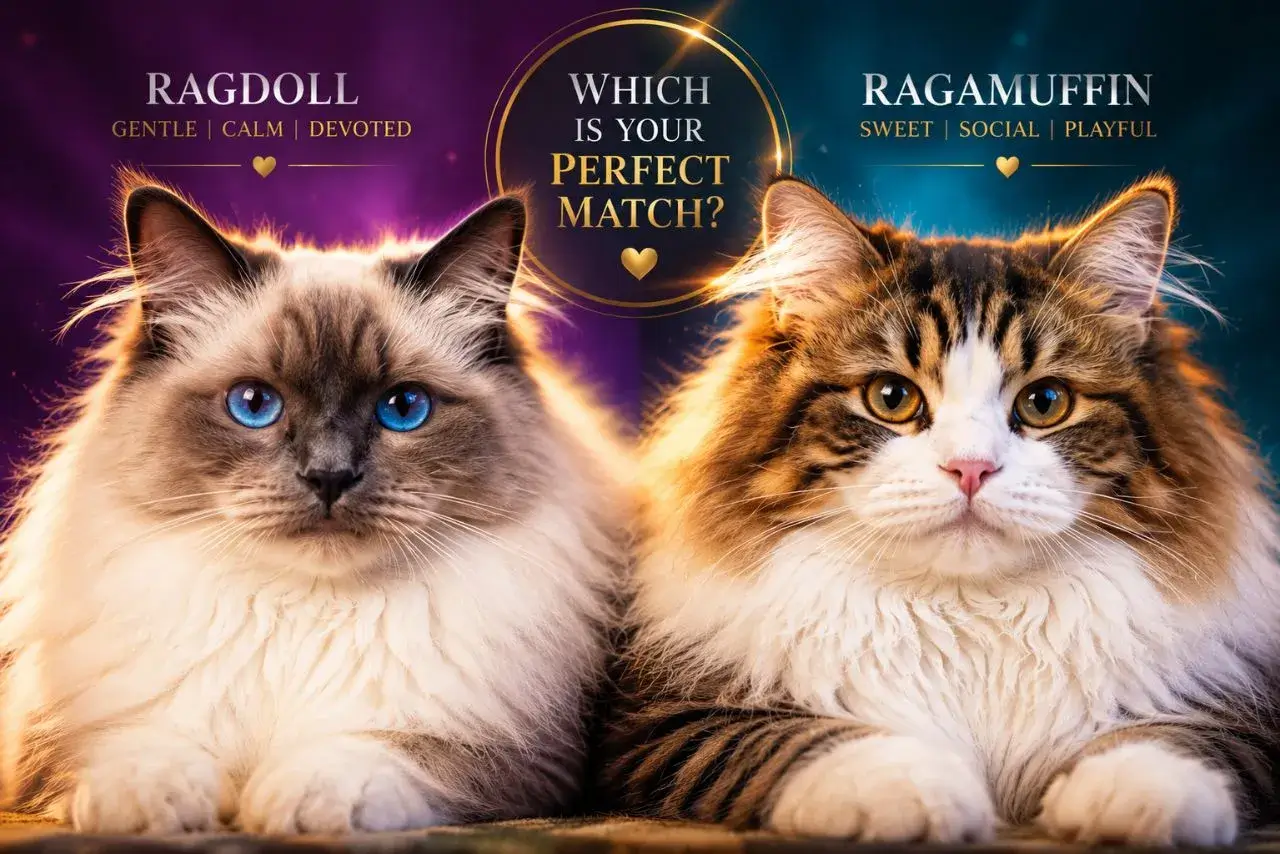
In the world of cats, two breeds catch our eye. The Ragdoll and the Ragamuffin are known for their looks and sweet nature. We often ask, “What makes these cats different?” “What is the Difference Between Ragdoll and Ragamuffin Cats? “Knowing the differences helps us pick the right cat for our home.
Last updated September 2026: we corrected the breed-recognition history in this guide, including an important note about TICA’s foundation Ragamuffin program that can affect what you’re actually buying, added a lifespan comparison, and fixed some inconsistent weight figures.
What You Should Know Before Choosing Between These Two Breeds
If you’re trying to decide between a Ragdoll and a Ragamuffin, here’s the short version before we get into the details.
Ragdolls and Ragamuffins look similar at first glance. Both have fluffy coats, calm natures, and that soft, almost plush quality that makes big cats irresistible. But once you look closer, the differences start to show up in ways that actually matter when choosing a pet.
Ragdolls are the larger of the two. They carry a pointed coat pattern, think darker coloring on the face, ears, paws, and tail, and they’re famous for going completely limp when you pick them up, which is exactly where the name comes from. They’re deeply loyal and tend to shadow their owners around the house.
Ragamuffins are a bit rounder in build and come in a much wider range of colors and patterns. They’re also affectionate, but they bring a little more energy and playfulness to the table. If you want a cat that’s cuddly but also keeps things interesting, the Ragamuffin leans that way.
Both breeds are loving and loyal, but they do have different grooming needs and activity levels, which we’ll break down throughout the article. And if you’re already familiar with Ragdolls and want to know how the breed behaves when mixed with others, the Ragdoll Himalayan Mix Personality is a good place to start seeing how those core traits shift across generations.
Understanding these differences is what helps you make the right call. And knowing a bit of their history makes both breeds even more interesting.
Origins and Historical Background
The Ragdoll and Ragamuffin cat breeds have interesting stories. They come from the world of feline genetics and the growth of domestic cat varieties. Let’s explore their origins and how they became beloved pets.
The Ragdoll Story: From Ann Baker to Modern Day
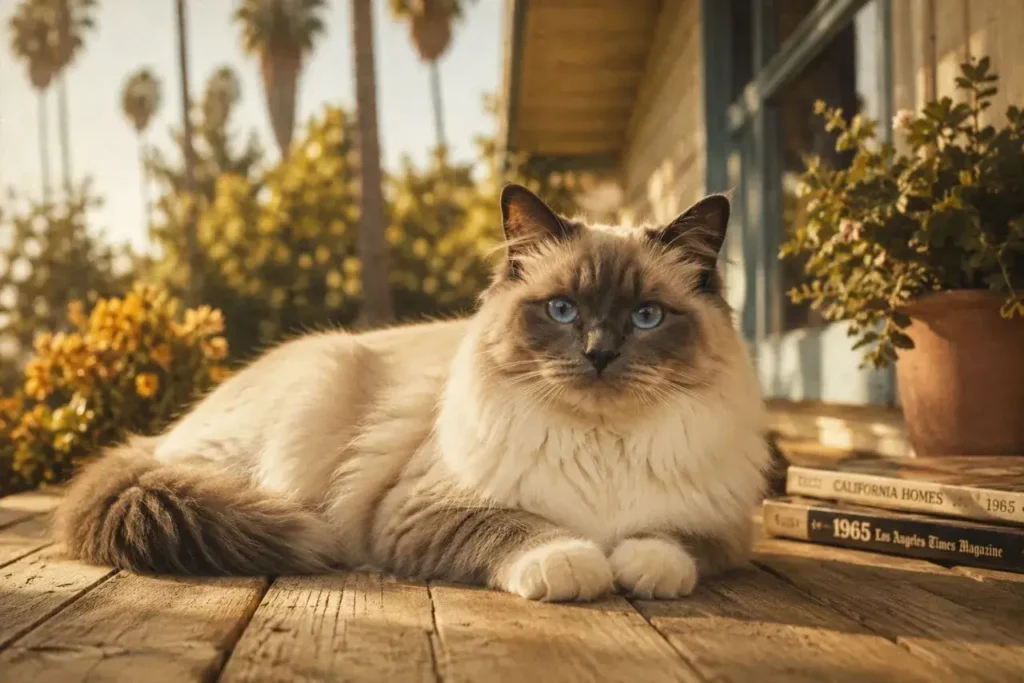
In the 1960s, Ann Baker in Riverside, California, started a special cat breeding project. She wanted to create cats that were gentle, loving, and acted like dogs. This led to the Ragdoll breed we love today.
Development of the Ragamuffin Breed
As the Ragdoll breed grew, some breeders wanted to try something new. They broke away and started the Ragamuffin breed. They mixed Ragdoll cats with other varieties to create a new, unique cat.
Breed Recognition and Standards
The Ragdoll was accepted for registration by the Cat Fanciers’ Association (CFA) in 1993 and advanced to full championship status in 2000. The Ragamuffin’s recognition history is more scattered: it was accepted by the American Cat Fanciers Association (ACFA) in 2003 and later by CFA, but here’s an important detail most comparison articles leave out: TICA does not recognize the Ragamuffin as a championship breed at all. TICA still registers Ragdoll-cross cats under a “foundation Ragamuffin” program, which means a kitten marketed as a “TICA-registered Ragamuffin” may not have any real Ragamuffin ancestry, just Ragdoll genetics sold under a different name. If a breed registry matters to you, CFA or ACFA papers are the ones that actually confirm Ragamuffin lineage.
| Breed | Origin | Recognition |
| Ragdoll | Riverside, California (1960s) | CFA (registered 1993, championship 2000) |
| Ragamuffin | Developed from Ragdoll and other domestic cats | ACFA (2003), CFA (later); not recognized by TICA as a distinct championship breed |
Physical Characteristics and Appearance
Ragdoll and Ragamuffin cats have special features that make them unique. Let’s explore what makes these fluffy cats special.
Size and Stature
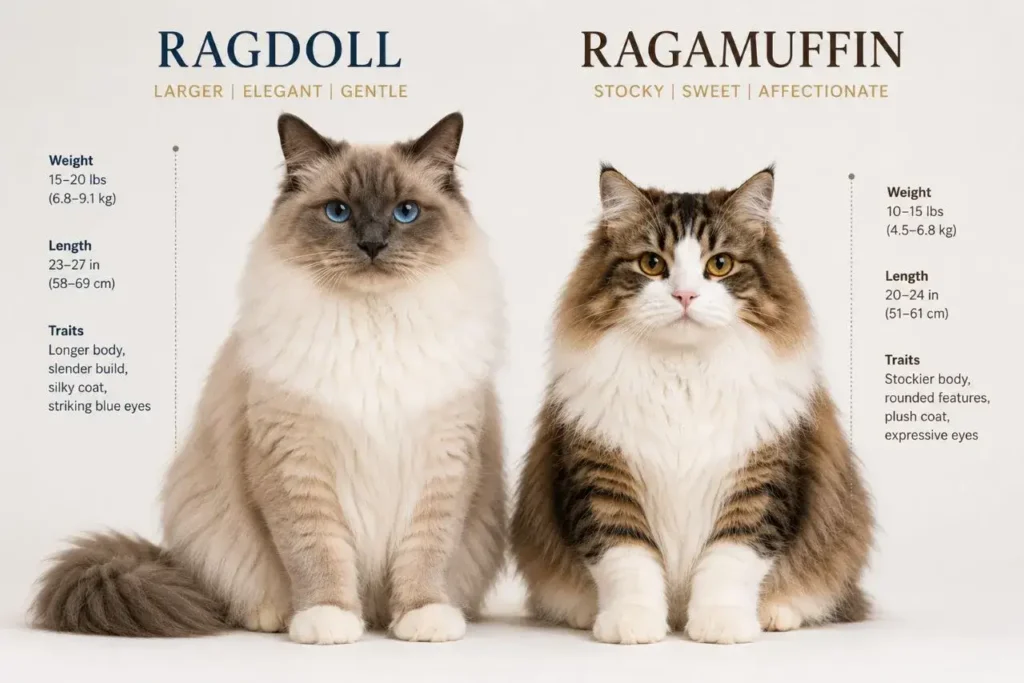
Ragdoll cats are medium to large. Males weigh 15 to 20 pounds, and females weigh 10 to 15 pounds. Ragamuffin cats are a bit smaller. Males weigh 12 to 18 pounds, and females weigh 8 to 15 pounds.
Coat and Patterns
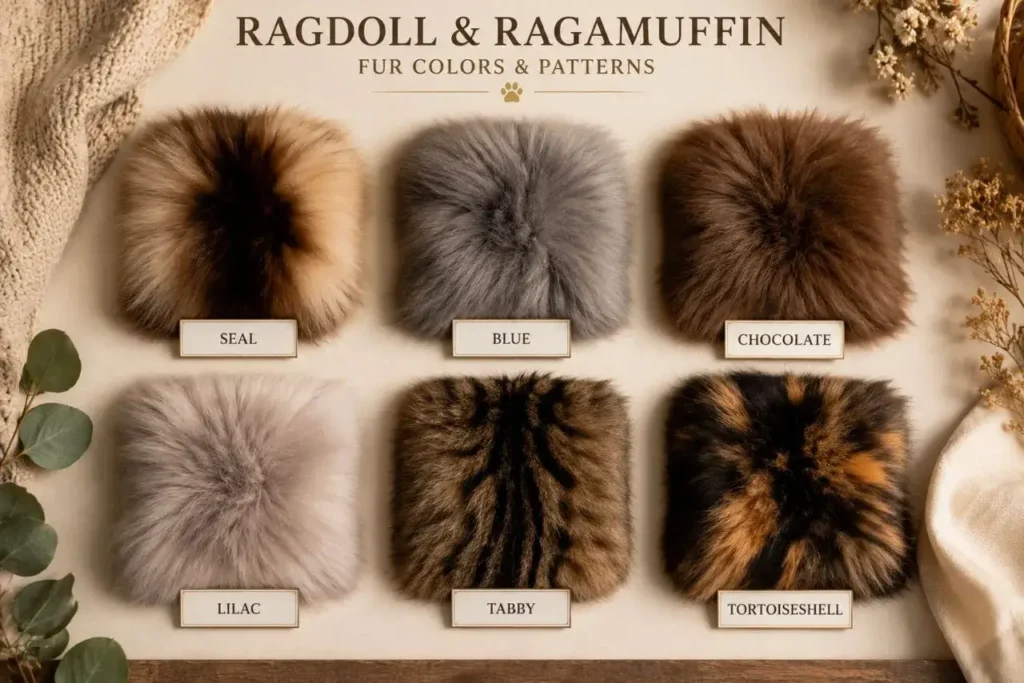
Both breeds have soft, fluffy coats. Ragdolls have colorpoint, mitted, and bicolor patterns. Ragamuffins have solid, tabby, and tortoiseshell patterns.
Ragdoll coat colors go further than most people expect. If you’ve ever seen a completely white Ragdoll and wondered whether it’s actually purebred, the Pure White Ragdoll Cat article answers that well. On the other end of the color spectrum, the high-contrast look of a Tuxedo Black and White Ragdoll Cat is one of the most visually striking variations in the breed. And if you want to see just how wide the color range runs, the Ragdoll Eye Color Chart is a useful visual reference that covers eye and coat combinations together.
| Trait | Ragdoll | Ragamuffin |
| Size (male) | 15-20 lbs | 12-18 lbs |
| Size (female) | 10-15 lbs | 8-15 lbs |
| Coat Patterns | Colorpoint, Mitted, Bicolor | Solid, Tabby, Tortoiseshell |
Ragamuffin fur is longer and fluffier, making them look like teddy bears.
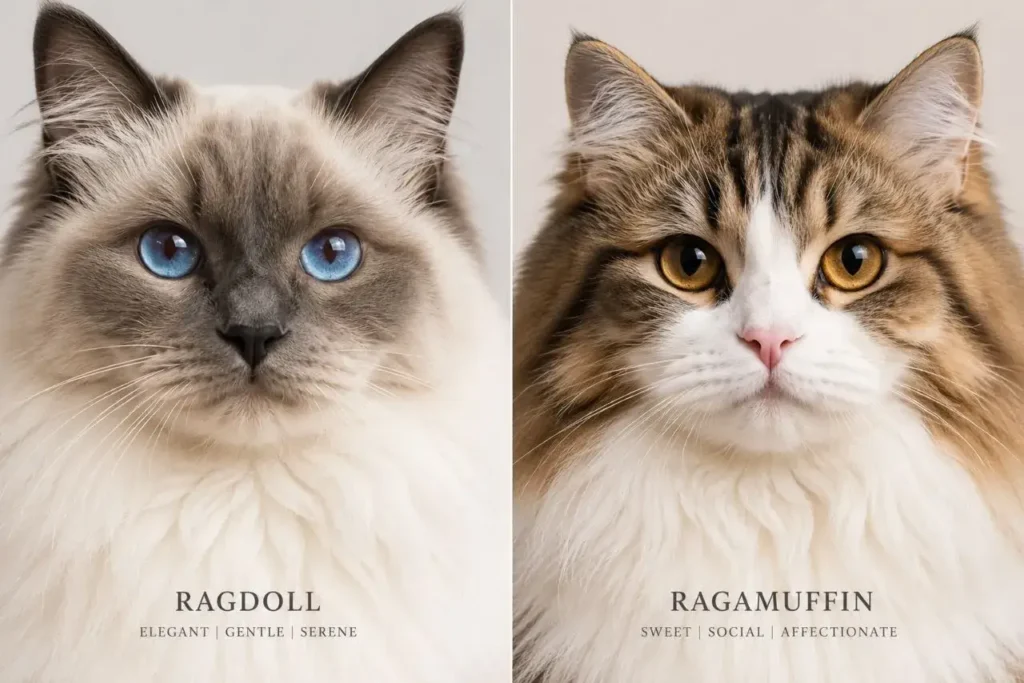
Ragdolls have broad heads and big, blue eyes. Ragamuffins have rounder faces and friendly looks.
These cats’ looks show why they’re so special in the world of cats.
What Is The Difference Between Ragdoll And Ragamuffin Cats
Ragdoll and Ragamuffin cats are two different breeds. They share some similarities but also have big differences. We’ll look at these differences to help you understand each breed’s unique features.
Size and Weight Variations
Ragdolls are generally the larger of the two: males typically run 15 to 20 pounds and females 10 to 15 pounds, versus 12 to 18 pounds for male Ragamuffins and 8 to 15 pounds for females. The ranges overlap quite a bit though, especially among females, so weight alone isn’t a reliable way to tell the two breeds apart.
Coat Colors and Patterns
Both breeds have many feline coat colors and patterns. You can find seal, blue, chocolate, and lilac. But Ragamuffins have more cat genetics and coat types. They include pointed, mitted, and bicolor patterns.
Crosses and mixes add even more variety to the picture. The Ragdoll Cat Mixed With Siamese produces some striking pointed patterns, while the Ragdoll Tabby Cat Mix brings in those classic tabby stripes in a softer, fluffier package. If rich, multicolored coats are your thing, the Tortoiseshell Calico Ragdoll Cat is one of the most visually interesting Ragdoll variations worth knowing about. And for something rarer, What Is A Mink Ragdoll Cat? covers a coat type that sits in its own unique category entirely.
Facial Features and Body Structure
Ragdolls have a broad, rounded head and big, expressive eyes. Ragamuffins have a narrower face and ears that are set lower. They also have a more muscular body than Ragdolls.
Knowing the cat breeds comparison between Ragdoll and Ragamuffin cats helps you choose. Both breeds have special qualities that make them loved by many.
If you’re still comparing options beyond just these two breeds, the Snowshoe Cat vs Ragdoll comparison is worth a look; it covers another similarly patterned breed that often gets confused with Ragdolls.
Personality Traits and Temperament
Ragdoll and Ragamuffin cats share some traits but also have differences. They are both very affectionate and gentle. This makes them great for families. But they have different energy levels and social behaviors.
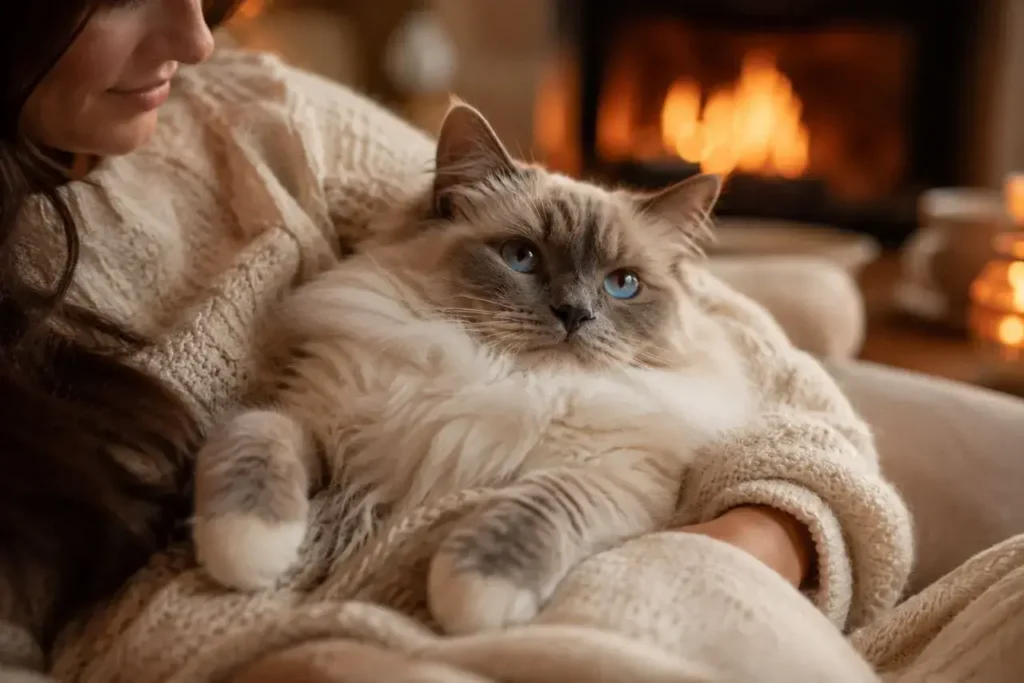
Ragdoll cats are known for being loyal and laid-back. They love to cuddle and bond with their owners. They are often called “puppy-like” because they follow their owners and enjoy being held.
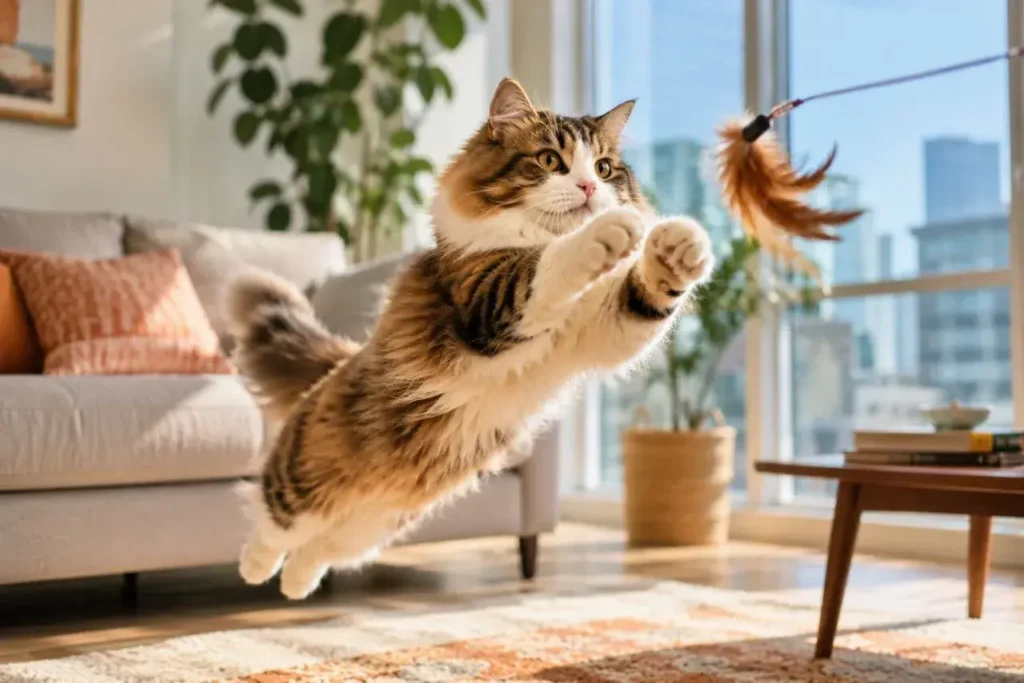
Ragamuffin cats, on the other hand, are more active and playful. They love to play and explore. They are also more independent but always want to be with people.
Both breeds can fit into many homes. But their energy and social needs differ. Ragdolls are perfect for families with young kids or those who love a cuddly pet. Ragamuffins are great for families with older kids or those who want a more active pet.
Lifespan: Which Breed Lives Longer?
Both breeds are long-lived for large cats, and their ranges overlap more than they differ. Ragdolls typically live 12 to 17 years, and Ragamuffins typically live 12 to 18 years. Any edge the Ragamuffin has tends to show up at the upper end of that range rather than as a dramatic gap, so lifespan alone shouldn’t be a deciding factor between the two.
Ragdolls are often described as “puppy-like” for exactly this reason: they follow their owners around and are unusually willing to be picked up and carried.
Both Ragdoll and Ragamuffin cats can be wonderful pets. But it’s important to think about their unique traits and temperaments before adopting.
One practical thing to check before bringing either breed home is whether anyone in your household has cat sensitivities. Ragdoll Cats and Allergies covers what you need to know on that front. Once you’ve sorted that, it’s also worth understanding What is The Lifespan of a Ragdoll Cat, because these cats can be with you for a long time, and knowing that helps you plan and commit fully.
Quick Answer: Which One Should You Choose?
- Want the classic blue-eyed, pointed look and a cat that goes limp when held? Go with a Ragdoll.
- Want more coat color and pattern options, and a slightly more playful, independent cat? Go with a Ragamuffin.
- Shopping specifically for a “Ragamuffin”? Verify CFA or ACFA papers, not just TICA registration, given the foundation-program issue described above.
- Torn between the two? Either breed is an excellent, affectionate, family-friendly choice, the differences here are real but modest, not a case of one breed being clearly “better.”
Sources and Further Reading
- The Cat Fanciers’ Association – Ragdoll Breed Standard
- The International Cat Association (TICA) – Foundation Ragamuffin Program
Conclusion
Ragdoll and Ragamuffin cats are special feline breeds. They look and act differently, even though they share some traits. Each breed has its own unique qualities.
Ragdoll cats are big, strong, and have soft fur. They have pointed faces and bright blue eyes. They are very friendly and love people, making great pets for families or singles.
Ragamuffin cats are a bit rounder and have a wider range of colors and patterns. They can be solid, bicolor, or tricolor. This makes them stand out.
Both Ragdolls and Ragamuffins are great pets. They bring joy and love to any home. Think about what you need in a pet, like grooming and activity level. Knowing the differences will help you choose the perfect cat for you.
Frequently Asked Questions ( FAQs )
1. What are the key differences between Ragdoll and Ragamuffin Cats?
Ragdoll and Ragamuffin cats look similar but have some key differences. Ragdolls are bigger, have pointed coat patterns, and are very affectionate. Ragamuffins are smaller, have more varied coat colors, and are a bit more playful.
2. How did the Ragdoll and Ragamuffin Breeds originate?
The Ragdoll breed started in the 1960s in California by Ann Baker. She bred cats with special traits. The Ragamuffin came later, aiming to add more variety to the Ragdoll gene pool. It became a recognized breed in the late 20th century.
3. What are the Physical Characteristics of Ragdoll and Ragamuffin Cats?
Ragdolls are big, muscular, and have blue eyes. They have pointed coat patterns. Ragamuffins also have fluffy coats, but in more colors and patterns. They are a bit smaller than Ragdolls. Both have broad heads and medium-sized ears.
4. How do the personality traits of Ragdoll and Ragamuffin Cats differ?
Ragdolls are calm, friendly, and love to play. They are very affectionate and “go limp” when picked up. Ragamuffins are also friendly but more active and playful. They enjoy playing and can be a bit more independent.
5. What are the grooming requirements for Ragdoll and Ragamuffin Cats?
Both breeds have long, fluffy coats that need regular grooming. They should be brushed often to prevent matting. Ragamuffins might need more grooming because of their varied coat patterns. Both may need baths now and then to stay clean and healthy.