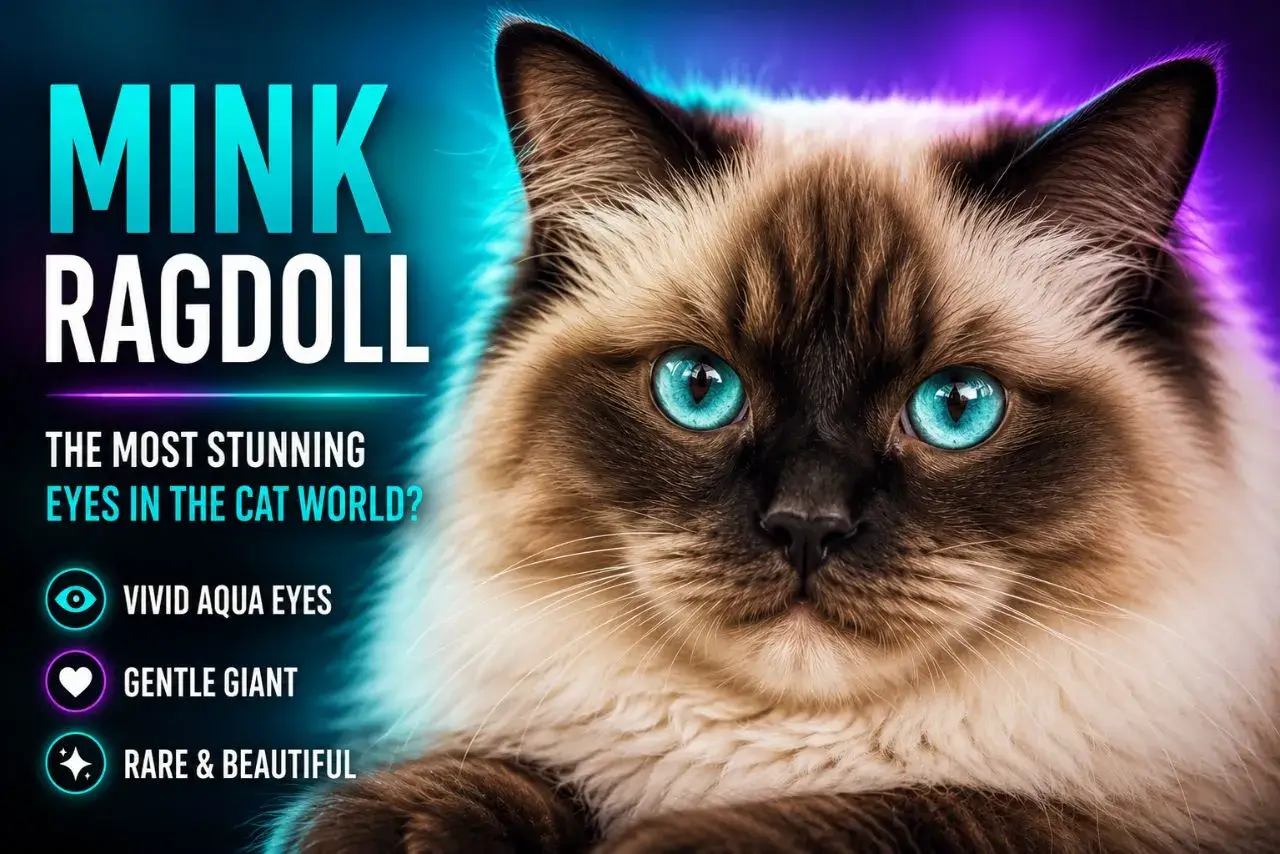
So, what is a Mink Ragdoll Cat, exactly? If you’ve ever seen a Ragdoll kitten with aqua-colored eyes and a coat that looks richer than any standard colorpoint cat you’ve encountered, chances are you were looking at one. A lot of people get confused when they first hear the term. Is it a different breed? A color variation? A marketing label invented by breeders who want to charge more?
Last updated September 2026: we corrected some inconsistent lifespan figures that had crept into this guide, removed a breeder’s specific pricing data that didn’t belong here, cleaned up a batch of outdated FAQs (including one that wrongly dated mink Ragdolls to the 2000s), and added a note on how the Cherubim classification is already performing in TICA competition.
Did you know that Mink Ragdoll cats are rare, making up just 1 in every 10 Ragdolls born? These cats are loved for their beautiful “mink-like” coat colors and their sweet nature. They are a special type of Ragdoll cat, known for their big, strong bodies and their love for cuddles.
None of the above. A mink ragdoll cat is a real, genetically distinct variation of the Ragdoll breed, and once you understand what makes them different, you’ll see exactly why so many cat owners get obsessed with them. According to TICA, the mink ragdoll breed line traces all the way back to the original foundation cats of the 1960s. That’s not a recent development. Let’s get into it.
What Is a Mink Ragdoll Cat?
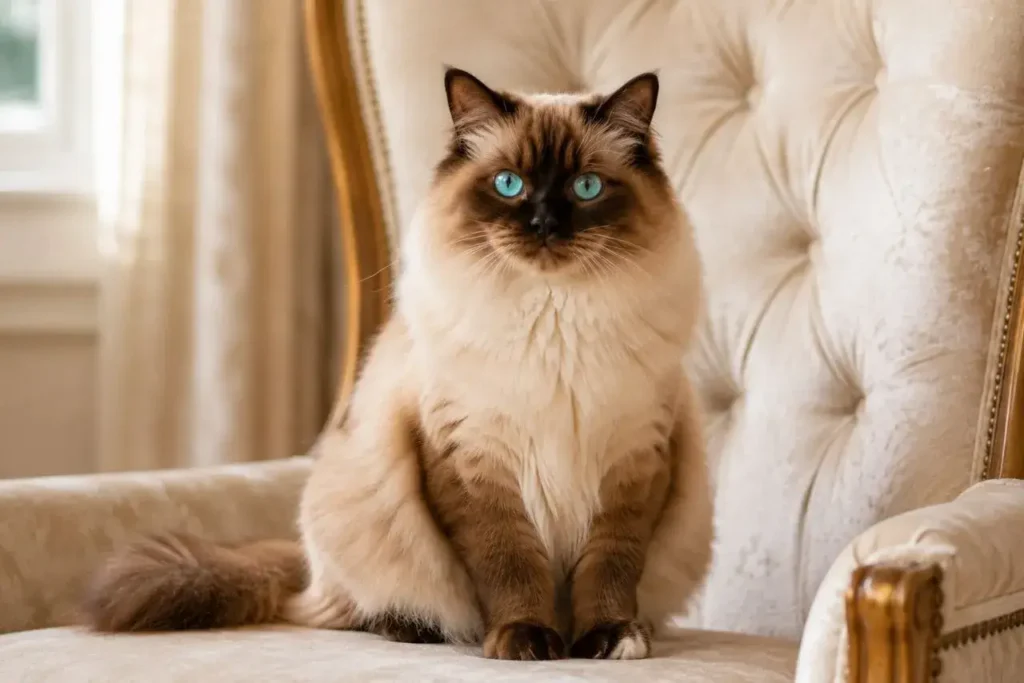
A mink ragdoll cat is a Ragdoll that carries a specific gene variation called the mink gene (also written as the Burmese gene or “cb” allele). This gene changes how pigment develops across the coat and eyes. The result is a cat that looks noticeably different from a traditional Ragdoll, even if the two come from the same breed lines.
The word “mink” here refers to the gene expression, not a color, not a pattern, and not a separate breed. A mink ragdoll can still be a bicolor, a colorpoint, or a mitted ragdoll. It can come in seal mink, blue mink, chocolate mink, lilac mink, flame mink, and several other mink ragdoll colors. The mink gene is a layer on top of all of that.
So when someone says “I have a seal mink mitted ragdoll,” they’re describing a Ragdoll with the mink gene, a seal (dark brown) base color, and white mittens on the paws. All of those traits coexist.
This is also why the mink ragdoll breed info can seem confusing at first. The terminology stacks up fast. Color plus pattern plus gene expression. Once you get that framework, the rest clicks into place.
Where Does the Mink Gene Come From?
The mink gene traces back to the very beginning of the Ragdoll breed. Ann Baker, the founder of the Ragdoll breed in the 1960s, worked with a cat named Buckwheat, a solid black cat of Burmese-type heritage. Burmese cats carry the gene responsible for the mink coat expression. Because some of Ann Baker’s early foundation cats carried this gene, a portion of Ragdoll lines still carry it today.
Mink ragdolls are not the result of intentional crossing with Burmese cats in recent times. The gene has been present in some Ragdoll bloodlines since the beginning. Mink ragdoll origin is genuinely tied to the breed’s roots, which is part of why the mink ragdoll history argument gets heated when people claim these cats are somehow less authentic.
Breeders who specialize in mink ragdolls work with these original bloodlines to produce mink kittens consistently. For a detailed look at Ragdoll breed history and genetics, the TICA Ragdoll breed standard provides official documentation on how the breed has been defined and classified over time.
Quick Mink Ragdoll Cat Facts
Before going deeper, here are some fast Mink Ragdoll facts worth bookmarking:
- Mink Ragdolls are born with visible coat color, unlike traditional Ragdolls, which are born white.
- Eye color is typically aqua or teal, not blue.
- The coat is often described as denser and plusher than a standard Ragdoll coat.
- They are purebred cats with documented pedigrees going back to the breed’s foundation.
- As of May 2025, TICA officially recognizes them under the Cherubim (CB) breed classification.
- Mink Ragdoll lifespan is 12 to 17 years, the same as a traditional Ragdoll, since the mink gene is a pigmentation modifier, not a separate breed with its own health profile.
- They carry the same gentle, affectionate mink ragdoll temperament the breed is known for.
Mink Ragdoll vs Traditional Ragdoll: What’s Actually Different?
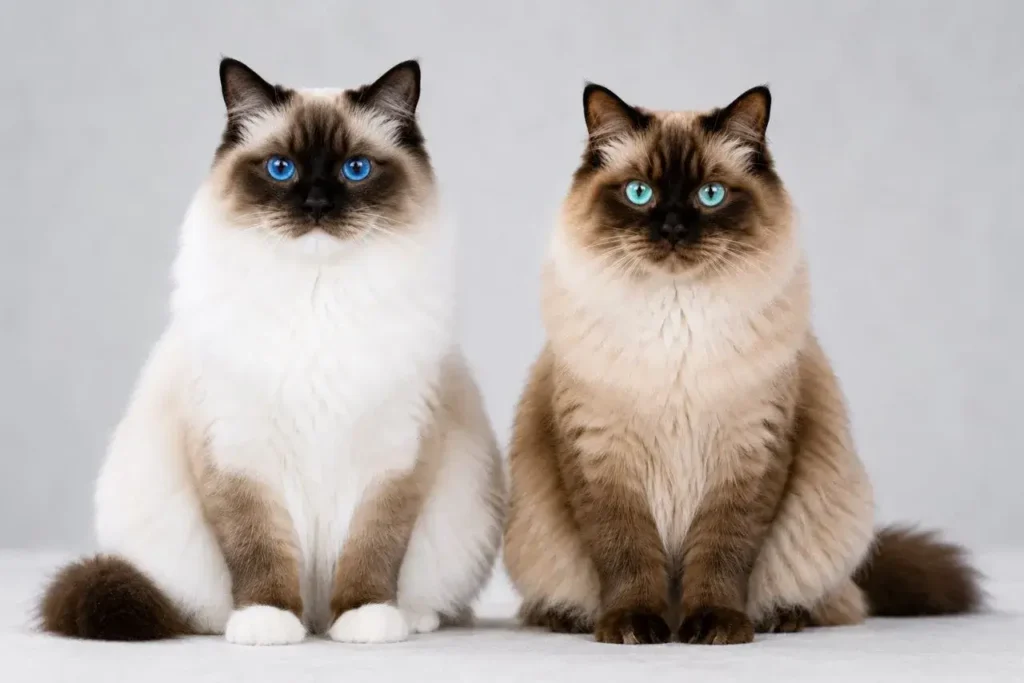
This is the most common question people ask, and it’s a fair one. Here’s a clear breakdown of what the mink ragdoll vs traditional ragdoll comparison actually looks like in real life.
Coat Color and Contrast
Traditional Ragdolls are born almost completely white. Their color develops gradually over weeks and months, with darker points appearing on the face, ears, legs, and tail. The contrast between the light body and darker points is one of the most recognizable visual traits of the breed.
Mink ragdoll cats are born with color already visible. The pigment is present from day one, and the coat continues deepening as the kitten grows. The contrast between body and points is still there, but it’s softer and more blended. The body carries visible pigmentation rather than staying cream or ivory.
A seal mink ragdoll, for example, will have a noticeably warm, brownish tone across the body, with darker seal-colored points. A blue mink ragdoll cat will show a cool grayish-blue across the body with deeper blue-gray points.
Eye Color
This is probably the most talked-about difference. Traditional Ragdolls always have blue eyes. That’s part of the official breed standard. The blue eyes are tied directly to the colorpoint gene.
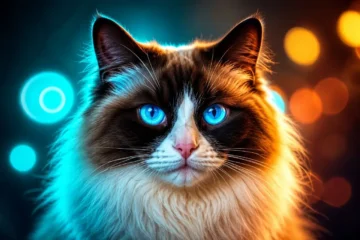
Mink ragdoll cats typically have aqua, teal, or green-gold eyes. The mink ragdoll blue eyes question comes up often, and the short answer is: minks don’t have the classic deep blue. The aqua is the most common and often described as striking because it sits right between blue and green in a way that looks almost turquoise. Some mink ragdolls do have eyes on the bluer end of the aqua range, but they won’t produce the pure bright blue you see in traditional Ragdolls.
Mink ragdoll green eyes are also possible, particularly in cats that carry different pigment variations. Eye color in minks is genuinely variable, which is part of what makes them interesting.
For people who specifically want that deep blue eye look, a traditional Ragdoll is the right choice. For people drawn to aqua or teal, a mink ragdoll is worth looking at. You can see more eye color variations in this Ragdoll Eye Color Chart that covers the full range of shades across different Ragdoll types.
Coat Texture
Many owners of mink ragdolls report that the mink ragdoll coat feels different: denser, plusher, with a velvety texture. Some breeders and owners describe it as feeling similar to rabbit fur. Traditional Ragdolls have a silky, semi-longhaired coat that is famously soft, but the mink coat texture is often described as a step thicker.
This difference isn’t universal and can vary from cat to cat, but it’s mentioned frequently enough that it’s worth knowing about. A fluffy mink ragdoll in a seal or blue color is genuinely something to see in person.
Temperament
Same as a traditional Ragdoll. Mink Ragdoll personality is the classic Ragdoll disposition: calm, affectionate, people-oriented, and relaxed. They tend to follow their owners around, go limp when picked up (which is where the Ragdoll name comes from), and get along well with kids and other pets.
The mink gene affects appearance only. It has no effect on mink ragdoll temperament, health baseline, or how the cat bonds with people. Mink Ragdoll personality traits are indistinguishable from a traditional Ragdoll in day-to-day life.
| Feature | Mink Ragdoll | Traditional Ragdoll |
|---|---|---|
| Born with color | Yes | No (born white) |
| Eye color | Aqua, teal, green-gold | Blue only |
| Coat contrast | Soft, blended | High contrast |
| Coat texture | Dense, plush | Silky, semi-longhaired |
| Temperament | Classic Ragdoll | Classic Ragdoll |
| Show eligibility | Cherubim classification | Eligible under Ragdoll standard |
| Registry status | TICA Cherubim (CB) from May 2025 | Recognized Ragdoll |
Mink Ragdoll Personality: Gentle Giants
Mink Ragdoll cats are known for being very gentle, loving, and loyal. They are big and strong but have a calm nature. This makes them great friends. They love to be close to their owners, enjoying cuddles and sitting on laps.
These cats fit well in homes with one person or a big family. They are easygoing and love to play and snuggle. Mink Ragdolls like to relax with their owners but also have a playful side. This makes them great friends.
Mink Ragdolls are very loving but also like their alone time. They are often called “lap cats,” but also like to play by themselves when no one is around. This mix of love and independence makes them a great choice for many homes.
| Breed | Average Weight (Adult) | Lifespan |
|---|---|---|
| Mink Ragdoll | 10 to 20 pounds | 12 to 17 years |
| Siberian | 12 to 15 pounds | 11 to 15 years |
| Ragdoll | 10 to 20 pounds | 12 to 17 years |
The Mink Ragdoll is a mix of gentle, loving, adaptable, and independent. It’s a great cat for anyone looking for a cuddly friend or an independent pet. The Mink Ragdoll could be the perfect cat for your family.
Are Mink Ragdolls Purebred?
Yes, mink ragdoll cats are purebred. This comes up a lot because some registries have historically not recognized minks under the same Ragdoll classification as traditional colorpoint cats.
The reason has nothing to do with whether the cats are purebred. It comes down to breed standards. TICA and CFA have historically defined the Ragdoll as a blue-eyed pointed cat. Since mink ragdolls don’t have blue eyes and don’t display the classic high-contrast pointed pattern, they fell outside the standard for show purposes. CFA mink ragdoll registration has generally not been available for this reason.
That said, a major update changed the picture. Starting May 1, 2025, TICA began recognizing mink, sepia, and solid Ragdoll cats under a new separate breed classification called Cherubim (CB). The cherubim cat classification gives these cats their own official standard and allows them to compete for titles and awards, which they couldn’t do as Ragdolls. This is a big deal for the mink ragdoll breeders USA community and anyone who’s been working with these bloodlines for years.
TICA mink ragdoll registration going forward will use the Cherubim designation. This doesn’t change the cats’ legitimacy at all. A mink ragdoll kitten from a reputable breeder with documented pedigrees is as legitimate as any traditional Ragdoll.
Mink Ragdoll Colors
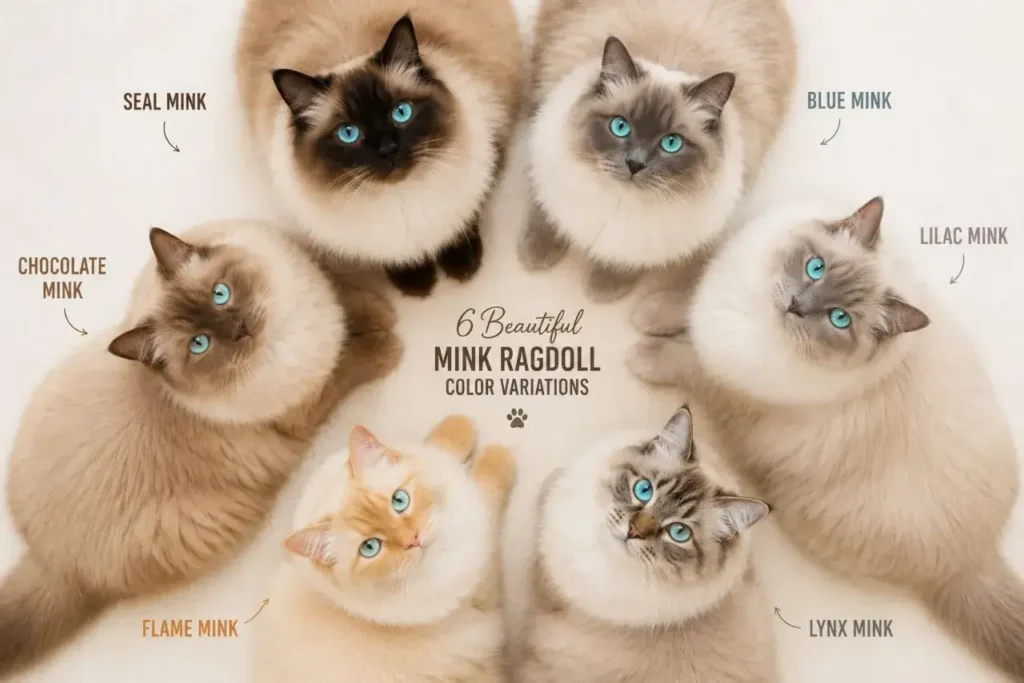
One of the things that draws people to mink ragdolls is the range of mink ragdoll colors. Because the mink gene is a modifier rather than a base color, it can appear across the full spectrum of Ragdoll colors and patterns.
Here are the most common color combinations in the mink ragdoll cat colors chart:
- Seal mink ragdoll: Warm brown body with dark seal-colored points. One of the most popular combinations. The seal mink ragdoll cat is often what people picture when they hear the term.
- Blue mink ragdoll: Cool gray-blue body with deeper blue-gray points. The blue mink ragdoll cat is widely sought after. The mink blue tone in this variation has a soft, cool-gray quality unlike any standard pointed cat.
- Chocolate mink ragdoll cat: Lighter, milk-chocolate brown body with slightly darker chocolate points. The chocolate seal mink ragdoll cat variation is a rich, warm expression of this.
- Lilac mink ragdoll: A pale, frosty pinkish-gray tone across the body with lilac-toned points.
- Flame mink ragdoll: A warm reddish-orange expression that’s rarer than the other colors.
- Lynx mink ragdoll cat: Any of the above colors with tabby striping visible in the points.
- Tortie mink ragdoll: A mink cat with tortoiseshell patterning mixed into the coat.
- Bicolor mink ragdoll: Standard bicolor pattern combined with mink gene expression.
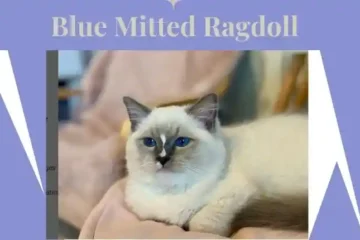
A blue mitted mink ragdoll cat has the blue mink base color, the plush mink coat, and white mittened paws. A seal point mink ragdoll cat shows the seal coloring specifically at the points. A blue point mink ragdoll cat carries the blue point expression with the mink modification.
Chocolate mink ragdoll cats and lilac mink ragdolls tend to be harder to find because the chocolate and lilac genes themselves are less common in Ragdoll bloodlines. A brown mink ragdoll cat is sometimes used loosely to describe what’s technically a chocolate or seal mink.
Mink Ragdoll Kittens: What to Expect at Birth
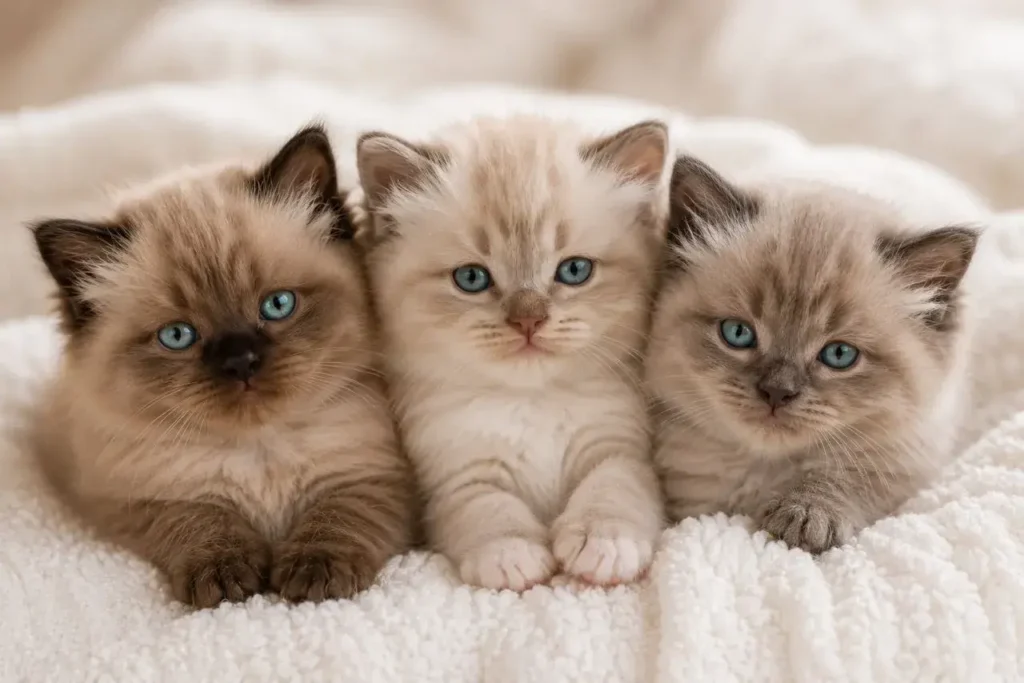
One of the clearest ways to tell a mink ragdoll kitten from a traditional ragdoll kitten is to look at them the day they’re born. Traditional Ragdolls are born nearly white, regardless of what color they’ll eventually be. Their points take weeks to develop.
Mink ragdoll kittens are born with visible color. You can see what color they’ll be right away. A seal mink mitted ragdoll kitten will already show that warm brown pigmentation at birth. This makes identifying mink kittens much easier early on and is one of the traits breeders use to confirm mink expression.
The color continues to deepen and develop over the first year of life, but the foundational pigment is always visible from birth in a mink ragdoll kitten. If you’re buying a mink ragdoll kitten and the breeder can’t show you the pigmentation present at birth, that’s worth asking about.
When looking at mink ragdoll kittens for sale, reputable breeders will be able to tell you exactly what gene combinations are in a litter and explain what to expect from each kitten as they develop.
Mink Ragdoll Size and Physical Appearance
Mink Ragdolls are large cats, the same as traditional Ragdolls. Ragdolls as a breed are one of the biggest domestic cat breeds, and the mink gene doesn’t change that.
Mink Ragdoll Full Grown Size and Weight
A mink ragdoll full-grown typically weighs:
- Males: 15 to 20 pounds
- Females: 10 to 15 pounds
Mink ragdoll cat size and weight fall right in line with the traditional Ragdoll. They reach full size slowly, usually taking about 3 to 4 years to reach their adult weight. Mink ragdoll kittens can look deceptively compact, but they grow into substantially large cats.
The mink ragdoll coat is semi-longhaired, similar to a traditional Ragdoll, but often feels denser and plushier. Mink ragdoll markings follow the same patterns available in traditional Ragdolls: colorpoint, mitted, bicolor, and their lynx and tortie variations. Mink Ragdoll’s appearance is overall similar to a traditional Ragdoll in body shape, with the coat color and eye color being the distinguishing visual markers.
With good care, Ragdolls (and mink Ragdolls) commonly live 12 to 17 years or more.
Mink Ragdolls are special cats that need careful grooming and health care. Spending time on their needs makes sure they stay happy and bring joy to your life.
Mink Ragdoll Care, Grooming, and Health
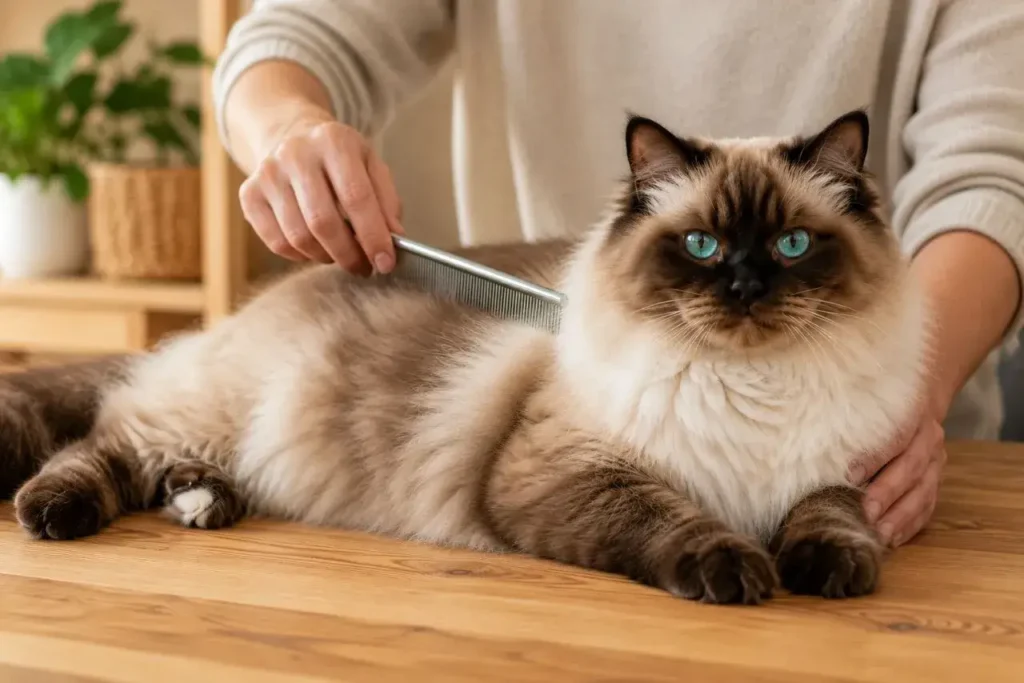
Caring for a mink ragdoll cat is similar to caring for any Ragdoll. Here’s what the mink ragdoll care guide looks like in practice.
Grooming Your Mink Ragdoll
Mink ragdoll grooming tips start with frequency: aim for 2 to 3 sessions per week. The plush, dense coat can mat if left unattended, especially around the collar area, behind the ears, and under the arms. A stainless steel comb works well for working through the coat without breaking the hair.
Some owners of mink ragdolls actually report that the coat mats less than a traditional Ragdoll’s silkier coat, possibly because the denser texture doesn’t tangle as easily. Your individual cat’s coat may vary.
Mink ragdoll cat grooming tips also include regular nail trimming every 2 to 3 weeks and ear checks monthly. These are routine grooming tasks for any semi-longhaired cat. Regular grooming is also a bonding activity that most Ragdolls genuinely enjoy.
Feeding Your Mink Ragdoll
The best food for mink ragdoll cats is a high-protein diet. Given their large size and slow maturation, a kitten-formulated food appropriate for large breeds is a good starting point. Transitioning to adult food around 12 months is typical, though some breeders recommend waiting until 18 months, given how long Ragdolls take to fully develop.
Wet food is generally recommended as a core part of the mink ragdoll feeding guide for urinary and kidney health. If you’re primarily feeding dry food, make sure fresh water is always available.
Health and Lifespan
The mink ragdoll lifespan is typically 12 to 17 years, the same as the traditional Ragdoll. Mink ragdoll health issues are mostly breed-related rather than gene-specific. The main concerns for the Ragdoll breed include:
- Hypertrophic cardiomyopathy (HCM): A genetic heart condition that affects some Ragdolls. Reputable breeders test breeding cats for the HCM gene mutation. According to the Cornell Feline Health Center, HCM is the most common heart disease in cats, and genetic screening is the best tool breeders have for reducing its prevalence.
- Polycystic kidney disease (PKD): Less common in Ragdolls than in some other breeds, but worth asking a breeder about.
- Obesity: Ragdolls, including minks, can gain weight if overfed. Their calm, indoor temperament means they need active play to stay fit.
The mink ragdoll lifespan is not negatively affected by the mink gene itself. It’s a pigmentation modifier, not a structural gene with health implications.
Are Mink Ragdolls Hypoallergenic?
No, mink ragdoll cats are not hypoallergenic. No cat truly is. Allergies to cats are typically triggered by the Fel d 1 protein found in cat saliva, skin, and dander. If you’re exploring Ragdolls because you have allergies, take a look at this detailed breakdown of Ragdoll Cats and Allergies before making a decision.
Do mink ragdolls shed? Yes, though mink ragdoll shedding is moderate compared to many long-haired breeds. Regular brushing reduces it significantly.
Mink Ragdoll Personality and Social Behavior
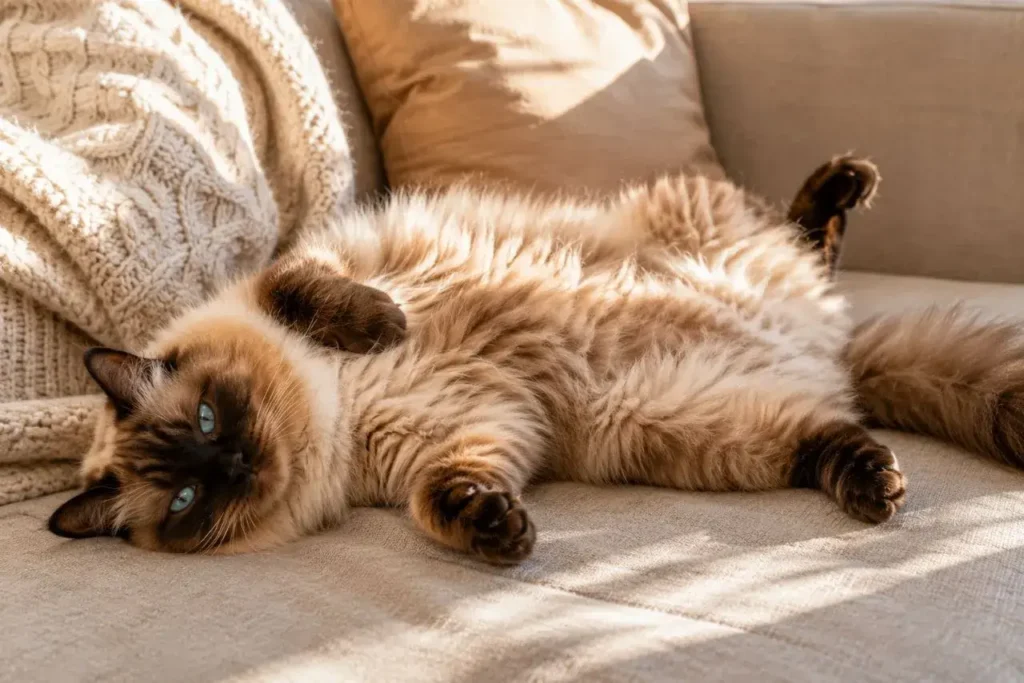
Ask anyone who owns a mink ragdoll about the personality, and you’ll hear the same things. These cats are calm. They’re affectionate. They follow you from room to room. They flop over when picked up. They’re not climbers or destroyers.
Mink ragdoll personality traits mirror the classic Ragdoll temperament almost exactly. They’re described as dog-like in how they bond with their owners. Some will greet you at the door. Many will sleep next to you or on you. They don’t typically disappear under the bed when guests arrive.
Are mink ragdolls friendly? Yes, consistently so. Are mink ragdolls affectionate? Very. Are mink ragdolls good pets? For the right household, they’re excellent.
Mink ragdoll social behavior means they’re good with children and generally do fine in multi-pet households when introduced properly. Their calm demeanor holds up in reasonably active family environments.
Mink ragdoll training is possible, though these cats don’t need much formal training. Basic recall, responding to their name, and getting comfortable with routines come naturally to them. Interactive play sessions using wand toys or puzzle feeders help keep a mink ragdoll indoor cat mentally and physically engaged.
If you’re interested in how other Ragdoll mixes compare in personality, this guide on Ragdoll Himalayan Mix Personality gives a good side-by-side picture of how temperament shifts across different Ragdoll type combinations.
The Cost of Owning a Cinnamon Mink Ragdoll
Getting a Mink Ragdoll cat is a big financial step. Prices range from $1,000 to $2,500 or more. The price changes based on the breeder, the kitten’s background, and special colors or marks.
There are more costs besides buying the cat. You’ll need to pay for good cat food, litter, vet visits, grooming, and supplies. Even though Mink Ragdolls cost more, their looks and loving nature make them popular with cat lovers.
Coat pattern and color affect price, with rarer combinations like cinnamon, chocolate, or lilac typically running higher than common seal or blue mink kittens. A typical deposit to hold a kitten runs $200 to $500 and is usually non-refundable, so make sure you’re committed before putting one down. Reputable breeders include vaccinations, a health contract, TICA registration, and a starter kit with the purchase price.
The high initial cost of a Mink Ragdoll is worth it for their unique traits and care needs. Knowing the costs helps people decide if a Mink Ragdoll is right for their family.
Mink Ragdoll Price: What Does It Actually Cost?
Mink ragdoll cat price ranges vary depending on breeder, location, color, pattern, and pedigree. In the US, you can generally expect to pay:
- $1,200 to $2,500 for a mink ragdoll kitten as a companion pet
- $2,500 to $4,000+ for show-quality or breeding rights
How much is a mink ragdoll? That question comes up a lot, and the honest answer is that mink ragdoll cost overlaps significantly with traditional Ragdoll pricing. What drives the mink ragdoll cat cost up is the breeder’s reputation, health testing documentation, and the specific color and pattern combination.
Rarer color combinations, like a chocolate mink ragdoll cat or lilac mink ragdoll, tend to sit at the higher end. A blue mink ragdoll cat in a popular pattern, like bicolor or mitted, may also carry a premium. The mink ragdoll kitten price for everyday seal or blue colorpoint combinations is generally at the lower end of that range.
Be cautious of mink ragdoll kittens for sale at very low prices. Reputable mink ragdoll breeders in the USA invest in health testing, socialization, and documentation. A kitten priced far below market rate may come from a breeder cutting corners on those things.
Are Mink Ragdolls Rare?
Mink Ragdolls are less common than traditional Ragdolls, but not exceptionally rare. Most Ragdoll breeders focus on traditional colorpoint Ragdolls, so mink breeders represent a smaller portion of the overall breeding community.
Finding the specific color combination you want may require a longer wait. Mink ragdoll breeders USA-wide do exist, but waitlists are common for popular combinations.
If you’re looking for a mink ragdoll for adoption, that’s harder to find. Most Ragdolls in shelters are not clearly identified by type, and mink-specific rescues are uncommon. A mink ragdoll adoption search typically means contacting Ragdoll-specific rescue organizations and explaining what you’re looking for. Mink ragdoll rescue placements do happen, just less frequently than with traditional Ragdolls.
Rare mink ragdoll cats in colors like chocolate or lilac are the hardest to find, and buyers sometimes wait 6 to 12 months for a specific pairing.
Mink Ragdoll vs Sepia Ragdoll: What’s the Difference?
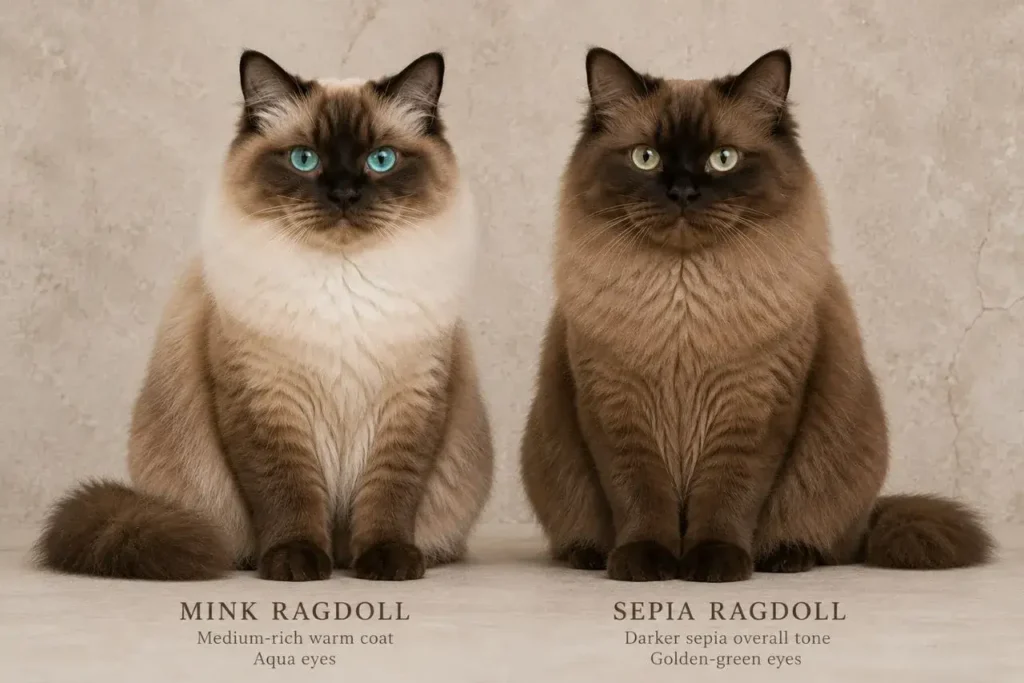
While we’re talking about minks, it’s worth touching on sepia ragdolls too because they often get confused. The sepia vs mink ragdoll question is one of the more technical ones in this space.
A sepia ragdoll carries two copies of the mink/Burmese gene (homozygous), while a mink ragdoll carries one copy paired with a traditional colorpoint gene (heterozygous). The result is that sepia ragdolls have even richer, deeper pigmentation than minks. Their coat is darker overall, and their eyes tend to be gold or yellow-green rather than aqua.
Both minks and sepias are born with color. Minks are born with moderate color, and sepias with deeper color. The mink ragdoll vs sepia ragdoll difference at birth is noticeable if you know what to look for. Breeders who work with these bloodlines understand the mink ragdoll genetics well and can explain what to expect from a given pairing.
All three types (traditional, mink, and sepia) can appear in the same litter if both parents carry the relevant genes.
Is a Mink Cat the Same as a Mink Ragdoll?
People sometimes search for “minks cat” or “mink cat” and land on pages about the Ragdoll breed, which can cause confusion. Worth clarifying.
A mink cat in the context of the Ragdoll breed refers to a Ragdoll carrying the mink gene, exactly what this article covers. Outside of that context, the word “mink” refers to a small carnivorous mammal in the weasel family. The two are completely unrelated.
You may also see comparisons like fisher cat vs mink or mink vs fisher cat in search results. A fisher cat is another weasel-family animal, and both are wild creatures with no connection to domestic cats or the Ragdoll breed. If you landed here looking for information about those animals, this isn’t that article. But if you’re looking for a mink ragdoll cat, you’re in the right place.
The term “mink cat” when used by Ragdoll breeders, always refers to the gene variation and the cats that carry it.
Finding Reputable Mink Ragdoll Breeders
When looking for mink ragdoll kittens, the breeder matters a lot. Here’s what to look for when searching for mink ragdoll cat breeders near you:
- Health testing: Reputable mink ragdoll breeders test their breeding cats for HCM and PKD. Ask to see documentation.
- TICA registration: Kittens should come with paperwork. Post the May 2025 TICA change, mink kittens may be registered as Cherubim rather than Ragdoll, which is completely legitimate.
- Socialization: Kittens raised in home environments with regular human contact are significantly better adjusted. Ask how kittens are raised.
- Communication: Good breeders answer questions directly and don’t pressure you to commit quickly.
- References: A breeder who can connect you with previous buyers is a good sign.
When you buy a mink ragdoll kitten, the contract should cover health guarantees and return policies if something comes up. Avoid mink ragdoll kittens near me searches that lead to pet store listings or ads without pedigree documentation. A mink ragdoll cat adoption from a breed-specific rescue is also worth exploring if you’re open to adult cats.
For more on related Ragdoll variations and what to expect from different combinations, the Ragdoll Cat Mixed With Siamese and Snowshoe Cat vs Ragdoll guides are worth reading if you’re still comparing options.
Mink Ragdoll Colors, Patterns, and Variations: A Full Overview
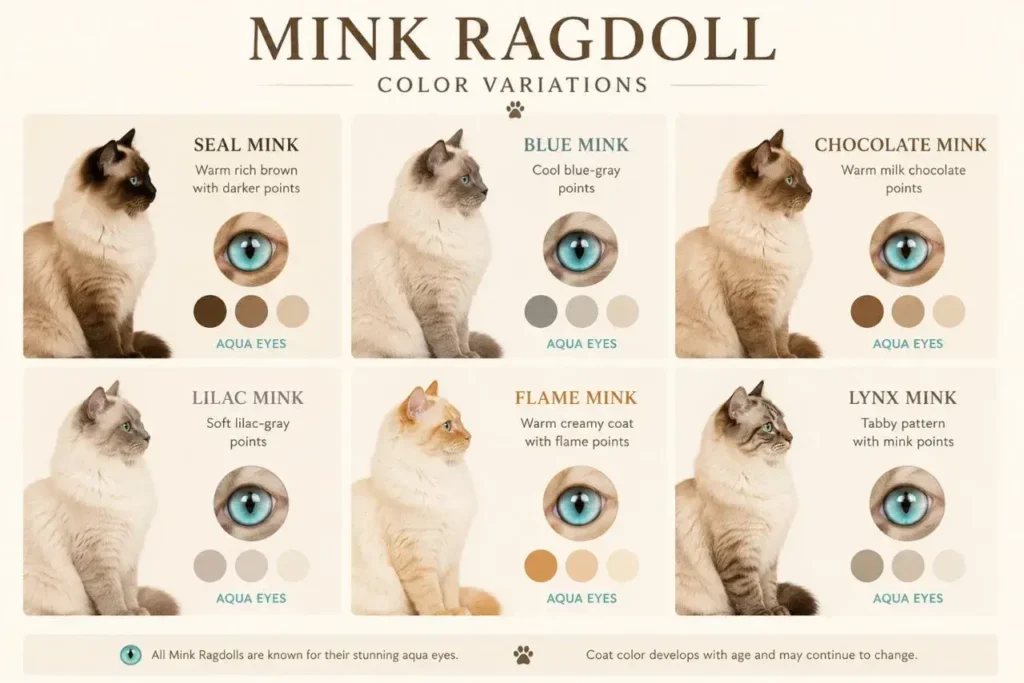
Here’s a summary of the color and pattern combinations you’re most likely to encounter in a complete mink ragdoll cat guide:
Common Mink Ragdoll Colors:
- Seal mink ragdoll
- Blue mink ragdoll
- Chocolate mink ragdoll
- Lilac mink ragdoll
- Flame mink ragdoll
- Cream mink ragdoll
Common Mink Ragdoll Patterns:
- Colorpoint mink ragdoll (no white, points only)
- Mitted mink ragdoll (white mittens on paws, white chin)
- Bicolor mink ragdoll (white inverted V mask, white legs and belly)
- Lynx mink ragdoll (tabby striping in the points)
- Tortie mink ragdoll (tortoiseshell pattern combined with mink)
These can be combined in many ways. A seal mink mitted ragdoll, a blue point mink ragdoll, and a lynx mink ragdoll cat all exist as distinct combinations. The mink ragdoll cat colors chart gets detailed quickly when you layer patterns on top of colors, which is part of why mink ragdoll cat names and descriptions from breeders can sound so specific.
If you’re curious about other unique Ragdoll color expressions, the Pure White Ragdoll Cat and Tuxedo Black and White Ragdoll Cat pages cover striking variations in the breed. And if the tabby-influenced look appeals to you, the Ragdoll Tabby Cat Mix guide is worth a read. For something with even more pattern complexity, the Tortoiseshell Calico Ragdoll Cat page covers how tortie patterning works in the breed.
Mink Ragdoll Cat Pros and Cons
| Pros | Cons |
|---|---|
| Plush, velvety coat with rich coloring from birth | Less common than traditional Ragdolls |
| Striking aqua or teal eye color | Not eligible under Ragdoll show standard (Cherubim classification instead) |
| Classic Ragdoll temperament: calm and affectionate | Rarer colors (chocolate, lilac) mean longer wait times |
| Good with families, children, and other pets | Some registries still debate classification |
| Large, visually striking cats | Higher price for specific color and pattern combos |
People Also Ask: Mink Ragdoll Cat FAQ
1. What Is a Mink Ragdoll Cat?
A mink ragdoll cat is a Ragdoll that carries the mink gene (Burmese-derived), resulting in richer coat pigmentation from birth, softer contrast between body and points, and aqua or teal-colored eyes instead of blue.
2. Are Mink Ragdolls Purebred?
Yes. Mink ragdolls come from documented Ragdoll bloodlines tracing back to the breed’s foundation cats. They are purebred cats, though they may be registered under the Cherubim classification in TICA rather than as standard Ragdolls.
3. What Is the Difference Between a Mink Ragdoll and a Traditional Ragdoll?
The main differences are eye color (aqua vs. blue), coat contrast (blended vs. high-contrast points), coat pigmentation at birth (visible color vs. born white), and registry classification for show purposes.
4. What Color Are Mink Ragdoll Eyes?
Mink ragdoll eye color is typically aqua, teal, or green-gold. The aqua shade is the most common and most sought-after. Mink ragdoll blue eyes are not standard; that eye color belongs to traditional Ragdolls.
5. How Much Does a Mink Ragdoll Cost?
Mink ragdoll price typically ranges from $1,200 to $2,500 for a companion pet in the US. Rare colors and patterns or breeding rights can push the mink ragdoll cat cost higher.
6. Do Mink Ragdolls Have Different Personalities Than Traditional Ragdolls?
No. Mink Ragdoll temperament is the same as a traditional Ragdoll: calm, affectionate, and people-oriented. The mink gene affects appearance only.
7. Are Mink Ragdolls Rare?
They’re less common than traditional Ragdolls but not extremely rare. Finding specific color combinations may require a waitlist with a reputable mink ragdoll breeder.
8. What Is a Seal Mink Ragdoll?
A seal mink ragdoll has a warm brownish body tone with darker seal-colored points, produced by the combination of the seal base color and the mink gene. It’s one of the most popular mink color combinations.
9. What Is a Cherubim Cat?
A cherubim cat is the TICA classification introduced in May 2025 for mink, sepia, and solid Ragdoll cats. It gives these cats their own breed standard and allows them to compete for show titles, which they couldn’t do under the Ragdoll standard.
10. What Is the Lifespan of a Mink Ragdoll Cat?
The mink ragdoll lifespan is typically 12 to 17 years, matching the traditional Ragdoll, since the mink gene affects pigmentation rather than the breed’s underlying health profile. For a broader overview of Ragdoll longevity, see this guide on What Is the Lifespan of a Ragdoll Cat.
11. Are Mink Ragdolls Good With Other Pets?
Yes. Mink ragdoll social behavior is typical for the breed: friendly and adaptable. Proper introductions are still recommended, but they generally get along with other cats and calm dogs.
12. Do Mink Ragdolls Shed a Lot?
Mink ragdoll shedding is moderate. Regular brushing 2 to 3 times per week keeps it manageable. The plush coat sheds less than some semi-longhaired breeds.
13. How Do I Find Mink Ragdoll Kittens Near Me?
Search for mink ragdoll breeders USA through TICA’s breeder directory under the Cherubim classification, or look for breed-specific Ragdoll breeder communities online. Always verify health testing documentation before committing.
14. What Is the Difference Between a Mink Ragdoll and a Sepia Ragdoll?
A mink ragdoll carries one copy of the Burmese gene (heterozygous), while a sepia ragdoll carries two copies (homozygous). Sepia ragdolls are darker overall with gold or green eyes. Minks have aqua eyes and a medium-rich coat tone.
15. Are Mink Ragdolls Good Pets for Families?
Yes. Mink ragdoll cat characteristics include a gentle, patient temperament that works well in family settings. They do well with respectful children and adapt to multi-pet households with proper introductions.
16. Has the Cherubim Classification Actually Caught On?
Yes. As of early 2026, Cherubim cats are already competing and winning at the highest level: Oakcrest Thor’s Legacy became the first Cherubim Supreme Grand Champion in TICA in February 2026, with the first solid Cherubim Supreme Grand Champion following just days later. The classification isn’t just a paperwork change, it’s an active, growing show category.
Sources and Further Reading
- The International Cat Association (TICA) – Ragdoll Breed Standard
- Cornell Feline Health Center – Hypertrophic Cardiomyopathy
This article is for general informational purposes and isn’t a substitute for advice from a licensed veterinarian, particularly regarding HCM or PKD screening.
Conclusion
So, what is a mink ragdoll cat? It’s a Ragdoll with a specific gene that changes how pigment is expressed in the coat and eyes. Born with visible color rather than white, carrying a plush and often velvety coat, and showing aqua or teal eyes instead of blue, a mink ragdoll cat is visually distinct from a traditional Ragdoll while sharing the same gentle, affectionate temperament.
Whether you’re drawn to a blue mink ragdoll cat, a seal mink ragdoll, or one of the rarer chocolate mink ragdoll cat or lilac mink ragdoll variations, these are legitimate, purebred cats from one of the most beloved breeds in the world. The TICA Cherubim recognition in 2025 was a long-overdue acknowledgment of that.
If you’re seriously considering adding a mink ragdoll cat to your family, take time to find a reputable mink ragdoll breeder who health-tests their cats and can answer your questions directly. Ask about mink ragdoll genetics, see the parents if possible, and get the paperwork. A well-bred mink ragdoll kitten is an investment in years of genuinely good company.
For more on related Ragdoll types, check out these guides on Ragdoll Himalayan Mix Personality and What Is the Lifespan of a Ragdoll Cat at Ragdoll Care World.