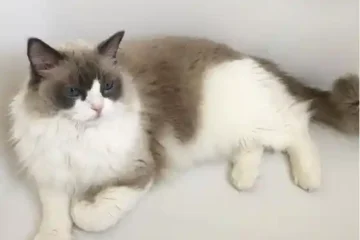
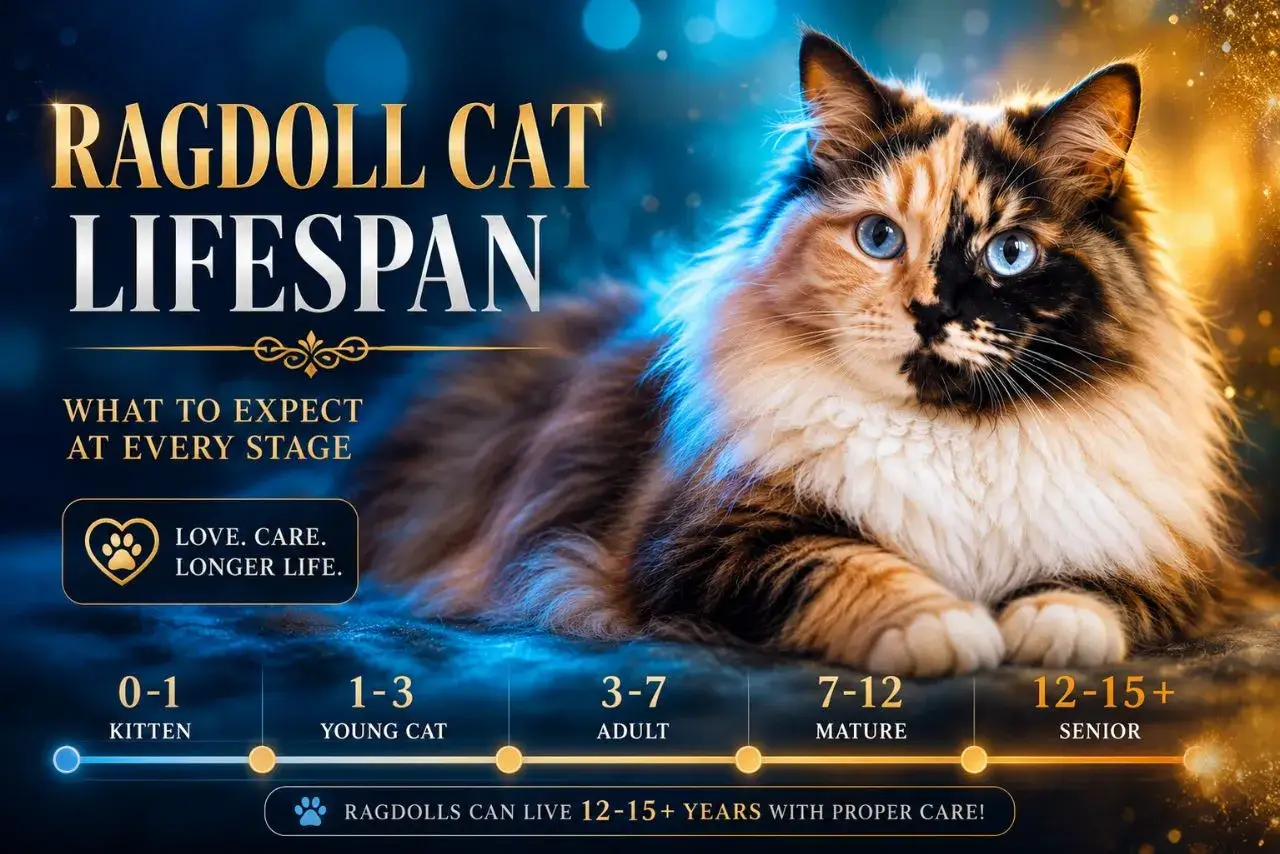
I remember the first time someone asked me how long ragdoll cats live. A friend had just brought home a seal point kitten, all floppy and blue-eyed, and she was already thinking about how many years she’d get with him. The answer surprised her. So, what is the lifespan of a ragdoll cat?
Last updated September 2026: we fixed a scrambled data table, corrected a couple of FAQs that had drifted from the rest of this guide (including one that gave the wrong lifespan range and one that wrongly suggested Ragdolls do fine outdoors), and streamlined some repetitive sections.
Typically between 12 and 17 years, which puts them on the longer end compared to many other breeds. Some ragdolls even make it past 20. That’s a long friendship, and it’s worth knowing what shapes it.
This guide covers everything that affects the ragdoll cat lifespan: genetics, diet, health risks, indoor vs outdoor life, male vs female differences, and the signs of aging you should watch for. Whether you already have one or you’re thinking about getting a ragdoll kitten, this is the information that actually matters.
What Is the Average Lifespan of a Ragdoll Cat?
People ask what is the lifespan of a ragdoll cat, and the honest answer is: it depends, but typically 12 to 17 years. Some sources put the midpoint around 12.5 years, while others report healthy indoor ragdolls regularly reaching 15 or more. The wide range reflects how much individual factors matter.
For context, the average life span of a cat generally runs 12 to 15 years. Ragdolls sit comfortably within that range and often push past it, especially when kept indoors with consistent veterinary care and proper pet insurance for indoor cats. According to PetMD’s ragdoll breed profile, these cats are known for their gentle temperament and above-average longevity compared to many other purebreds.
A few notable cases: Ragdoll cats have been reported living into their early 20s. These are the outliers, but they’re not impossible. Good genetics combined with attentive care can get you there.
Ragdoll Cat Lifespan in Years: A Quick Reference
| Category | Expected Lifespan |
|---|---|
| Average ragdoll cat lifespan | 12 to 17 years |
| Indoor ragdoll cat lifespan | 14 to 17+ years |
| Outdoor or free-roaming ragdoll | 10 to 13 years |
| Female ragdoll cat lifespan | Slightly longer on average |
| Male ragdoll cat lifespan | Slightly shorter, though varies |
| Oldest reported ragdoll cat | 20+ years |
Ragdoll cats live a long time and are very gentle. They usually live between 12 and 17 years. But many things can change how long they live.
Ragdolls live a long time, but how long can change. Taking good care of them is key. Indoor Ragdolls live longer because they are safe from dangers.
Ragdolls are usually healthy and don’t have many genetic problems. But they can get sick like any cat. Going to the vet often and taking care of them helps them live longer.
| Factor | Impact on Ragdoll Lifespan |
|---|---|
| Genetics and Breeding | Good breeding helps avoid health issues and increases lifespan |
| Diet and Nutrition | Eating well supports their health and helps them live longer |
| Indoor vs Outdoor Living | Indoor Ragdolls live longer because they are safe from dangers outside |
| Veterinary Care | Regular vet visits and early treatment of sickness can help them live longer |
Knowing what affects Ragdoll cats’ lives helps us take good care of them. This way, they can live long, happy lives with us.
Ragdoll Cat Lifespan Male vs Female: Is There a Difference?
Yes, though it’s modest. Female ragdoll cat lifespan tends to run slightly longer than male ragdoll cat lifespan. This mirrors patterns seen across many cat breeds, where females on average outlive males by a year or two.
The gap narrows considerably when males are neutered early. Unneutered males tend to roam, fight, and expose themselves to more injury and disease. A neutered male ragdoll kept indoors can easily match or approach the lifespan of a female.
Spaying females also helps. It removes the risk of uterine infections and significantly lowers breast cancer risk, especially when done before the first heat cycle.
So, while the ragdoll cat lifespan male vs female does show some difference, the more important variable is whether the cat is spayed or neutered. Ragdoll cat lifespan after neutering or spaying consistently trends longer.
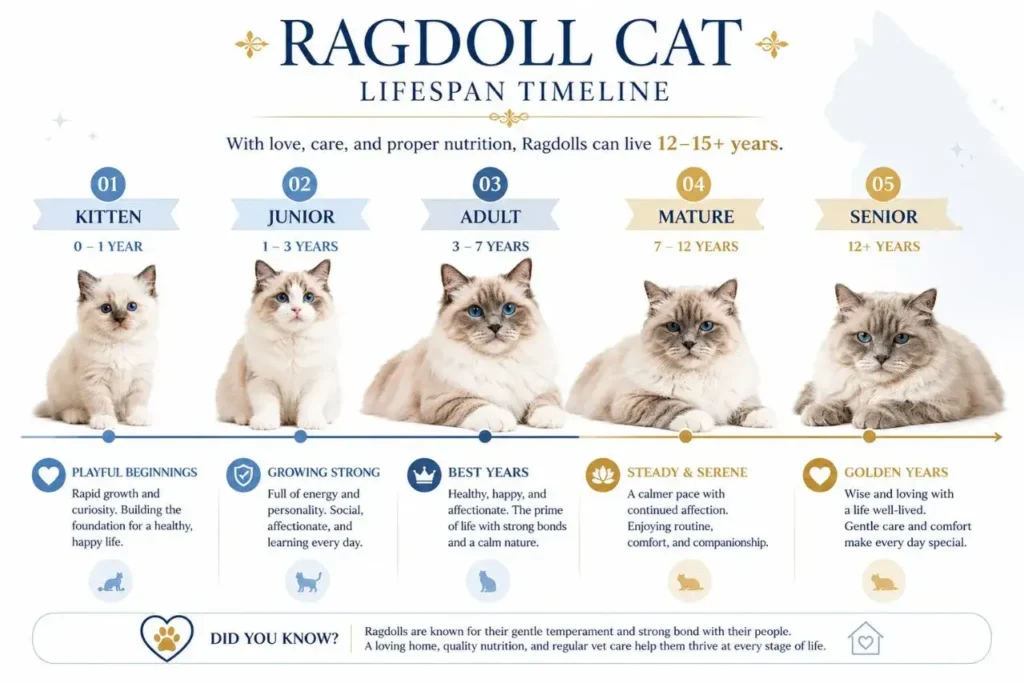
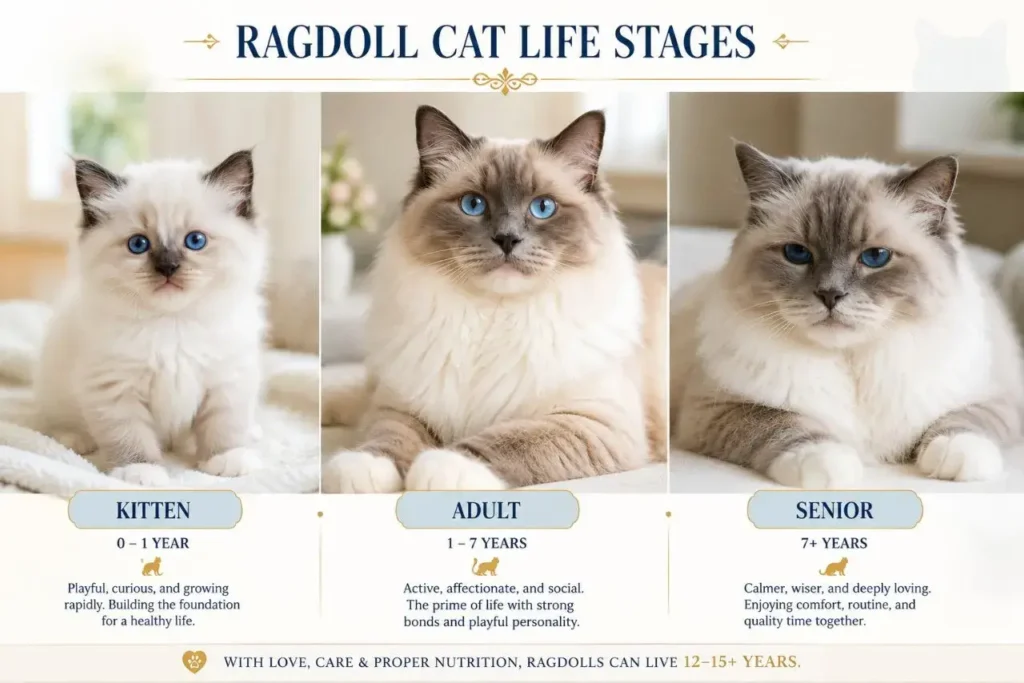
Ragdoll Cat Life Stages: From Kitten to Senior
Understanding where your ragdoll is in its life helps you give the right care at the right time.
Birth to 6 Months: Ragdoll Kitten Stage
Ragdoll kittens are small, playful, and growing fast. They’re weaned around 4 to 5 weeks and should stay with their mother until at least 8 weeks. This early period shapes their immune system and social behavior.
The ragdoll kitten lifespan concern here is mostly infectious disease and injury. Keep vaccinations current and limit exposure to unknown cats.
6 Months to 18 Months: Adolescence
Ragdolls are large cats, and they mature slowly. Full adult size usually isn’t reached until 3 to 4 years. During adolescence, energy is high, and mischief is common. This is the ideal window for spaying or neutering.
18 Months to 10 Years: Adult Stage
Healthy adult ragdolls are relaxed, social, and relatively low-maintenance. Annual vet checkups, good nutrition, and regular play are the pillars of this stage. The ragdoll personality during these years is why so many owners become lifelong fans of the breed.
10 Years and Beyond: Senior Ragdoll Stage
At around 10, ragdolls enter their senior phase. Ragdoll cat senior age brings slower movement, possible weight changes, and a higher risk of the health conditions covered below. Regular vet visits should move from once to twice a year.
For those who want to see how their cat stacks up, ragdoll cat years to human years run roughly like this: a 10-year-old ragdoll is close to 56 in human terms. A 15-year-old is around 76. When owners ask what is the lifespan of a ragdoll cat in human equivalent terms is, that comparison helps put it in perspective.
Ragdoll Cat Health Problems That Affect Lifespan
Ragdolls are generally a healthy breed, but they do carry a few breed-specific risks. Knowing them early can make a real difference.

Hypertrophic Cardiomyopathy (HCM)
This is the one that comes up most often. Hypertrophic cardiomyopathy ragdoll risk is real. HCM is a thickening of the heart muscle that can lead to heart failure. It’s the leading cause of cardiac death in cats overall, and ragdolls have a genetic predisposition to it.
Ragdoll cat heart disease lifespan outcomes vary. Some cats with mild HCM live normal lifespans with medication and monitoring. Severe cases can significantly shorten life. Responsible breeders test breeding cats for the HCM gene mutation, so ask about this when choosing a kitten. Annual cardiac screenings after age 5 are a smart idea. The Cornell Feline Health Center’s overview of hypertrophic cardiomyopathy is a reliable, vet-backed reference if you want to go deeper on this condition.
Kidney Disease
Ragdoll cat kidney disease lifespan is a concern, particularly in older cats. Chronic kidney disease (CKD) is common in aging cats broadly, and Ragdolls are not exempt. Symptoms include increased thirst, weight loss, and frequent urination.
Early detection through bloodwork (which your vet can run at annual checkups) allows for dietary management that can slow progression considerably.
Obesity
Ragdoll cat obesity lifespan effects are worth taking seriously. These cats have a docile, low-activity temperament, which makes weight gain easy if food is freely available. Excess weight stresses joints, strains the heart, and raises the risk of diabetes.
Ragdoll cat weight and lifespan are directly connected. Keep your cat at a healthy weight through portion control and regular play, even if they don’t ask for it.
Other Common Conditions
Ragdoll cat arthritis symptoms become more common after age 10. Watch for reluctance to jump or climb. Ragdoll cat diabetes risk is elevated in overweight cats. Ragdoll cat cancer symptoms, including lumps, weight loss, or unexplained lethargy, should prompt an immediate vet visit.
Factors Affecting Ragdoll Cat Longevity
The lifespan of a Ragdoll cat depends on many things. These include their genes, how they are bred, what they eat, and their health care. Knowing about these can help Ragdoll owners help their cats live longer and healthier.
Genetics and Breeding
Good breeding is key for Ragdoll health and long life. Good breeders pick parents with the right genes. This lowers the chance of diseases that can shorten a Ragdoll’s life. Things like the cat’s family history, genetic tests, and the breeder’s ethics matter for its possible life span.
Diet and Nutrition
A good diet is vital for a Ragdoll cat’s health and long life. Feeding them food full of nutrients, proteins, and vitamins helps their immune system and organs. Keeping them at a healthy weight with the right amounts of food and exercise can also prevent obesity problems.
| Factors | Influence on Ragdoll Cat Lifespan |
|---|---|
| Genetics and Breeding | Good breeding lowers the risk of inherited diseases, helping them live longer. |
| Diet and Nutrition | A balanced diet supports the cat’s immune system, organs, and health, leading to a longer life. |
| Indoor vs Outdoor Living | Indoor Ragdolls live longer because they avoid dangers and accidents outside. |
| Veterinary Care | Regular vet visits, preventive care, and quick treatment of health issues can greatly affect a Ragdoll’s lifespan. |
Understanding and acting on these key factors helps Ragdoll owners support their cat’s long life. This ensures their cats live happily and healthily.
One condition worth naming specifically alongside HCM and kidney disease generally: polycystic kidney disease (PKD), caused by fluid-filled cysts that gradually impair kidney function. A DNA test can identify carriers, so it’s worth asking a breeder whether their breeding cats have been tested. Ragdolls can also develop feline urinary tract infections (UTIs), which are usually manageable with prompt vet care and generally don’t shorten lifespan the way HCM or untreated kidney disease can.
Providing a Healthy Environment
Ensuring a Ragdoll cat lives a long life means giving them a safe and interesting place to be. Things like living inside, getting enough exercise, and grooming properly are key. These things help keep these cats healthy and long-lived.
Indoor vs Outdoor Living
Ragdoll cats are gentle and loving, making indoor living a good fit for them. Staying inside keeps them safe from dangers like predators, cars, and sickness. Indoor Ragdolls can live 14 to 17 years or more, while outdoor ones might not live as long because of the risks they face.
To keep your indoor Ragdoll happy, make sure their home is fun and full of things to do. Give them toys, scratching posts, and places to play and explore. Brushing them often also keeps their fur healthy and cuts down on hairballs.
- Keeping Ragdolls indoors can add up to 6 years to their life
- Give indoor Ragdolls fun things to do and brush them often
- Outdoor Ragdolls face more dangers, like predators and sickness
Creating a safe and caring home helps extend your Ragdoll cat’s lifespan. It makes sure they are happy and healthy. The main thing in ragdoll cat lifespan care tips is to focus on their happiness and give them what they need to do well.
Indoor vs Outdoor Life: Which Adds More Years?
Indoor ragdoll cat lifespan is consistently longer. The gap is not small. Cats kept exclusively indoors live, on average, several years longer than those with outdoor access. This is one of the most direct answers to what is the lifespan of a ragdoll cat kept safely inside versus one allowed to roam.
Ragdolls are particularly unsuited to outdoor life. The ragdoll personality is trusting to a fault. They don’t fear strangers, they don’t run from threats, and they have no street sense. This makes them vulnerable to traffic, predators, and theft.
Ragdoll cat lifespan outdoor vs indoor is not really a close comparison. Outdoor exposure brings infectious diseases, parasites, fights with other animals, and environmental toxins. Do indoor ragdoll cats live longer? Yes, clearly.
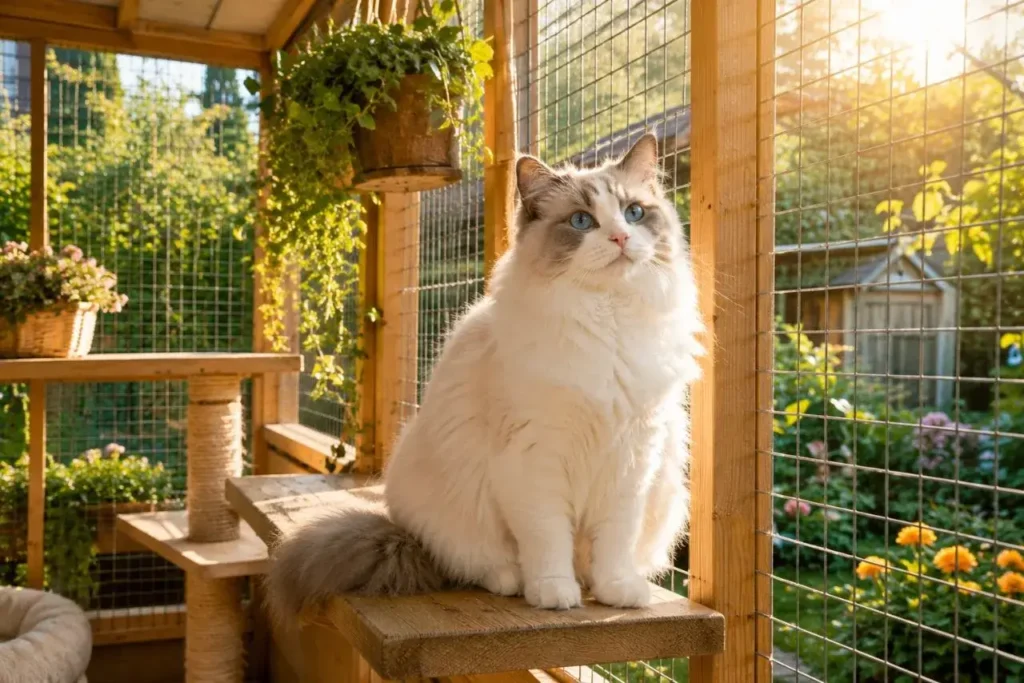
If your cat wants the stimulation of the outdoors, a secure enclosed catio or supervised walks on a harness are good options. You get the outdoor experience without the risk. This is also worth thinking about if you’re comparing breeds, since our Snowshoe Cat vs Ragdoll guide covers how both breeds share a similarly trusting nature that makes unsupervised outdoor time a genuine risk.
Diet and Nutrition: What You Feed Matters
Ragdoll cat diet for longevity comes down to a few key principles.
Protein is the foundation: Cats are obligate carnivores. A diet high in quality animal protein supports muscle mass, organ health, and immune function. Look for foods where a named meat source (chicken, salmon, turkey) appears as the first ingredient.
Wet food helps with hydration: Ragdoll cat hydration tips often center on this. Many cats don’t drink enough water, and chronic mild dehydration strains the kidneys over time. Wet food addresses this directly. If your cat is on dry food, adding water or a cat water fountain can help.
Avoid overfeeding: The best food for ragdoll cat lifespan is whichever one you feed in the right amounts. Even excellent food causes problems when given in excess.
Ragdoll cat supplements for longevity worth considering include omega-3 fatty acids (for heart and joint health) and probiotics. Discuss these with your vet before adding them. For a solid grounding in what cats actually need from their food, the ASPCA’s cat nutrition guide is a straightforward, trustworthy resource.

How to Increase Ragdoll Cat Lifespan: Practical Steps
Here’s what consistently makes the biggest difference in ragdoll cat care for long life:
- Annual (and bi-annual for seniors) vet checkups: Ragdoll cat health checklist items like bloodwork, dental exams, and cardiac screening catch problems before they become serious.
- Dental care: This one surprises people. Poor dental health is directly linked to kidney disease in cats. Regular brushing and professional cleanings matter.
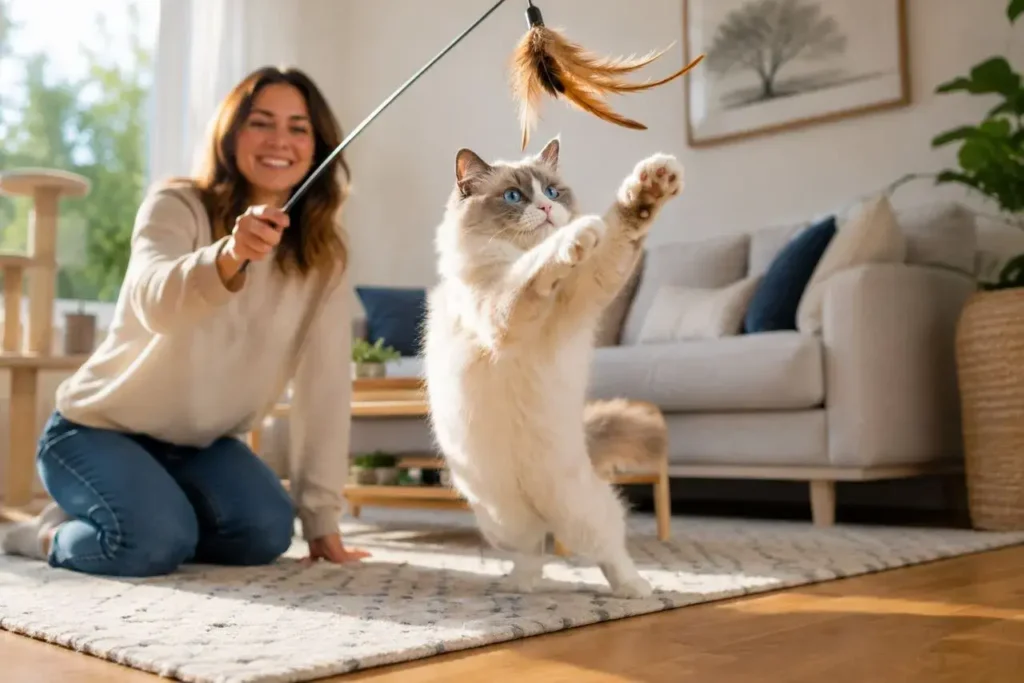
- Regular play: Ragdoll cat exercise needs are low compared to high-energy breeds, but not zero. 15 to 20 minutes of interactive play daily keeps weight and muscle tone in check.
- Mental stimulation: Puzzle feeders, window perches, and rotation of toys keep cats engaged and reduce stress.
- Keep them indoors: This alone is one of the highest-impact decisions you can make.
- Vaccinations and parasite prevention: A consistent ragdoll cat vaccination schedule protects against preventable disease.
- Stress-free environment: Ragdolls are sensitive cats. Loud environments, frequent disruption, and lack of routine can affect both behavior and physical health over time.
If you’re working through allergy concerns at home alongside your cat’s care routine, it’s also worth reading our article on Ragdoll Cats and Allergies before making changes to the home environment.
This routine for long life isn’t complicated. Most of it is consistency.
Ragdoll Cat Lifespan Compared to Other Breeds
How does the ragdoll cat lifespan compare to similar large, gentle breeds? Understanding what is the lifespan of a ragdoll cat is relative to other popular breeds helps put the numbers in context.
| Breed | Average Lifespan |
|---|---|
| Ragdoll | 12 to 17 years |
| Maine Coon | 12 to 15 years |
| Siamese | 12 to 20 years |
| Persian | 10 to 15 years |
| Domestic shorthair | 12 to 18 years |
Ragdoll vs Maine Coon lifespan is fairly similar, with Maine Coons sometimes showing a shorter window due to higher cardiac disease rates. Ragdoll vs Siamese lifespan is interesting: Siamese are known for longevity, and some overlap with ragdoll life expectancy at the higher end. Ragdoll vs Persian lifespan leans toward ragdolls, as Persians carry more structural health issues.
Ragdoll Cat Aging Signs: What to Watch For
Ragdoll cat old age symptoms and ragdoll cat aging signs worth watching for include:
- Reduced activity or reluctance to jump
- Changes in litter box habits
- Increased thirst or urination
- Weight loss or muscle wasting
- Cloudy eyes or changes in vision
- Sleeping more than usual
- Vocalizing more, especially at night
- Confusion or disorientation
These don’t automatically signal something serious, but they’re worth a vet conversation. Ragdoll cat end-of-life signs are more pronounced versions of the above, often paired with loss of appetite and withdrawal.
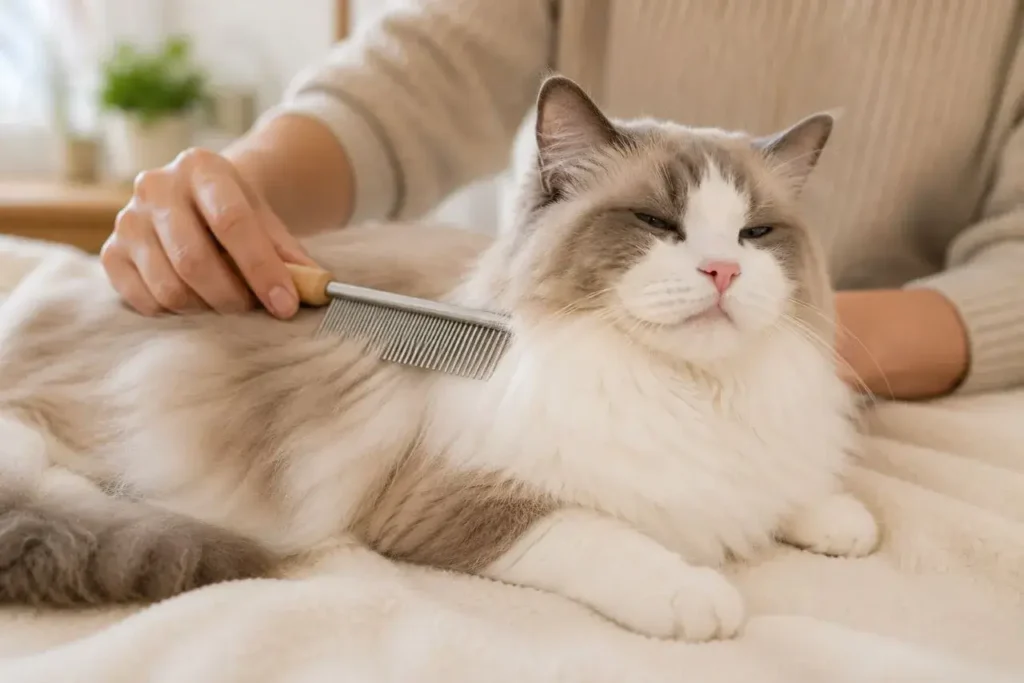
Caring for senior ragdoll cats means adjusting their environment, too. Lower litter box sides, heated beds, ramps instead of stairs, and more frequent vet visits make a real difference in quality of life.
Ragdoll Cat Grooming and Its Role in Health
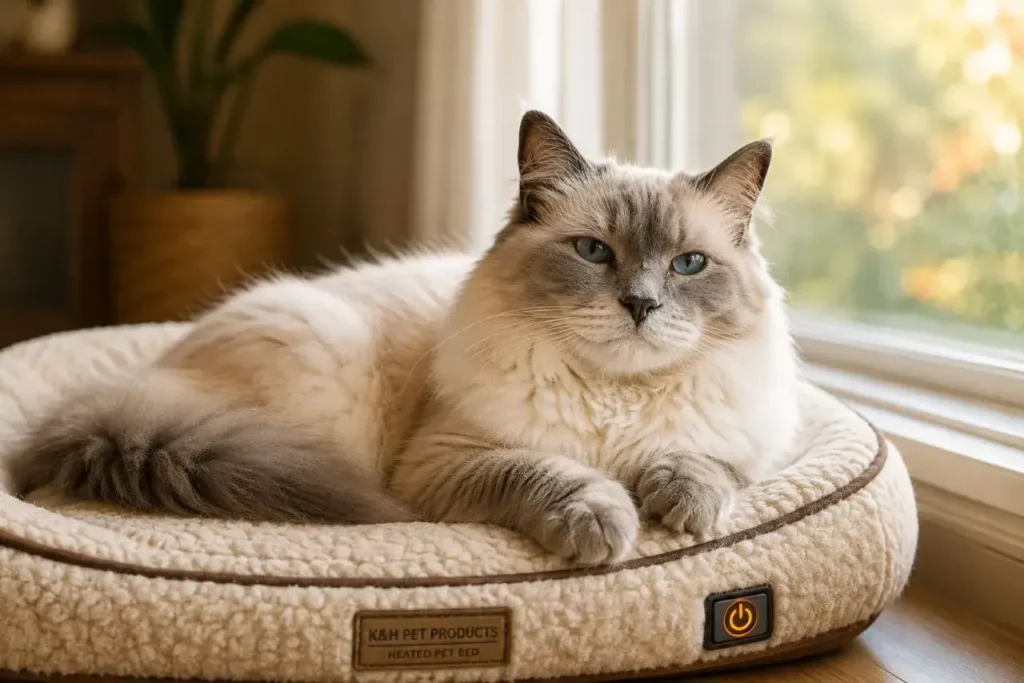
Ragdoll cat grooming tips and their connection to lifespan aren’t always obvious, but they’re real. Regular grooming prevents matting, which can cause skin infections. It also lets you check for lumps, wounds, or parasites that might otherwise go unnoticed.
Ragdolls have semi-long, silky coats that mat less than some other long-haired breeds but still need brushing a few times a week. Most ragdolls enjoy it, which helps. For more about ragdoll coat colors and care differences by type, take a look at our guides on Pure White Ragdoll Cats and the Tuxedo Black and White Ragdoll Cat.
Mixed Breed Ragdolls: Does Lifespan Change?
Mixed breed ragdolls often benefit from what’s called hybrid vigor. Crossing breeds can reduce the concentration of genetic disease risk.
A Ragdoll Himalayan Mix may carry traits from both parent breeds, including any associated health predispositions. The same applies to a Ragdoll Cat Mixed With Siamese, a Ragdoll Tabby Cat Mix, or a Tortoiseshell Calico Ragdoll Cat.
Mixed ragdolls can live as long as purebreds, sometimes longer, but the key is the same: diet, vet care, and indoor living.
Choosing a Healthy Ragdoll Kitten
The ragdoll cat lifespan you get starts with the breeder you choose. A good breeder will:
- Health tests their breeding cats for HCM and other genetic diseases
- Provide a ragdoll cat breeder’s health guarantee
- Be transparent about lineage and any known health history
- Socialize kittens properly before sending them home
Healthy ragdoll kittens for sale from reputable breeders cost more, but the difference in long-term health and veterinary expenses often makes it worthwhile. The ragdoll cat vet costs, and ragdoll cat yearly health care costs, add up over 15 years, and a cat from health-tested parents starts with a meaningful advantage.

Pros and Cons of Ragdoll Cat Ownership (Lifespan Perspective)
| Pros | Cons |
|---|---|
| Long average lifespan of 12 to 17 years | Prone to HCM, requires cardiac monitoring |
| Calm temperament, easier to manage | Can become obese without active management |
| Adapts well to indoor life | Needs regular grooming |
| Bonds deeply with family | Trusting nature makes outdoor access risky |
| Generally healthy with good care | Vet costs for senior care can be significant |
People Also Ask: Ragdoll Cat Lifespan FAQ
1. What is the average lifespan of a ragdoll cat?
What is the lifespan of a ragdoll cat on average? Between 12 and 17 years. With consistent indoor care, routine vet checkups, and a good diet, many ragdolls reach the higher end of that range. Some live past 20.
2. How long do ragdoll cats live indoors?
Indoor ragdoll cat lifespan typically runs 14 to 17 years or more. Keeping a ragdoll exclusively indoors removes most of the major risks that shorten cats’ lives, including traffic, disease exposure from other animals, and predators.
3. Do male or female ragdoll cats live longer?
Female ragdoll cat lifespan tends to be slightly longer than male, but the difference is small. Neutering males and spaying females both improve life expectancy more than sex alone does.
4. What health problems affect ragdoll cat lifespan?
The main concerns are hypertrophic cardiomyopathy (HCM), chronic kidney disease, and obesity-related conditions like diabetes and joint disease. Ragdoll cat genetic diseases can be partially screened for through responsible breeding.
5. What is the lifespan of a flamepoint ragdoll cat?
The average lifespan of a flamepoint ragdoll cat follows the same range as other ragdolls: 12 to 17 years. Coat color and pattern (flame point, blue, seal point, bicolor, mink) don’t meaningfully affect lifespan.
6. At what age is a ragdoll considered a senior cat?
Ragdoll cat senior age is generally considered to start around 10 years. From this point, more frequent vet visits and attention to mobility, weight, and organ health become particularly worthwhile.
7. What are signs that a ragdoll cat is aging?
Ragdoll cat aging signs include reduced activity, changes in eating or drinking habits, weight loss, litter box changes, cloudy eyes, and sleeping more. These are normal parts of aging but warrant a vet check to rule out treatable conditions.
8. Can a ragdoll cat live to 20 years?
Yes. A ragdoll cat living to 20 years is documented, though uncommon. The oldest ragdoll cat ever cases tend to involve cats with good genetics, consistent indoor living, attentive owners, and regular veterinary care throughout their lives.
9. How does diet affect ragdoll cat lifespan?
Ragdoll cat lifespan and diet are closely connected. High-protein, portion-controlled food with adequate hydration supports organ health, healthy weight, and energy levels. Overfeeding is one of the more preventable ways to shorten a ragdoll’s life.
10. Are ragdoll cats healthy compared to other breeds?
Yes, ragdolls are generally considered a healthy breed. The main breed-specific concern is HCM. Outside of that, are ragdoll cats prone to disease? Not especially. With good care, they hold up well compared to many other purebreds.
11. What’s the Single Highest-Impact Thing I Can Do for My Ragdoll’s Lifespan?
Keep them indoors. It’s the one factor that, on its own, adds the most years, several more on average than an outdoor or free-roaming cat. Everything else, diet, dental care, vet visits, weight management, matters too, but none of it moves the needle as much as simply not exposing your cat to traffic, predators, and disease from other animals.
12. Is 14 Old for a Ragdoll Cat?
It’s senior, not old. Since ragdolls typically live 12 to 17 years and regularly reach into their late teens or 20s with good care, a 14-year-old is a well-established senior, roughly comparable to a person in their early 70s, but still has good years ahead in most cases. It’s a great age to move to twice-yearly vet visits if you haven’t already.
13. Do Ragdolls Get Sick Easily?
No, ragdolls are generally healthy cats. To lower their risk of illness, keep vaccines current, feed a balanced diet, and stay on top of the breed-specific screenings (HCM, kidney function) covered above.
14. Are Ragdolls Good Outdoor Cats?
No, and this is worth being direct about: a ragdoll’s trusting, fearless temperament, the same trait that makes them such gentle companions, makes them a poor fit for unsupervised outdoor life. They don’t have the street sense to avoid traffic, predators, or strangers, which is a big part of why indoor ragdolls live meaningfully longer than outdoor ones. A secure catio or supervised harness walks give you the outdoor experience without that risk.
Sources and Further Reading
- Cornell Feline Health Center – Hypertrophic Cardiomyopathy
- PetMD – Ragdoll Breed Profile
- ASPCA – Cat Nutrition Tips
This article is for general informational purposes and isn’t a substitute for advice from a licensed veterinarian, particularly regarding HCM or kidney disease screening.
Conclusion
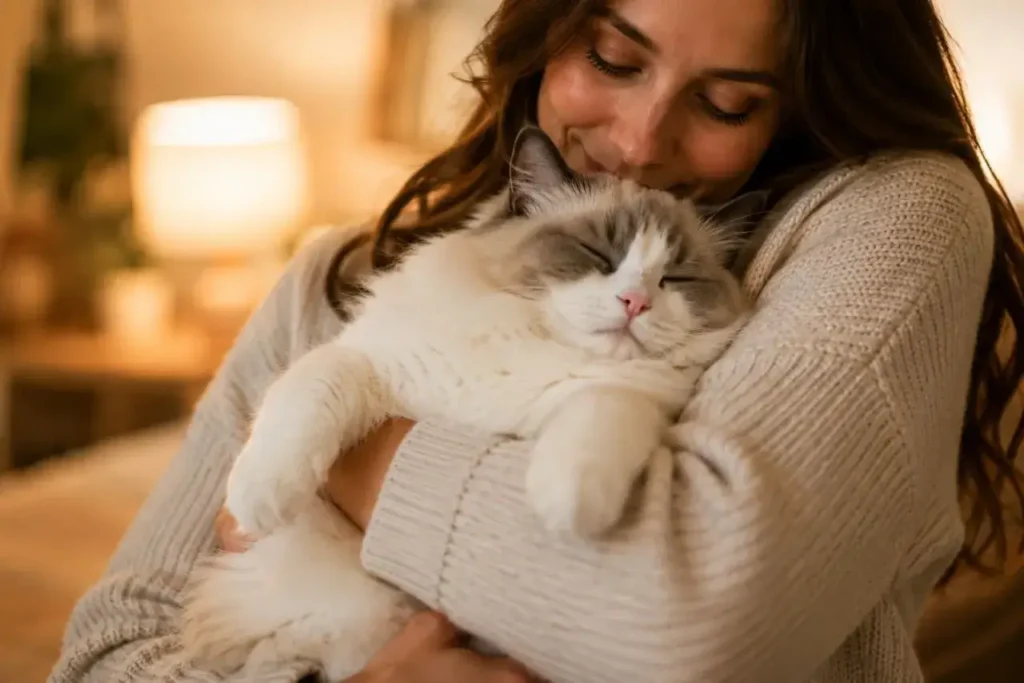
The lifespan of a ragdoll cat is genuinely good news for anyone who falls for the breed. Between 12 and 17 years, with real potential to go longer, you’re looking at a long-term companion. And when people ask what is the lifespan of a ragdoll cat, the answer really does depend on the choices made every single year.
What shapes that lifespan is mostly within your control: keeping them indoors, feeding them well, getting regular vet care, managing their weight, and staying on top of dental and cardiac health. Genetics play a role, which is why choosing a kitten from a health-tested breeder matters.
Ragdolls are not a high-maintenance breed in terms of temperament or training. But they do reward attentive care with extra years. That’s a pretty good deal.
If you have a senior ragdoll at home, or you’re preparing for those years, remember: the care adjustments that help most are consistency and early detection. Keep the vet appointments. Pay attention to changes. And enjoy the time.