If you have come across a Ragdoll cat with a deep, smoky gray coat and those signature blue eyes, you already know how striking it is. But the term “dark gray Ragdoll cat” tends to confuse people, and for good reason. Ragdoll color terminology does not always match what you see with your eyes, and what breeders call “blue” often looks unmistakably gray in real life.
So when someone searches for a dark gray Ragdoll cat, they might be looking at a blue Ragdoll, a blue point, a charcoal variation, or sometimes a cat that carries dilute color genetics in an unexpected way. This guide breaks all of that down clearly.
You will learn what makes a Ragdoll appear dark gray, how the genetics behind these coat colors actually work, what to expect from a dark gray Ragdoll kitten as it grows up, what these cats cost, and how to care for one properly. No guesswork, no padding, just the full picture.
Last updated September 2026: this guide covers how a dark gray Ragdoll differs from the newer “black Ragdoll” variety people sometimes confuse it with, practical tips for photographing your cat’s true coat color, and current 2026 pricing.
What Is a Dark Gray Ragdoll Cat?
The Ragdoll breed, including the dark gray coloring covered in this guide, traces its history back to the 1960s.
The Color Confusion Around “Blue” and Gray
Ragdolls are officially recognized in a set of colors by major registries, including TICA and CFA. The standard colors are seal, blue, chocolate, lilac, red, and cream. Within those, you get point, mitted, and bicolor patterns.
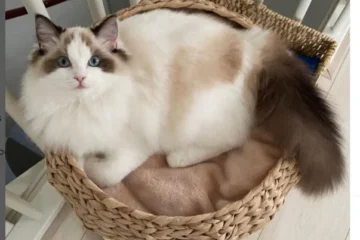
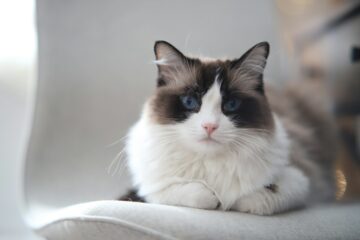
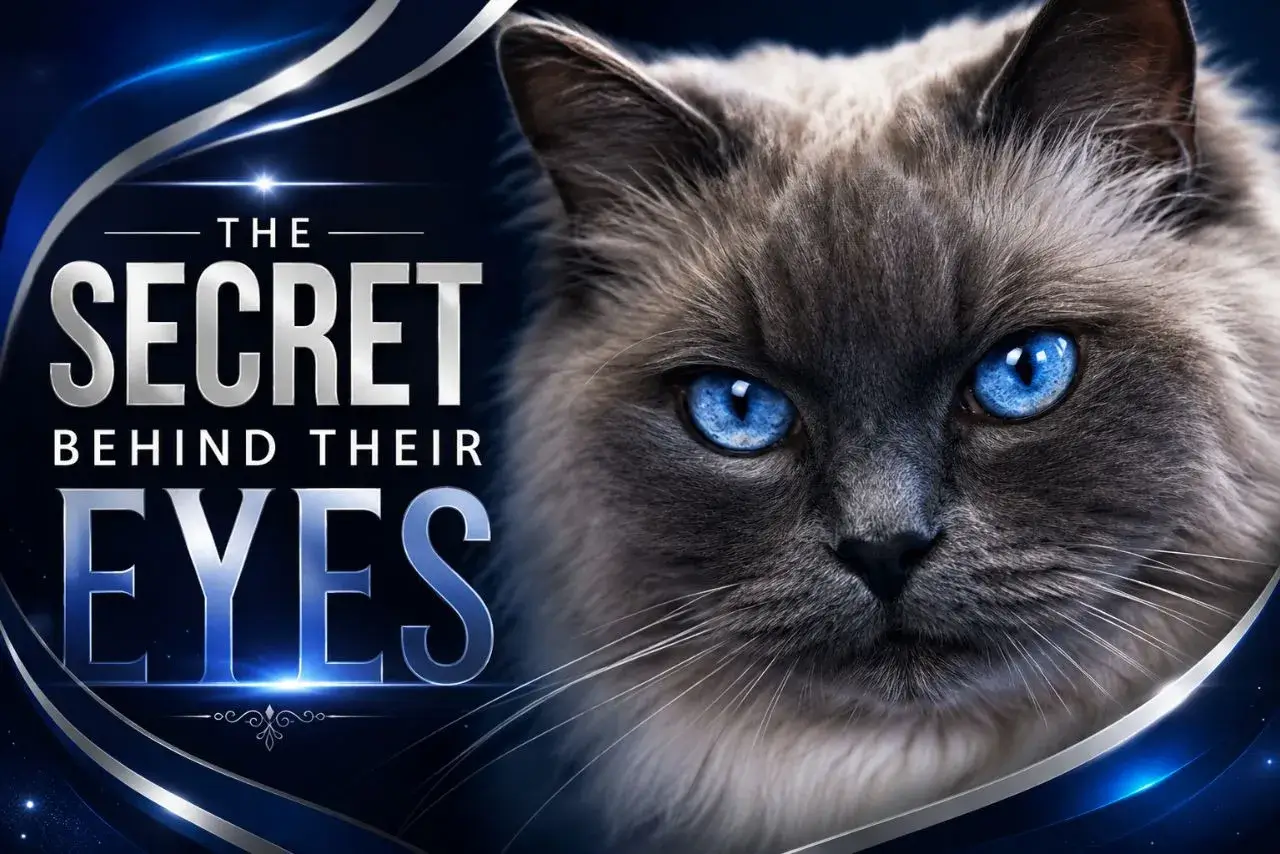
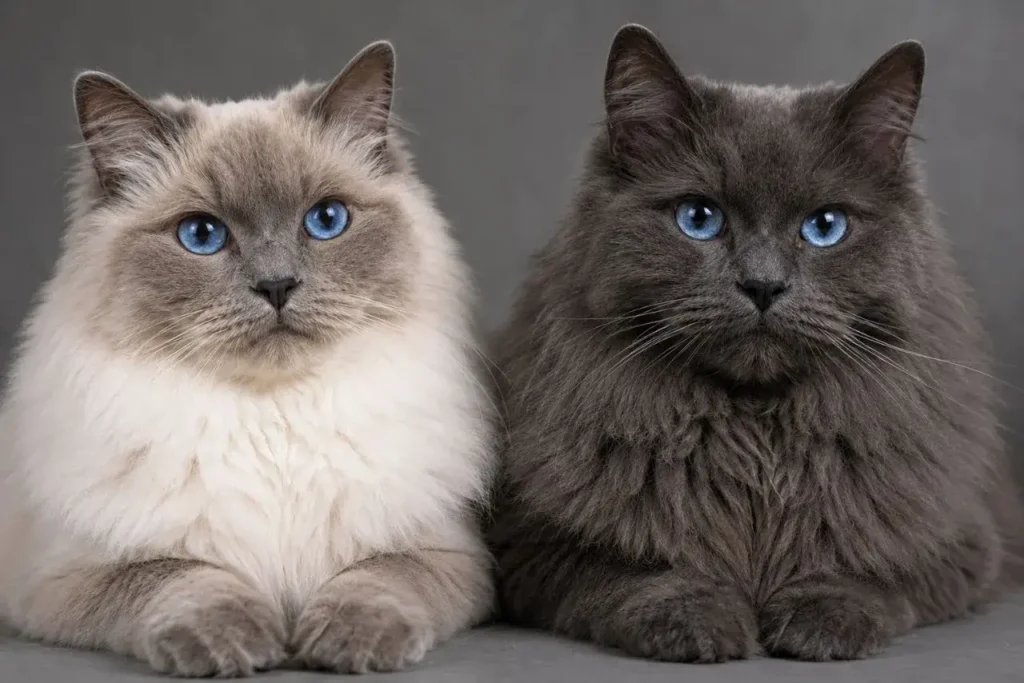
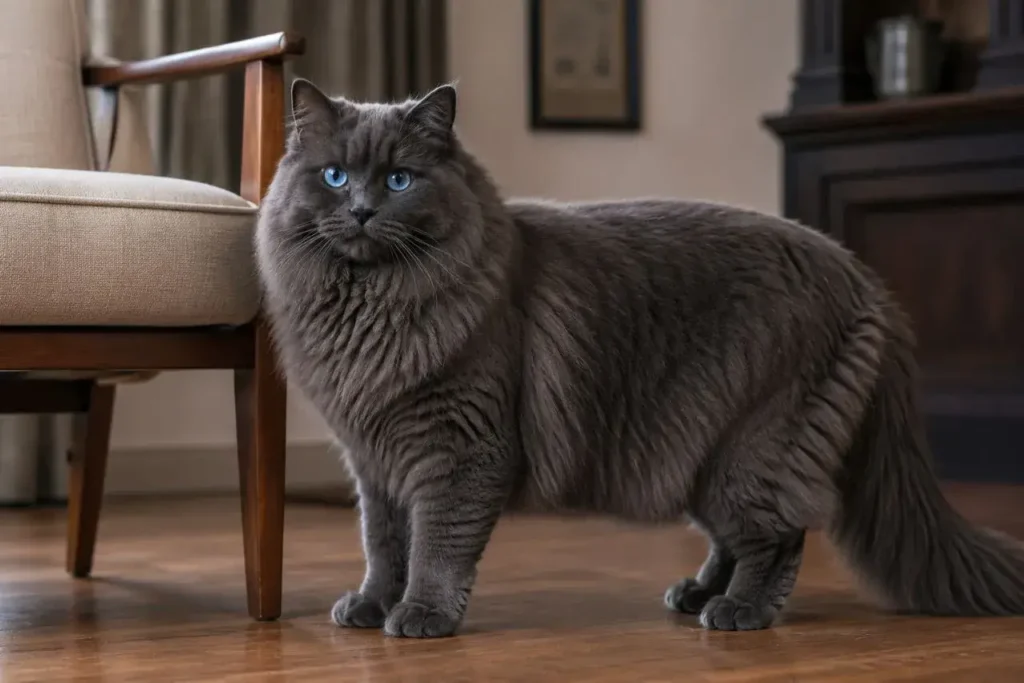
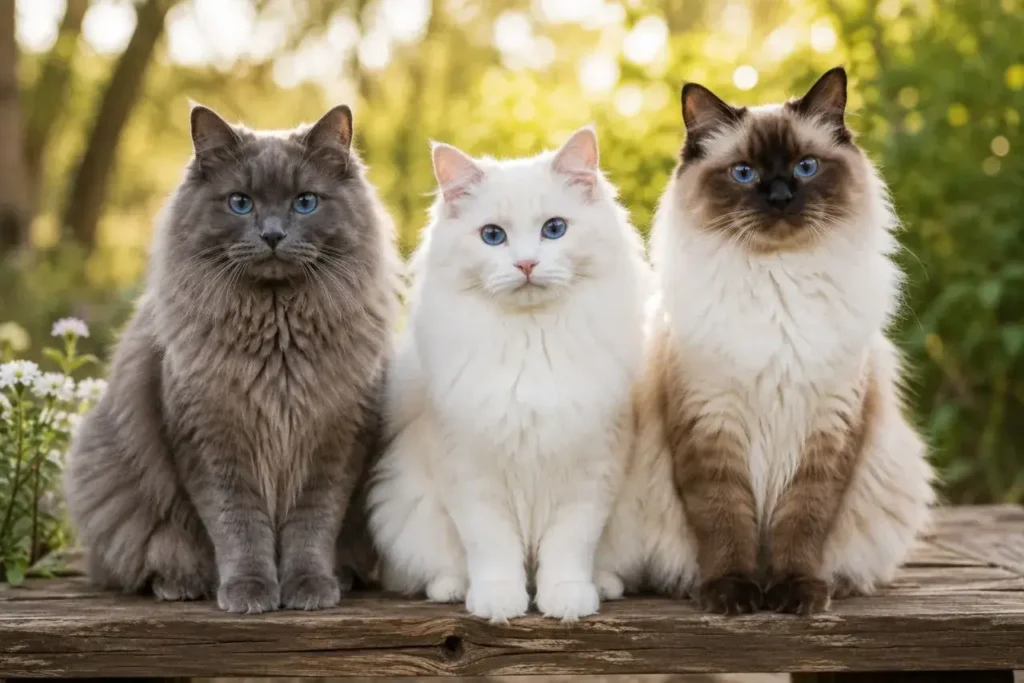
Here is the thing: “blue” in the cat breeding world does not mean the vivid blue you might picture. It refers to a cool, diluted gray tone. A blue Ragdoll has a pale to medium gray body with deeper gray points on the ears, face mask, legs, and tail. Some blue Ragdolls appear quite light. Others, particularly in certain lighting or at certain ages, look noticeably darker and more slate-toned, which is what many people describe when they say “dark gray Ragdoll cat.”
So in most cases, a dark gray Ragdoll is a blue Ragdoll, or a variation of the blue color class.
Where Charcoal Comes In
There is another factor that can deepen a Ragdoll’s coat: the charcoal gene. Charcoal is not an official TICA or CFA color for Ragdolls, but it exists in the breed population. Charcoal Ragdolls often show darker, more dramatic shading, sometimes with a mask-like facial pattern and a “cape” of darker fur along the back. When a charcoal gene is combined with a blue base, the result can look strikingly dark and smoky, much closer to what someone might describe as a true dark gray cat.
Dark Gray Ragdoll Cat Genetics
How the Blue/Gray Color Develops
Ragdoll coat color is controlled by several genetic factors. The base colors seal and blue are the most common. Blue is the dilute version of seal, meaning a cat inherits two copies of the dilute gene (dd) to express a gray coat instead of the dark brown-black of seal.
The dilute gene reduces the pigment density in each hair shaft, which produces that characteristic gray, lavender-gray, or blue-gray tone. The specific shade of gray a cat shows depends on how other modifying genes interact with that dilute base.
Cats with a warmer underlying pigment tend to look more lavender-gray. Cats with a cooler undertone look more true gray or slate. Lighting, photography, and even the season can shift how the color reads to human eyes.
The Charcoal Modifier
The charcoal pattern in Ragdolls is linked to a gene called the Agouti locus, specifically a wide-band modifier. When a Ragdoll carries this gene, it can produce that distinctive darker cape and facial markings. A blue charcoal Ragdoll combines the dilute gene with the wide-band modifier, often resulting in a cat with deep gray-blue coat areas alongside paler zones. It is one of the most visually dramatic Ragdoll color combinations.
Because charcoal is not a breed standard color, not all breeders produce it intentionally, and some do not test for it. If you are specifically looking for a charcoal gray Ragdoll cat, be direct with breeders about what you want and ask whether they breed for or test the charcoal gene.
Do Dark Gray Ragdoll Cats Always Have Blue Eyes?
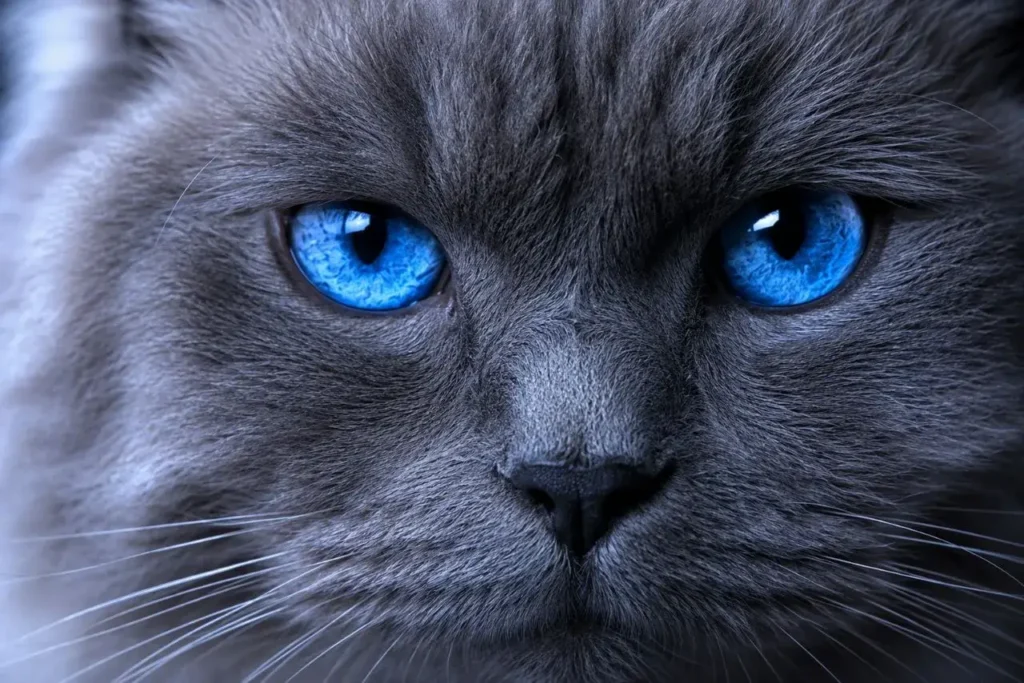
Blue eyes are a breed standard for Ragdolls. The gene responsible for the pointed coat pattern is linked to blue eye color, which is why traditional Ragdolls always have blue eyes. A blue point dark gray Ragdoll cat with that vivid blue gaze against a cool gray coat is one of the most photogenic color combinations in the cat world.
Mink Ragdolls, which carry a different genetic combination, can have aqua eyes rather than the vivid blue seen in traditional pointed cats. If you are curious about what a mink Ragdoll cat is, that variation gets into deeper genetics around the Burmese color restriction gene.
Dark Gray Ragdoll Cat Colors and Variations
Blue Point
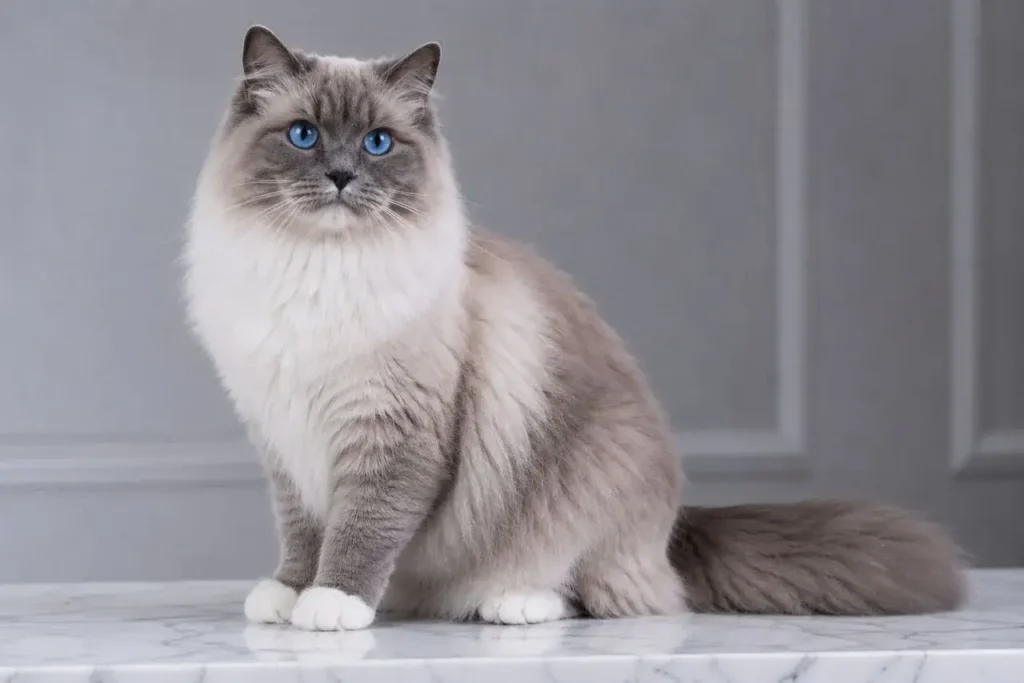
This is the most common variation that people refer to when they describe a gray Ragdoll. The body is a pale to medium cool gray, with darker gray points on the face, ears, legs, and tail. Blue point Ragdolls often look lighter overall with clearly defined darker extremities.
Blue Mitted
Same base color as blue point, but with white mittens on the front paws, white boots on the back legs, and usually a white chin and belly stripe. The contrast between the gray coat and the white mittens gives this variation a very distinctive look.
Blue Bicolor
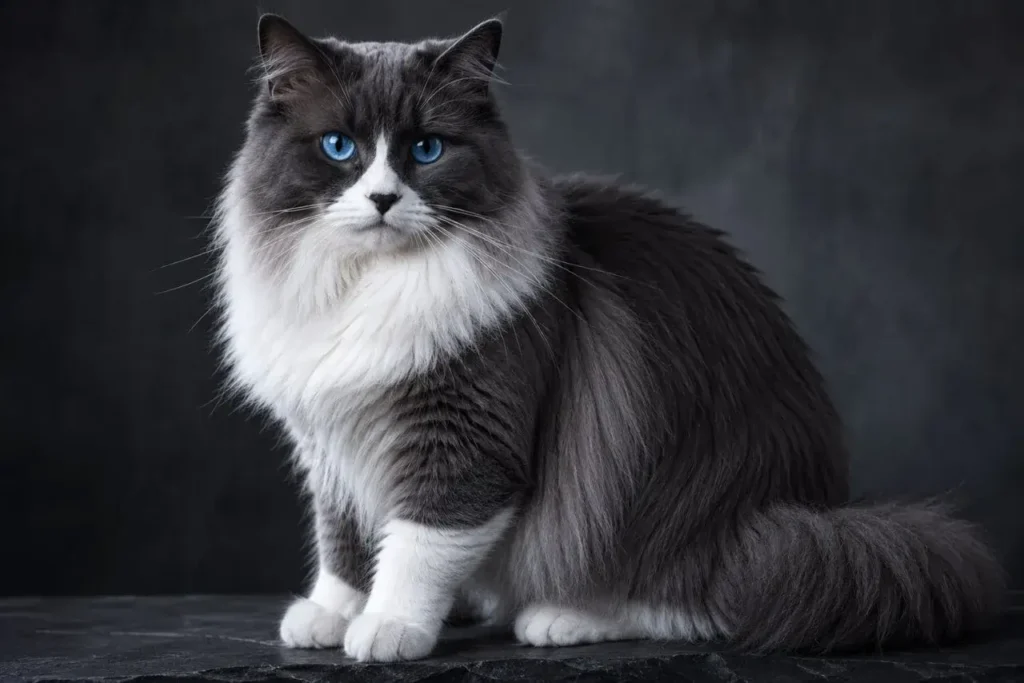
Blue bicolor Ragdolls have the most white, with an inverted V-shaped white blaze on the face, white legs, and a largely white underbelly. The gray is concentrated on the back, head, and tail. These cats can look dramatically two-toned.
Blue Lynx
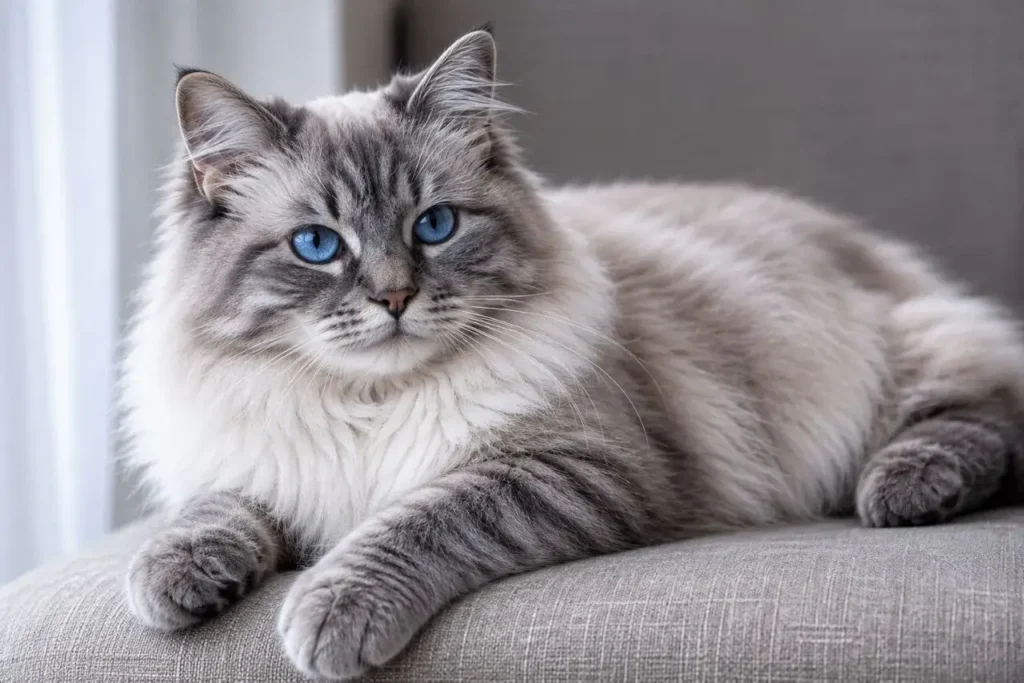
Lynx Ragdolls have tabby striping visible in the points. A blue lynx Ragdoll shows gray tabby striping on a cool gray base, giving the coat a layered, textured look. The striping is clearest on the legs and face.
Charcoal Gray Variations
As mentioned, charcoal blue Ragdolls show deeper, denser gray shading with a cape-like pattern across the shoulders and back. These cats tend to look the most dramatically dark gray out of any Ragdoll variation and are often what people specifically mean when they search for a dark gray Ragdoll cat.
Quick-Reference: Every Dark Gray Ragdoll Variation Compared
With five different variations all loosely called “dark gray,” it helps to see them side by side.
| Variation | Body Color | Markings | Overall Look |
|---|---|---|---|
| Blue Point | Pale to medium cool gray | Darker gray points on face, ears, legs, tail | Lightest and most classic “gray Ragdoll” look |
| Blue Mitted | Same as blue point | White mittens, boots, chin, belly stripe | Gray coat with crisp white accents |
| Blue Bicolor | Gray concentrated on back, head, tail | Inverted V white blaze, white legs and belly | Dramatically two-toned |
| Blue Lynx | Cool gray base | Visible tabby striping in the points | Layered, textured gray |
| Charcoal Blue | Deep, saturated gray | Cape-like shading across back and shoulders, defined facial mask | The darkest, most dramatic gray Ragdoll variation |
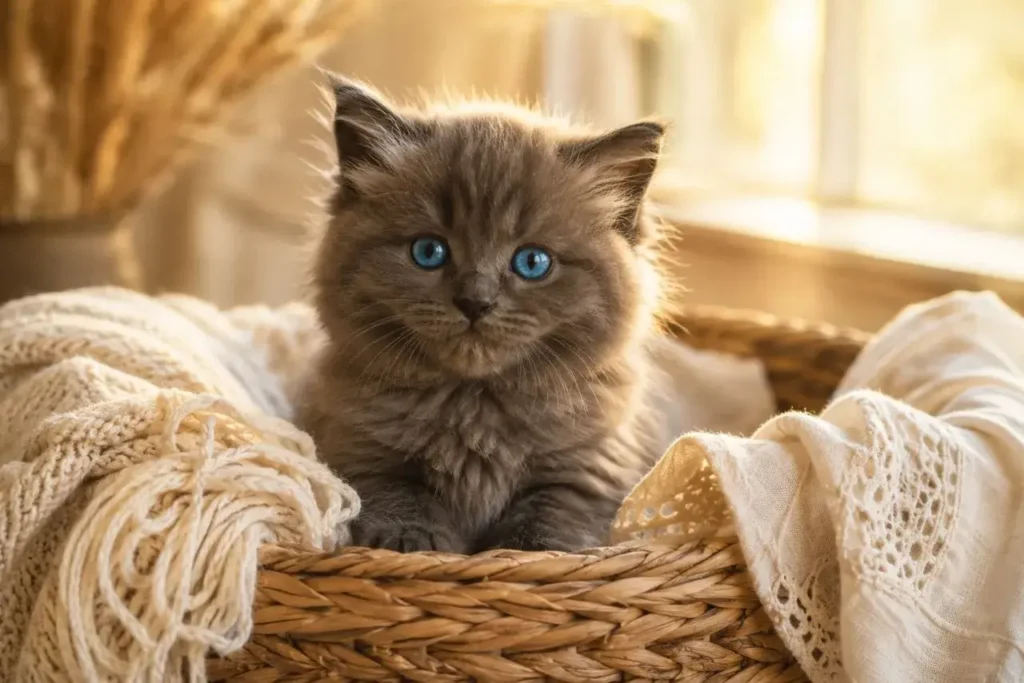
Dark Gray Ragdoll Kitten: What to Expect as They Grow
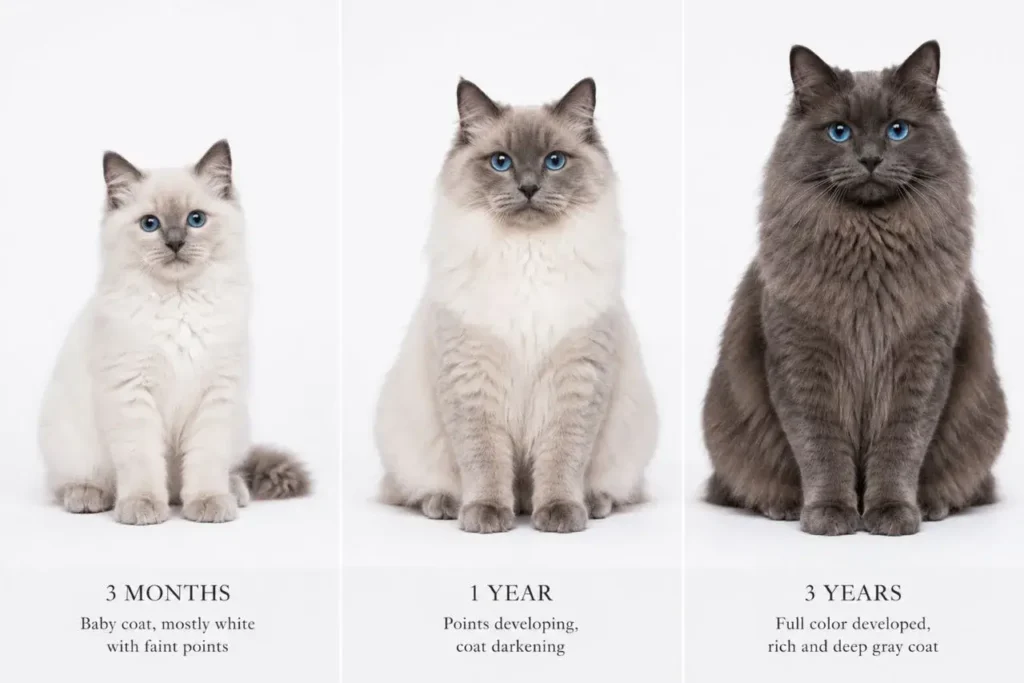
Born White, Darkens Over Time
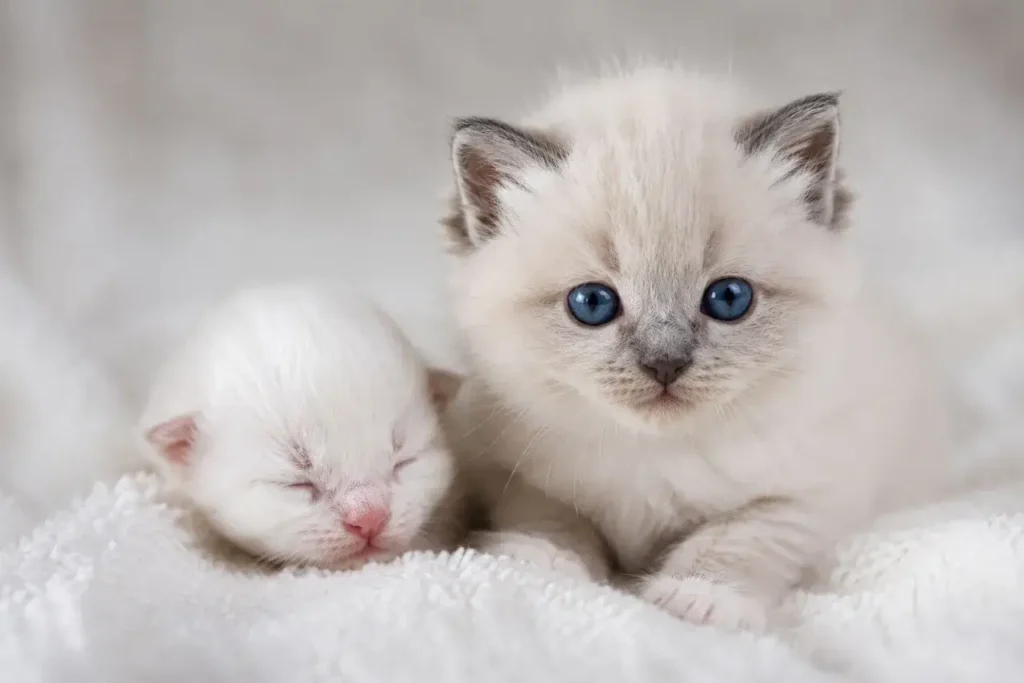
One of the most interesting things about Ragdoll kittens is that they are born almost entirely white. The pointed coloring develops gradually due to a temperature-sensitive enzyme that affects pigment production. Cooler areas of the body (extremities, face) develop pigment, while the warmer core remains lighter.
A dark gray Ragdoll kitten will start showing color in the first few weeks of life, with the points becoming visible around 2 to 4 weeks. By around 8 to 12 weeks, you can get a good read on what color class the kitten belongs to, but the full depth of color takes much longer to develop.
When Does a Dark Gray Ragdoll Kitten Reach Full Color?
Ragdolls are slow-maturing cats. Full coat color and pattern depth typically develop between 2 and 4 years of age, though some cats continue to deepen slightly after that. A blue Ragdoll kitten that looks relatively pale at 3 months may look noticeably richer and more distinctly gray by age 2.
Charcoal Ragdolls tend to show their pattern more clearly as they mature, with the cape and facial markings becoming more defined with age.
Size at Full Maturity
Ragdolls are one of the largest domestic cat breeds. Males typically reach 15 to 20 pounds, while females usually weigh 10 to 15 pounds. Full physical maturity, including body size and muscle development, happens around 3 to 4 years. So a dark gray Ragdoll kitten, full-grown, is a genuinely large, solid cat with a luxurious semi-long coat.
Are Dark Gray Ragdoll Cats Rare?
This depends on what you mean by “dark gray.” Blue Ragdolls are actually one of the most common Ragdoll colors, so if you are looking for a blue or blue point Ragdoll, they are widely available from reputable breeders. You should not have trouble finding one.
If you are specifically looking for a charcoal gray Ragdoll, that is a different situation. Charcoal Ragdolls are less common because not all breeders test for or intentionally breed the charcoal gene. You may need to search more specifically, and availability will vary by region.
In terms of the darkest possible expression of gray in a Ragdoll, the blue charcoal bicolor or blue charcoal mitted Ragdolls are among the rarer finds from specialized breeders.
Dark Gray Ragdoll Cat Personality Traits
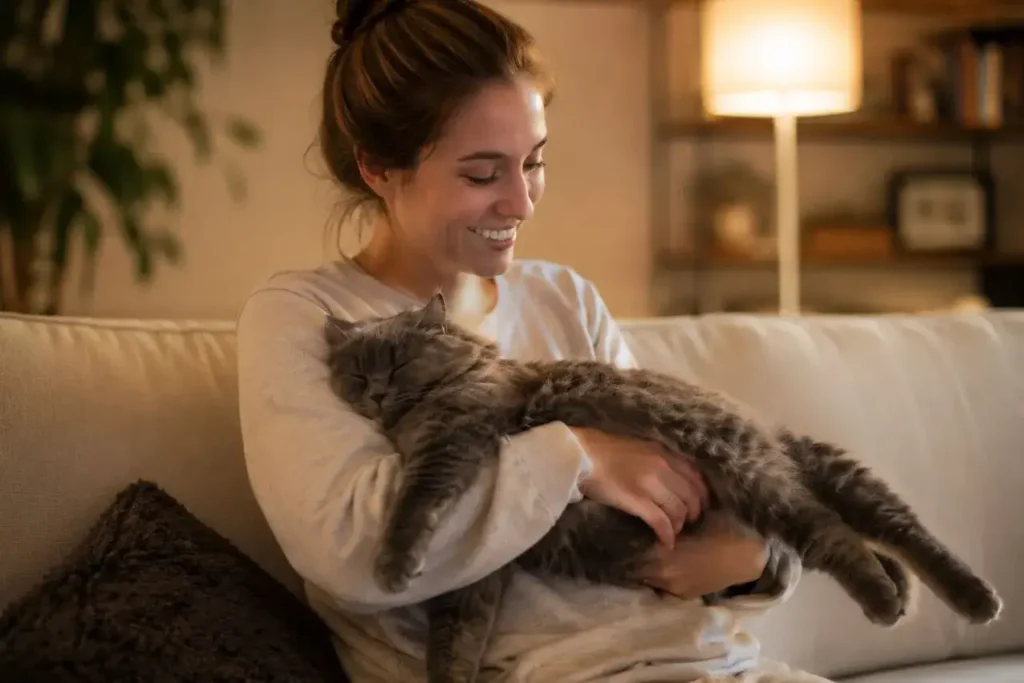
The coat color does not affect personality. All Ragdolls, regardless of color, share the same characteristic temperament that made the breed famous.
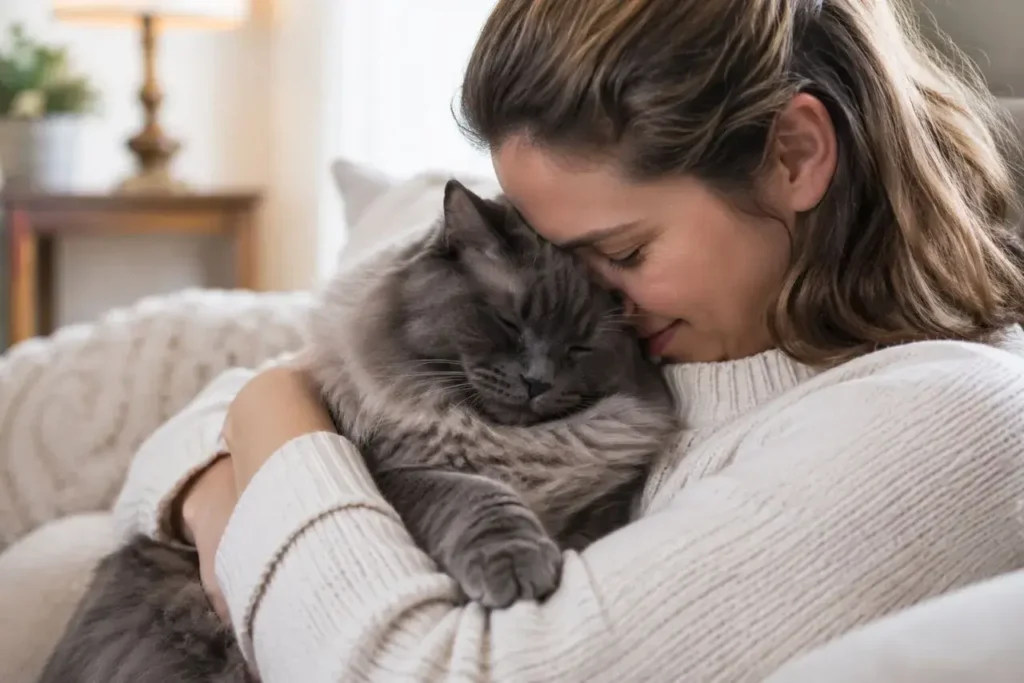
Ragdolls are known for going limp when picked up, which is where the name comes from. They tend to be calm, gentle, and tolerant, and they follow their owners from room to room, often described as “dog-like” in their loyalty. They are typically quiet cats, not given to excessive vocalization, though they will communicate when they want something.
Also they get along well with children and other pets when properly introduced, and they are not typically high-energy or destructive, though they do enjoy play sessions. Because they tend to be trusting and not especially street-savvy, most breeders and veterinarians recommend keeping Ragdolls as indoor cats.
If you want to understand how Ragdoll temperament compares to similar breeds, it is worth reading about Ragdoll vs Ragamuffin differences or exploring how a Ragdoll Himalayan mix tends to behave.
Dark Gray Ragdoll Cat Price: What to Budget
From a Reputable Breeder
A dark gray Ragdoll cat (blue Ragdoll) from a TICA or CFA-registered breeder in the United States typically costs between $1,000 and $2,800 for a pet-quality kitten as of 2026, with most buyers landing in the $1,200 to $2,000 range. Show-quality kittens and those from championship lines can run $3,000 to $5,000 or more.
Charcoal Ragdolls, because of their relative rarity and the additional genetic testing involved, may be priced toward the higher end of that range or beyond, depending on the breeder.
Factors that affect price include:
- Breeder reputation and registry status
- Geographic location
- Coat color and pattern (charcoal typically commands a premium)
- Pedigree and show lineage
- Whether the kitten is pet quality or breeder/show quality
- Health testing was completed on the parents
Why Pricing Below $800 Should Raise Questions
If you see a dark gray Ragdoll cat for sale at prices well below $800, that warrants scrutiny. Responsible breeders invest significantly in health testing, vaccinations, veterinary care, quality nutrition, and socialization before a kitten leaves their care. Significantly low prices often indicate a kitten mill, backyard breeder, or a situation where health and genetic testing have been skipped.
Adoption
Occasionally, Ragdolls and Ragdoll mixes end up in shelters or breed-specific rescues. Adoption fees are generally $75 to $300. While finding a specific color like blue or charcoal gray through rescue is less predictable, it is worth checking dedicated Ragdoll rescue organizations if you are open to an adult cat.
Dark Gray Ragdoll Cat Care Guide
Coat Care and Grooming
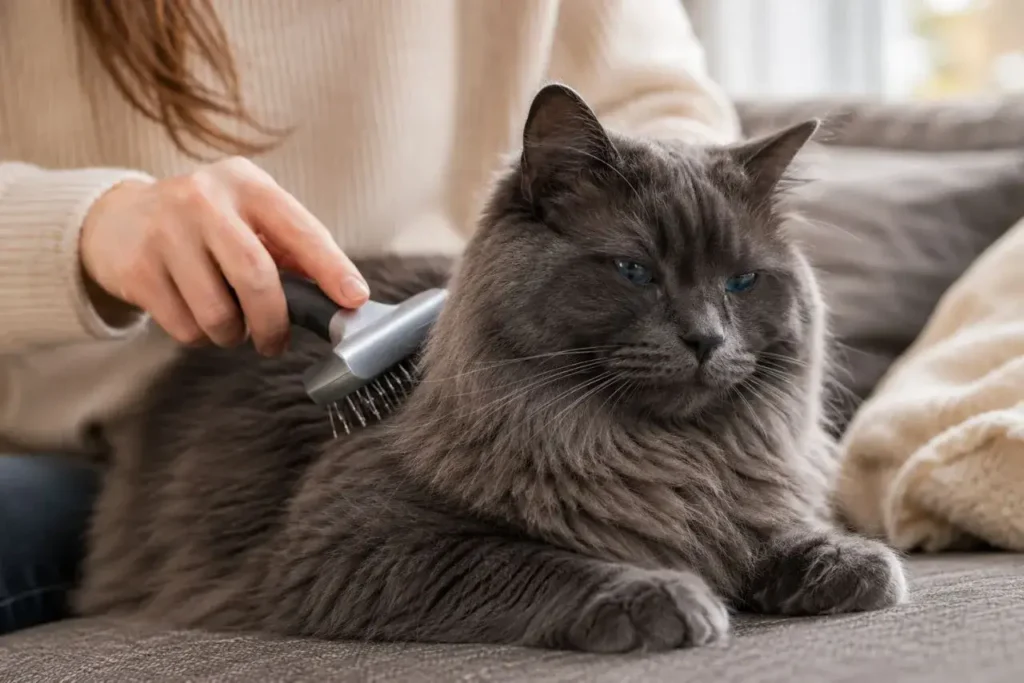
Ragdolls have a semi-long, silky coat that is lower-maintenance than you might expect for a longhaired breed. They lack a dense undercoat, which reduces matting compared to breeds like Persians. That said, regular brushing is still important.
Brush your dark gray Ragdoll at least twice a week using a stainless steel comb or slicker brush. During seasonal shedding periods (typically spring and fall), daily brushing helps manage loose fur. Pay attention to the areas behind the ears, the armpits, and around the collar if your cat wears one, as these spots are most prone to tangling.
Bathing is rarely needed unless the cat gets into something. Ragdolls generally tolerate baths well when introduced to them young.
Nutrition
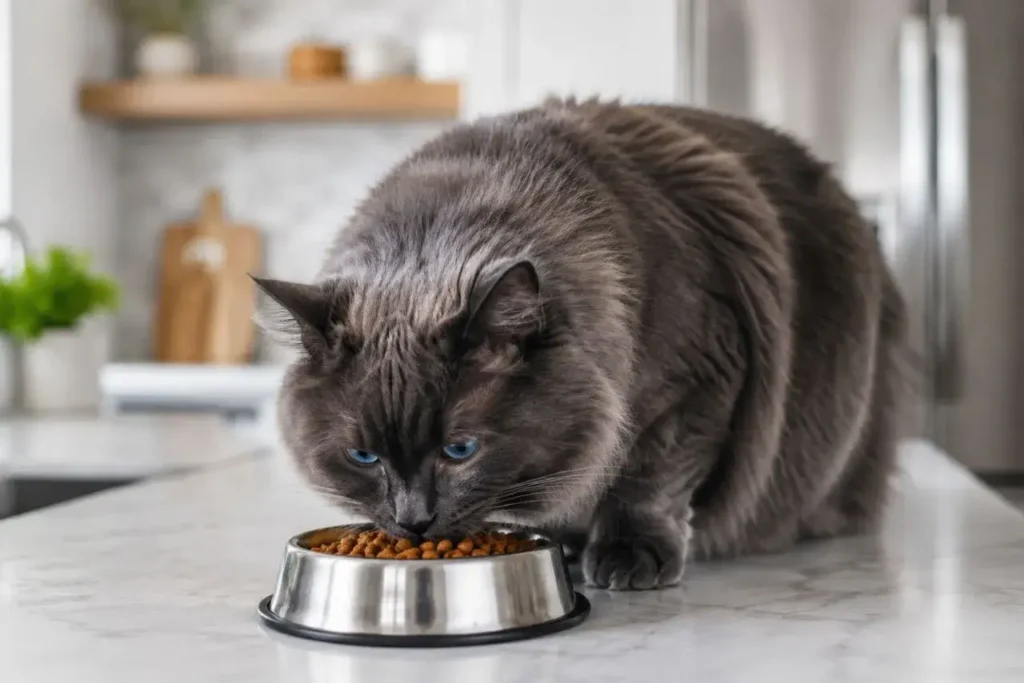
Feed a high-quality cat food that meets AAFCO nutritional standards. According to AAFCO guidelines, food labels should clearly state that the product meets nutritional requirements for your cat’s life stage. For adult Ragdolls, look for a food with high-quality protein as the primary ingredient.
Ragdolls can be prone to weight gain, especially neutered adults. Monitor portion sizes carefully. If your cat is gaining weight, the approach recommended by veterinarians involves gradual caloric reduction rather than abrupt diet switches. Fresh water should always be available, and many cat owners find that a water fountain encourages better hydration.
Exercise and Play
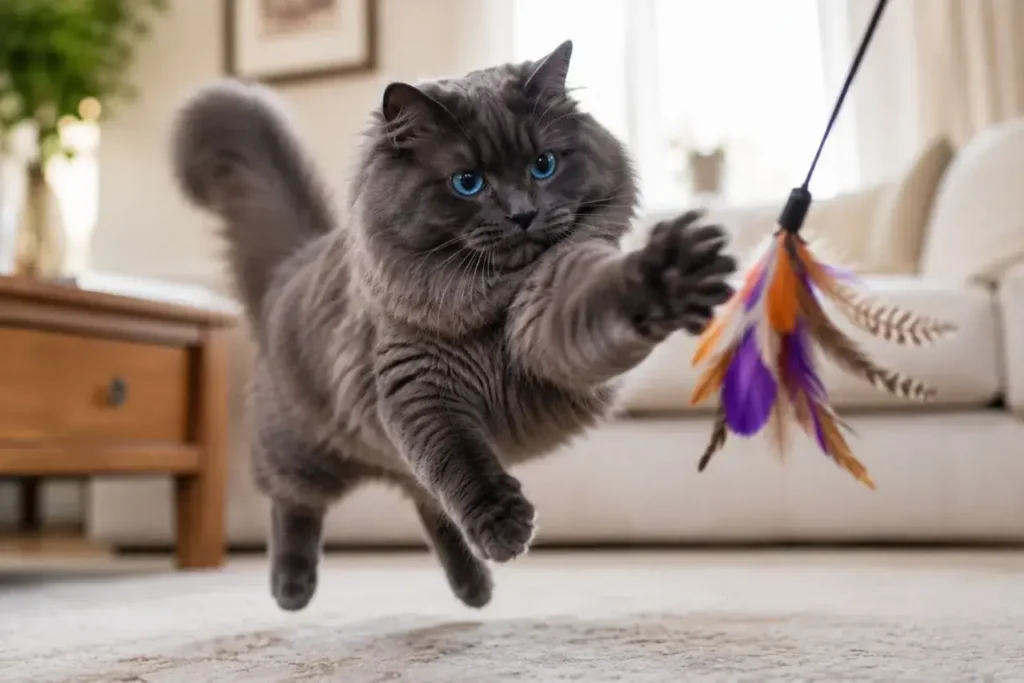
Despite their calm reputation, Ragdolls need regular play. Interactive toys, wand teasers, and puzzle feeders keep them mentally and physically engaged. Aim for at least two 10-15 minute play sessions per day. Because they are large cats, a lack of exercise can contribute to obesity and associated health problems.
Health Considerations
Ragdolls are generally healthy, but there are a few conditions worth being aware of.
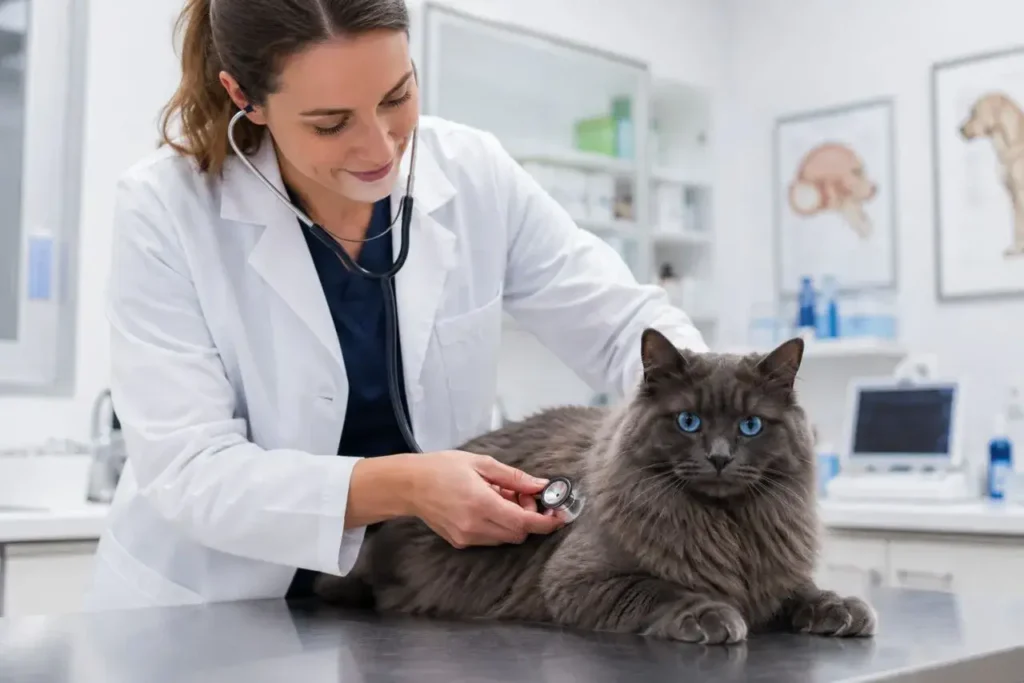
Hypertrophic Cardiomyopathy (HCM): This is the most common heart disease in cats, and Ragdolls are among the breeds with a genetic predisposition to it. According to PetMD, HCM causes the heart muscle to thicken, potentially leading to heart failure. Reputable breeders screen breeding cats for HCM using echocardiograms. Ask breeders for evidence of regular HCM testing.
Polycystic Kidney Disease (PKD): Less common in Ragdolls than in Persians, but worth asking about. DNA testing can identify carriers.
Dental Health: Large cats can develop dental disease. Regular tooth brushing or dental treats helps maintain oral health.
The Cornell Feline Health Center is an excellent resource for keeping up with the latest information on cat health conditions and preventive care.
Litter Box and Environmental Needs
Ragdolls are large cats. Use a litter box that is appropriately sized, at minimum 1.5 times the length of the cat. Most standard litter boxes are too small for a fully grown male Ragdoll. Provide at least one box per cat plus one extra.
Because Ragdolls are calm and not highly territorial, they typically adapt well to multi-cat households.
For a related deep-dive on health topics specific to this breed, the guide on Ragdoll cat lifespan covers what to expect across different life stages.
Dark Gray Ragdoll Cat vs Blue Ragdoll: Is There a Difference?
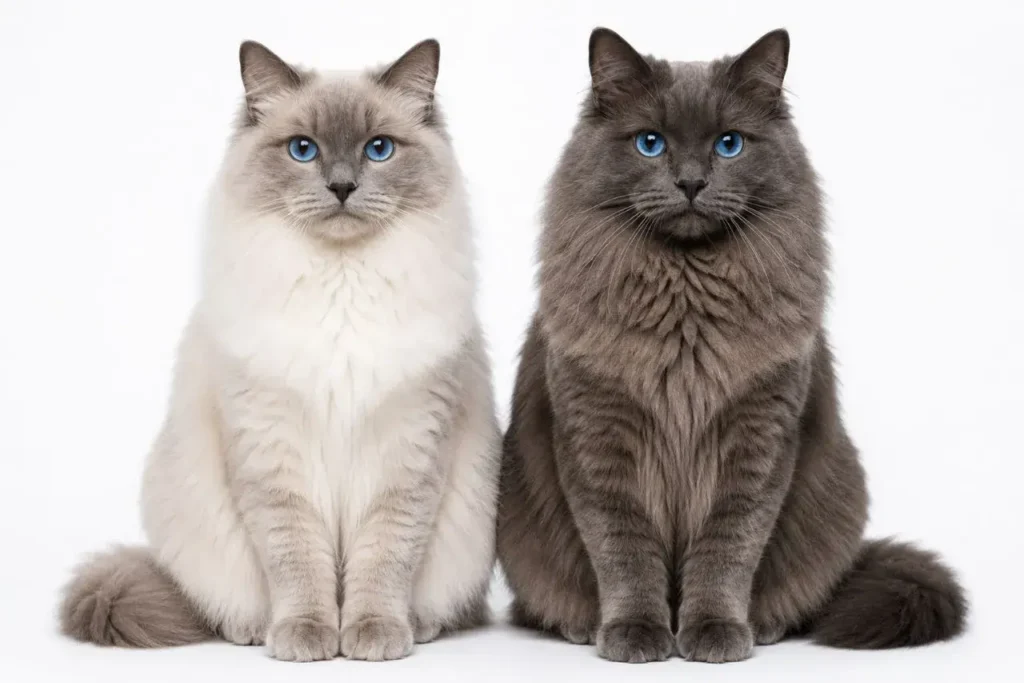
In most practical conversations, no. A dark gray Ragdoll cat is typically a blue Ragdoll viewed in a particular light or at a stage in its development when the coat appears richer and deeper than the standard pale blue-gray description suggests.
The distinction that does matter is between a standard blue Ragdoll and a charcoal blue Ragdoll. A standard blue Ragdoll has a diluted gray coat with a paler body and darker points, fitting the classic pointed pattern. A charcoal blue Ragdoll has a darker, more saturated gray appearance with the cape-like shading that makes it look distinctly different from a standard blue.
If you are comparing a dark gray Ragdoll against other gray or dark cat options, you might also find it useful to look at how Ragdolls compare to related breeds. For example, a Snowshoe cat vs Ragdoll comparison or a look at a Maine Coon mixed with Ragdoll can help clarify whether the Ragdoll’s temperament and size match what you are actually looking for.
Dark Gray Ragdoll vs. Black Ragdoll: Not the Same Thing
If your search for “dark gray Ragdoll” has also turned up listings for “black Ragdoll” or “Cherubim” cats, it’s worth understanding how these differ, because they are not the same variety and come from different genetics.
Everything described in this guide, blue points, blue mitted, blue bicolor, and charcoal, comes from the standard dilute gene acting on a pointed coat. These cats are always paler on the body than on the points, and they always have blue eyes, because the same gene controls both the pointed pattern and eye color.
A genuinely solid black or near-black cat, with dark coloring covering the whole body rather than just the points, is a different genetic story. That kind of coloring overrides the pointed restriction entirely, which is why it doesn’t fit the traditional Ragdoll standard recognized by CFA and TICA today.
Some breeders are working with solid-colored, Ragdoll-type cats under names like “Cherubim,” but this is a separate, less established line rather than a color variation within the standard Ragdoll breed. If you’re specifically shopping for one of these cats, treat it as its own category, ask the breeder directly what registry (if any) recognizes it, and don’t assume it carries the same health-testing standards or breed guarantees that apply to CFA/TICA-registered Ragdolls.
The simplest way to tell them apart at a glance: if the face, ears, legs, and tail are visibly darker than the body and the eyes are blue, you’re looking at a standard blue or charcoal Ragdoll. If the whole cat is a uniform dark color with no lighter body, you’re looking at something else.
Why Is My Ragdoll Cat Dark Gray?
This is one of the more common questions from owners who expected a lighter cat. A few reasons your Ragdoll might appear darker gray than expected:
Age: Ragdolls deepen in color as they age. A cat that looked pale blue at 6 months may look noticeably darker at 2 or 3 years.
Temperature: The color-restricting enzyme in pointed cats is temperature-sensitive. Cats kept in cooler environments may develop deeper, more extensive coloring over time.
Charcoal gene: If your cat shows unusually dark shading with a cape-like pattern, it may carry the charcoal modifier.
Photography and lighting: Cool-toned or low lighting makes blue Ragdolls look much darker and more gray in photos than they appear in person under natural light.
Seasonal changes: Some cats appear slightly darker in winter due to coat density changes.
How to Photograph Your Dark Gray Ragdoll’s True Color
Since lighting is one of the biggest reasons a blue Ragdoll looks lighter in some photos and much darker gray in others, a few small changes to how you shoot can make a real difference, whether you’re trying to document your cat’s actual color or just want better pictures.
- Shoot in indirect natural light. Position your cat near a window during the day rather than under indoor bulbs. Direct sunlight can wash out the coat, while warm incandescent lighting shifts cool gray tones toward yellow or brown.
- Skip the flash. On-camera flash flattens the coat and can make a rich charcoal gray look like a plain washed-out blue, or create odd color casts entirely.
- Check your white balance. If you’re using a phone, tap to set focus and exposure on the cat’s coat rather than the background, and avoid filters that add warmth, since they’re the main reason gray coats read as brown or beige in photos.
- Use a neutral background. A plain white, gray, or muted backdrop makes it much easier to judge true coat color than a busy or brightly colored blanket, which can visually shift how the gray reads.
- Take a few reference shots at different times of day. Morning light, midday light, and evening light all render gray differently. If you’re trying to document your cat’s actual color, for a breeder, vet, or registry, a midday shot near a north-facing window is usually the most accurate.
5-Point Checklist: Is Your Ragdoll Blue or Charcoal?
If you’re trying to figure out at home whether your cat is a standard blue or carries the charcoal modifier, work through these five checks in good natural light, ideally when your cat is at least 2 years old and fully colored in:
- Check the back and shoulders for a “cape.” A darker, more solidly shaded band across the shoulders and down the spine, distinct from the lighter sides, points toward charcoal.
- Look for a defined facial mask. Charcoal cats often show a darker, more solidly outlined mask across the face rather than the softer, more gradual shading of a standard blue point.
- Compare the depth of the body color to the points. On a standard blue, the body is noticeably paler than the points. On a charcoal, the body color sits much closer to the point color, so the contrast is less obvious.
- Look at ticking on individual hairs where the coat is lightest, such as the belly or flanks. Charcoal cats often show darker ticking or banding along individual hair shafts.
- Ask the breeder for genetic testing records if you want certainty. Visual identification is a reasonable starting point, but a DNA panel is the only way to confirm the charcoal modifier with certainty.
If you check 3 or more of the first four boxes, your cat is likely carrying the charcoal gene. Either way, the coat color has no bearing on health or temperament, so this is really about satisfying curiosity rather than anything that changes how you care for your cat.
Allergies and Dark Gray Ragdolls
A common question is whether Ragdolls are hypoallergenic. The short answer is no, no cat breed is truly hypoallergenic. However, some people with mild cat allergies find they react less to Ragdolls. This is not because of coat color or length but because individual cats produce varying levels of Fel d 1, the primary allergen in cat saliva and skin secretions.
The ACAAI notes that there is no reliably hypoallergenic cat breed, though individual variation means some allergy sufferers do better with certain cats. If allergies are a concern, the detailed guide on Ragdoll cats and allergies covers this thoroughly.
Dark Gray Ragdoll vs Other Gray Cat Breeds
If you started your search with something broader, like “dark gray cat breed,” you’ve probably come across a few other solid-gray breeds that get mentioned alongside the Ragdoll. They’re not related, and they look quite different up close.
| Breed | Coat | Eyes | Size | Key Difference from a Dark Gray Ragdoll |
|---|---|---|---|---|
| Blue/Charcoal Ragdoll | Semi-long, silky, pointed or shaded gray | Blue | Large (up to 20 lbs) | — |
| Russian Blue | Short, dense, solid silvery-gray all over | Green | Medium (8–12 lbs) | Solid gray body with no points, much smaller and more reserved |
| Nebelung | Semi-long, solid blue-gray | Green | Medium (8–12 lbs) | No point pattern, slimmer build, more independent temperament |
| British Shorthair (Blue) | Short, dense, plush solid gray | Gold or copper | Medium-large (9–17 lbs) | Short-coated, stockier “teddy bear” body shape, not pointed |
The simplest tell: if the cat has a pale body with darker gray “points” on the face, ears, legs, and tail plus vivid blue eyes, you’re almost certainly looking at a Ragdoll. Solid gray from nose to tail with green or gold eyes points to one of the other breeds above.
Other Ragdoll Color Variations Worth Knowing
If you are researching the dark gray Ragdoll cat, you might be interested in how it compares to other striking Ragdoll color variations. Ragdolls come in a wide range, from the striking pure white Ragdoll cat to the dramatic tuxedo black and white Ragdoll, and even the rich, patterned tortoiseshell calico Ragdoll.
For those interested in mixed breeds, the Ragdoll Tabby cat mix and the Ragdoll cat mixed with Siamese offer interesting color and temperament combinations that overlap with some of the gray and dark-toned patterns you see in purebred Ragdolls.
Finding a Dark Gray Ragdoll Cat for Sale
When looking for a dark gray Ragdoll cat for sale, start with registered breeders listed through TICA or CFA. Both organizations maintain breeder directories that you can filter by location and breed.
Questions to ask a breeder before committing:
- Are both parents HCM-tested by a board-certified cardiologist, and how recently?
- Are the parents DNA-tested for PKD?
- What vaccines and parasite treatments has the kitten received?
- What socialization has the kitten had?
- Do they offer a health guarantee?
- Can you visit the facility or do a video call to see the living conditions?
- Is the kitten registered or registerable with TICA or CFA?
Reputable breeders will welcome these questions. Be cautious of anyone who pressures you to decide quickly, refuses to answer health-related questions, or cannot provide documentation.
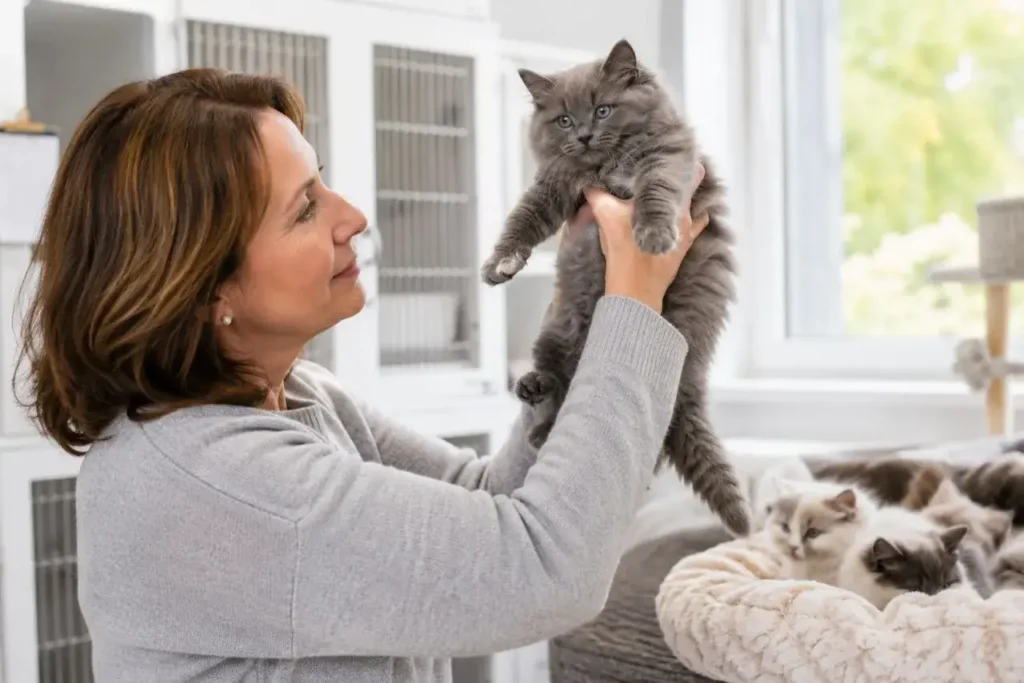
For BAER testing (relevant for white or mostly white cats that may have hearing concerns), resources like LSU Veterinary Medicine provide information on how this testing works, though it is less commonly relevant for typical blue-gray Ragdolls than for white or bicolor cats with high white coverage.
Sources and Further Reading
- The International Cat Association (TICA) – Ragdoll Breed Standard
- The Cat Fanciers’ Association – Ragdoll Colors
- PetMD – Feline Hypertrophic Cardiomyopathy
- Cornell Feline Health Center
This article is for general informational purposes and isn’t a substitute for advice from a licensed veterinarian, particularly regarding HCM or PKD screening.
Conclusion
The dark gray Ragdoll cat is, in most cases, the blue Ragdoll or the charcoal blue Ragdoll, two of the most visually striking variations in the entire breed. Whether you are drawn to the cooler, lighter steel-gray of a standard blue point or the deeper, more dramatic coat of a charcoal, you are looking at a cat that combines beauty with one of the most laid-back temperaments in the cat world.
Understanding the genetics behind the color helps set realistic expectations, particularly around how a dark gray Ragdoll kitten’s coat will develop over the first two to four years. Knowing what to budget, what health tests matter, and what daily care looks like gives you a solid foundation before bringing one home.
If the dark gray Ragdoll has caught your attention, it is worth taking the time to find a reputable breeder, ask the right questions, and give this cat the attentive, loving home it thrives in.
People Also Ask: FAQs About Dark Gray Ragdoll Cat
1. What Is a Dark Gray Ragdoll Cat?
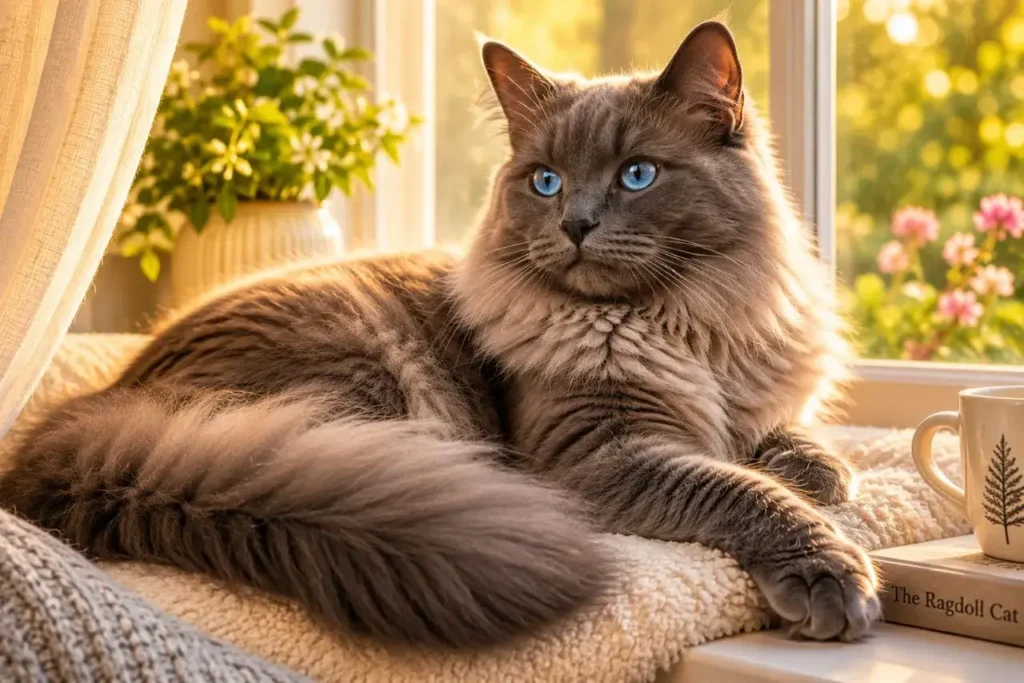
In most cases, a dark gray Ragdoll cat refers to a blue Ragdoll, which carries the dilute genetic modifier that produces a gray coat. In some cases, particularly deep or richly gray cats may also carry the charcoal gene, which creates a darker, cape-like shading pattern.
2. Are Dark Gray Ragdoll Cats Rare?
Blue Ragdolls are one of the most common Ragdoll colors and are not rare. Charcoal gray Ragdolls, which show deeper gray shading, are less common because fewer breeders specifically produce or test for the charcoal gene.
3. Why Is My Ragdoll Cat Dark Gray?
Ragdoll coats deepen with age, with full color developing between 2 and 4 years. Cooler environments, the charcoal gene, and even lighting conditions can make a blue Ragdoll appear darker gray than expected.
4. Do Dark Gray Ragdoll Cats Always Have Blue Eyes?
Yes, traditional pointed Ragdolls, including blue Ragdolls, always have blue eyes as part of the breed standard. The color-restriction gene that produces the pointed pattern is also responsible for the blue eye color.
5. How Much Does a Dark Gray Ragdoll Cat Cost?
From a reputable breeder in the USA, expect to pay $1,000 to $2,800 for a pet-quality kitten as of 2026, with show-quality kittens reaching $3,000 to $5,000 or more. Charcoal variations tend to sit toward the higher end. Significant discounts from those ranges should prompt questions about health testing and breeding practices.
6. What Is the Difference Between a Blue Ragdoll and a Charcoal Gray Ragdoll?
A standard blue Ragdoll has a pale to medium cool-gray body with darker gray points. A charcoal blue Ragdoll has much deeper gray shading with a darker “cape” across the shoulders and more defined facial markings, produced by an additional wide-band modifier gene.
7. How Big Do Dark Gray Ragdoll Cats Get?
Ragdolls are one of the largest domestic breeds. Males typically weigh 15 to 20 pounds at full maturity. Full growth takes around 3 to 4 years.
8. Do Dark Gray Ragdoll Cats Have Health Problems?
Ragdolls as a breed have a genetic predisposition to hypertrophic cardiomyopathy (HCM). Reputable breeders test breeding cats regularly for HCM. Polycystic kidney disease (PKD) is also worth asking about. Regular veterinary care and a healthy diet go a long way toward a long, healthy life.
9. Are Dark Gray Ragdoll Cats Good With Children?
Yes. Ragdolls are consistently rated among the most gentle and tolerant cat breeds. They handle being handled calmly, making them well-suited to families with children, though adult supervision with young children is always recommended.
10. What Should I Feed a Dark Gray Ragdoll Cat?
Feed a high-quality cat food meeting AAFCO standards, with high-quality animal protein as the primary ingredient. Monitor portion sizes to prevent weight gain, which Ragdolls are prone to as they age, particularly after neutering.
11. Is a Dark Gray Ragdoll Cat Hypoallergenic?
No cat breed is truly hypoallergenic. Some allergy sufferers find they react less to Ragdolls, but this varies by individual and is not guaranteed. Spending time with the breed before adopting is the most reliable way to assess your personal reaction.
12. What Is the Lifespan of a Dark Gray Ragdoll Cat?
Ragdolls typically live 12 to 17 years with good care. Some live longer. Regular veterinary check-ups, a quality diet, an indoor lifestyle, and early detection of conditions like HCM all contribute to a longer lifespan.