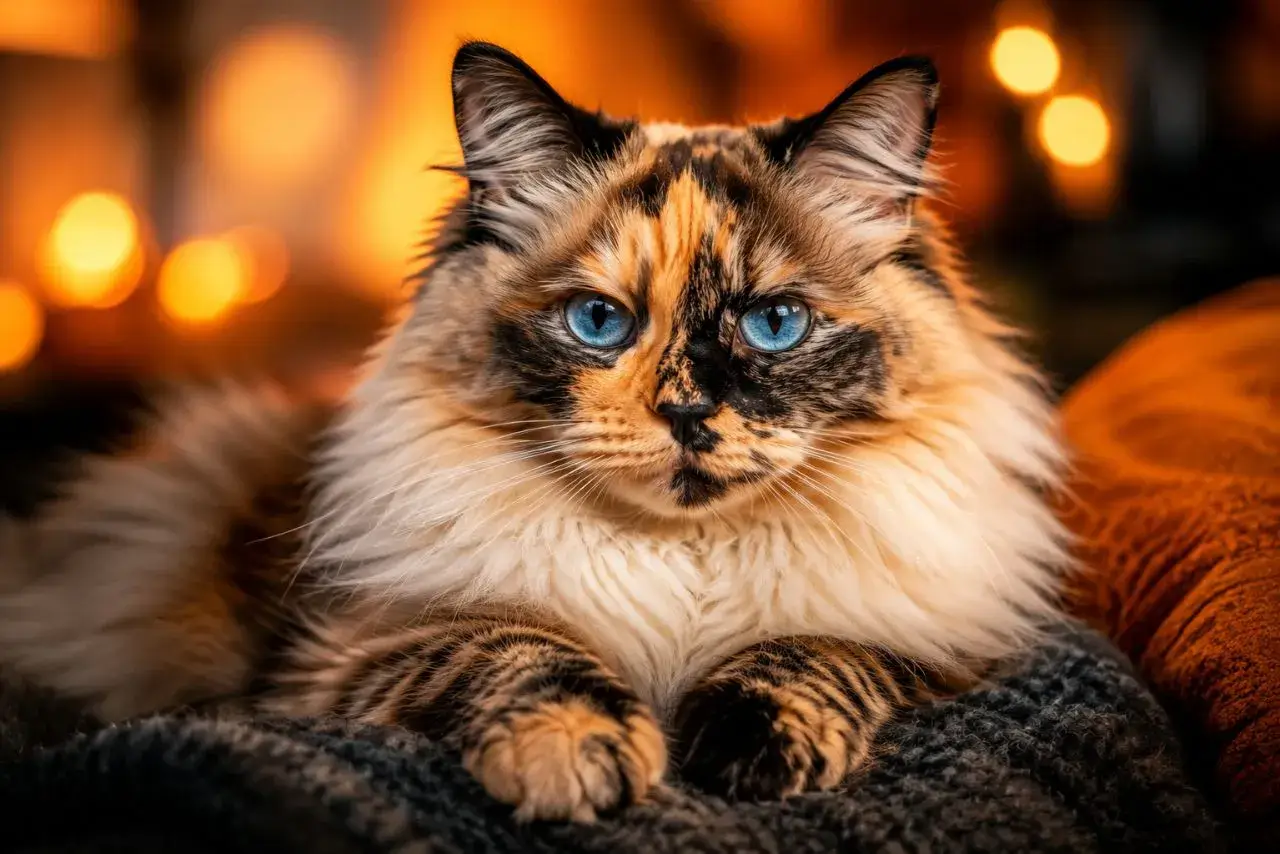
Most cat lovers can name a Calico Cat or a Tortie Cat without blinking. But a Tortoiseshell Calico Ragdoll Cat? That stops people in their tracks. This isn’t just a pretty coat pattern on a big, floppy cat. It’s one of the rarest color combinations you’ll find in the entire Ragdoll breed.
Last updated September 2026: added the lilac tortie point variety to the recognized-colors list, a clearer explanation of why “calico” isn’t technically a CFA-recognized Ragdoll category, and corrected a couple of FAQs that had drifted from the rest of this guide.
I’ve spent years reading about Ragdolls, talking to breeders, and going down rabbit holes about cat coat genetics. The tortoiseshell calico Ragdoll is consistently one of the most misunderstood and under-documented cats out there. People search for “calico Ragdoll” and end up confused because what they’re actually looking at is a tortie Ragdoll or a torbie Ragdoll. The naming alone trips people up.
So let’s fix that. This guide covers everything: the genetics, the coat patterns, the personality, the lifespan, and whether you can actually find one of these cats.
What Is a Tortoiseshell Calico Ragdoll Cat?
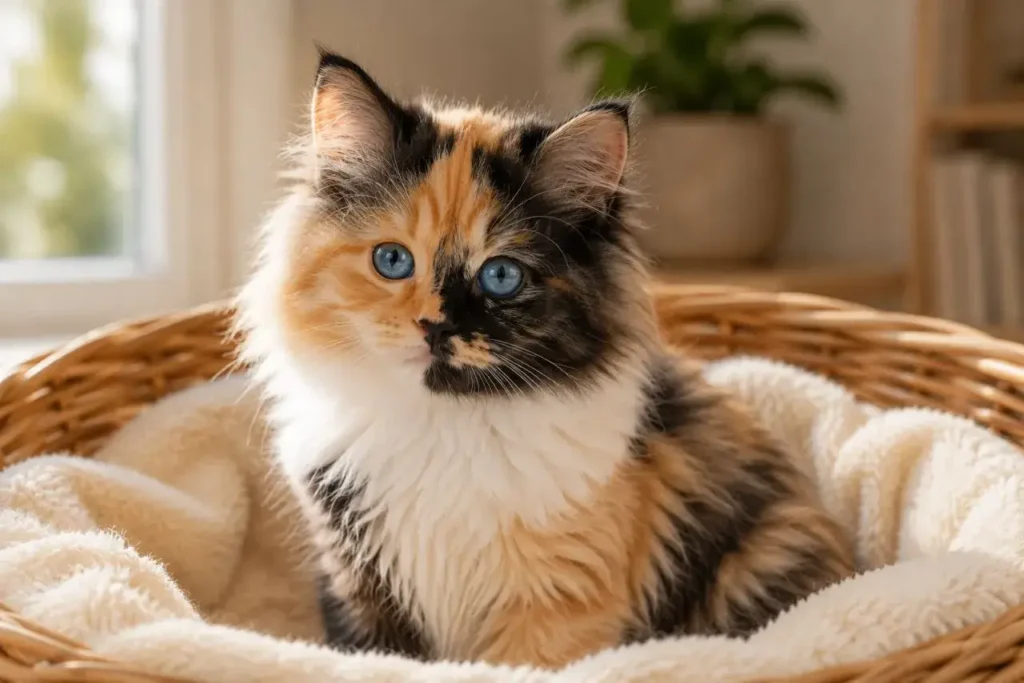
A tortoiseshell calico Ragdoll cat is a Ragdoll that carries a coat pattern blending orange (or red), black (or seal), and white in a mosaic-like distribution. Within the Ragdoll breed, these cats are officially called “torties,” even though their coloring looks very much like what most people think of as calico.
Here’s where it gets interesting. According to PetHelpful, the only real difference between a tortoiseshell and a calico is the presence of white. A calico cat has an extra spotting gene that introduces white, sometimes in large patches, sometimes in small ones. A tortie cat is typically just orange and black with no white, or very little.
But Ragdolls almost always have some white. It’s part of the breed standard. So a tortoiseshell calico cat mix in a Ragdoll will usually show that classic tri-color pattern, even if the breed technically calls it a tortie.
Key Terms to Know:
- Tortie Ragdoll: Orange and black/seal patchwork, may have white
- Torbie Ragdoll: A tortie that also carries the tabby (lynx) gene, showing stripes within the patches
- Calico Ragdoll: Used loosely by many people, but officially falls under the tortie category in Ragdoll breed standards
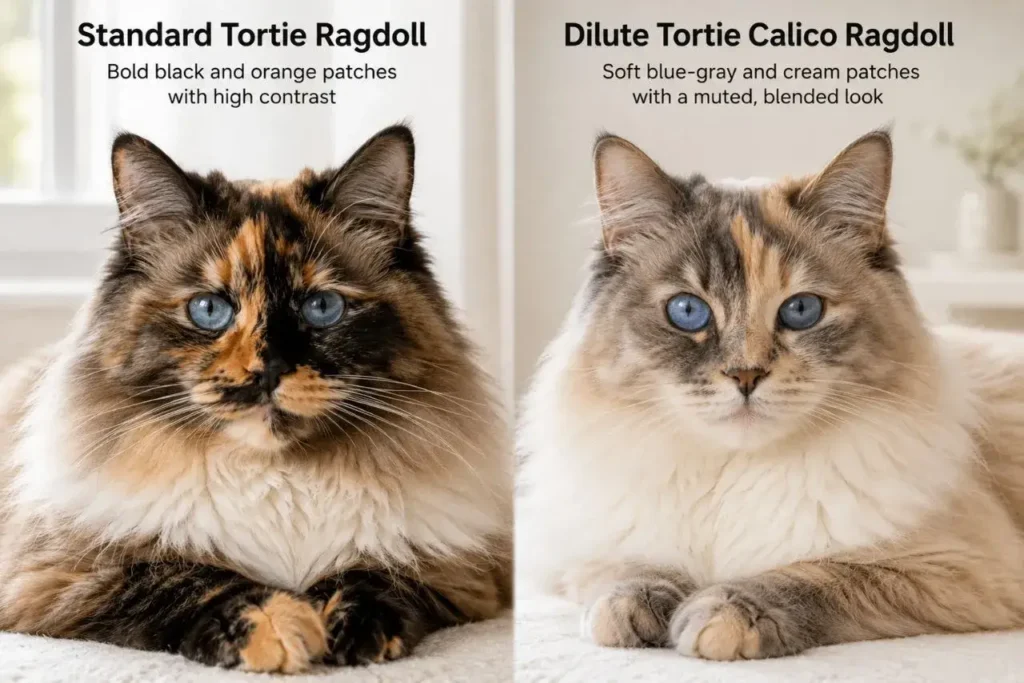
- Dilute tortoiseshell calico: A softer version where the orange becomes cream, and the black becomes grey or blue
The Genetics Behind the Tortoiseshell Calico Pattern
This is the part that genuinely surprised me when I first learned it. The tortoiseshell calico pattern comes down almost entirely to X chromosomes.
The gene that controls orange fur in cats sits on the X chromosome. Female cats have two X chromosomes (XX), so they can carry the orange gene on one X and a non-orange gene on the other. During embryo development, one X chromosome randomly switches off in each cell. This random switching produces the patchwork of orange and non-orange that we see on a tortoiseshell calico cat.
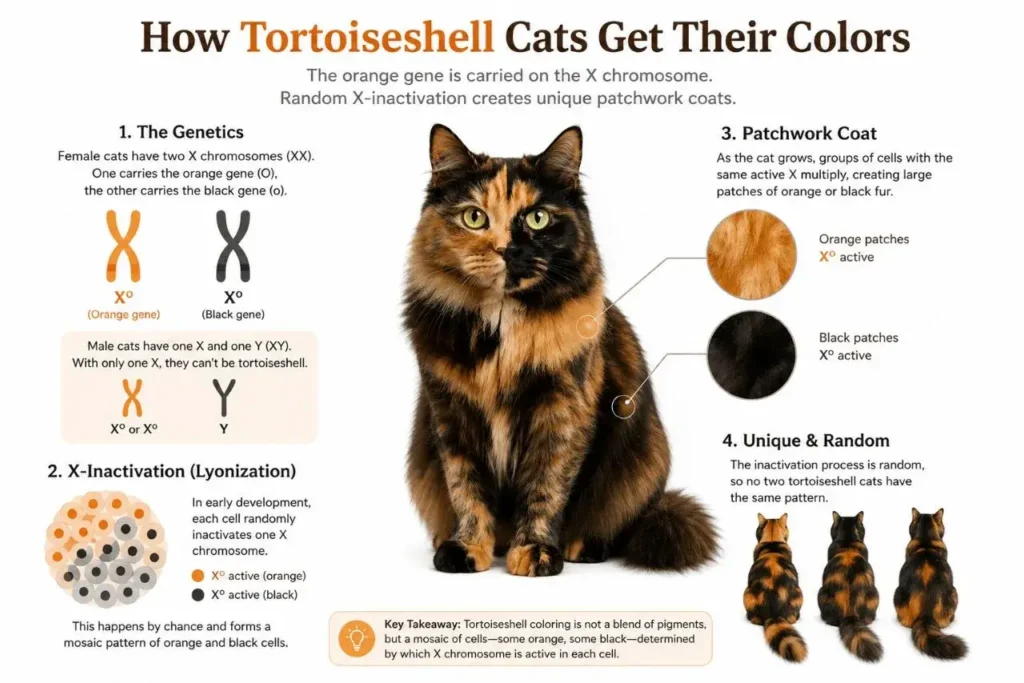
Male cats only have one X chromosome (XY). That means they can be orange or non-orange, but never both. So almost all tortoiseshell calico cats are female. The rare male tortie exists, but only because of a chromosomal anomaly (XXY), and those cats are almost always sterile.
This is why when someone asks, “Are all calico cats female?” the answer is: nearly, but not quite.
For Ragdolls specifically, the tortoiseshell coloring is considered one of the less common color expressions in the breed. According to CFA Ragdoll breed standards, the recognized tortie varieties are:
- Seal Tortie Point: Pale fawn or cream body, seal brown points mottled with red or cream
- Blue Tortie Point (dilute): Body is white to bluish-white, points are blue-grey mottled with cream
- Chocolate Tortie Point: Ivory body, warm milk-chocolate points mottled with red or cream
- Lilac Tortie Point: Cool, near-white body, frosty pinkish-grey points mottled with cream
All tortie Ragdolls, per CFA standards, will have blue eyes. That’s a signature of the Ragdoll breed. The contrast between those deep blue eyes and the warm, mixed-color coat is genuinely striking.
An important clarification worth repeating: “calico” itself doesn’t actually appear in the CFA Ragdoll breed standard. A purebred Ragdoll can’t technically be a true calico in the strict sense, only tortie points are officially recognized. What most people mean when they say “calico Ragdoll” is a tortie-point Ragdoll with enough white to visually resemble a calico’s tri-color look. If a seller specifically advertises a “calico Ragdoll,” it’s worth asking exactly what pattern and papers the kitten actually has.
Are Tortoiseshell Calico Ragdoll Cats Rare?
Short answer: yes, relatively.
The tortoiseshell calico Ragdoll is rarer than the most common Ragdoll colors like seal point, blue point, and mitted. There are a few reasons for this:
- Tortoiseshell coloring is a minority pattern in the Ragdoll breed overall
- Breeding for tortie Ragdolls requires specific pairings. You need a cat carrying the orange gene on one X chromosome
- Reputable Ragdoll breeders don’t always produce torties. It depends on the parent cats’ genetics
Among the rare tortoiseshell calico cat variations, the dilute tortoiseshell calico (where colors are softened to cream and blue-grey) is even harder to come by.
If you’re specifically looking for a tortoiseshell calico Ragdoll kitten, expect to spend time on a waitlist with a reputable breeder. These aren’t cats you’ll typically find at a random pet store. The Ragdoll Fanciers Worldwide (RFWI) maintains a breeder directory that’s worth checking.
Tortoiseshell Calico Ragdoll Cat Personality
People who have owned both standard Ragdolls and tortie Ragdolls will tell you there’s a personality twist with the torties. Cat people call it “tortitude.”
Tortitude is the informal name for the slightly more assertive, opinionated, or feisty streak that many tortoiseshell cats of any breed seem to have. Anecdotally, tortie owners report that their cats are quicker to voice displeasure, more independent, and more likely to have distinct preferences about everything from where they sleep to who gets to pet them.
Is this real or confirmation bias? Probably somewhere in between. A 2015 study from UC Davis did find that tortoiseshell and calico cats were somewhat more likely to be rated as “intolerant” of handling. That’s not the same as aggressive or unfriendly. It just means they might be more selective.
Layer that tortie personality on top of the typical Ragdoll temperament, and things get interesting. Standard Ragdolls are known for:
- Being docile and calm
- Following their owners from room to room
- Going limp when held (the classic “ragdoll” effect)
- Getting along well with kids, dogs, and other cats
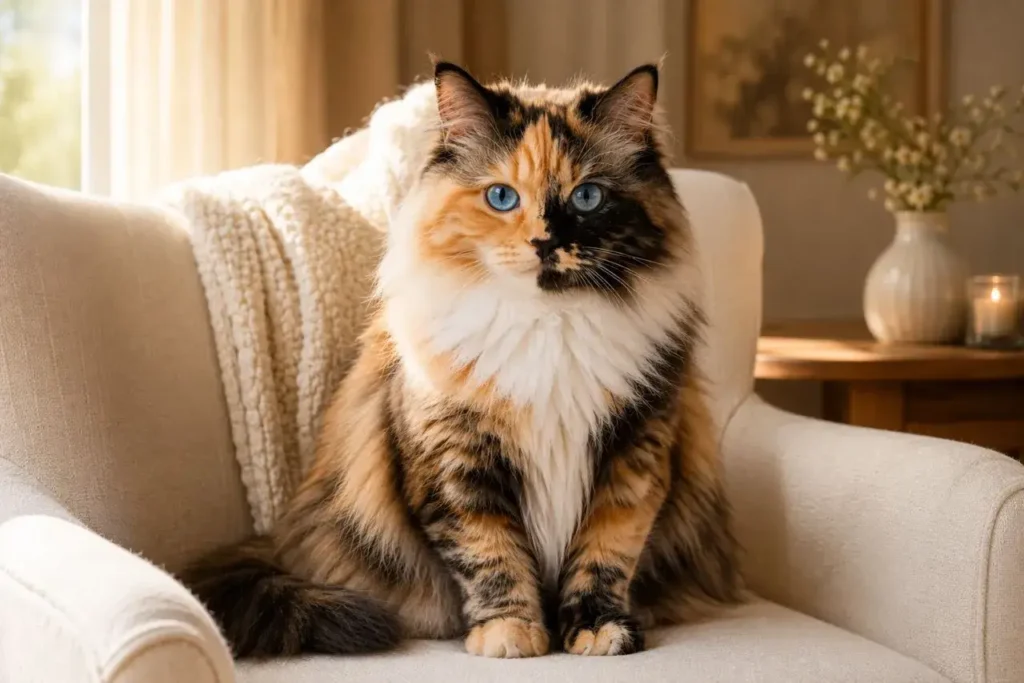
A tortoiseshell calico Ragdoll cat personality is often described as that Ragdoll sweetness with a bit more character on top. More curious. Quicker to tell you when something isn’t to their liking. Still affectionate, still a lap cat, but with opinions.
Most tortie Ragdoll owners love this about them. It’s not difficult behavior. It’s personality.
If you’re curious how personality traits shift across Ragdoll mixes, the guide to Ragdoll Himalayan Mix Personality is a good companion read. Two gentle breeds, one very interesting combination.
Tortoiseshell Calico Ragdoll Cat Coat Patterns
Within the tortie category, Ragdolls can appear in several coat patterns. Understanding these helps if you’re trying to identify what you’re looking at, or what you’re asking a breeder for.
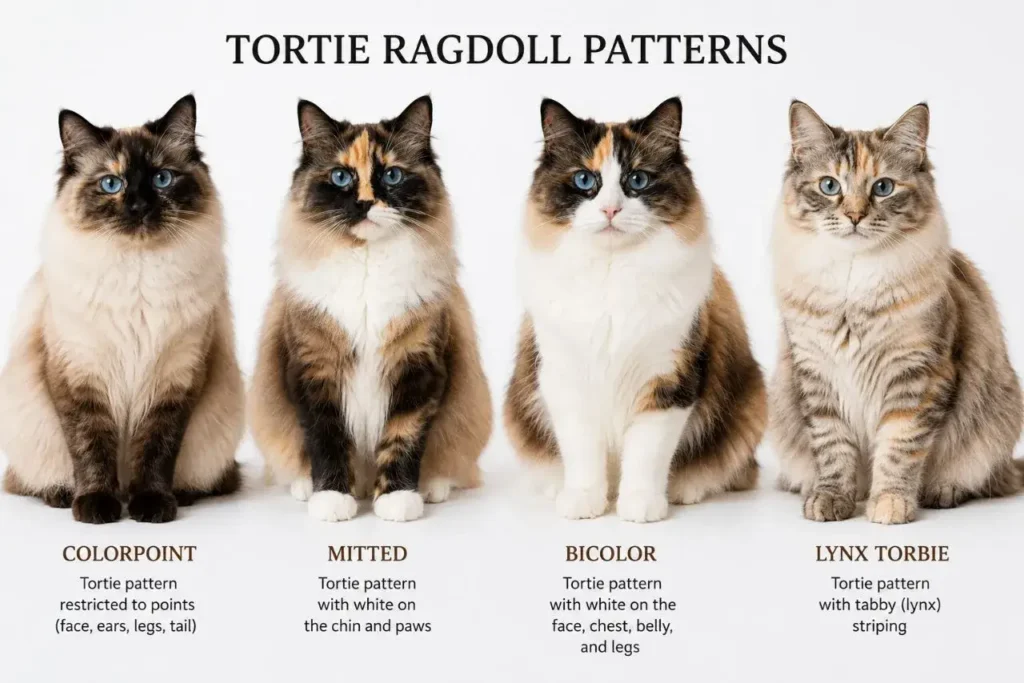
Colorpoint Tortie
Color appears only on the “points”: face, ears, paws, and tail. The body stays pale or cream. This is the most classic Ragdoll look applied to the tortoiseshell calico color combination.
Mitted Tortie
Same as colorpoint, but the cat has white “mittens” on the front paws and white boots on the back legs. Often has a white chin and belly stripe too.
Bicolor Tortie
A Ragdoll with an inverted V of white on the face, white chest, and white underbelly. The tortoiseshell coloring appears on the back and head.
Lynx (Torbie)
When the tortie gene meets the tabby gene, you get a torbie. The patches of orange and black will show tabby striping within them. This can look incredibly complex: like a painting that keeps revealing more detail the longer you look.
Each pattern type will show the characteristic blue Ragdoll eyes and the soft, plush semi-long coat the breed is known for.
If you want to see how different color genetics play out across Ragdoll varieties, check out our guides on the Pure White Ragdoll Cat and the Tuxedo Black and White Ragdoll Cat. Both show how dramatically coat genetics can shift the look of the same breed.
Tortoiseshell Calico Ragdoll vs Other Tortoiseshell Cat Breeds
The tortoiseshell calico cat pattern shows up across many breeds. Here’s how the Ragdoll version compares to a few others.
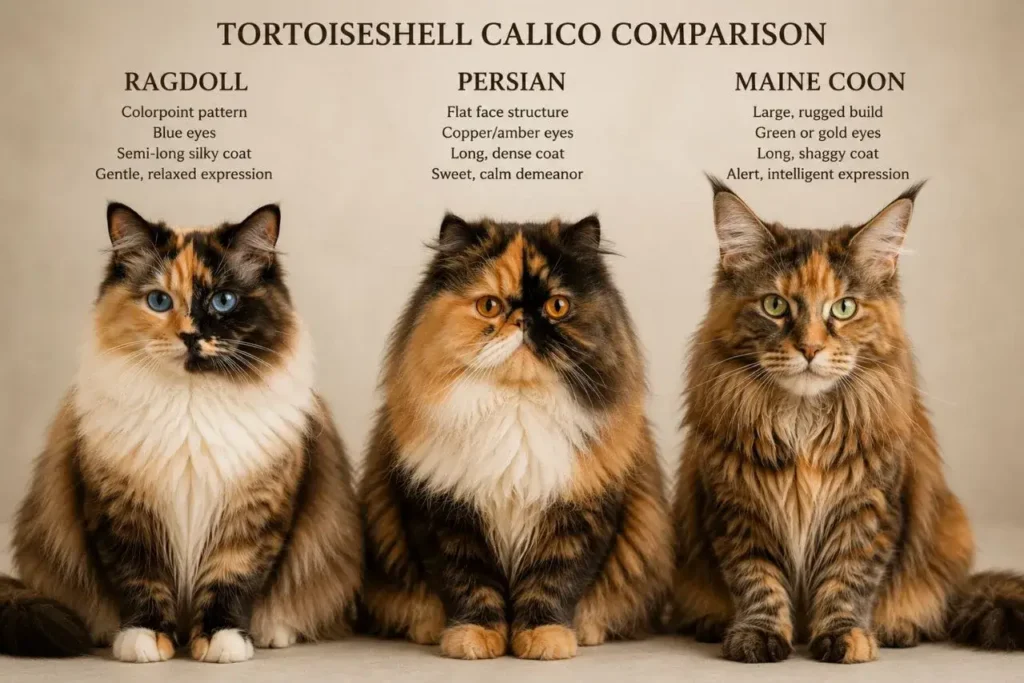
| Feature | Tortoiseshell Calico Ragdoll | Tortoiseshell Calico Persian Cat | Maine Coon Tortoiseshell Calico Cat |
|---|---|---|---|
| Size | Large (10-20 lbs) | Medium (7-12 lbs) | Very Large (10-25 lbs) |
| Coat | Semi-long, silky, low-mat | Long, dense, high-maintenance | Long, shaggy, water-resistant |
| Eye Color | Always blue | Copper, green, blue (varied) | Gold, green (rarely blue) |
| Temperament | Docile, affectionate, floppy | Calm, quiet, reserved | Active, sociable, playful |
| Shedding | Moderate | High | High |
| Grooming | 2-3x weekly | Daily | Regular brushing needed |
The tortoiseshell calico Persian cat tends to be quieter and more sedentary. The Maine Coon tortoiseshell calico cat is typically more active and curious outdoors. The Ragdoll sits in a sweet spot: big, soft, social, and relatively low-maintenance compared to other longhaired breeds.
For another angle on Ragdoll mix comparisons, our Snowshoe Cat vs Ragdoll guide walks through two pointed breeds with very different energy levels. And if you want to understand how the Ragdoll’s temperament plays out in a cross, the Ragdoll Cat Mixed With Siamese article covers that in detail.
Tortoiseshell Calico Ragdoll Cat Lifespan and Health
A tortoiseshell calico Ragdoll cat’s lifespan is typically 12 to 17 years, which aligns with the Ragdoll breed average. The tortoiseshell coloring itself has no known effect on lifespan or health. It’s just a coat pattern.
That said, Ragdolls as a breed do have a few health considerations worth knowing.
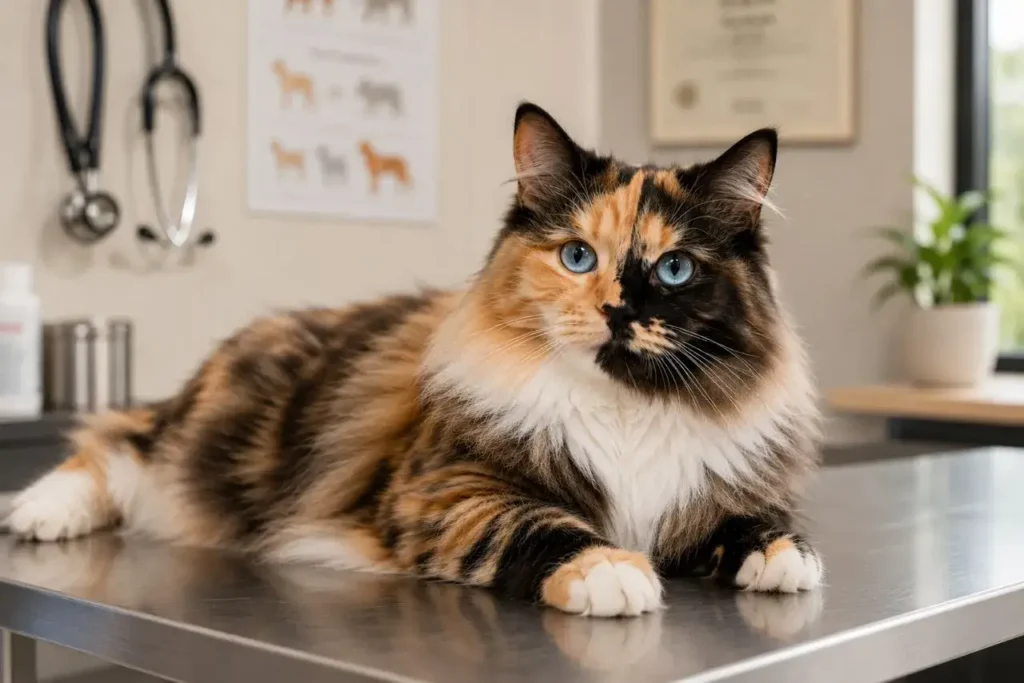
Hypertrophic Cardiomyopathy (HCM): This hereditary heart condition is more common in Ragdolls than in many other breeds. Reputable breeders test their cats for the HCM gene mutation. If you’re buying a tortoiseshell calico Ragdoll kitten, ask the breeder directly about cardiac screening. The Cornell Feline Health Center notes that HCM is the most common heart disease in cats, and Ragdolls carry a specific testable mutation.
Polycystic Kidney Disease (PKD): Less common in Ragdolls than in Persians, but still worth asking about from any breeder.
Bladder and Urinary Issues: Ragdolls can be prone to calcium oxalate stones. A quality diet and consistent water intake help reduce the risk.
Obesity: Ragdolls are large cats, but they can get genuinely overweight. They’re not the most active breed, so portion control matters more than it does with some others.
On the allergy side, some people report that Ragdolls trigger fewer reactions than other breeds. This is sometimes attributed to lower Fel d 1 protein levels. But Ragdolls are not truly hypoallergenic. No cat is. For a thorough look at this topic, read our dedicated guide: Ragdoll Cats and Allergies.
How to Care for a Tortoiseshell Calico Ragdoll Cat
Ragdolls are not high-maintenance cats, but they do need consistent care. Here’s what actually matters day-to-day.
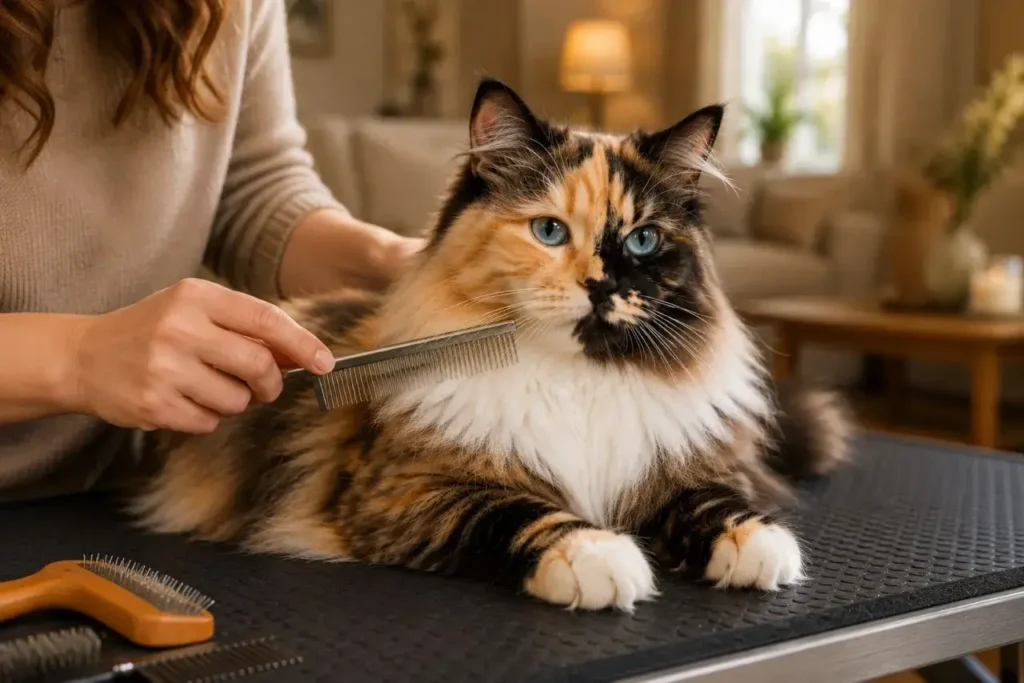
Grooming Your Tortie Ragdoll
The Ragdoll’s semi-long coat is silky and resists matting better than a Persian’s, but it still needs attention. Brush 2 to 3 times a week with a stainless steel comb or slicker brush. Pay extra attention to the chest and underarms, where tangles tend to form.
During shedding season (spring and fall), daily brushing is worth it. A de-shedding undercoat rake will save your furniture and your patience.
Diet and Feeding
High-protein, low-carbohydrate food is the standard recommendation for Ragdolls. These cats can easily overeat, so measure portions rather than free-feeding. Many Ragdoll owners combine wet and dry food. Wet food helps with hydration, which supports kidney health long-term.
Exercise and Play
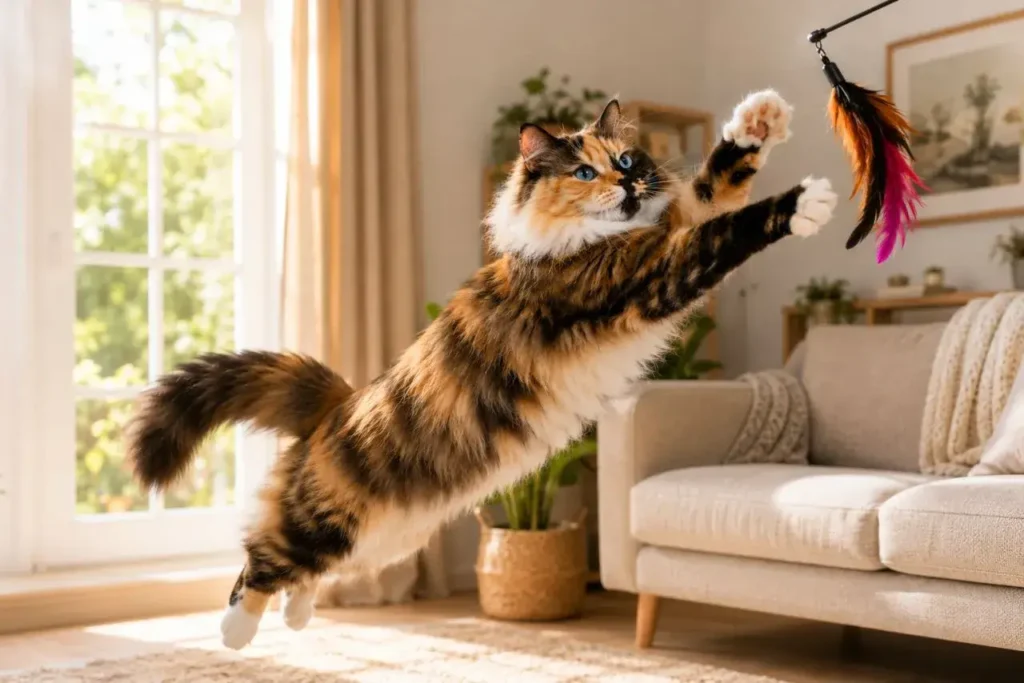
Ragdolls aren’t couch potatoes, but they’re not bouncing off the walls either. Daily interactive play sessions of 15 to 20 minutes keep them mentally engaged and prevent weight gain. Wand toys, puzzle feeders, and tall cat trees all work well.
A tortoiseshell calico Ragdoll cat might show more curiosity and initiative during play than a standard Ragdoll, thanks to that tortie personality streak.
Socialization and Company
These cats do not do well with long periods alone. If you work long hours, consider getting two cats, so they have company. Ragdolls bond closely with their people and can develop anxiety if left alone too long.
The Ragdoll Tabby Cat Mix guide also touches on how tabby genetics can influence energy levels in Ragdoll mixes, which is worth reading if you’re weighing different Ragdoll types.
Tortoiseshell Calico Ragdoll Cat Price: What to Expect
A tortoiseshell calico Ragdoll from a reputable breeder will generally run between $1,500 and $3,500 in the US, depending on the breeder, location, coat pattern, and lineage.
Rarer color variations like dilute tortoiseshell calico or specific pattern types (bicolor tortie, mitted tortie) may sit at the higher end. Show-quality cats will be even more expensive.

Red flags when buying:
- No genetic health testing mentioned
- Kittens available immediately with no waitlist
- Price well below $1,000 for a “purebred” Ragdoll
- Breeder unwilling to provide references or allow a visit
Both TICA and RFWI maintain breeder directories. Sticking to breeders registered with a recognized cat association is the safest approach.
Dilute Tortoiseshell Calico Ragdoll: A Softer Version
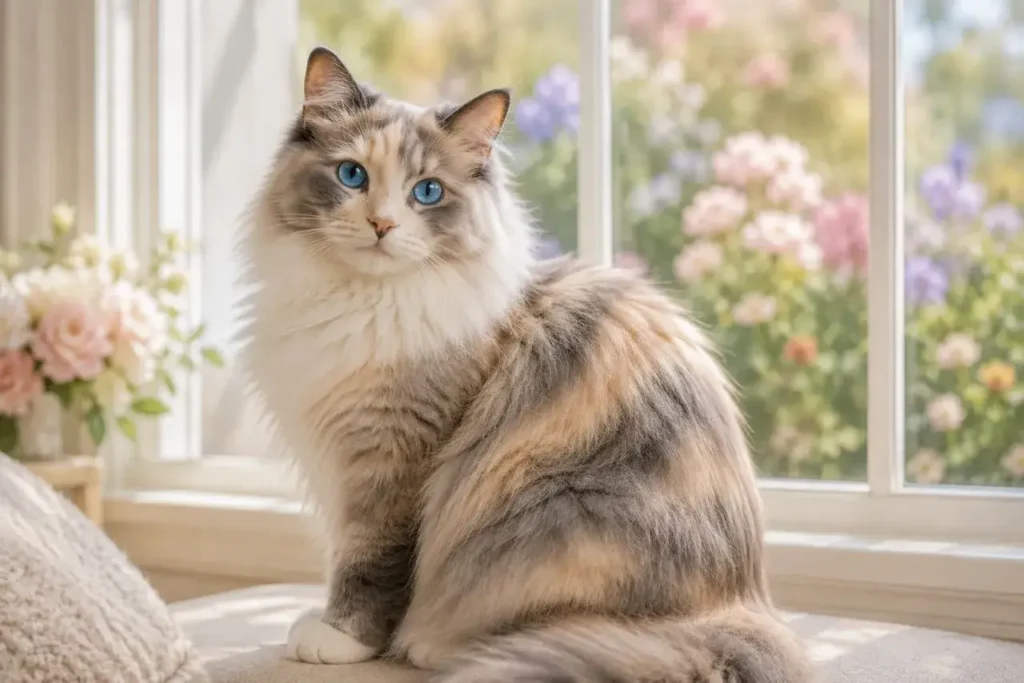
The dilute tortoiseshell calico is a variation where all the base colors are muted. Instead of vivid orange, you get soft peach or cream. Instead of deep black or seal, you get blue-grey. The result is a cat that looks almost watercolor-painted.
In Ragdoll terminology, these are called Blue Cream or Blue Tortie cats. The genetics are the same as standard tortoiseshell. The dilute modifier gene (d) simply softens all the pigments.
A dilute tortoiseshell calico cat paired with the Ragdoll’s signature blue eyes is a genuinely unusual combination. According to TICA’s Ragdoll breed standard, dilute tortie Ragdolls are fully recognized and can compete in shows. If color documentation matters to you as a buyer, make sure the kitten comes with TICA or CFA registration papers.
Tortoiseshell Calico Sphynx vs Ragdoll: A Quick Comparison
Some people searching for a tortoiseshell calico cat end up comparing breeds side by side. The tortoiseshell calico Sphynx is another popular choice: hairless body, but the same tortoiseshell skin pigmentation showing through.
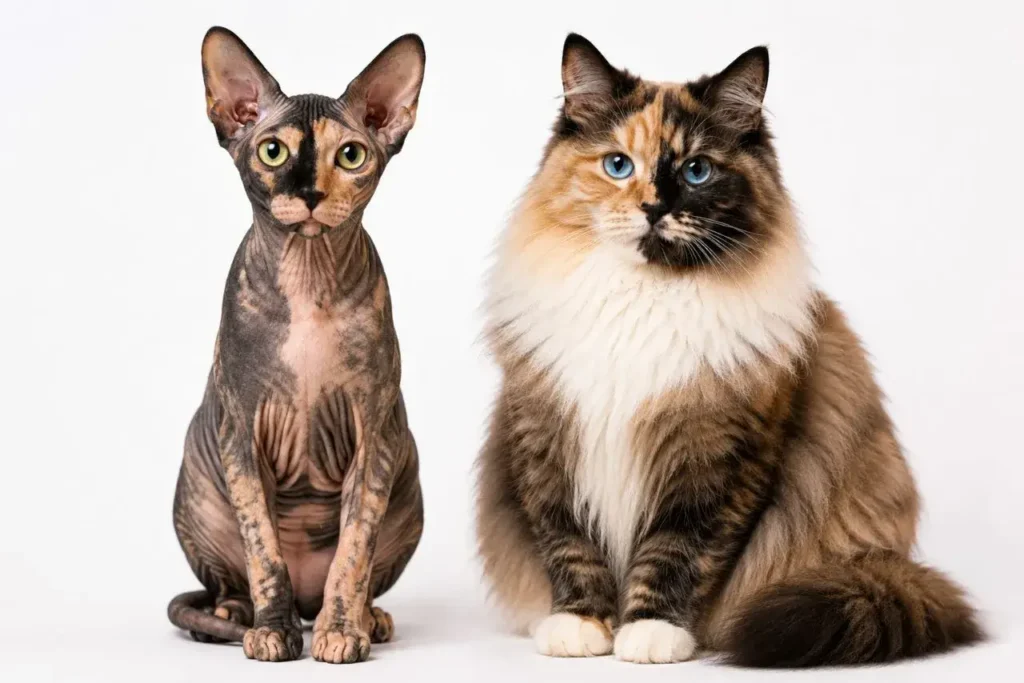
Tortoiseshell Calico Sphynx:
- Hairless (or near-hairless)
- Very warm to the touch
- High energy, very social, attention-seeking
- Requires regular skin cleaning
- No shedding
Tortoiseshell Calico Ragdoll:
- Semi-long plush coat
- Moderate energy
- Calm, floppy, easy-going
- Regular brushing needed
- Moderate shedding
Both are affectionate cats. The choice comes down to whether you want a warm, wrinkly companion or a large, fluffy one.
People Also Ask: Tortoiseshell Calico Ragdoll Cat FAQ
1. Are tortoiseshell calico Ragdoll cats rare?
Yes. Tortoiseshell calico Ragdoll cats are among the less common color varieties in the breed. The tortoiseshell pattern requires a specific genetic combination (two X chromosomes with different orange gene expressions), and not all Ragdoll breeders work with tortie lines. Finding one takes more effort and usually involves a waitlist. Dilute tortoiseshell calico Ragdolls are even rarer.
2. What is the personality of a tortoiseshell calico Ragdoll cat?
Most owners describe the tortoiseshell calico Ragdoll cat personality as classic Ragdoll sweetness with more character layered on top. The “tortitude” associated with tortie cats means these cats often have stronger opinions, more vocal tendencies, and more selective affection than their solid-colored Ragdoll counterparts. Still loving, just on their own terms.
3. Can male cats be tortoiseshell calico?
Almost never. Because the gene for orange coat color is carried on the X chromosome, producing both orange and non-orange patches requires two X chromosomes. That means tortoiseshell calico cats are almost always female. The rare male tortie occurs due to a chromosomal anomaly (XXY) and is typically sterile.
4. What is the lifespan of a tortoiseshell calico Ragdoll cat?
The tortoiseshell calico Ragdoll cat lifespan is generally 12 to 17 years. The tortoiseshell coat pattern has no effect on lifespan. Health factors that matter include genetics (HCM risk in Ragdolls), diet, weight management, and regular vet care.
5. What is the difference between a tortie and a calico Ragdoll?
In general cat terms, a tortie is orange and black/brown with little or no white, while a calico has significant white patches added. Within the Ragdoll breed, these distinctions blur because Ragdolls almost always carry some white. The breed technically uses “tortie” to describe what others might call a calico. A tortoiseshell calico cat mix in Ragdoll form is essentially a tortie Ragdoll.
6. How much does a tortoiseshell calico Ragdoll cat cost?
Expect to pay between $1,500 and $3,500 from a reputable breeder. Rarer variants like dilute tortoiseshell calico or show-quality cats may cost more. Be cautious of any “purebred” Ragdoll priced well under $1,000.
7. Do tortoiseshell calico Ragdoll cats get along with other pets?
Generally yes. Ragdolls as a breed are known for being good with other cats and even dogs. The tortoiseshell personality can make them more assertive about their space, but most tortie Ragdolls adapt well in multi-pet households when introduced properly.
8. What is a dilute tortoiseshell calico cat?
A dilute tortoiseshell calico has the same color pattern as a standard tortoiseshell, but all the pigments are muted. Orange becomes cream or peach, and black or seal becomes blue-grey. In Ragdolls, these are sometimes called Blue Tortie or Blue Cream cats.
9. Can Ragdoll Cats be Tortie?
Yes, and this one is officially recognized, unlike true calico. Tortie points (seal, blue, chocolate, and lilac) are part of the CFA Ragdoll breed standard. What isn’t officially recognized is “calico” as its own category, that’s a tortie point with enough white to look calico-like.
10. Why is it called Tortoiseshell?
The Tortoiseshell Coat Color in cats acquired its name because it resembles tortoiseshell material.
11. How rare is a Tortoiseshell Calico Cat?
Yes, especially males. Roughly only 1 in every 3,000 tortoiseshell or calico cats is male, since the pattern requires two X chromosomes to express both colors.
A tortoiseshell or calico cat coat is the consequence of the presence of both the orange color and black cat pigment genes.
12. Are Tortoiseshell cats lucky?
Tortoiseshell Cats are still lucky charms in Scotland and Ireland, particularly if one ends up in your home. This good fortune has earned them a unique moniker in the United States: “money cats.” In Japan, it’s said that owning a tortie would keep spirits away from your house.
13. Why are Tortoiseshell Cats special?
The genetics of Tortoiseshell Cats are distinct. As it happens, their genes hold the key. These chic cats possess not one, but two co-dominant color genes that combine to produce the incredible color patterns we are all familiar with.
14. Does Being a Tortoiseshell Affect Lifespan Across Cat Breeds Generally?
No. The tortoiseshell coat pattern itself isn’t tied to lifespan in any breed. What determines lifespan is the underlying breed and individual health, not coat color. A tortie Ragdoll follows the same 12 to 17 year Ragdoll average discussed above; a tortie domestic shorthair follows that breed’s typical range instead.
Sources and Further Reading
- The Cat Fanciers’ Association – Ragdoll Breed Standard
- The International Cat Association (TICA) – Ragdoll Breed Standard
- Cornell Feline Health Center – Hypertrophic Cardiomyopathy
This article is for general informational purposes and isn’t a substitute for advice from a licensed veterinarian, particularly regarding HCM or PKD screening.
Conclusion
The tortoiseshell calico Ragdoll cat is one of the most special animals you can share a home with. You get the Ragdoll’s size, calm temperament, and stunning blue eyes, layered over a coat pattern that is essentially a genetic roll of the dice. No two are alike, and all of them are beautiful.
They’re not the easiest cats to find, and they’re not the cheapest. But for people who fall for them, the search is worth it. Whether you’re drawn to the vivid tortoiseshell calico coloring or the muted softness of the dilute tortoiseshell calico, there’s a version of this cat that will stop you the first time you see one.
If you’re considering adding a tortie Ragdoll to your home, take your time finding a reputable breeder, ask the right health questions, and prepare for a cat with very strong opinions about their very comfortable life. The sassiness, you’ll find, is half the charm.