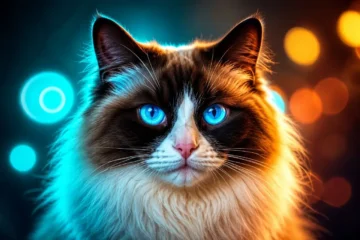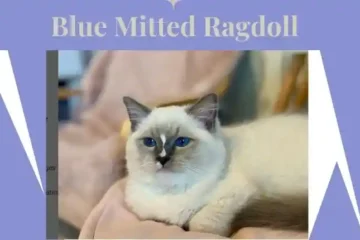
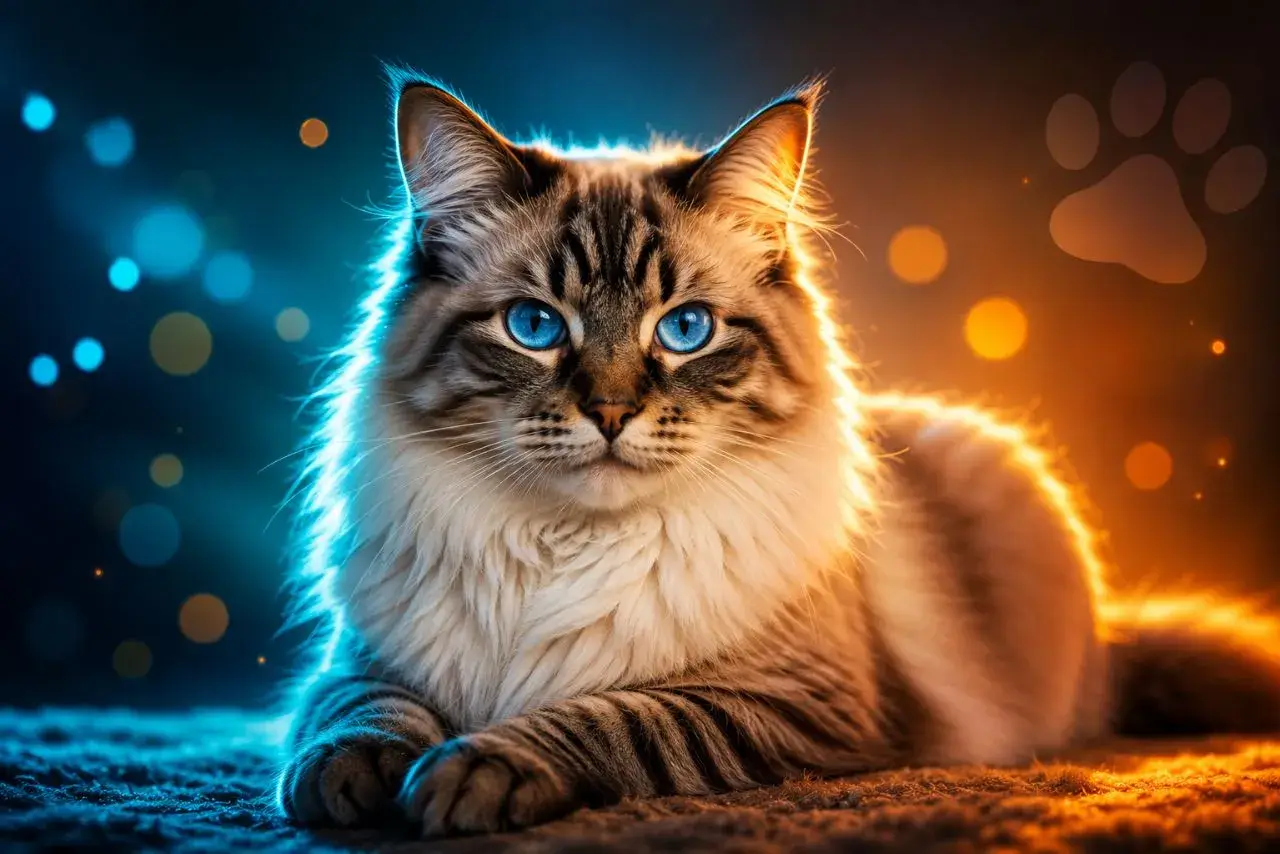
About 42% of cat owners say they chose their pet based on a mix of personality and looks. And honestly, that tracks. Because if you’ve ever seen a Ragdoll Tabby Cat Mix, you know exactly why people stop scrolling.
I’ve spent years around Ragdoll cats and their various crosses, and this one keeps coming up in conversations. People want to know what a Ragdoll Tabby mix actually looks like in person. Is the fur long? Do they keep those iconic blue eyes? Will the kitten be mellow like a Ragdoll or more independent like a classic tabby cat?
Good questions all. And the answers are more interesting than you’d expect. This guide covers the appearance, temperament, coat varieties, care routine, and what to expect if you’re looking for Ragdoll Tabby Mix Kittens. Updated September 2026 with a clearer breakdown of Lynx Ragdolls vs true mixes, DNA testing options, and a source list. Let’s get into it.
What Is a Ragdoll Tabby Cat Mix?
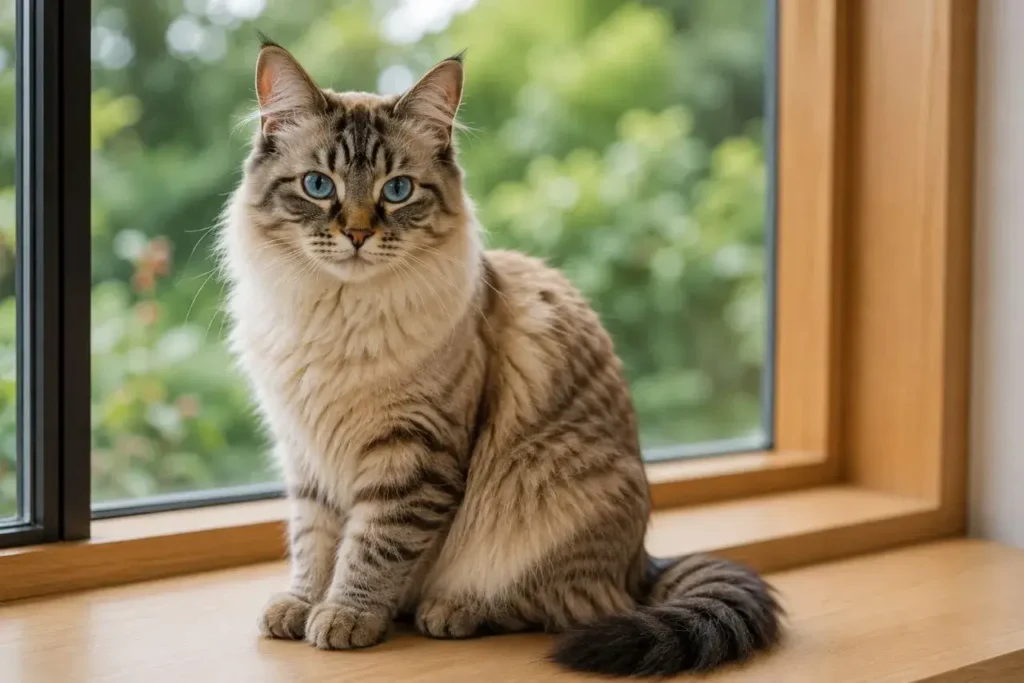
A Ragdoll Tabby Cat Mix is a hybrid cat with one purebred Ragdoll parent and one tabby-marked cat parent. The word “tabby” doesn’t refer to a specific breed. It describes a coat pattern, so the tabby parent could be a domestic shorthair, a Maine Coon, or any other cat carrying the tabby gene.
Ragdolls are a large, gentle breed developed in California in the 1960s by breeder Ann Baker. They’re known for going limp when picked up (hence the name), their silky semi-long coats, and their famously calm temperament. The Ragdoll Cat typically weighs between 10 and 20 pounds, with females on the smaller end.
Tabby markings come from the agouti gene, one of the most common coat genetics in domestic cats. There are 4 main tabby patterns:
- Classic Tabby: Bold swirling patterns, sometimes called blotched
- Mackerel Tabby: Narrow vertical stripes running down the sides
- Spotted Tabby: Broken stripes that form distinct spots
- Ticked Tabby: Agouti banding on each individual hair, minimal striping on the body
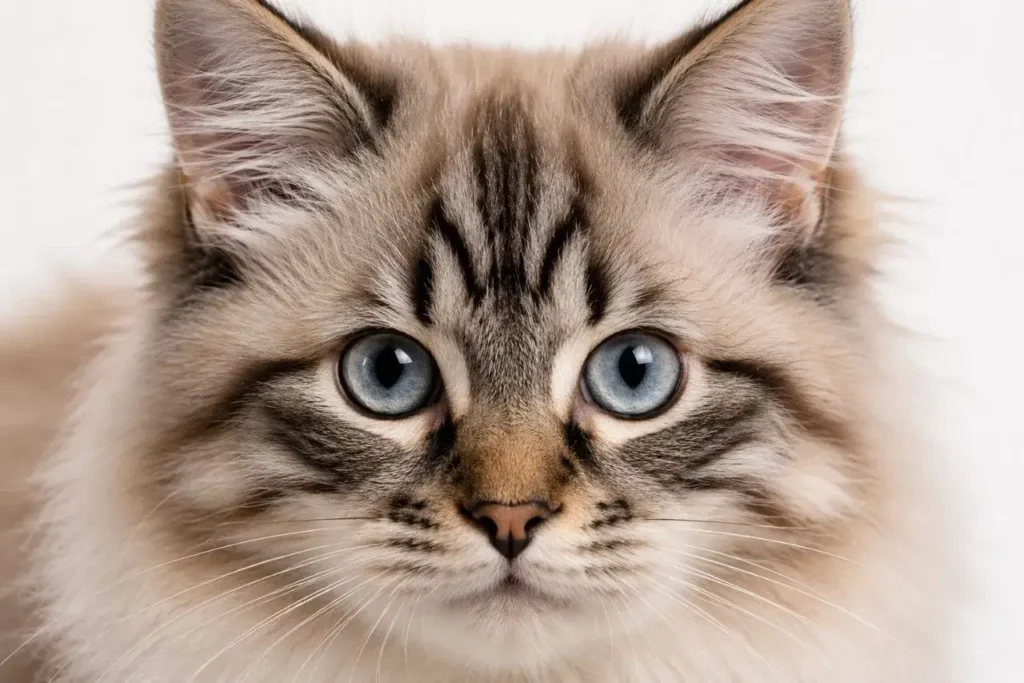
All tabby cats share the distinctive “M” marking on their forehead. That marking doesn’t disappear in a Ragdoll Tabby Mix. It often shows up clearly even when the rest of the coat leans Ragdoll.
What Does a Ragdoll Tabby Mix Look Like?
This is where it gets unpredictable, in the best way.
When you cross two very different cats, the kittens can land anywhere on the spectrum. Some lean heavily toward the Ragdoll parent with a light-colored, silky coat and minimal striping. Others show strong tabby markings with bold stripes across the body, legs, and face. Most end up somewhere in between.
Coat Length and Texture
The Ragdoll’s coat is semi-long and has no dense undercoat, which is actually what makes it feel so silky rather than fluffy. If the tabby parent is short-haired, kittens in the litter could be either short or semi-long. If the tabby parent is also long-haired, expect long-haired kittens across the board.
A Ragdoll Tabby mix short hair version is absolutely possible and isn’t rare when the tabby parent carries short-coat genes.
Eye Color
Purebred Ragdolls almost always have blue eyes. That’s tied to the pointed gene they carry. In a Ragdoll Tabby mix, eye color depends on the tabby parent’s genetics. You might get blue eyes, green eyes, gold, or even odd-colored eyes where each eye is a different color. There’s no guarantee.
Body Size
Ragdolls are one of the largest domestic cat breeds. Expect a Ragdoll Tabby mix to land somewhere between medium and large, depending on the tabby parent’s size. Males tend to be noticeably bigger than females.
Color Variations
Some of the most common color combinations you’ll see in a Ragdoll Tabby mix include:
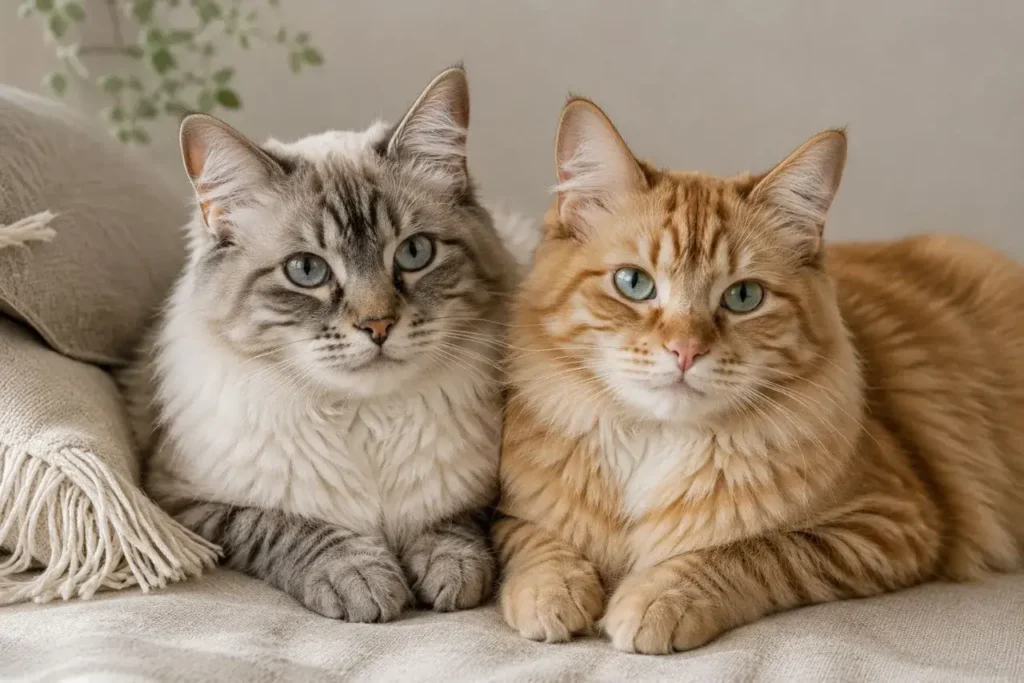
- Gray Ragdoll Tabby mix: A blue or silver base with gray tabby striping. Stunning and one of the more common outcomes.
- Ragdoll Tabby orange: Warm orange or red tabby markings over a lighter Ragdoll base. Very eye-catching.
- Ragdoll Tabby bicolor: Patches of white alongside the tabby pattern, inherited from the Ragdoll’s bicolor gene.
- Ragdoll Tabby point: Darker coloring concentrated on the face, ears, paws, and tail, just like a pointed Ragdoll, but with tabby striping within those points.
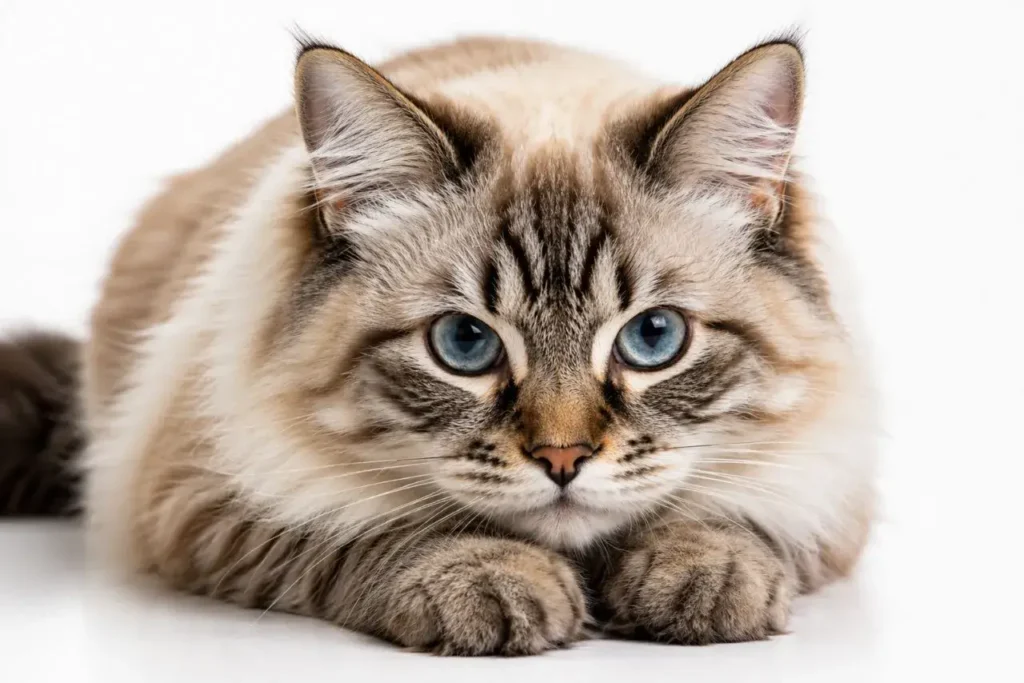
- Ragdoll Tabby lynx: One of the most distinct looks. The lynx pattern means tabby striping appears within the color points. So the face, legs, and tail have visible stripes.
If you’re specifically looking for a Ragdoll Tabby lynx or a Ragdoll Tabby point, know that these patterns require specific genetics from both parents, so not every litter will produce them.
Ragdoll Tabby Mix Personality and Temperament
Here’s the honest version: you cannot fully predict temperament in a mixed breed.
What you can do is look at both parents. Ragdolls are famously easygoing. They follow their owners from room to room, enjoy being held, and are generally gentle with kids and other pets. They’re low-aggression and not big on random bursts of chaos at 3 AM (unlike some breeds I could name).
Tabby cats, again, aren’t a breed, so temperament on that side depends entirely on which cat the tabby parent is. A domestic shorthair tabby can range from a lap cat to an independent explorer. A tabby-patterned Maine Coon will bring size and a playful, sociable personality. A Siamese Ragdoll Tabby mix (when the tabby parent has a Siamese background) is likely to be vocal, curious, and a bit more demanding.
In general, most Ragdoll Tabby mix cats lean toward the friendlier end. Ragdoll genetics are dominant in the personality department more often than not. But you can get a more independent, active cat, especially if the tabby parent was on the feisty side.
What most owners report:
- Good with families, including children
- Moderately to highly social
- Enjoys playtime but is also happy to lounge
- Generally not aggressive or skittish
- Adapts reasonably well to indoor living
If you’re looking at other Ragdoll crosses for comparison, the Ragdoll Himalayan Mix Personality tends to be even more laid-back, since both parent breeds are known for a calm temperament.
Ragdoll Tabby Mix Kitten: What to Expect in the Early Months
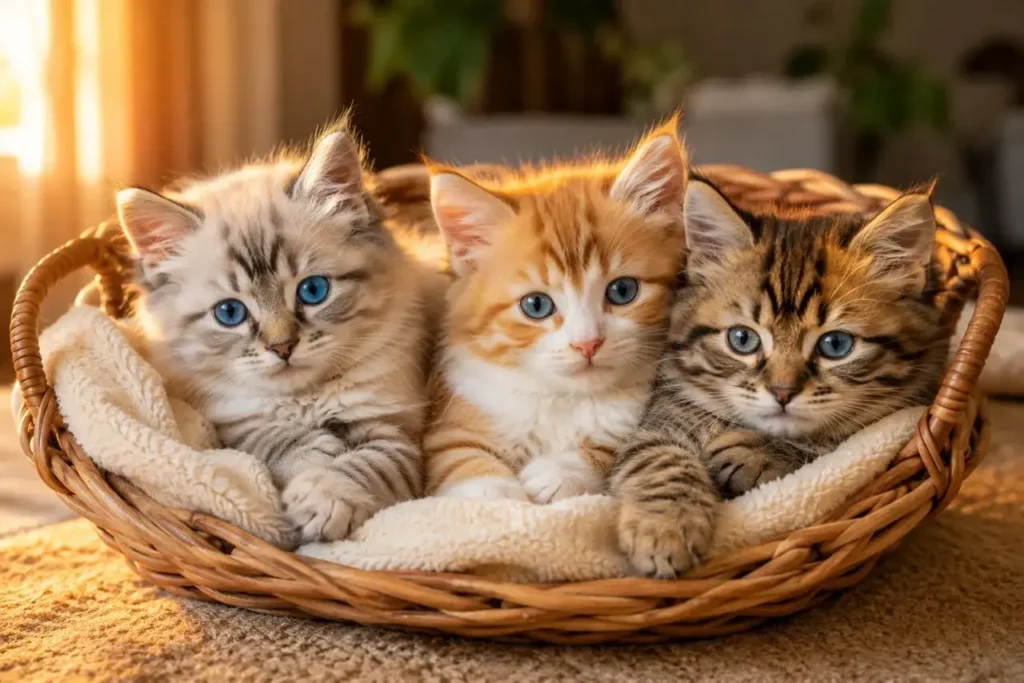
Ragdoll Tabby mix kittens are typically born with their base coat showing, but the final color and pattern can shift quite a bit in the first 6 to 12 months. Ragdolls themselves are known for slow color development. Their points deepen with age, and the same can happen in the mix.
If you’re bringing home a Ragdoll Tabby mix kitten, here are a few things worth knowing:
Growth rate is slow. Ragdolls don’t fully mature until around 3 to 4 years old. A mix might mature a bit faster depending on the other parent, but don’t expect the cat to reach full size in the first year.
Early socialization matters: The friendlier the environment in those first 8 to 16 weeks, the more sociable the adult cat will be. Handle kittens often, expose them to sounds and different people, and make those early vet visits a normal part of life.
Coat care starts early: Even if the kitten has a shorter coat than a purebred Ragdoll, getting them used to brushing early makes adult grooming much easier.
Watch for signs of color point development: If a kitten looks lighter than expected at birth, don’t assume the tabby markings won’t come in. Many Ragdoll Tabby kittens show their full pattern only after a few months.
Ragdoll Tabby Mix Short Hair vs Long Hair
One question that comes up often: will a Ragdoll Tabby mix be short-haired or long-haired?
The answer depends on what the tabby parent is carrying genetically. Long hair is a recessive trait. A Ragdoll carries two copies of the long-hair gene (L/L), meaning every kitten will receive one long-hair gene from the Ragdoll side. Whether the kitten ends up long-haired depends on what the tabby parent contributes.
- If the tabby parent is short-haired but carries a hidden long-hair gene, about 50% of kittens will be long-haired
- If the tabby parent is short-haired with no long-hair gene, the kittens will be short-haired
- If the tabby parent is long-haired, all or most kittens will be long-haired
A Ragdoll Tabby mix short hair cat is lower-maintenance in grooming, but won’t have the signature silky Ragdoll look. Both versions are healthy and wonderful pets. It’s more about what you prefer.
Grooming a Ragdoll Tabby Mix
Grooming needs vary based on coat length, but there are some general rules that apply to most Ragdoll Tabby mix cats.
For long-haired versions:
The Ragdoll’s coat has no thick undercoat, which is a blessing. It tangles less than most long-haired breeds. Still, weekly brushing is a good habit, and during shedding seasons (spring and fall), you’ll want to brush 2 to 3 times a week. A stainless steel comb or a slicker brush works well.
For short-haired versions:
Monthly brushing is usually enough outside of heavy shedding periods. A rubber grooming mitt can be enough for regular maintenance.
Other care:
- Trim nails every 2 to 3 weeks
- Check and clean ears monthly
- Dental care matters. Weekly tooth brushing or dental treats can prevent issues down the road
- Bathing is rarely needed unless the cat gets into something
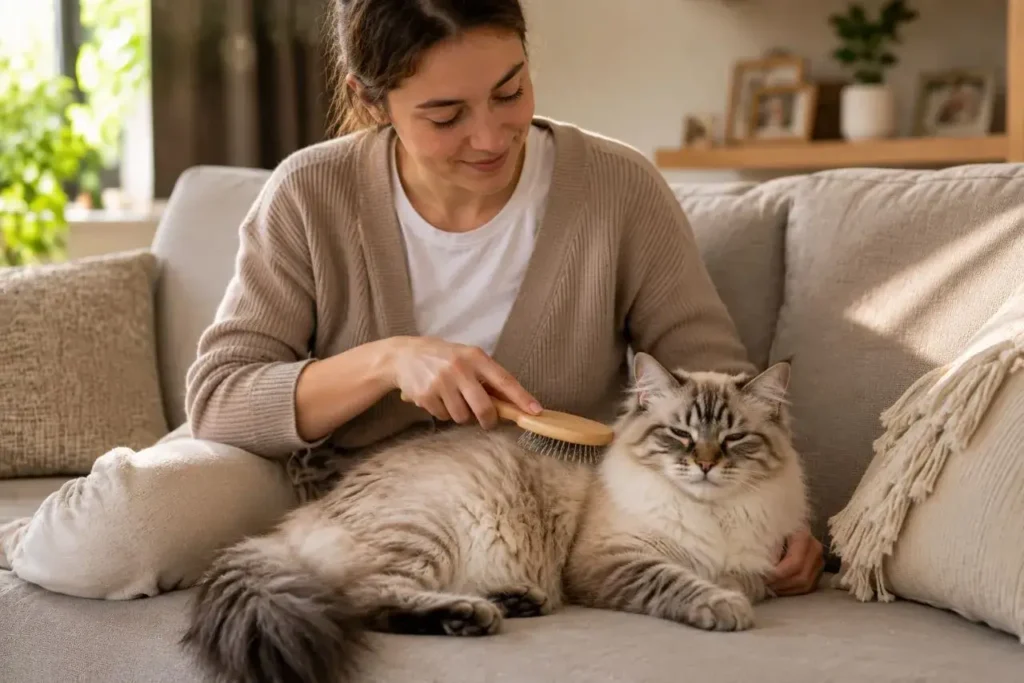
If you’re curious about whether your Ragdoll Tabby mix might be lower-shedding than a purebred Ragdoll, the answer is: maybe, but don’t count on it. Both coat types shed, especially seasonally. Check out our article on Ragdoll Cats and Allergies if shedding is a concern for your household.
Health Considerations for a Ragdoll Tabby Mix
Mixed-breed cats often have an advantage called hybrid vigor, where genetic diversity reduces the likelihood of inheriting breed-specific conditions. That said, a Ragdoll Tabby cat mix can still carry health risks from the Ragdoll side.
Hypertrophic Cardiomyopathy (HCM) is the main one. It’s the most common heart disease in cats, and Ragdolls have a known genetic mutation (MYBPC3) that makes them more susceptible. Responsible breeders test for this, but a mixed litter from an unplanned pairing may not have been screened. Ask about cardiac testing if you’re buying from a breeder.
Polycystic Kidney Disease (PKD) is another condition to be aware of, though Ragdolls are at lower risk than some other breeds.
Obesity is a real concern in any large, calm cat. A Ragdoll Tabby mix that leans toward the lazy end can easily become overweight if food isn’t managed. Measure meals, avoid free-feeding, and keep them active with daily play.
Routine vet visits once a year (twice for cats over 7) catch most problems early. For a cat with Ragdoll genetics, ask your vet about a cardiac screening around age 2 to 3.
Siamese Ragdoll Tabby Mix
A Siamese Ragdoll Tabby mix is a three-way combination where the cat has genetic contributions from Siamese background (often through a tabby-marked cat with Siamese lineage), a Ragdoll, and the tabby pattern gene.
These cats are typically:
- More vocal than a standard Ragdoll Tabby mix
- Highly social and interactive
- Likely to have strong color pointing on their faces, ears, paws, and tail
- Often carrying striking blue or aqua eyes
The Siamese influence brings a more chatty, demanding personality. If you want a cat that tells you exactly how it feels about everything, this mix delivers. You might also want to read our full breakdown of the Ragdoll Cat Mixed with Siamese to understand that pairing better.
Ragdoll Tabby Mix vs Ragdoll Bicolor and Other Patterns
The terms can get confusing, so here’s a quick breakdown of the main Ragdoll pattern terms and how they interact with tabby markings.
| Pattern | What It Means | Tabby Overlap Possible? |
|---|---|---|
| Ragdoll Tabby Bicolor | White patches on body, colored on points | Yes |
| Ragdoll Tabby Point | Dark points on face, ears, paws, tail | Yes, striping within points |
| Ragdoll Tabby Lynx | White patches on the body, colored on points | This is a lynx point |
| Gray Ragdoll Tabby Mix | Blue/grey base with tabby striping | Yes |
| Ragdoll Tabby Orange | Red/orange tabby markings | Yes |
The Ragdoll Tabby Lynx pattern is essentially what happens when a Ragdoll’s pointed genetics combine with a tabby’s striped genetics. You get a cat with visible striping within the darker points on the face and extremities. It’s one of the most photogenic outcomes.
For reference, a Pure White Ragdoll Cat is at the opposite end of the spectrum, carrying no visible pattern at all. A Tuxedo Black and White Ragdoll Cat is a bicolor Ragdoll with specific black and white patterning.
Lynx Ragdoll vs Ragdoll Tabby Mix: What’s the Difference?
This trips up a lot of people searching for this topic, so it’s worth clearing up directly: a “Lynx Ragdoll” and a “Ragdoll Tabby mix” are not the same thing.
A Lynx Ragdoll is a purebred Ragdoll. Both major registries, TICA and the CFA, recognize the lynx pattern as an official Ragdoll variation, alongside solid colorpoint, mitted, and bicolor. The lynx gene has been present in the Ragdoll gene pool from the breed’s early development, so a striped, tabby-pointed kitten from two registered Ragdoll parents is still 100% Ragdoll, not a mix. Breeders intentionally produce lynx litters, and they’re not considered rare within the breed.
A Ragdoll Tabby mix, the subject of this guide, is different: it has one Ragdoll parent and one non-Ragdoll parent that carries the tabby gene. That’s a genuine crossbreed, not a registry-recognized pattern.
How to tell which one you have:
- If both parents are documented, registered Ragdolls, and one carries the lynx gene, your kitten is a purebred Lynx Ragdoll, not a mix.
- If one parent isn’t a Ragdoll at all (a domestic shorthair, a Maine Coon, or any other non-Ragdoll tabby cat), you have a genuine Ragdoll Tabby mix.
- If you don’t know the parentage (a shelter or rescue cat, for example), you’re looking at educated guesswork based on appearance, or a DNA test (more on that below).
Visually, the two can look nearly identical, since both combine Ragdoll-style color pointing with tabby striping. The real difference is in the pedigree, not the coat.
Ragdoll Tabby Mix Kittens for Sale: What to Look For
Finding Ragdoll Tabby mix kittens for sale takes a bit more searching than finding a purebred. This is not a recognized breed, so there’s no official registry or breed-specific breeder list.
Here’s where these kittens typically come from:
Unplanned litters. A purebred Ragdoll that wasn’t spayed mates with an unneutered tabby cat. The owner ends up with a litter of Ragdoll Tabby kittens. These are often posted on local classifieds, Facebook groups, or sites like Petfinder.
Rescue organizations. Many Ragdoll mixes end up in shelters or breed-specific rescues. If you’re not set on a kitten, an adult rescue cat can be a wonderful option, and you know the personality you’re getting.
Small hobby breeders. Some breeders intentionally produce Ragdoll crosses. Be careful here. Ask about:
- Health testing for HCM in the Ragdoll parent
- Kitten socialization practices
- Age at which kittens are sent home (should be 12 weeks minimum, ideally 14)
- What vaccinations and deworming have been done
Avoid anyone who can’t show you the parents, won’t discuss health testing, or offers kittens younger than 10 weeks. Those are red flags regardless of the breed or mix.
The price range for Ragdoll Tabby mix kittens for sale varies widely. From free (rescue litters) to $300-$800 from a small breeder. A purebred Ragdoll from a show-quality breeder runs $1,200 to $2,500 for comparison.
Can a DNA Test Confirm Your Cat’s Ragdoll Genetics?
If you adopted a cat that looks like a Ragdoll Tabby mix but you don’t know its parentage, a cat DNA test is the most reliable way to get an actual answer instead of guessing from photos online.
The two main options as of 2026 are Wisdom Panel Complete for Cats and Basepaws. Wisdom Panel screens for 70+ breeds and populations and reports breed mix down to roughly 1%, which makes it the stronger pick if breed identification is your main goal. Basepaws compares your cat’s DNA against a smaller set of around 21 breeds grouped into broader categories (Western, Eastern, Persian, Exotic) and leans more heavily into dental and general health screening. Ragdoll falls under the “Western” breed group in Basepaws’ system.
A few honest caveats worth knowing before you spend the money:
- Both tests use a cheek swab, and results typically take 2 to 6 weeks depending on the company.
- Cat DNA databases are smaller and less mature than dog DNA databases, so results are reported as genetic similarity to breed groups rather than a precise percentage breakdown in every case.
- Owners sometimes get results that don’t match their visual guess, or that shift somewhat between testing rounds with the same company. Treat the results as a strong data point, not an absolute verdict.
- If your main concern is health rather than ancestry, both companies also screen for genetic health markers, including some relevant to Ragdolls, which can be useful information for your vet regardless of the breed breakdown.
For most owners who just want confirmation their cat really does have Ragdoll ancestry, a DNA test is a fun and genuinely informative option, just don’t expect it to read like a pedigree certificate.
How a Ragdoll Tabby Mix Compares to Similar Breeds
If you’re weighing options, here’s a quick, honest comparison:
Ragdoll Tabby Mix vs Snowshoe Cat: Both are medium-to-large, people-oriented cats. The Snowshoe carries specific white paw markings from its Siamese-American Shorthair heritage. A Ragdoll Tabby mix will have more variable markings. Read our full Snowshoe Cat vs Ragdoll comparison for more details.
Ragdoll Tabby Mix vs Maine Coon Tabby Mix: Maine Coons are more active and independent than Ragdolls. A Ragdoll-based mix tends to be calmer and more lap-oriented.
Ragdoll Tabby Mix vs Purebred Ragdoll: The purebred is more predictable in looks and temperament. The mix brings more genetic variety and potentially lower health risk, but you give up predictability on appearance and personality.
Feeding and Nutrition for a Ragdoll Tabby Mix
A Ragdoll Tabby cat mix does best on a high-protein, moderate-fat diet. Cats are obligate carnivores, so animal protein should be the first ingredient in any food you choose.
General guidelines:
- Wet food helps with hydration, especially for male cats prone to urinary issues
- Dry food can be part of the diet, but shouldn’t be the only source
- Portion control matters with this mix. A calm, large-framed cat can easily overeat
- Avoid foods with heavy grain or corn fillers as the primary ingredient
- Check with your vet about a urinary health or cardiac-supportive diet if your cat has known risk factors
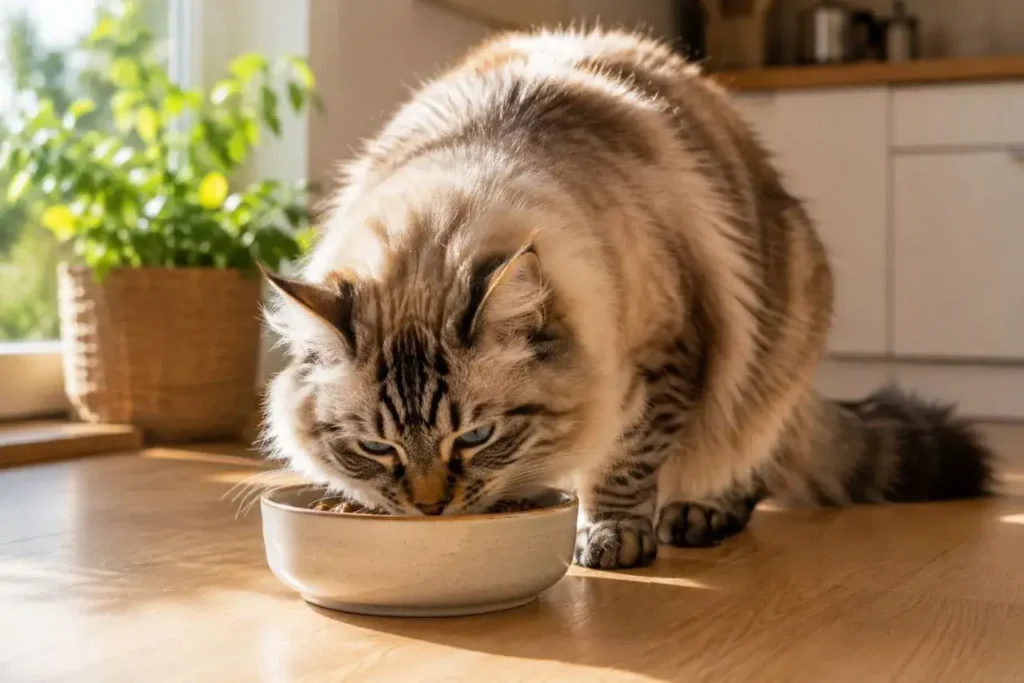
Adult cats typically need 20 to 33 calories per pound of body weight per day, though active cats need more. A 12-pound Ragdoll Tabby mix needs roughly 240 to 400 calories daily. Adjust based on activity level and body condition.
For more details on feline nutrition recommendations, the American Association of Feline Practitioners publishes excellent guidelines.
Living With a Ragdoll Tabby Mix: Daily Life
Ragdoll Tabby mix cats are generally well-suited to indoor life. They’re not intense hunters by nature (especially if the Ragdoll traits dominate), and they can adapt to apartments as long as they have some vertical space and regular interaction.
A few things that help:
Cat trees and perches: Even mellow cats like to watch the world from above. A sturdy cat tree gives them exercise, a scratching surface, and a vantage point.
Interactive play:15 to 20 minutes of active play twice a day keeps them mentally engaged and helps prevent weight gain. Feather wands and puzzle feeders work well.
Company: Ragdoll-influenced cats don’t do great being alone for long stretches every day. If you work long hours, consider a second cat for companionship or look into cat-sitters on busy weeks.
Litter box basics: One box per cat, plus one extra. Scoop daily. Most Ragdoll Tabby mix cats aren’t picky about litter type, but consistency matters.
People Also Ask: FAQ About Ragdoll Tabby Cat Mix
1. What does a Ragdoll Tabby Cat Mix look like?
A Ragdoll Tabby cat mix can look quite different from one kitten to the next, even in the same litter. Most have semi-long to short fur, some visible tabby markings like stripes or swirling patterns, and may have lighter coloring with darker points (from the Ragdoll side). Eye color ranges from blue to green to gold. The classic tabby “M” marking on the forehead often shows up clearly.
2. Is a Ragdoll Tabby Mix a good family pet?
Yes, generally speaking. Ragdoll Tabby mix cats tend to be social, gentle, and good with children. The Ragdoll genetics lean toward calm and affectionate behavior. That said, individual personality varies based on the tabby parent, so meeting the kitten and its parents before committing is always a good idea.
3. How big does a Ragdoll Tabby Mix get?
Expect a medium-to-large cat. Ragdolls are one of the bigger domestic breeds, averaging 10 to 20 pounds. A Ragdoll Tabby mix may be slightly smaller depending on the tabby parent, but is still likely to be larger than an average domestic cat. Full size is typically reached between 2 and 4 years.
4. Do Ragdoll Tabby mix cats have blue eyes?
Not always. Purebred Ragdolls carry the pointed gene that produces blue eyes. In a Ragdoll Tabby mix, the tabby parent’s genetics can change the eye color outcome. Some kittens will have blue eyes, others green, gold, or hazel. It depends on both parents.
5. Are Ragdoll Tabby mix cats hypoallergenic?
No cat is truly hypoallergenic. Ragdoll Tabby mix cats still produce Fel d 1, the protein in cat saliva and skin secretions that triggers allergies. Ragdolls are sometimes considered lower-allergen than average due to their coat structure, but this isn’t guaranteed in a mix. See our article on Ragdoll Cats and Allergies for a deeper breakdown.
6. How much does a Ragdoll Tabby mix kitten cost?
Prices range from free (shelter or rescue) to around $300 to $800 from a small breeder. This is significantly less than a purebred Ragdoll, which typically costs $1,200 to $2,500. If you find Ragdoll Tabby mix kittens for sale priced much higher than $800 without documented health testing, ask questions.
7. What is a Ragdoll Tabby lynx?
A Ragdoll Tabby Lynx is a cat that has Ragdoll color pointing (darker color on the face, ears, paws, and tail) with visible tabby striping within those pointed areas. The result is a cat with stripes on its face and legs that sit within the darker color points. It’s one of the most visually distinct patterns in Ragdoll mixes.
8. Can a Ragdoll Tabby mix have short hair?
Yes. A Ragdoll Tabby mix short hair outcome happens when the tabby parent carries short-coat genetics. Long hair is recessive, so even though the Ragdoll parent is semi-long-haired, the kittens can be short-haired if the tabby parent doesn’t carry the long-hair gene.
9. What is a Siamese Ragdoll Tabby mix?
A Siamese Ragdoll Tabby mix combines Siamese lineage (often through a tabby-patterned cat with Siamese heritage), Ragdoll genetics, and tabby markings. These cats tend to be more vocal and interactive than a standard Ragdoll Tabby mix, with strong color points and often blue or aqua eyes.
10. Where can I find Ragdoll Tabby mix kittens for sale?
Check local rescue organizations and shelters first. Local classifieds and Facebook groups sometimes list litters from unplanned breedings. If buying from a breeder, ask about health testing (specifically HCM cardiac screening) and confirm the Ragdoll parent is registered.
11. What is the Best Ragdoll mix?
Certainly, one of the most popular Ragdoll crossbreeds is the mix of a Ragdoll with a Russian Blue. Both breeds are known for their lovable and placid temperament, as well as their beautiful and silky coats. When these characteristics are combined through crossbreeding, the offspring can be exceptionally stunning and captivating.
12. What does a Ragdoll mix look like?
Ragdoll cats typically exhibit strong genetic influences, and when crossed with other breeds or types of cats, some of their characteristics tend to be retained in the offspring. The extent of this retention, however, relies on how similar the other type of cat is to the Ragdoll parent. The more similarities, the more likely certain traits and features of the Ragdoll will be passed on to the crossbred offspring.
13. Can a Ragdoll cat be orange?
Ragdoll cats can occasionally display an orange-reddish tinge to their coats, a coloring referred to as “flame point.” The distinctive orange highlights are more pronounced around the face, ears, legs, and tail.
14. Can a Ragdoll be grey?
Ragdoll cats can possess a grey coat, which breeders typically refer to as “blue.” This color variation can range from a very pale grey to a dark steel blue.
15. What’s the difference between a Lynx Ragdoll and a Ragdoll Tabby mix?
A Lynx Ragdoll is a purebred Ragdoll with a tabby-striped variation that’s officially recognized by TICA and the CFA, both parents are registered Ragdolls. A Ragdoll Tabby mix has one Ragdoll parent and one non-Ragdoll parent carrying the tabby gene, making it a genuine crossbreed rather than a registry-recognized pattern. The two can look very similar; the difference comes down to pedigree, not appearance.
16. Can a DNA test confirm if my cat is part Ragdoll?
Yes, with some caveats. Cat DNA tests like Wisdom Panel Complete for Cats and Basepaws can detect genetic similarity to Ragdoll and other breeds using a cheek swab, with results in 2 to 6 weeks. Wisdom Panel offers more granular breed detection (70+ breeds, down to about 1%), while Basepaws groups Ragdoll under a broader “Western” breed category. Results are a strong data point but not as precise as a documented pedigree.
Sources and Further Reading
This guide draws on breed registry standards and veterinary and feline-health resources rather than guesswork. For deeper reading:
- Cornell Feline Health Center – Feline Genetics and Coat Patterns
- The International Cat Association (TICA) – Ragdoll Breed Standard
- American Association of Feline Practitioners – Feline Nutrition Guidelines
- National Institutes of Health – Feline Urinary and Cardiac Health Nutrition
This article is reviewed and refreshed periodically as breed and genetics information evolves. It’s for general informational purposes and isn’t a substitute for advice from a licensed veterinarian, particularly for questions about your cat’s individual health or cardiac screening. Last updated September 2026.
Conclusion
The Ragdoll Tabby cat mix is genuinely one of the more interesting cat crosses you’ll come across. You get the gentle, sociable foundation of a Ragdoll combined with the endless visual variety of tabby genetics. No two of these cats look quite the same, whether you end up with a gray Ragdoll Tabby mix, a Ragdoll Tabby orange, a Ragdoll Tabby point, or the visually striking Ragdoll Tabby lynx pattern.
Temperament-wise, most lean toward being friendly and adaptable, especially when well-socialized early. They make solid family cats, get along with other pets reasonably well, and adapt to indoor living without complaint. The main variables are coat length, eye color, and exactly where on the mellow-to-active scale they land.
If you’re thinking about bringing home a Ragdoll Tabby mix kitten, take the time to meet the parents if at all possible. Ask about health testing. And don’t overlook rescues because a lot of beautiful Ragdoll mixes are out there waiting for a home.
Have a Ragdoll Tabby mix at home already? Drop a comment below and share what yours looks like. These cats don’t get nearly enough attention, and every photo I see makes me wish more people knew about them.