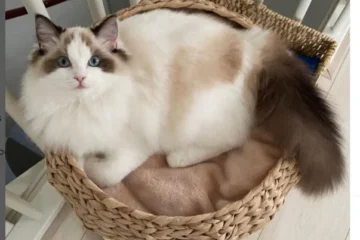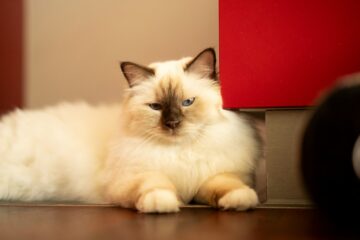
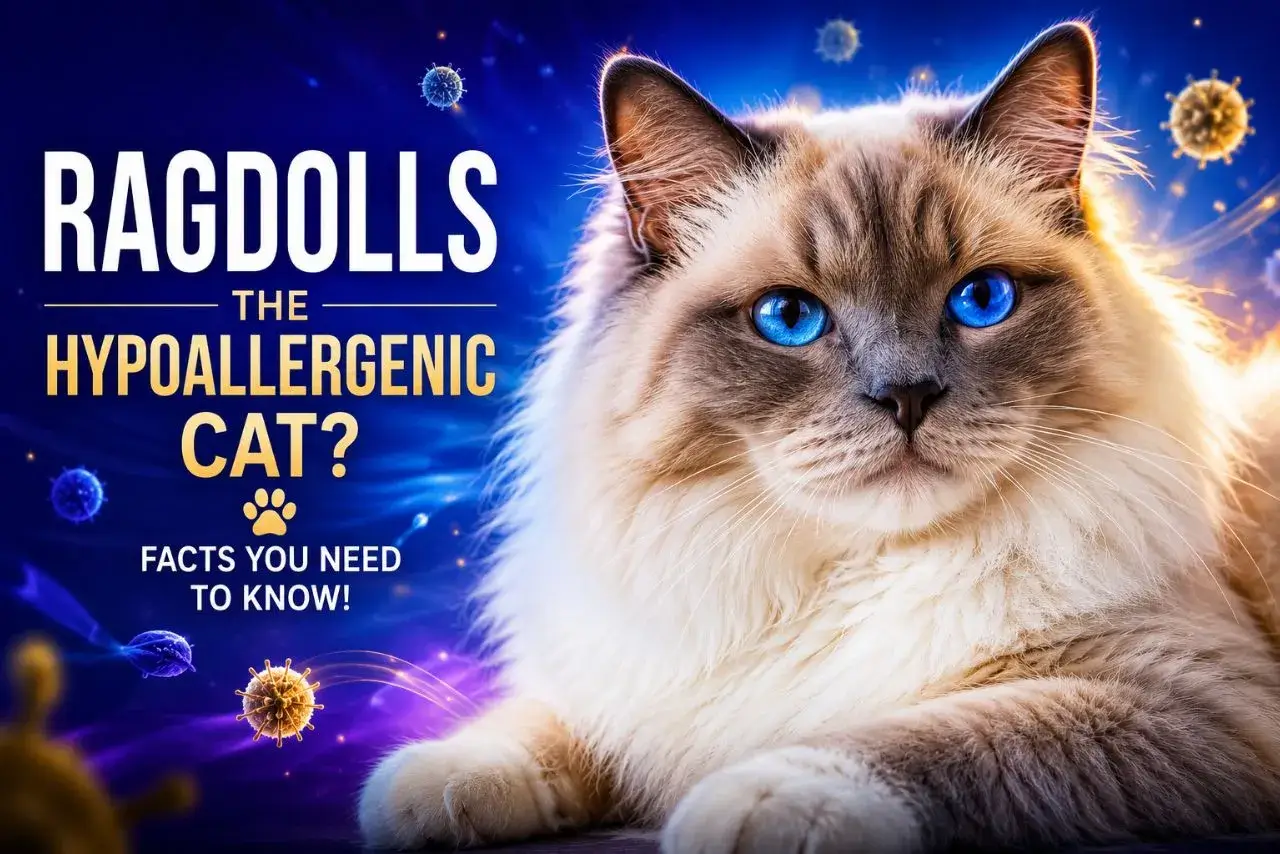
About 10 to 20 percent of the world’s population is allergic to cats. And yet, millions of those same people still want one. I get it. I really do. The first time I held a Ragdoll kitten, I wasn’t thinking about Ragdoll Cats and Allergies or cat dander, or Fel d 1 protein levels. I was just completely in love with this floppy, blue-eyed fluffball who didn’t even bother to squirm.
So here’s the honest answer to the question I get asked constantly: No, Ragdoll cats are not hypoallergenic. But living with one when you have cat allergies is very much possible, and plenty of allergy sufferers do it every single day. The key is knowing what you’re dealing with before you bring one home.
Updated September 2026: this guide now includes the latest research on allergen-neutralizing cat food and the cat-allergy vaccines and treatments currently in development, along with a source list so you can dig into the science yourself.
This guide covers everything: what actually causes cat allergies, how Ragdolls compare to other breeds, what allergy symptoms to watch for in your cat, and the practical steps that actually work for managing cat allergies at home.
What Actually Causes Cat Allergies in Humans
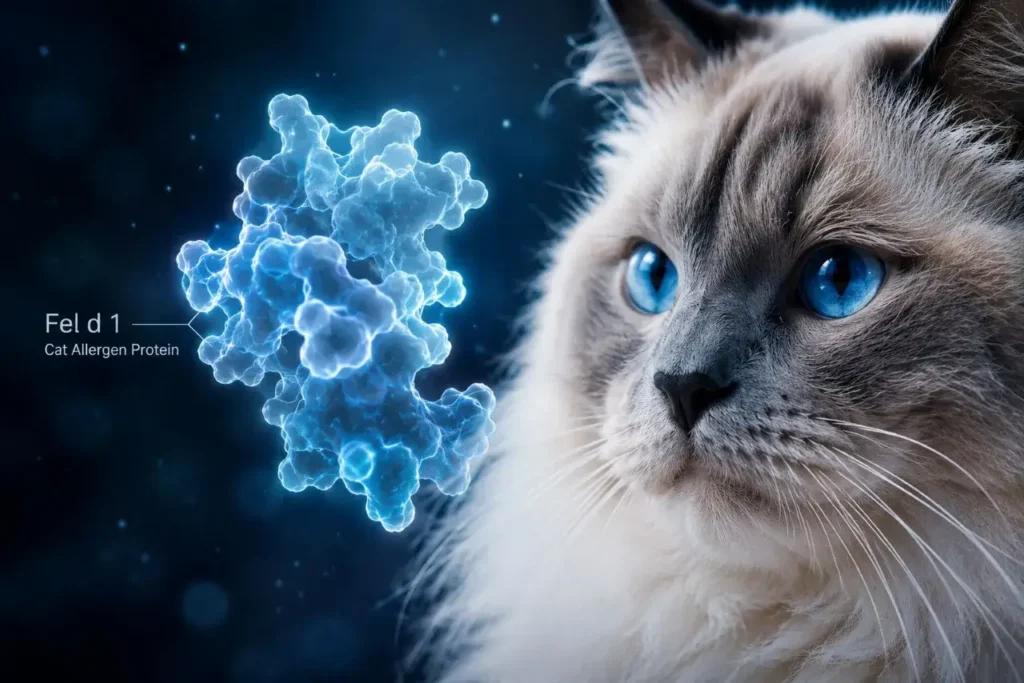
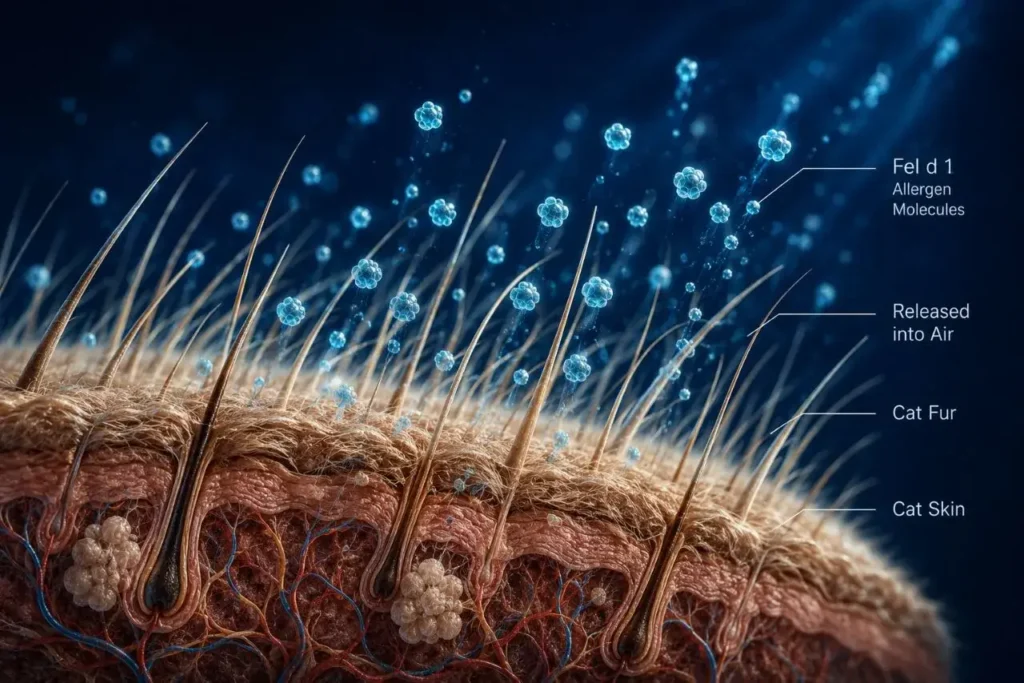
Most people assume cat hair is the problem. It’s not. The real culprit is a tiny protein called Fel d 1, which is produced in a cat’s sebaceous glands, saliva, and urine. When your cat grooms itself, Fel d 1 gets deposited onto the fur. As the fur sheds, those allergen particles go airborne and land on your furniture, bedding, and carpet, and eventually into your airways.
Your immune system then treats those particles like an invader and triggers a response. That’s why you sneeze, get itchy eyes, or start wheezing around cats.
A few things are worth knowing here:
- Male cats produce more Fel d 1 than female cats.
- Intact (unneutered) males produce the most.
- Kittens produce significantly less than adult cats.
- Individual cats of the same breed can produce very different amounts of this protein.
So when someone says a breed is “low allergen,” they usually mean that the breed tends to produce less Fel d 1 on average. That’s it. There’s no cat breed that produces zero.
Are Ragdoll Cats Hypoallergenic? The Real Answer
Ragdolls are not hypoallergenic. They produce Fel d 1 just like any other cat. But there are a few things about the breed that make some allergy sufferers find them more manageable than other cats.
Ragdolls have a single-layer coat. Unlike many breeds that have a dense undercoat, Ragdolls carry only a top coat. This means they shed less overall, and less shedding generally means fewer allergen-carrying hairs floating around your home.
They also tend to groom themselves less aggressively than breeds like Siamese or Persians, which means slightly less saliva, the main vehicle for Fel d 1, gets deposited on their fur.
Does that make them safe for people with cat allergies? Not automatically. But it does mean some people with mild to moderate cat allergies find Ragdolls more tolerable than other breeds.
Here’s a Quick Comparison:
| Factor | Ragdoll | Average Long-Haired Cat |
|---|---|---|
| Undercoat | No | Yes |
| Shedding Level | Moderate | High |
| Grooming Frequency | Moderate | High |
| Fel d 1 Production | Average | Average to High |
| Relative Allergy Risk | Lower than most long-haired breeds | Higher |
The Bottom Line: Ragdolls sit in the middle ground. They’re not the worst breed for allergy sufferers, but they’re far from the safest either. If you’re considering a Ragdoll, spending time with one before committing is the smartest thing you can do.
Ragdoll Cats vs Other Breeds for Allergy Sufferers
If you’re comparing breeds and wondering whether a Ragdoll makes sense, here’s a real-world picture.
Breeds like the Siberian, Balinese, and Devon Rex are often cited as more allergy-friendly because they produce lower levels of Fel d 1 or have shorter coats that trap less dander. The Sphynx (hairless) is sometimes recommended, though they still produce the protein; it just doesn’t have fur to hitch a ride on.
Ragdolls fall somewhere in the middle of the spectrum. Their single-coat structure and calmer grooming habits do reduce overall allergen exposure compared to breeds like Maine Coons or Persians. But they’re large cats, and more cats means more protein production overall.
Some Ragdoll mix breeds also carry different coat characteristics that affect shedding and dander. If you’re curious about related breeds, you might want to read about Ragdoll Himalayan Mix Personality or the Ragdoll Cat Mixed With Siamese, both crosses that can affect coat type and potentially allergen levels.
Common Allergy Symptoms in Humans Living with Ragdolls
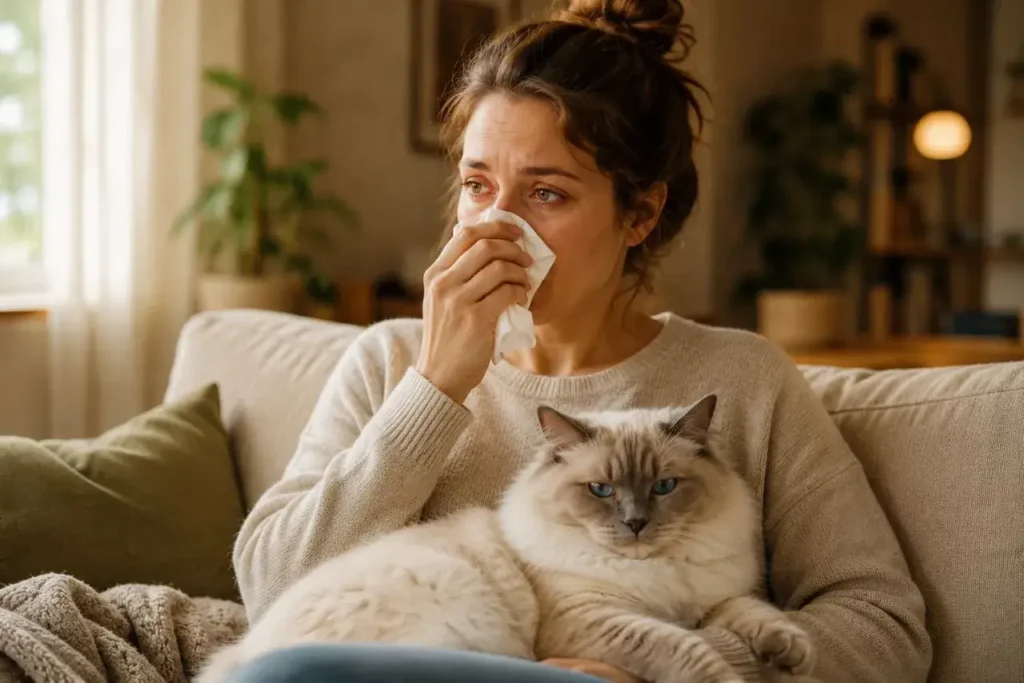
If you’re already living with a Ragdoll and noticing reactions, here’s what cat allergy symptoms typically look like in humans:
- Sneezing, especially after petting or holding your cat
- Itchy, watery eyes (allergic conjunctivitis)
- Runny or congested nose (allergic rhinitis)
- Skin hives or redness where the cat touched you (contact dermatitis)
- Wheezing or tightness in the chest, especially in people with asthma
- Symptoms that get worse in rooms where the cat spends most of its time
Timing matters here. Cat allergy symptoms can appear within minutes of exposure or build up slowly over hours. If your symptoms are worse at home than anywhere else, your Ragdoll is almost certainly contributing.
The American College of Allergy, Asthma and Immunology (ACAAI) notes that cat allergens are incredibly sticky; they cling to walls, furniture, and clothing, and can remain airborne for extended periods even in homes without cats. So if you’re moving into a space where a cat previously lived, you may react even before your own pet arrives.
Allergy Symptoms Your Ragdoll Might Be Experiencing
This part often gets overlooked. Ragdoll cats can develop allergies themselves, and the symptoms sometimes look like behavioral problems if you don’t know what to watch for.
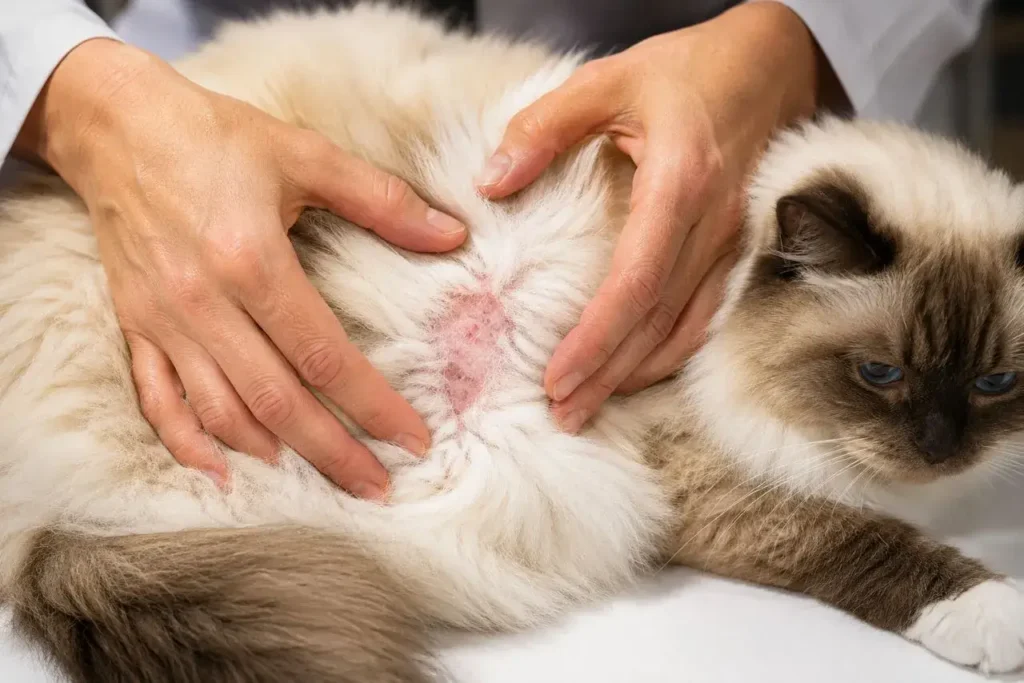
Allergic Rhinitis in Ragdoll Cats
Just like humans, Ragdolls can react to airborne allergens like dust, pollen, and mold. Allergic rhinitis in cats shows up as:
- Frequent sneezing or nasal discharge
- Pawing at the face
- Itchy skin that leads to over-grooming
If you’re seeing your cat sneeze more than usual or scratch constantly, a vet check is worth doing.
Food Allergies in Ragdolls
Food allergies in Ragdoll cats usually develop between the ages of 2 and 6. Common triggers include chicken, beef, fish, egg, milk, soy, and corn. Symptoms can be digestive (vomiting, diarrhea, gas) or skin-based (redness, hair loss, hives).
An elimination diet under vet guidance is the standard approach for diagnosing food allergies in cats.
Environmental and Inhalant Allergies
Your cat can also react to cleaning sprays, scented candles, perfumes, and certain houseplants. These inhalant allergies typically affect eyes, lungs, and skin, watery eyes, labored breathing, or patchy skin irritation are common signs.
Flea Allergy Dermatitis
One of the most common skin allergies in Ragdolls is a reaction to flea saliva. Even a single bite can trigger intense scratching, inflamed skin, and fur loss near the tail. Routine flea prevention is important even for indoor cats.
How to Manage Cat Allergies If You Own a Ragdoll
Here’s the practical part. These are the approaches that actually work, not just in theory, but for real people living with Ragdolls and cat allergies every day.
Air Filtration Makes a Real Difference
A HEPA air purifier in the rooms where your cat spends the most time is one of the most effective things you can do. HEPA filters capture particles as small as 0.3 microns, which covers most cat allergen particles. Running one continuously in your bedroom can reduce your overnight allergen exposure significantly.
The American Lung Association recommends HEPA filtration for households with pets and allergy sufferers.
Keep Your Cat Out of the Bedroom
I know. It’s hard. But your bedroom is where you spend 7 to 8 hours a night, breathing whatever is in the air. Keeping that space cat-free gives your immune system a consistent break and can reduce overall allergy symptom severity dramatically.
Brush Your Ragdoll Regularly (But Outside)
Regular brushing reduces loose fur and dander accumulating indoors. Do it outside or in a well-ventilated space, and wear a mask while you’re at it. Ragdolls don’t have an undercoat, so their fur doesn’t mat as badly as Persians’, but weekly brushing still makes a measurable difference in airborne allergen levels at home.
Wash Your Hands After Every Pet Session
Fel d 1 gets on your hands every time you touch your cat. Touching your face after is a direct route to symptoms. Washing your hands before touching your eyes, nose, or mouth is simple and genuinely effective.
Vacuum with a HEPA Vacuum
Standard vacuums can push allergen particles back into the air. A HEPA-filter vacuum traps them instead. Vacuuming twice a week on carpets and upholstered furniture helps keep allergen load in the home under control.
Consider Antihistamines or Allergy Shots
Over-the-counter antihistamines (like cetirizine or loratadine) help with mild cat allergy symptoms. For moderate to severe reactions, allergen immunotherapy (allergy shots) can desensitize your immune system over time. Talk to an allergist, not just a GP, for proper assessment.
Bathing Your Ragdoll
Bathing your cat weekly can reduce Fel d 1 on the coat. Most cats aren’t thrilled about it, so starting young and keeping sessions short helps. Use a gentle, cat-safe shampoo and rinse thoroughly. The effect does wear off within a few days, so this needs to be a routine rather than a one-off.
Try an Allergen-Reducing Cat Food
One newer tool worth knowing about: allergen-neutralizing cat food. Purina Pro Plan LiveClear contains an egg-derived protein that binds to Fel d 1 in your cat’s saliva and neutralizes it before grooming spreads it onto fur and, eventually, into the air. In Purina’s own feeding trials, cats eating LiveClear daily showed an average 47% reduction in active Fel d 1 on their hair and dander, with effects starting around the third week of consistent feeding.
Set expectations correctly here: your Ragdoll will still produce Fel d 1, and this isn’t a cure. It’s a supplement to the habits above, air filtration, grooming, a cat-free bedroom, not a replacement for them. Since a Ragdoll is typically a 12 to 17 year commitment, it’s worth talking to your vet before switching foods, especially if your cat has existing dietary needs.
Setting Up an Allergy-Friendly Home With a Ragdoll
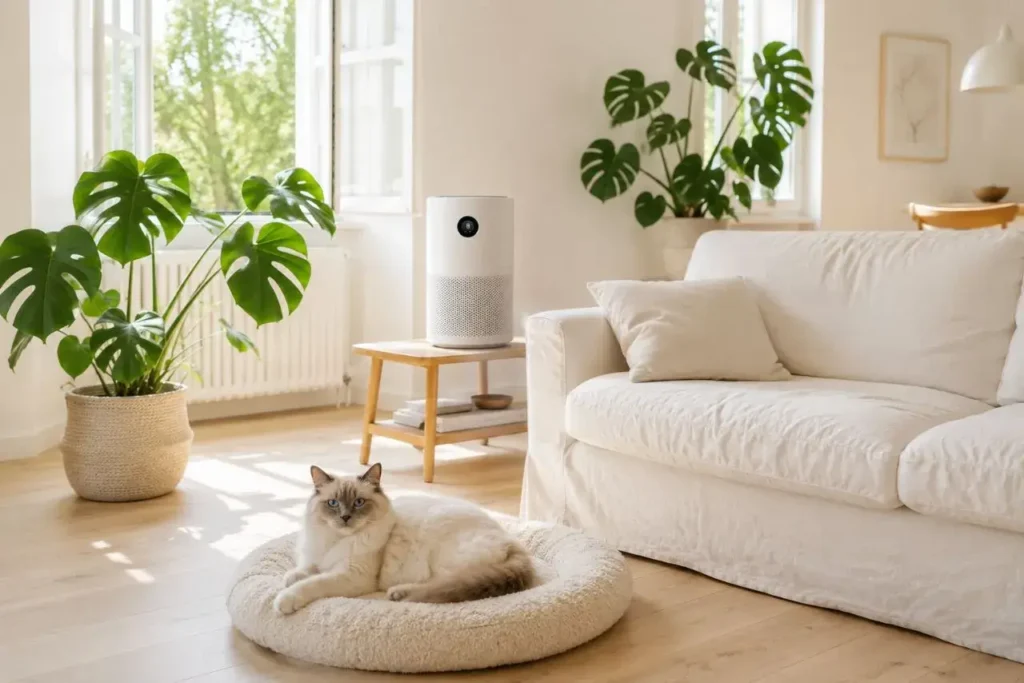
Your home environment matters as much as anything else. A few structural changes help a lot:
Hard floors over carpet. Carpet traps cat dander, pet hair, and allergen particles at levels that are genuinely difficult to clean. Hardwood, tile, or vinyl flooring is far easier to keep allergen-low.
Washable covers on furniture. Use covers that you can throw in the wash weekly. Microfiber and tightly woven fabrics trap fewer particles than loosely woven ones.
Designate cat-free zones. Your bedroom is the priority. A spare room or home office can also stay cat-free if you need a symptom-free retreat.
Clean litter boxes frequently. Cat urine is another source of Fel d 1. Scooping daily and doing a full litter change twice a week keeps this under control.
Avoid heavily scented products. Scented candles, air fresheners, and strong cleaning products can trigger respiratory reactions in both you and your Ragdoll. Unscented products are worth the switch.
Ragdoll Coat Colors and Allergy Considerations
You might have heard that certain coat colors in cats are associated with different allergen levels. There’s some research suggesting that darker-coated cats may produce slightly more Fel d 1, though the evidence isn’t strong enough to make breed selection decisions on coat color alone.
That said, coat type matters more than color. Whether you’re looking at a Pure White Ragdoll Cat or a Tuxedo Black and White Ragdoll Cat, the single-coat structure stays the same across color variations, which is what actually affects shedding and dander distribution.
Treating Allergy Symptoms in Your Ragdoll Cat
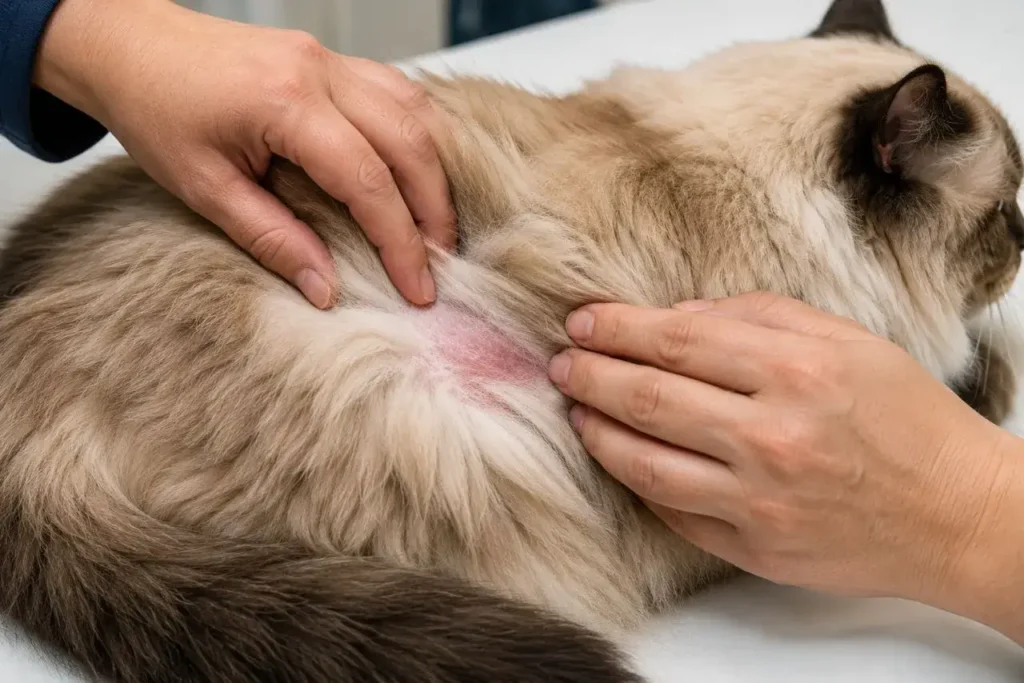
If your cat is the one suffering from allergies, here’s what the treatment process typically looks like.
Vet diagnosis first. Don’t guess. A vet can run allergen testing, skin tests, or recommend an elimination diet for food allergies. Treating the wrong trigger is a waste of time and money.
Antihistamines for cats. Yes, they exist. Your vet may prescribe antihistamines or anti-inflammatory medications depending on the allergy type.
Environmental modifications. For cats with dust mite allergies or pollen allergies, keeping your home cleaner and using HEPA filters helps your cat as much as it helps you.
Diet changes for food allergies. A limited-ingredient diet or a hydrolyzed protein diet removes the most common food triggers. Give it at least 8 to 12 weeks to see results, and don’t introduce new foods during the trial.
Flea prevention. Year-round flea prevention with a vet-recommended product is the most effective way to prevent flea allergy dermatitis in your Ragdoll.
Pros and Cons of Owning a Ragdoll with Cat Allergies
| Pros | Cons |
|---|---|
| Single-layer coat sheds less than most long-haired breeds | Still produces Fel d 1 allergen protein |
| Calm temperament means less agitated grooming | Large body size means more total allergen output |
| Lower shedding reduces airborne dander levels | Long fur can still trap and spread dander |
| Many allergy sufferers report tolerating Ragdolls well | Individual variation means no guarantees |
| Non-matting coat makes regular brushing easier | Requires consistent grooming routine |
How to Test Your Reaction Before Adopting
This is the step most people skip, and it’s probably the most important one.
Before you commit to adopting a Ragdoll, spend time with the specific cat or with the breeder’s adult cats. Visit for an hour or two. Don’t touch your face. See how you feel afterward, and then again 6 to 12 hours later (some reactions are delayed).
Ask the breeder if you can bring a small piece of bedding or a grooming brush home to test your reaction in your own environment over a few days. Reputable breeders understand this request completely.
You can also check comparisons like Snowshoe Cat vs Ragdoll if you’re still deciding between breeds based on allergy considerations.
The Future of Cat Allergy Treatment: What’s Coming
If you’re on the fence about a Ragdoll because of allergies, it helps to know the treatment landscape is actually moving. None of this changes today’s honest answer, no Ragdoll is hypoallergenic, but a few developments are worth watching.
A Vaccine That’s Given to the Cat, Not the Owner
A Swiss biotech company has been developing a vaccine called HypoCat that works in the opposite direction from a typical allergy shot: instead of desensitizing the human, it’s given to the cat. It triggers the cat’s own immune system to produce antibodies that neutralize its Fel d 1 before the protein ever reaches you. In a small field study of cat-allergic owners published in the journal Vaccines, participants tolerated longer petting sessions and reported milder symptoms after their cats were vaccinated. It isn’t commercially available yet, but researchers consider it one of the more promising approaches in development. You can read the peer-reviewed study on PubMed.
Antibody Treatments for Humans
Researchers are also attacking the problem from the human side. As of mid-2026, a Phase 3 clinical trial sponsored by Regeneron is recruiting participants to test injectable Fel d 1 monoclonal antibodies in people with cat-allergy-related conjunctivitis. It’s the same general approach already used for other allergic conditions, and it’s worth watching if your symptoms are more severe than grooming and filtration can manage. Details are listed on ClinicalTrials.gov.
For now, the tools covered earlier in this guide, HEPA filtration, regular grooming, a cat-free bedroom, and allergen-neutralizing food, remain the most reliable way to manage cat allergies with a Ragdoll at home. But if your allergies are borderline, it’s reasonable to expect more medical options within the next few years.
People Also Ask: Ragdoll Cats and Allergies
1. Are Ragdoll cats good for people with allergies?
Ragdolls can be a reasonable option for people with mild to moderate cat allergies because they have a single-layer coat that sheds less than most long-haired breeds. They’re not hypoallergenic, but some allergy sufferers find them more tolerable than other breeds. Individual variation matters a lot, so spending time with a specific cat before adopting is the best way to gauge your own reaction.
2. Do Ragdoll cats produce less Fel d 1?
There’s no strong scientific evidence that Ragdolls produce significantly less Fel d 1 than other breeds. What they do have is a single-layer coat and moderate grooming habits, which means less allergen-carrying fur is distributed around the home. That’s a practical difference, but it’s not the same as producing less of the protein.
3. What are the symptoms of a cat allergy from a Ragdoll?
Cat allergy symptoms from a Ragdoll are the same as from any cat: sneezing, runny nose, itchy eyes, skin hives where the cat touched you, and in more serious cases, wheezing or asthma flare-ups. The severity depends on how sensitive you are and how much allergen exposure you’re getting at home.
4. Can you be allergic to Ragdoll cats but not other cats?
Technically yes, though it’s uncommon. Cat allergies are usually triggered by Fel d 1, which all cats produce. But since individual cats produce different amounts, it’s possible to react more to one cat than another without it being strictly breed-related. If you’ve had cats before without problems, that doesn’t guarantee you won’t react to a Ragdoll, and vice versa.
5. How do I reduce cat allergens in my home with a Ragdoll?
The most effective steps are: use a HEPA air purifier, keep the cat out of your bedroom, vacuum with a HEPA vacuum twice a week, brush your Ragdoll regularly (outside), wash hands after contact, use washable furniture covers, and consider allergy immunotherapy if symptoms are severe. Consistent habits matter more than any single solution.
6. Can Ragdoll cats themselves have allergies?
Yes. Ragdolls can develop food allergies, environmental allergies, allergic rhinitis, inhalant allergies, and flea allergy dermatitis. Common food triggers include chicken, beef, fish, and dairy. Common environmental triggers include pollen, dust, mold, and certain cleaning products. A vet can help identify and treat the specific cause.
7. Are female Ragdoll cats better for allergy sufferers than males?
Generally, yes. Female cats and neutered males produce less Fel d 1 than intact males. If you have cat allergies and are choosing a Ragdoll, a spayed female or neutered male is the better option from an allergy management standpoint.
8. Do Ragdoll kittens cause less allergic reactions than adults?
Kittens produce less Fel d 1 than adult cats, so reactions during the kitten phase may be milder. That can give a false sense of security, as the cat matures and produces more protein, reactions may get worse. Don’t make a permanent adoption decision based only on how you react to a kitten.
9. Do Ragdoll cats make you sneeze?
The question of whether Ragdoll cats trigger allergies is best answered by individuals who have allergies and may be specifically allergic to certain breeds. It’s important to note that Ragdoll cats are not classified as hypoallergenic; however, they tend to shed less than some other breeds. Allergic reactions to cats can vary from person to person, and individuals with allergies should spend time with a specific breed to gauge their personal sensitivity before deciding to bring the cat into their home.
10. Are Ragdoll cats hypoallergenic?
Ragdoll cats are not hypoallergenic. However, due to their lack of an undercoat, they tend to shed less compared to some other cat breeds.
11. Do Ragdoll Cats produce dander?
Dander is produced by all felines and is the most common cause of pet allergies.
12. Is there a cat food that reduces allergies?
Yes. Purina Pro Plan LiveClear is currently the main option on the market. It contains an egg-derived protein that neutralizes Fel d 1 in a cat’s saliva, and Purina’s research showed an average 47% reduction in active allergen on hair and dander after about three weeks of daily feeding. It doesn’t stop a cat from producing Fel d 1 altogether, so it works best combined with HEPA filtration and regular grooming rather than on its own.
13. Is there a vaccine for cat allergies?
There isn’t one available to the public yet, but two approaches are in development. HypoCat is a vaccine given to cats that trains their immune system to neutralize their own Fel d 1. Separately, injectable Fel d 1 monoclonal antibodies for humans are in Phase 3 clinical trials as of 2026. Both are promising, but neither has reached the market, so current management still relies on filtration, grooming, and cat-free zones.
Sources and Further Reading
This guide is based on published research and guidance from allergy and veterinary organizations, not just breeder anecdotes. For deeper reading:
- American College of Allergy, Asthma and Immunology – Pet Allergies
- American Lung Association – Pet Dander and Indoor Air Quality
- Purina – Managing Cat Allergens Research
- PubMed – Immunization of Cats Against Fel d 1 Results in Reduced Allergic Symptoms of Owners
- ClinicalTrials.gov – Fel d 1 Monoclonal Antibody Study, Regeneron (2026)
This article is reviewed and refreshed periodically as new cat-allergy research and treatment options become available. It’s for general informational purposes and isn’t a substitute for advice from a board-certified allergist or a licensed veterinarian, if you or your cat have persistent or severe symptoms, please get checked out by a professional. Last updated September 2026.
Final Thoughts on Ragdoll Cats and Allergies
Living with ragdoll cats and allergies in the same household is genuinely doable for a lot of people. It takes some planning, consistent habits, and honest self-assessment about your sensitivity level, but it’s not some heroic sacrifice either. Millions of cat allergy sufferers share their homes with cats they love.
Ragdolls aren’t a magic solution for people with cat allergies, but their single-layer coat, calmer grooming behavior, and moderate shedding make them one of the more practical long-haired breeds for allergy-prone households. The biggest mistake is assuming you’ll automatically be fine, or automatically be miserable, without testing your own reaction first.
If you’re already dealing with ragdoll allergy symptoms, the combination of HEPA filtration, regular grooming, keeping allergen-free zones, and talking to an allergist will do more for you than switching cat breeds.
And if your Ragdoll is the one with allergy symptoms, get to a vet. The treatment options are good, and most cats do well once the trigger is identified.
Worth keeping an eye on: allergen-neutralizing food is already available today, and vaccines and antibody treatments for cat allergies are moving through research and clinical trials. None of it replaces the basics, but it’s a reason for cautious optimism if you love this breed and your allergies are the only thing holding you back.
Have you managed cat allergies while living with a Ragdoll? Share what’s worked for you in the comments below.