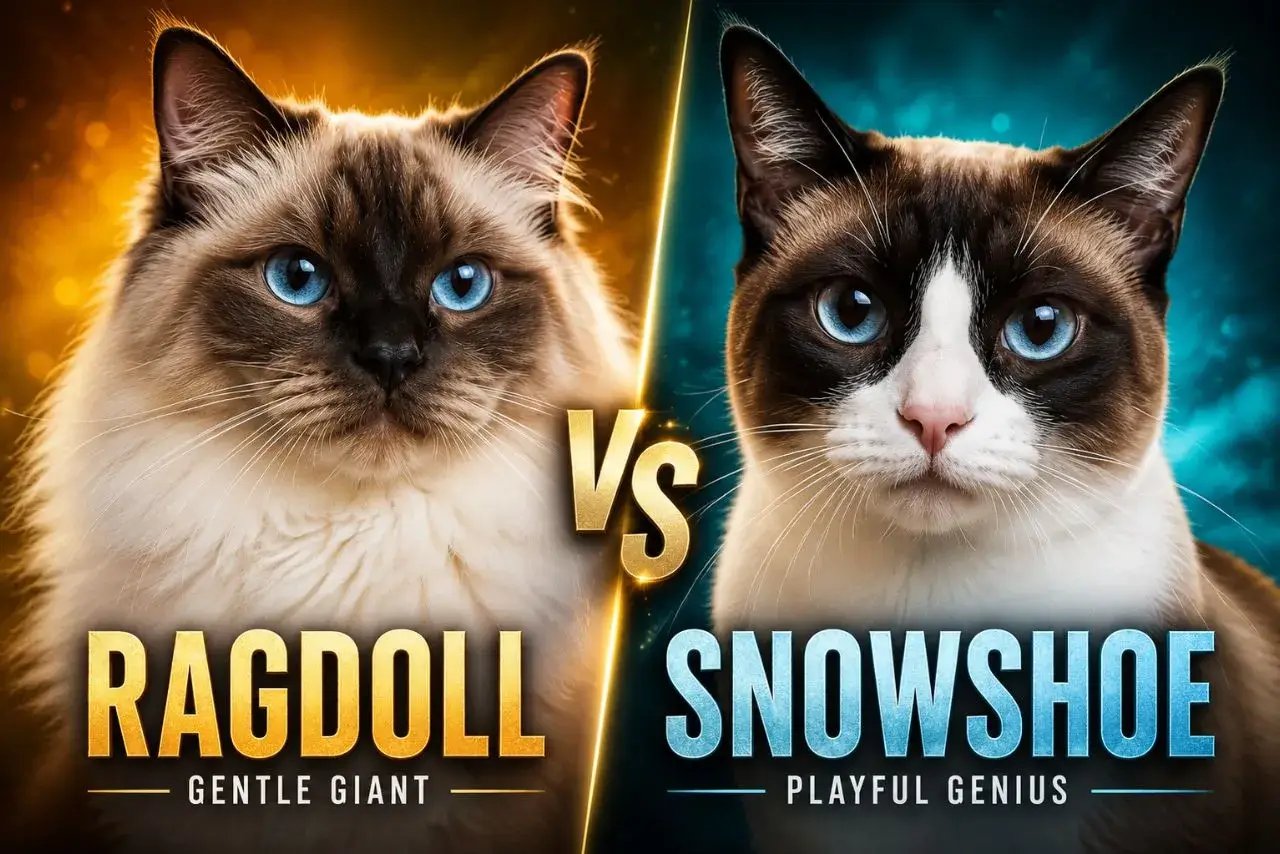
“Snowshoe Cat vs Ragdoll” is a question I’ve been asked more times than I can count. “Which one should I get, the Snowshoe or the Ragdoll?” And every time, I give the same answer: it depends on what kind of cat owner you actually are, not the kind you think you are.
Both Snowshoe cats and Ragdoll cats are blue-eyed, people-loving, and beautiful. On paper, they look almost interchangeable. But spend a week with each, and you’ll notice the differences pretty fast. The Ragdoll cat vs Snowshoe debate comes down to a handful of things: size, coat care, energy level, and how much cat chatter you can tolerate at 7 AM.
I’ve lived with both Ragdoll and Snowshoe cats, and I’ve watched friends pick the wrong breed because they went purely off looks. So let’s go through this side by side, the honest way. Updated September 2026 with cost and adoption info, a quick decision checklist, and a source list.
Snowshoe Cat vs Ragdoll: Breed Origins and History
Where the Snowshoe Cat Came From
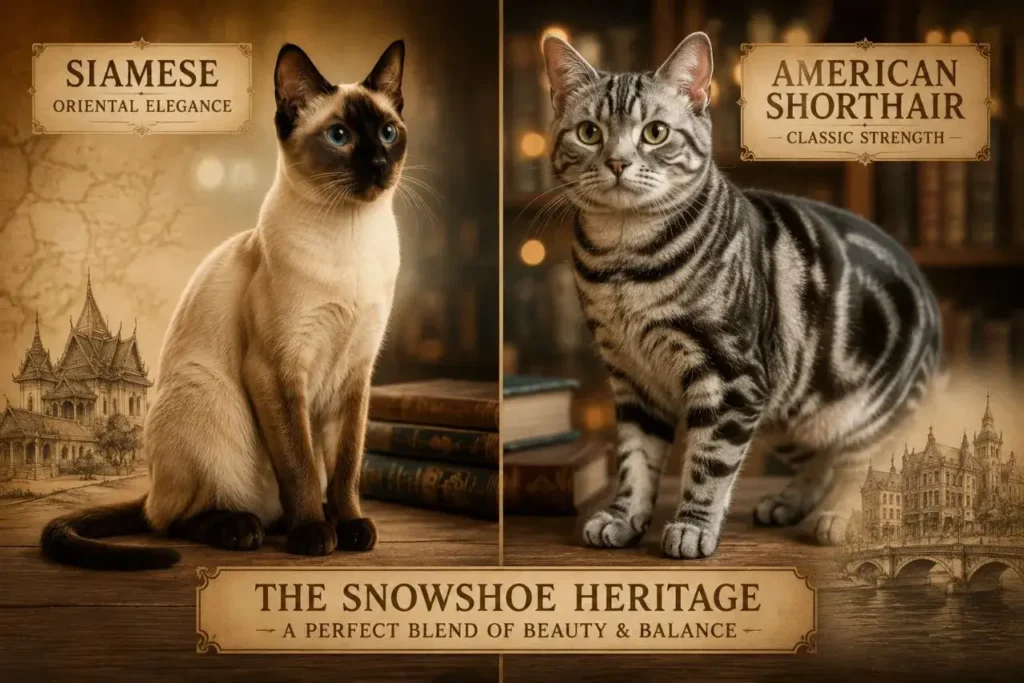
The Snowshoe cat is an American breed. Dorothy Hinds-Daugherty developed it in the late 1960s by crossing Siamese cats with American Shorthairs. The goal was to keep the Siamese’s striking blue eyes and pointed coloring but add white paws and a more solid, athletic build.
The Snowshoe breed received championship status from the Cat Fanciers’ Federation (CFF) in 1982, and the American Cat Fanciers Association recognized it in 1990. It’s still considered a relatively rare breed today compared to many others on the market.
Key facts about Snowshoe Cat History:
- Developed in Philadelphia in the late 1960s
- A cross between Siamese and American Shorthair
- Born completely white, color develops within weeks
- Approved for championship by CFF in 1982 and ACFA in 1990
Where the Ragdoll Cat Came From
The Ragdoll was developed by Ann Baker in California in the 1960s. The original cat, a white longhaired female named Josephine, produced kittens with unusually relaxed, docile temperaments. Baker kept breeding for that trait, and the Ragdoll breed was born.
Ragdolls are sometimes called “daughters of Josephine,” which is actually a pretty sweet nickname. The International Ragdoll Cat Association (IRCA) still exists, though a separate pair of breeders later developed the standard accepted by major registries like TICA and CFA. Today, the Ragdoll Fanciers’ Club International is the largest Ragdoll breed club globally.
Key facts about Ragdoll Cat History:
- Developed in Riverside, California, in the 1960s by Ann Baker
- Known as the “daughters of Josephine” breed
- Named for their tendency to go limp when picked up
- Recognized by TICA and CFA as a pointed cat breed
Size and Physical Appearance: Ragdoll Cat vs Snowshoe
This is where the two breeds start to separate clearly.
Ragdoll Size and Build
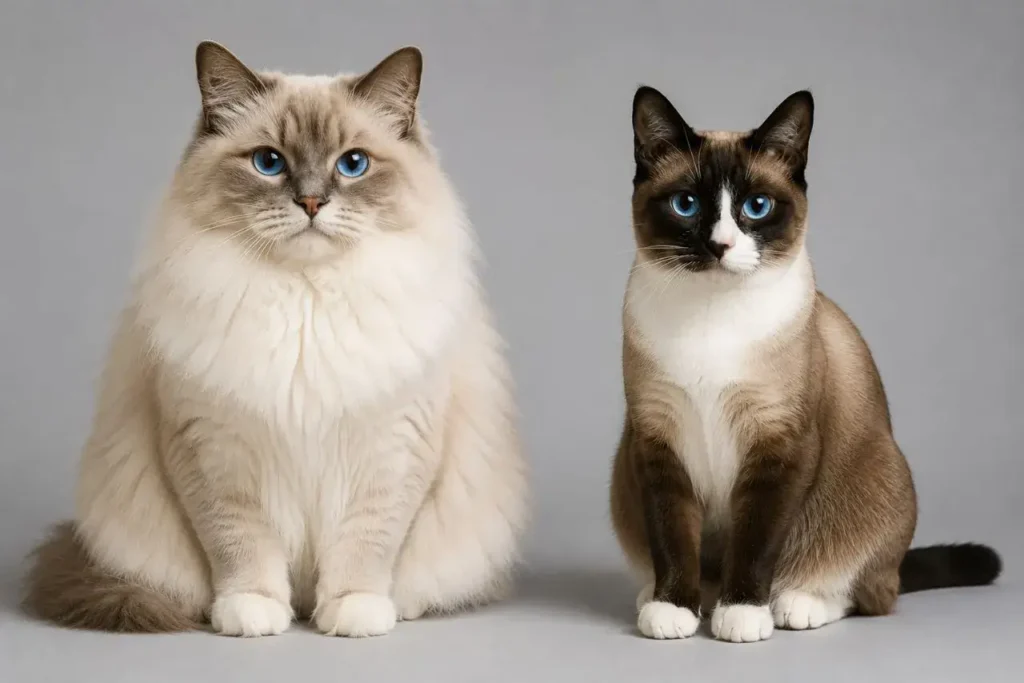
The Ragdoll is a large cat. Males typically weigh between 15 and 20 pounds when fully grown, and females run 10 to 15 pounds. They stand roughly 10 to 12 inches tall. Ragdolls are slow to mature: most don’t reach their full size until around 4 years of age.
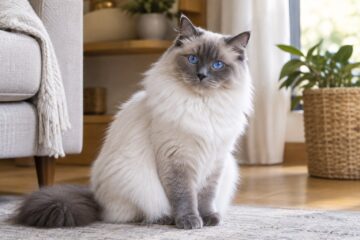
Their bodies are long, heavy-boned, and muscular. The Ragdoll coat is semi-long to long, silky, and has minimal undercoat, which reduces tangling but doesn’t eliminate shedding. Their blue eyes are large, oval-shaped, and one of the most striking things about the breed.
Ragdoll coat colors include seal point, chocolate point, blue point, cream point, and others. They come in 3 patterns: colorpoint, mitted, and bicolor. If you’re curious about the more unusual color variations, check out this guide on the Pure White Ragdoll Cat for a detailed look at how coat genetics play out in the breed.
Snowshoe Size and Build
The Snowshoe cat is medium-sized. Males weigh in at roughly 11 to 15 pounds, females a bit less. They stand 8 to 13 inches tall, so they can overlap with Ragdolls in height but rarely match them in weight.
The Snowshoe’s coat is short and silky with no undercoat. That’s a big practical difference from the Ragdoll. Less grooming, less shedding on your furniture. The Snowshoe’s white paws are its signature feature, along with a darker face mask and those bright blue eyes inherited from its Siamese ancestry.
All Snowshoe cats have blue eyes. That’s a breed standard. Their coloring follows a pointed pattern with white markings, and every individual cat’s exact pattern is different, making no 2 Snowshoes identical.
| Feature | Ragdoll | Snowshoe |
|---|---|---|
| Male weight | 15–20 lbs | 11–15 lbs |
| Female weight | 10–15 lbs | 8–12 lbs |
| Height | 10–12 inches | 8–13 inches |
| Coat length | Semi-long to long | Short |
| Coat texture | Silky, minimal undercoat | Smooth, no undercoat |
| Eye color | Blue | Blue (always) |
| Maturity age | Up to 4 years | 2–3 years |
Temperament Comparison: Which Breed Is More Affectionate?
Ragdoll Personality and Temperament
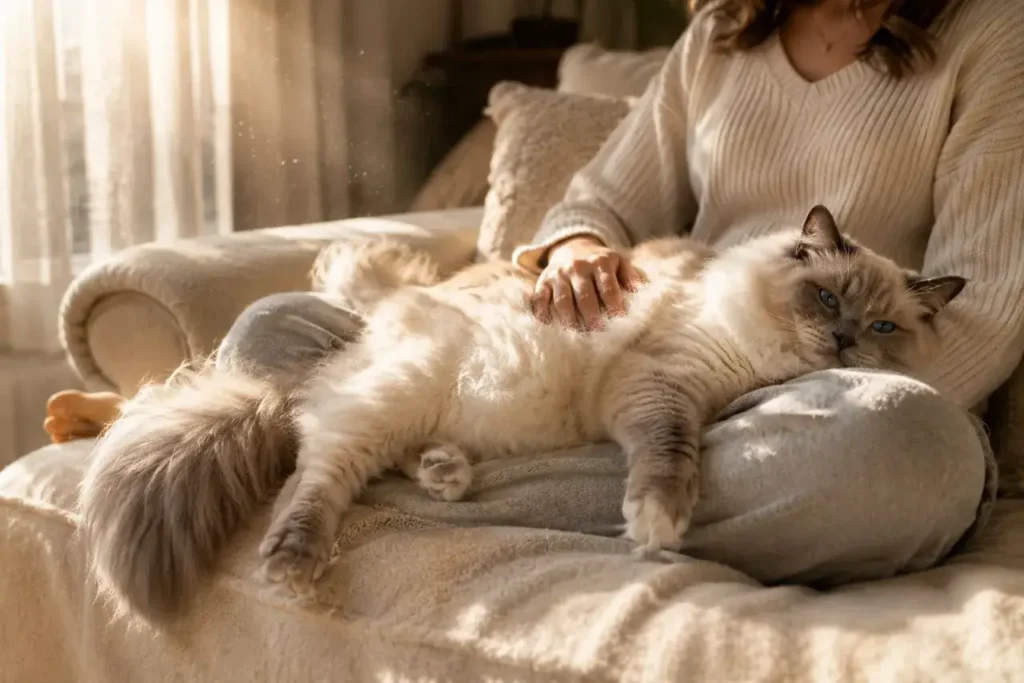
The Ragdoll personality is famously calm. These cats are often compared to dogs in how they follow their owners around the house. They greet you at the door. They’ll learn to play fetch. Some can walk on a leash with enough patience and training.
Ragdolls are lap cats in the truest sense. They go limp when you pick them up (hence the name), and they genuinely love being held and carried. They’re quiet by nature, rarely vocal, and tend to stay low to the ground rather than climbing to the highest shelf in the room.
This makes them a solid choice for families with children, older people, or anyone who wants a cat that’s calm and predictable. They get along well with other pets, including dogs, because they’re not easily rattled.
Ragdoll Personality Traits:
- Docile, calm, and extremely tolerant
- Low tendency to scratch or bite when stressed
- Follows owners from room to room
- Minimal vocalization
- Very dog-like in behavior
- Best suited for indoor living only
One thing to know: Ragdolls are indoor-only cats by most breeder recommendations. Their trusting nature makes them vulnerable outdoors. They don’t read danger the way more independent cats do. If you want to understand more of the Ragdoll personality range, the guide on Ragdoll Himalayan Mix Personality covers how mixed breeds can shift those traits.
Snowshoe Personality and Temperament
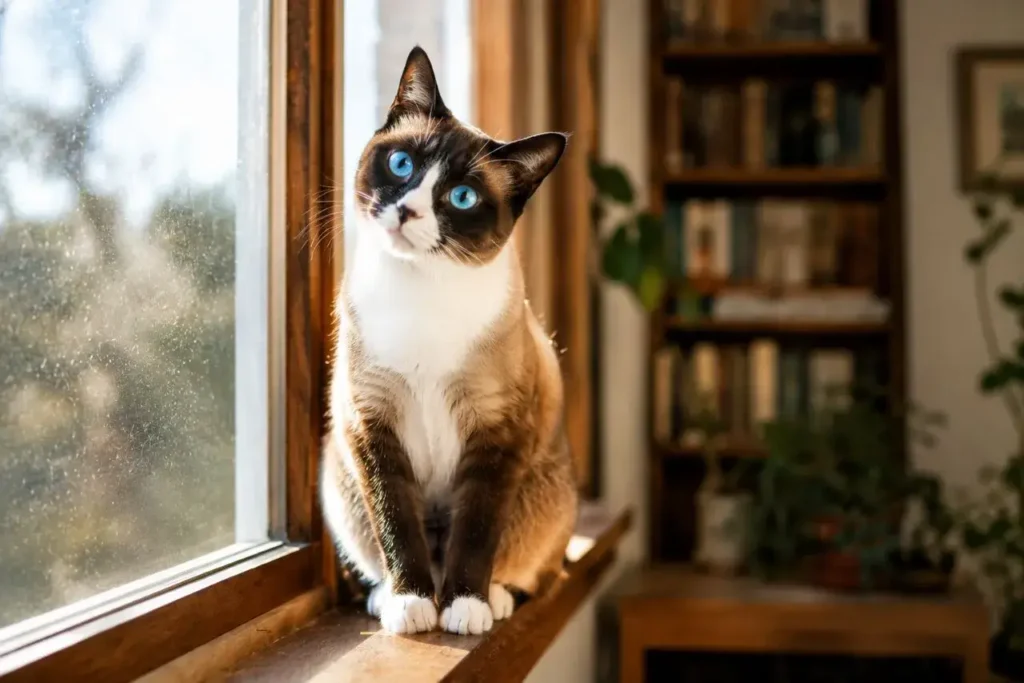
The Snowshoe cat temperament is warmer and more interactive than a lot of people expect. These cats are affectionate and loyal, but they bring Siamese energy into the mix. Snowshoes are more vocal than Ragdolls. They’ll talk to you. A lot. If you’re not home for long stretches, they’ll let you know about it.
Snowshoes tend to bond with one person more closely than Ragdolls do. They’re loyal in a specific, almost possessive way. They can be shy around strangers, which is pretty different from the Ragdoll’s “let everyone hold me” approach.
They’re active cats. They like games, they get bored without stimulation, and they do better in homes where someone is around most of the day. Snowshoes shouldn’t be left alone for long periods. If you have a busy schedule and travel often, a Snowshoe may not be the right fit.
Snowshoe Personality Traits:
- Affectionate but more selective about who they trust
- Vocal and communicative (inherited from Siamese)
- Bonds closely with one primary person
- More energetic and playful than Ragdolls
- Can be shy around new people
- Does not do well with long periods of solitude
Pros and Cons: Ragdoll vs Snowshoe Temperament
| Trait | Ragdoll | Snowshoe |
|---|---|---|
| Pros | Extremely calm, tolerates handling, great with kids | Loyal, interactive, entertaining |
| Cons | Can be too passive, needs indoor-only life | Vocal, separation-sensitive, can be wary of strangers |
Coat Care and Grooming Needs
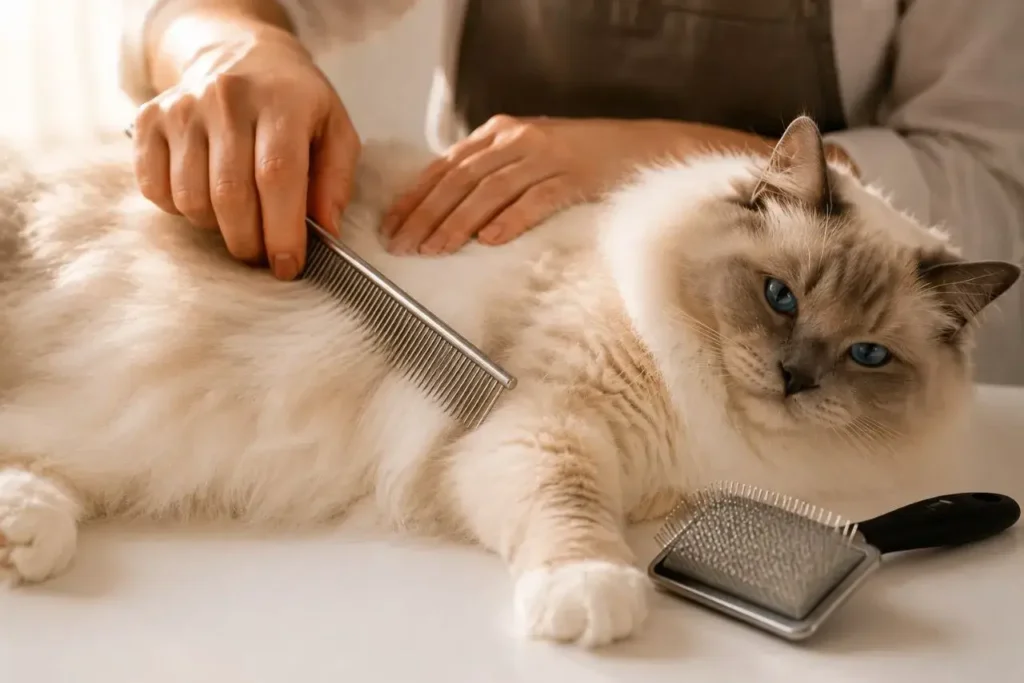
This is one of the most practical differences between the two breeds, and it gets overlooked constantly.
Grooming a Ragdoll
The Ragdoll’s semi-long coat needs brushing at least twice a week. Without regular grooming, the fur can mat, especially behind the ears and in the armpit area. They shed moderately throughout the year with heavier shedding in spring and fall.
You’ll need a stainless steel comb and a slicker brush as basics. Weekly nail trims, regular ear checks, and dental care round out the routine. Ragdolls are generally cooperative with grooming sessions, which helps.
Grooming a Snowshoe
The Snowshoe’s short coat is much lower maintenance. A weekly brush is usually enough to keep it clean and reduce loose hair. They don’t matter. They shed moderately, similar to the Ragdoll, but the shorter hair is less noticeable on furniture and clothing.
Snowshoes still need regular nail trims, ear cleaning, and dental care. But overall, the grooming commitment is noticeably lower than what you’d put into a Ragdoll.
If you’re someone who loves the idea of a longhaired cat but genuinely doesn’t have time for a twice-weekly brush session, the Snowshoe is the more honest choice.
Health and Lifespan: Ragdoll Cat vs Snowshoe
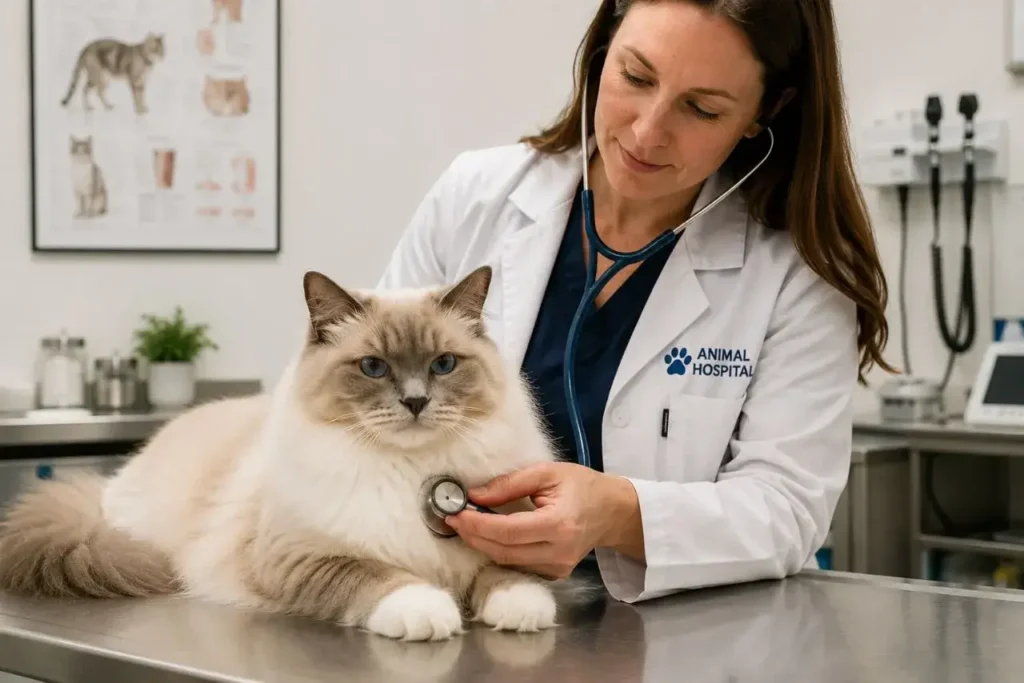
Ragdoll Health Issues
Ragdolls are generally healthy, but they carry a genetic predisposition to a few conditions worth knowing.
Hypertrophic Cardiomyopathy (HCM) is the most common concern. This is a thickening of the heart muscle, and it can affect cats as young as 1–2 years in the juvenile form. Symptoms include labored breathing, loss of appetite, and lethargy. Regular cardiac screening, especially in breeding cats, is strongly recommended.
Other health issues to watch in Ragdolls:
- Bladder stones (uroliths): Ragdolls can be prone to urinary tract issues
- Polycystic kidney disease (PKD): Less common but worth testing for in breeding lines
- Hip dysplasia: Their large, heavy frames put strain on joints over time
Ragdoll Lifespan is typically 12 to 15 years, though well-cared-for cats regularly reach 17–18 years. According to the Cornell Feline Health Center, regular vet checkups and cardiac screening are the best tools for catching HCM early in predisposed breeds.
Snowshoe Health Issues
Snowshoe cats are considered a generally hardy breed. Their Siamese heritage brings one notable concern: amyloidosis. This condition involves abnormal protein deposits in organs like the liver, spleen, and kidneys, and tends to develop between 1 and 5 years of age.
Other conditions Snowshoes can develop:
- Gingivitis and dental disease: Their teeth are prone to gum inflammation, so dental hygiene matters
- Obesity: Snowshoes have good appetites; excess weight raises the risk of diabetes and arthritis
- Strabismus (crossed eyes): Inherited from Siamese lines, generally cosmetic rather than harmful
Snowshoe Cat Lifespan runs 14 to 20 years, which is notably longer than the Ragdoll average.
| Health Factor | Ragdoll | Snowshoe |
|---|---|---|
| Main genetic concern | Hypertrophic cardiomyopathy (HCM) | Amyloidosis |
| Lifespan | 12–15 years | 14–20 years |
| Dental issues | Moderate | More prone to gingivitis |
| Weight management | Moderate concern | Higher concern |
| Cardiac screening needed | Yes | Less common |
Trainability and Intelligence
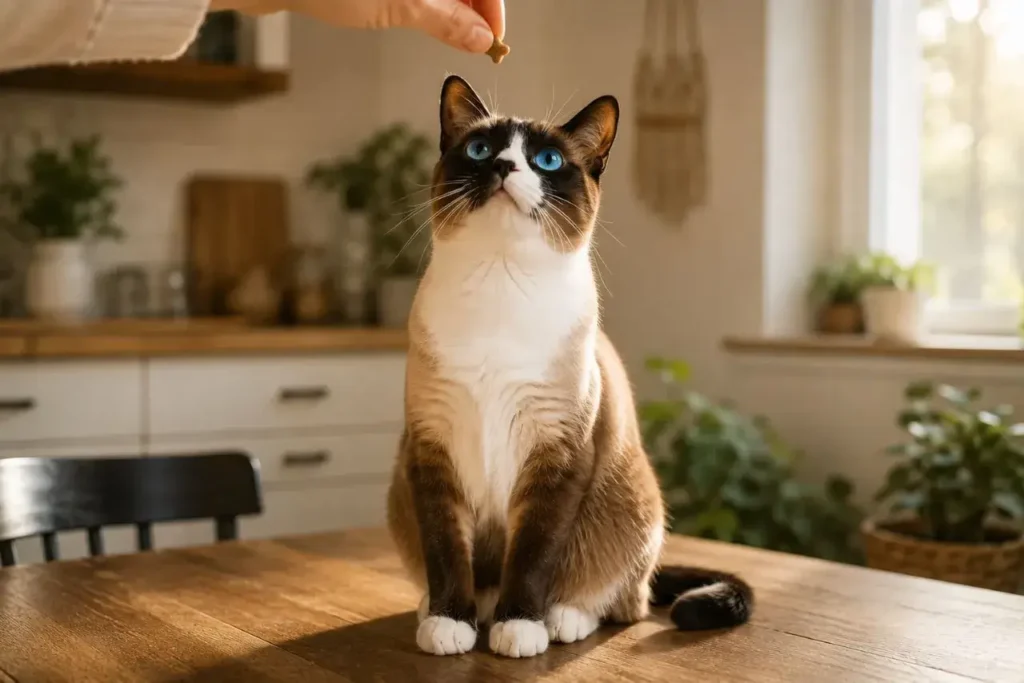
Training a Ragdoll
Ragdolls are intelligent cats. They learn commands like “sit,” “come,” and “stay” faster than most breeds, and they take well to leash training with patience. Their calm temperament makes training sessions easy because they don’t get stressed or distracted easily.
The flip side is that Ragdolls can be a little lazy about applying what they’ve learned. They’ll do it for a treat. Without the treat? Maybe not.
Training a Snowshoe
Snowshoe cats score higher on active trainability. They’re alert, curious, and motivated by interaction. They can learn tricks, respond to their names, and some owners report their Snowshoes figuring out how to open cabinet doors (which is equal parts impressive and inconvenient).
Their Siamese background gives them a sharp, inquisitive mind. Snowshoes do well with puzzle feeders and interactive toys. Mental stimulation is genuinely important for this breed, not optional.
Which Breed Fits Your Lifestyle?
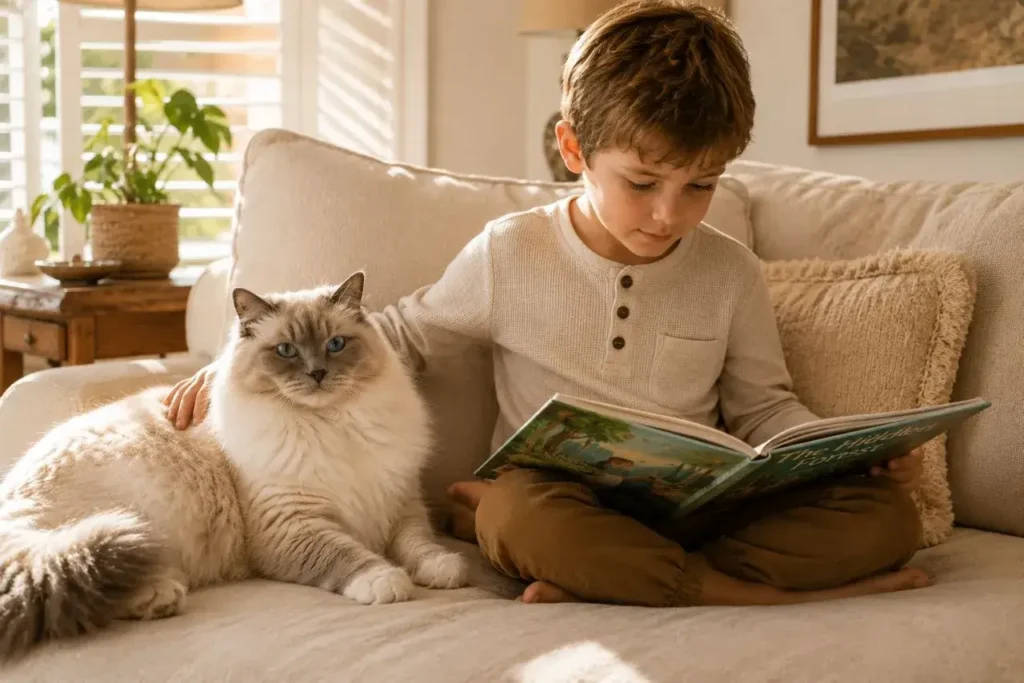
Choose a Ragdoll If:
- You want a calm, low-energy companion who genuinely loves being held
- You have young children or a multi-pet household
- You’re home regularly and want a cat that follows you around
- You don’t mind brushing a longhaired coat twice a week
- You want a large, gentle cat breed
Ragdolls work especially well for first-time cat owners because they’re forgiving. They don’t lash out when mishandled. For owners interested in the breed’s color range, there’s a good breakdown on the Tuxedo Black and White Ragdoll Cat pattern, which shows how varied the breed can look despite sharing the same gentle character.
Choose a Snowshoe If:
- You want an interactive, communicative cat that keeps you entertained
- You have a lower grooming tolerance but still want an affectionate breed
- Someone is home most of the day to keep the cat company
- You enjoy a cat with a bold personality
- You want a breed with a potentially longer lifespan
If you’re also drawn to Siamese personality traits, the Snowshoe might scratch that itch without the extreme vocalization of a purebred Siamese. For a related comparison, the article on Ragdoll Cat Mixed With Siamese covers how Siamese genes shift Ragdoll behavior in mix breeds, which is actually relevant context for understanding the Snowshoe too.
Snowshoe Cat vs Ragdoll: Side-by-Side Comparison Table
| Category | Ragdoll | Snowshoe |
|---|---|---|
| Size | Large (15–20 lbs male) | Medium (11–15 lbs male) |
| Coat | Semi-long, silky | Short, smooth |
| Grooming | Twice weekly brushing | Weekly brushing |
| Temperament | Calm, passive, trusting | Active, vocal, loyal |
| Vocalization | Quiet | Moderately vocal |
| Energy level | Low to moderate | Moderate |
| Best for | Families, first-time owners | Interactive owners, active homes |
| Lifespan | 12–15 years | 14–20 years |
| Main health risk | HCM | Amyloidosis |
| Trainability | Average | Moderate to high |
| Hypoallergenic | No | No |
| Good with kids | Yes | Yes |
| Good with other pets | Yes | Yes |
Similarities Between Snowshoe and Ragdoll Cats
Before you walk away thinking these breeds are completely different, here’s where they genuinely overlap:
- Both have blue eyes as a breed standard
- Both are pointed cat breeds (darker points on face, ears, paws, tail)
- Both are affectionate and people-oriented, not aloof cats
- Both do well with children and other pets
- Both originate from the United States
- Both have a litter size of 2 to 6 kittens
- Neither breed is hypoallergenic
- Both are relatively easy to train compared to independent breeds
The surface-level similarity in appearance is probably why so many people confuse them. But once you dig into daily life with each, the personality and care differences become clear.
How to Tell a Snowshoe Cat Apart From a Ragdoll
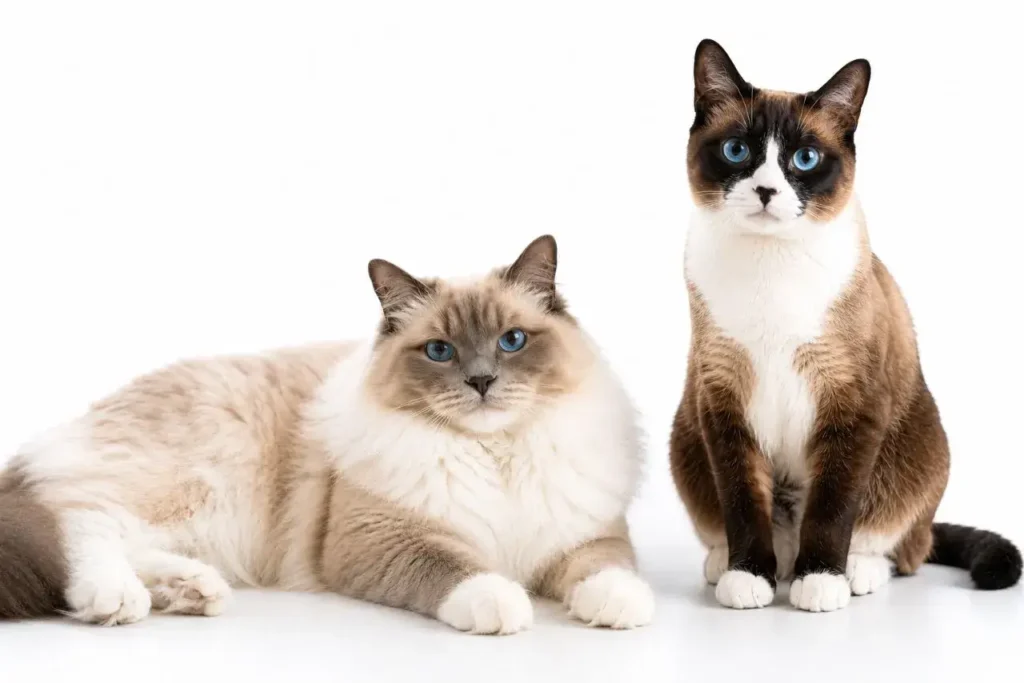
A lot of people see a blue-eyed, pointed cat and can’t tell which breed they’re looking at. Here’s a quick visual guide.
Look for these on a Ragdoll:
- Much larger, heavier frame
- Semi-long, fluffy coat
- Mitted (white-gloved paws) or bicolor pattern with white chest and belly
- Softer, rounder facial features
- Tends to be relaxed even in an unfamiliar environment
Look for these on a Snowshoe:
- More athletic, medium build
- Short, close-lying coat
- Distinctive inverted-V white marking on the face (in many individuals)
- White paws (the “snowshoe” feature)
- More alert, upright posture
- Often more visually “sharp” in expression compared to the Ragdoll’s softer face
According to The Cat Fanciers’ Association, the Ragdoll’s defining trait is its relaxed muscle tone when handled, something no other breed reliably does. That alone is the fastest way to tell the two apart.
Cost Comparison: Ragdoll vs Snowshoe Kittens
Price is a practical factor that a lot of breed comparisons skip, and it’s a real differentiator here.
Ragdoll kittens from a reputable, health-tested breeder typically run $1,200 to $2,500, with show-quality kittens sometimes going higher. Because Ragdolls are one of the more popular breeds in the US, there’s no shortage of breeders, but that also means more variation in quality and health testing standards. Always ask for HCM (heart) screening documentation on the parents.
Snowshoe kittens tend to cost $600 to $1,200 from a breeder, sometimes less, sometimes more depending on how closely the kitten matches the strict facial and paw markings required for show quality. Because Snowshoes are a genuinely rare breed with a small number of dedicated breeders, waitlists are common, expect to wait several months to a year for a kitten from a reputable source.
Both breeds also turn up in shelters and breed-specific rescues, usually for a standard adoption fee ($50 to $200), particularly as mixes rather than purebreds. If budget is the deciding factor, adoption is worth checking first for either breed.
Quick Decision Checklist
If you’re still torn, run through these questions honestly:
- Are you gone 9+ hours a day most weekdays? → Lean Ragdoll. Snowshoes handle solitude poorly.
- Do you want a cat that “talks back” and reacts to your day? → Lean Snowshoe.
- Is grooming time genuinely limited (under 10 minutes a week)? → Lean Snowshoe.
- Do you have toddlers or want the most predictably gentle handling? → Lean Ragdoll.
- Do you want the longest realistic lifespan? → Lean Snowshoe (14–20 years vs 12–15).
- Do you want the largest, most “huggable” cat? → Lean Ragdoll.
If you land on “lean Ragdoll” for most of these, the breed’s temperament will likely suit you well. If most point to Snowshoe, plan on being home more and investing in interactive toys.
People Also Ask: Snowshoe Cat vs Ragdoll FAQ
1. Are Snowshoe Cats Related to Ragdolls?
Snowshoe cats and Ragdolls are not directly related. Snowshoes come from a Siamese and American Shorthair cross. Ragdolls were developed separately from a white longhaired domestic cat. They share blue eyes and a pointed coat pattern, but their genetic lines are distinct.
2. Do Snowshoe Cats Go Limp Like Ragdolls?
No. The Ragdoll’s tendency to go limp when held is a breed-specific trait tied to their unusually relaxed muscle tone. Snowshoe cats are affectionate and enjoy being held, but they don’t display that same “flop” response.
3. Which Is Better for Families, a Ragdoll or a Snowshoe?
Both are good with families. The Ragdoll is typically the better choice for households with very young children because of its calm, tolerant nature. The Snowshoe works well in active families who want a more interactive, playful cat.
4. Are Snowshoe Cats Louder Than Ragdolls?
Yes. Snowshoe cats are considerably more vocal than Ragdolls. They inherited the Siamese’s tendency to communicate, though they’re generally less loud than a purebred Siamese. Ragdolls are among the quieter cat breeds.
5. How Long Do Snowshoe Cats Live Compared to Ragdolls?
Snowshoe cats have a longer average lifespan of 14 to 20 years. Ragdolls average 12 to 15 years. The difference likely relates to the Ragdoll’s genetic predisposition to heart conditions like HCM.
6. Is the Ragdoll Bigger Than the Snowshoe?
Yes. The Ragdoll is one of the largest domestic cat breeds, with males reaching up to 20 pounds. Snowshoe cats are medium-sized, with males topping out around 15 pounds. The size difference is noticeable in person.
7. Do Ragdolls and Snowshoes Get Along With Dogs?
Both breeds tend to do well with dogs. Ragdolls are particularly tolerant of other animals because of their passive temperament. Snowshoe cats can adapt to dogs but may take a bit longer to warm up, especially with high-energy dogs.
8. Which Breed Sheds More, Ragdoll or Snowshoe?
Ragdolls shed more because of their longer coat. Both breeds shed moderately, but the Ragdoll’s semi-long fur is more visible on furniture and clothing. Snowshoe cats have a short coat with no undercoat, so their shedding is easier to manage.
9. Can a Ragdoll Cat Have Black Coloring?
Ragdolls traditionally come in pointed patterns with lighter bodies and darker points, but some color variations do exist. For a detailed look at darker Ragdoll colorings, see this guide on Pure White Ragdoll Cat and the Tuxedo Black and White Ragdoll Cat for context on how far the breed’s color range extends.
10. Are Snowshoe Cats Rare?
Yes. The Snowshoe is considered a rare breed, partly because of the strict markings required to meet breed standards. The exact white paw pattern and facial markings are difficult to reproduce consistently, which keeps the population relatively small.
11. How do I know if my cat is a Snowshoe?
Snowshoes can have either long or short hair and may display a solid color or a tabby pattern, combined with white or other hues. The coloration of a Snowshoe is influenced by the quantity of pigment in their fur. Due to the diversity in sizes and colors, it’s important to note that while your pet may resemble a Snowshoe, it may not necessarily be of the same breed.
12. Are Snowshoe cats affectionate?
Indeed, Snowshoe cats are known for their loving and affectionate nature. They demonstrate strong devotion to their families and reciprocate the love they receive. These felines are characterized by high intelligence, although at times, they can exhibit a touch of stubbornness.
13. Is a Snowshoe cat hypoallergenic?
No. Like Ragdolls, Snowshoe cats are not hypoallergenic, no cat breed truly is. They still produce Fel d 1, the protein responsible for most cat allergies. What Snowshoes do have going for them is a short coat with no undercoat, which means less loose fur circulating around the house than a longhaired breed, but that’s a shedding difference, not an allergen difference. Both breeds shed and both can trigger allergies in sensitive people.
14. Can Snowshoe cats have green eyes?
Purebred Snowshoes are required to have blue eyes under breed standards, so a green-eyed cat with Snowshoe-like markings is more likely a mixed-breed cat carrying some Snowshoe or Siamese ancestry rather than a pedigreed Snowshoe. Ragdolls are also required to have blue eyes as a breed standard.
Sources and Further Reading
This guide draws on breed registry standards and veterinary health resources rather than breeder marketing copy. For deeper reading:
- Cornell Feline Health Center – Feline Cardiomyopathy and Breed Health
- The Cat Fanciers’ Association – Ragdoll Breed Standard
- The Cat Fanciers’ Association – Snowshoe Breed Standard
- The International Cat Association (TICA) – Breed Standards
This article is reviewed and refreshed periodically as breed health and standards information evolves. It’s for general informational purposes and isn’t a substitute for advice from a licensed veterinarian, particularly for cardiac screening or other breed-specific health concerns. Last updated September 2026.
Final Thoughts: Snowshoe Cat vs Ragdoll
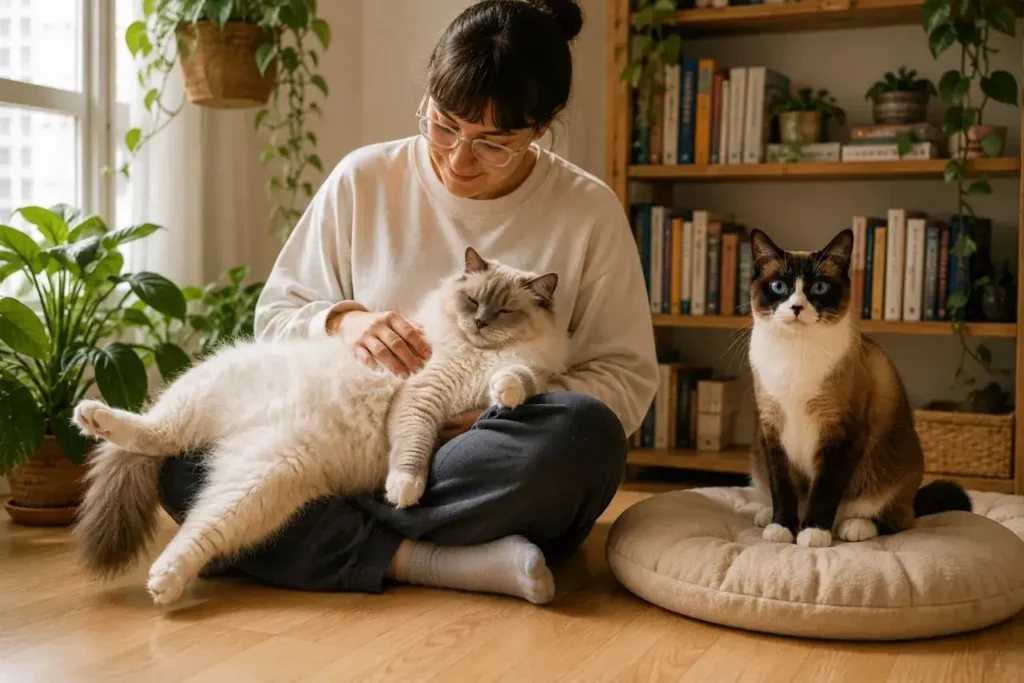
If you’re stuck between Snowshoe cat vs Ragdoll, you’re choosing between 2 genuinely good options. They’re both affectionate, both beautiful, and both going to make someone’s home better.
The honest answer is this: pick a Ragdoll if you want a calm, easygoing companion that won’t demand constant attention and can handle being around kids and other pets without drama. Pick a Snowshoe if you want something a little more alive, a cat that engages with you, talks back a little, and has a longer potential lifespan.
Neither breed is a compromise. They’re just different kinds of great.
If you’re still researching Ragdoll mixes and variations, the article on Ragdoll Cat Mixed With Siamese is worth a read, especially if the Snowshoe’s Siamese-influenced energy appeals to you but you’re still drawn to the Ragdoll’s size and coat.
Drop a comment below with which breed you went with and how it’s working out. Real experiences help more than any comparison chart.