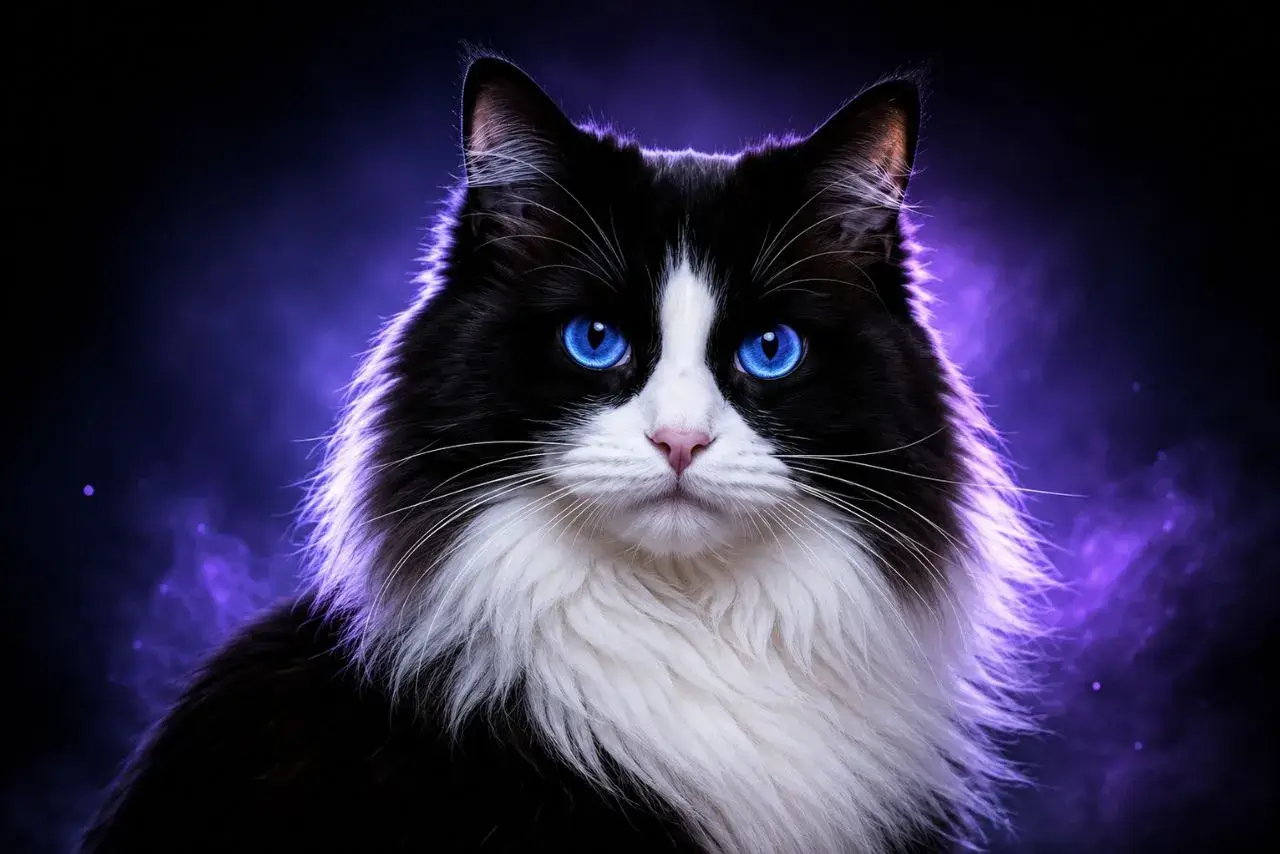
There’s something about a Tuxedo Black and White Ragdoll Cat that stops you in your tracks. The sharp contrast of deep black against bright white, draped over one of the biggest, fluffiest cat bodies you’ll ever see? It’s a lot. In 2021, the CFA named the Ragdoll the most popular cat breed in the world, and the Tuxedo Ragdoll takes that already-beloved breed and gives it a visual edge that’s hard to ignore.
I’ve spent years around Ragdoll Cats, and I’ll be honest: the first time I saw a Black and White Ragdoll, I thought someone had photoshopped a tuxedo onto a giant stuffed animal. They’re that striking. But there’s plenty more to know beyond the good looks, from the genetics behind the Tuxedo Coat Pattern to whether you can even find one from a reputable breeder.
This guide covers it all, including a quick checklist to gauge how much real Ragdoll lineage your cat likely carries. And if you’re curious about other rare Ragdoll color variations, check out our guides on the Dark Gray Ragdoll Cat and the Tortoiseshell Calico Ragdoll Cat. Updated September 2026.
What Is a Tuxedo Black and White Ragdoll Cat?
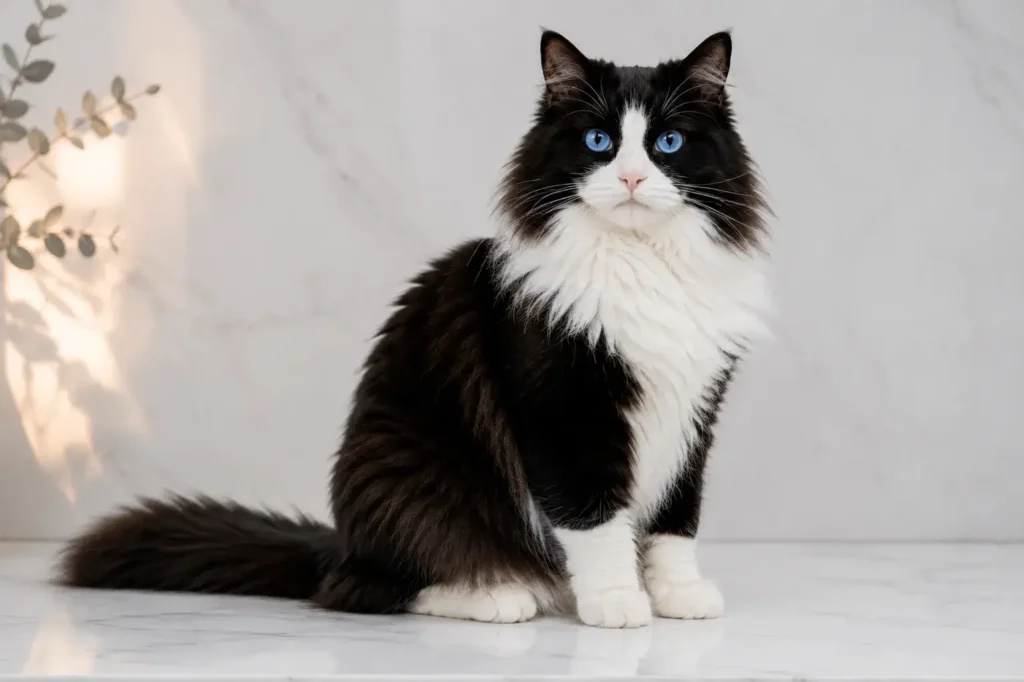
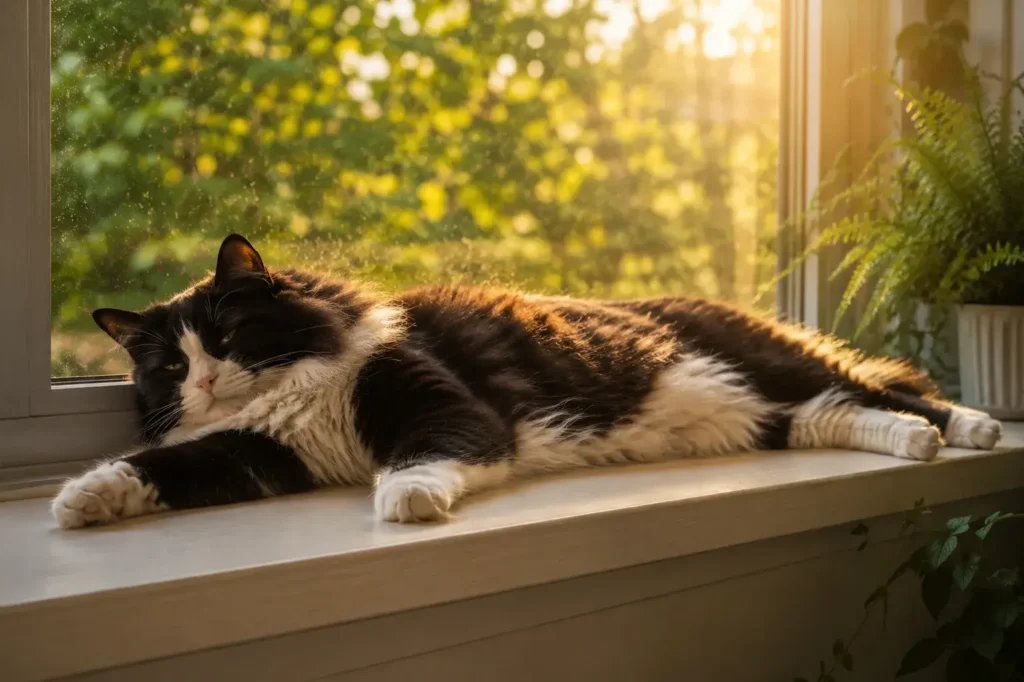
A Tuxedo Black and White Ragdoll is exactly what it sounds like: a Ragdoll cat, or Ragdoll-lineage cat, with a black and white bicolor coat that mimics the look of a formal tuxedo jacket. Dark coloring covers the back and upper body. White appears on the chest, belly, paws, and parts of the face.
The name “tuxedo” is a coat pattern descriptor, not a breed. It shows up across dozens of domestic cat breeds. But when that pattern lands on a Ragdoll’s large, silky, semi-long-haired frame, often paired with those signature blue eyes, the result is something genuinely special.
A few things to know upfront:
- The Tuxedo Ragdoll is not recognized as an official Ragdoll color by the CFA, TICA, ACFA, or Cat Fanciers’ Federation.
- Recognized Ragdoll Point Colors are seal, blue, chocolate, lilac, red, and cream. Black and white falls outside this list.
- These cats can’t be registered or shown as purebred Ragdolls, regardless of their parentage.
- That said, they can be genuinely Ragdoll in lineage, and they carry every bit of the breed’s famous personality.
Whether or not a show ribbon matters to you, the Tuxedo Black and White Ragdoll is a real, beautiful, and deeply affectionate cat worth knowing about.
The Genetics Behind the Tuxedo Coat Pattern
How Does the Tuxedo Pattern Form?
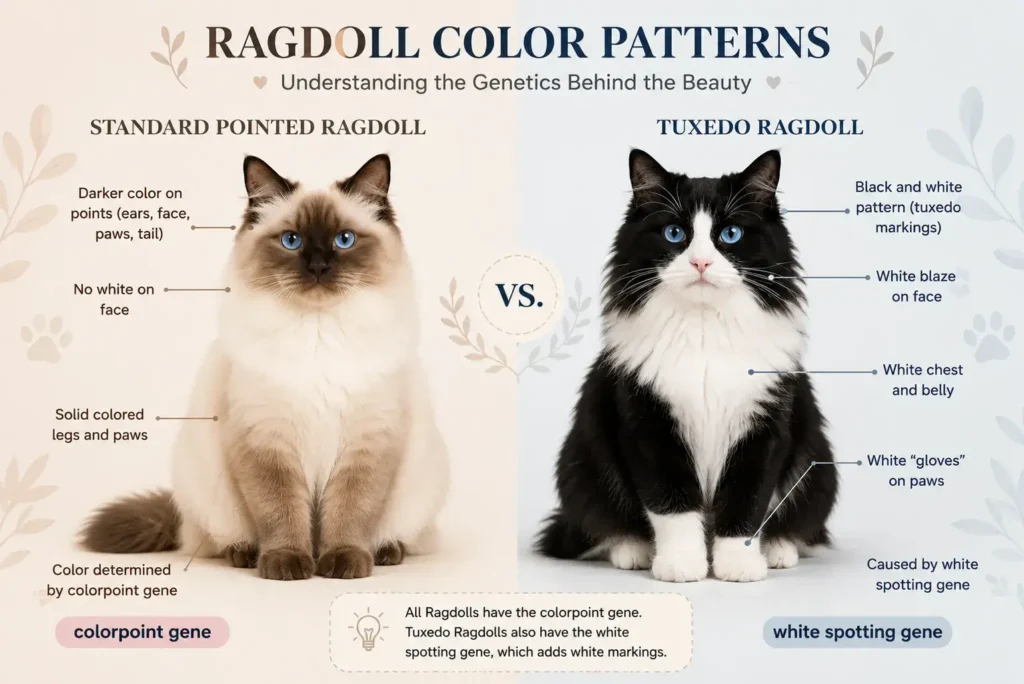
The Tuxedo Coat Pattern in cats results from the interaction between two genes: the gene responsible for black coloring and the White Spotting Gene (also called the S gene or piebald gene).
Most standard Ragdoll Cats carry the colorpoint gene (cs), which restricts pigmentation to the cooler areas of the body: ears, face, paws, and tail. That gives them their classic pointed look, and it’s not the same mechanism that produces a Tuxedo Pattern.
In a Tuxedo Ragdoll, the white spotting gene interrupts pigment production in specific patches of the body, while the base coat stays black or dark. The result is clean white on the chest, belly, chin, paws, and sometimes the face, with deep black everywhere else.
This is actually a partially random genetic event during embryonic development, which is part of why no two tuxedo cats have identical markings.
Why Are Tuxedo Ragdolls Rare?
Reputable breeders producing standard Ragdolls don’t intentionally breed for the Tuxedo Pattern. It’s outside the breed standard, so they actively avoid selecting for it. But the white spotting gene can be carried silently in a cat’s DNA. Two pointed Ragdoll parents who both carry the gene can produce a Tuxedo Ragdoll Kitten without either parent displaying the pattern. This is why Tuxedo Ragdoll Kittens sometimes appear as surprises in otherwise standard litters.
So yes, Tuxedo Black and White Ragdoll Cats are rare, but they do genuinely exist, and they’re not a product of crossbreeding in every case.
Pros and Cons of the Tuxedo Black and White Ragdoll Cat
| Pros | Cons |
|---|---|
| Visually striking, one-of-a-kind coat pattern | Not recognized by CFA, TICA, or ACFA |
| Same gentle, affectionate Ragdoll personality | Cannot be shown in sanctioned Ragdoll competitions |
| Rare, so you’ll likely be the only one in your neighborhood | Harder to find from reputable, registered breeders |
| Blue eyes possible in purebred-lineage individuals | Mixed-breed individuals may have green or yellow eyes |
| Large, soft, semi-long coat looks spectacular | Requires regular grooming (2-3 times per week) |
| Long lifespan of 12-18 years with proper care | Predisposed to HCM, so vet screening is recommended |
Appearance: What Does a Tuxedo Ragdoll Look Like?
Size and Body Structure
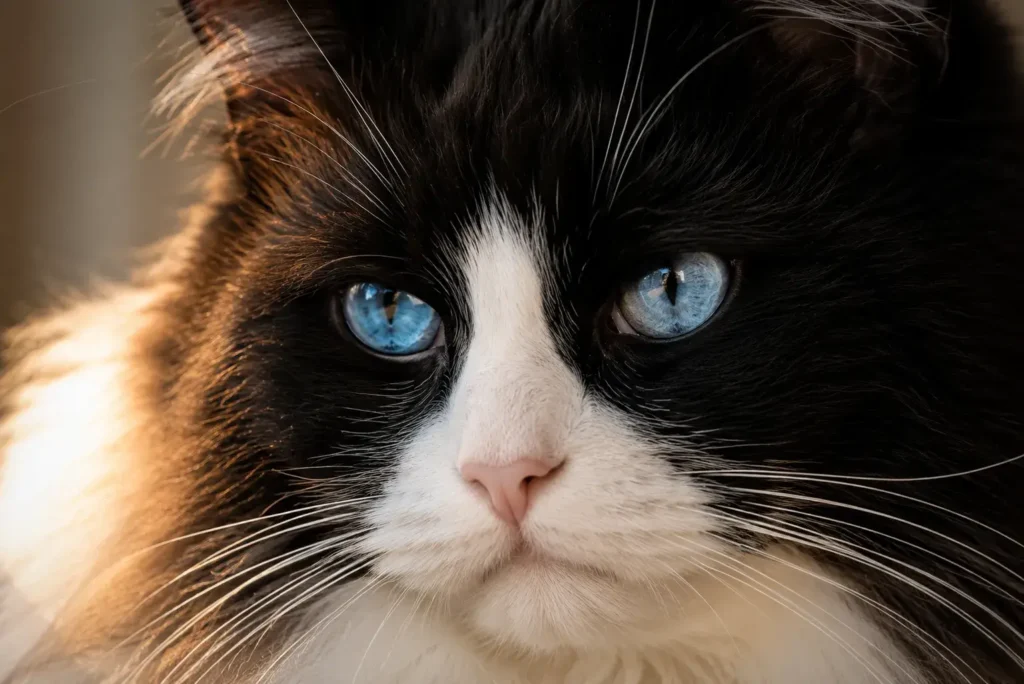
Tuxedo Ragdolls share the same large, muscular body as all Ragdolls. This is not a small cat. Adult males typically weigh between 15 and 20 pounds. Females run a bit lighter at 10 to 15 pounds. They have broad chests, long bodies, well-muscled limbs, and a large, bushy tail.
The semi-long, silky coat is one of the most distinctive features of the Ragdoll breed, and it makes the black and white contrast of the tuxedo pattern look even more dramatic. The fur lies beautifully flat and feels softer than most other long-haired breeds.
Coat Pattern Distribution
Most Tuxedo Black and White Ragdolls display:
- Deep black on the back, head, and sides
- White on the chest, belly, chin, and front paws
- Sometimes, a white blaze running down the face
- Occasional white patches on the back legs
Because the white spotting gene expression isn’t perfectly predictable, every Tuxedo Ragdoll has a unique coat. Some look almost perfectly symmetrical. Others have a more scattered, asymmetric pattern. Both are equally valid and often equally beautiful.
Eye Color
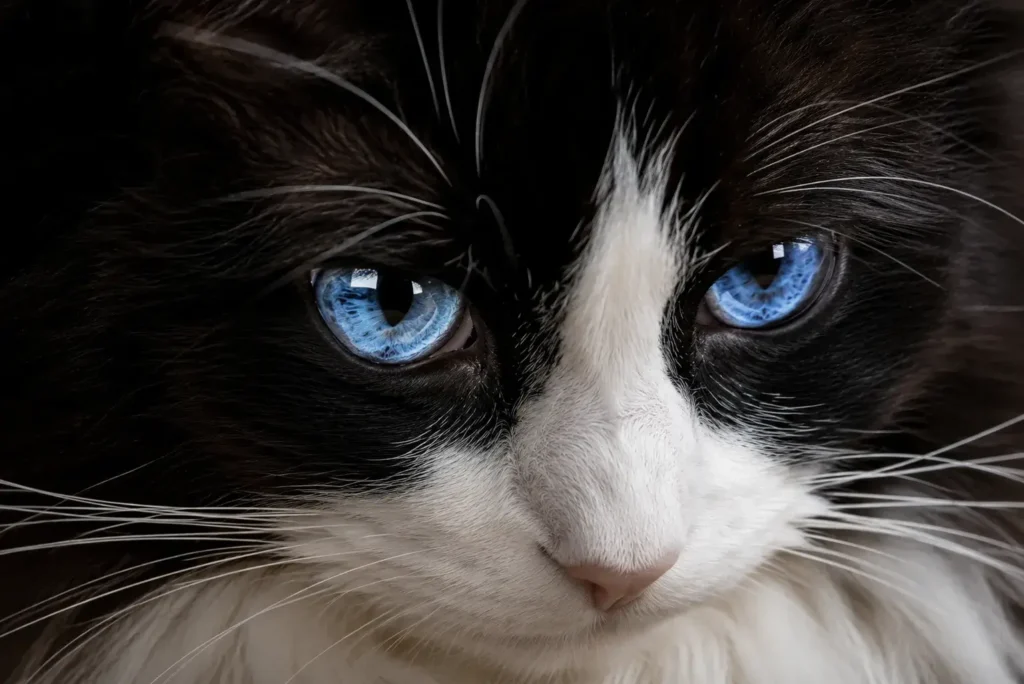
In purebred-lineage Tuxedo Ragdolls, eye color is typically vivid blue. The Ragdoll’s colorpoint gene can influence eye color even in non-standard coat patterns, and the deep blue eyes against a black and white coat are arguably the most striking visual combination the cat world has to offer.
In mixed-breed Tuxedo Ragdolls where non-Ragdoll genetics are involved, green or yellow eyes are common. A Black and White Ragdoll with blue eyes is rarer and generally points to a stronger Ragdoll lineage.
Personality and Temperament
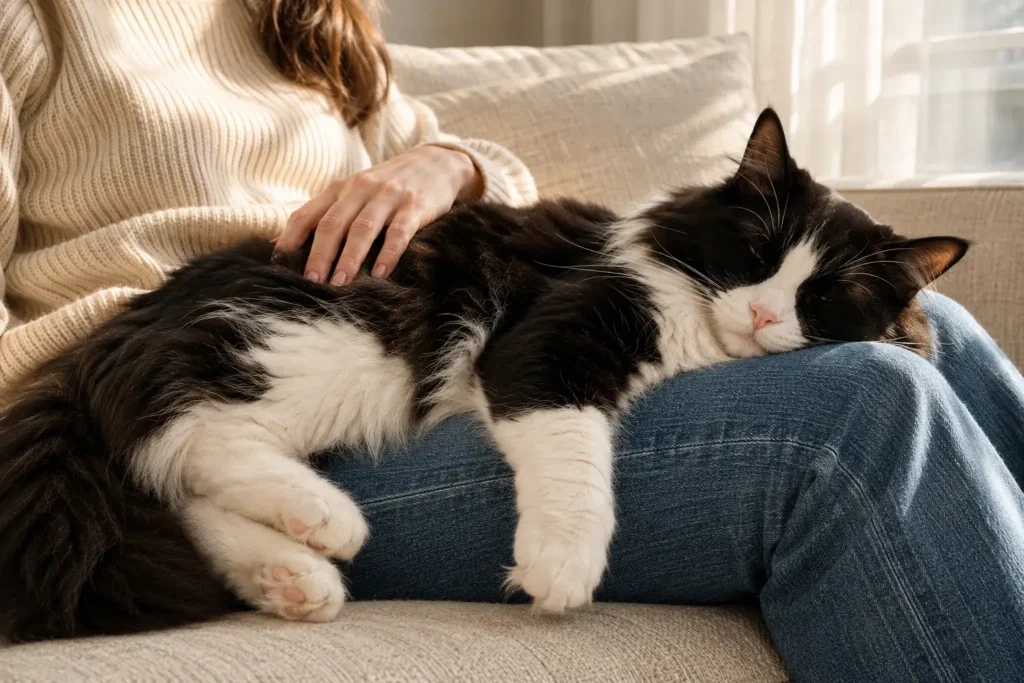
Here’s the thing about Tuxedo Black and White Ragdolls: the coat color has zero effect on personality. And that’s good news, because the Ragdoll Temperament is one of the main reasons people fall so hard for this breed.
What to Expect Day-to-Day
Tuxedo Ragdolls are calm, affectionate, and deeply people-oriented cats. They follow their owners from room to room. They’ll settle next to you on the couch and just… stay there. They’re not demanding or loud about it; they’re just quietly devoted.
The famous Ragdoll “flop” is that full-body relaxation when picked up, like holding a warm, heavy stuffed animal. It shows up in Tuxedo Ragdolls just as reliably as in any other color variation. It’s a physical expression of trust, and it never gets old.
They’re also:
- Patient with children: they tolerate handling well and rarely extend claws during play
- Good with other pets: calm enough to coexist peacefully with dogs and other cats
- Quiet communicators: they vocalize, but softly and infrequently
- Intelligent and trainable: they respond well to positive reinforcement and can learn simple commands and even some tricks
They’re genuinely one of the most easygoing cat breeds you’ll find. First-time cat owners do great with them. Families with young kids do great with them. Older people do great with them.
If you’re considering a mix of Ragdoll genetics, it might also be worth reading about Ragdoll Himalayan Mix Personality to understand how personality traits stack up in crossbreeds.
Are Tuxedo Ragdolls Purebred?
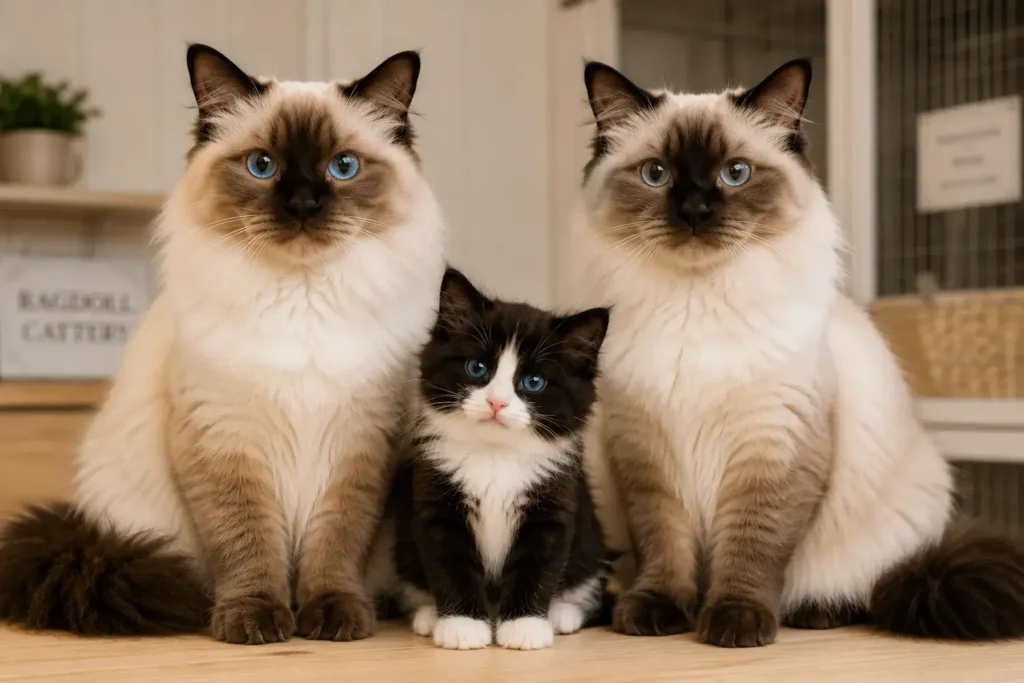
This is where things get a bit more involved, and it’s worth understanding clearly before you shop.
Purebred-Lineage Tuxedo Ragdolls
A Tuxedo Ragdoll can come from two TICA or CFA-registered Ragdoll parents if both carry the white spotting gene silently. In this case, the cat is genetically entirely Ragdoll. But because the Tuxedo coat pattern falls outside the breed standard, it cannot be registered or shown as a purebred Ragdoll.
So: fully Ragdoll genetics, zero registration eligibility. If you don’t care about shows, this cat is the real deal.
Mixed-Breed Tuxedo Ragdolls
Alternatively, a Black and White Ragdoll may be a mixed-breed cat with partial Ragdoll lineage, bred from a Ragdoll parent and a domestic tuxedo-patterned cat. These cats may share Ragdoll personality traits strongly or less so, depending on what they’ve inherited.
How to Verify Lineage
If a seller claims their Tuxedo Ragdoll Kitten is a rare purebred without providing TICA or CFA registration papers for both parents, be skeptical. Legitimate options to verify lineage include:
- Requesting breeding documentation from both parents
- DNA testing through services like Basepaws or Wisdom Panel
Don’t let anyone charge you premium purebred prices without the paperwork to back it up.
Quick Checklist: How Much Ragdoll Is in Your Tuxedo Cat?
If you already own a black and white cat and you’re trying to gauge how much genuine Ragdoll is behind the look, work through these points:
- Weight check: Is your adult cat over 10 pounds (female) or 15 pounds (male)? Strong Ragdoll lineage tends to show up in size first.
- Coat check: Is the fur semi-long and silky rather than short or coarse? Ragdolls lack a dense undercoat, so the coat lies flatter than a typical domestic longhair’s.
- Eye color check: Blue eyes are a strong (though not certain) sign of Ragdoll ancestry. Green or yellow eyes lean toward a mixed or non-Ragdoll background.
- Temperament check: Does your cat go noticeably limp and relaxed when picked up, follow you room to room, and stay calm around handling? This is the single strongest behavioral signal of real Ragdoll genetics.
- Paperwork check: Do you have any breeder documentation at all, even informal? No paperwork doesn’t rule out Ragdoll lineage, but it does mean you’re relying on appearance and behavior alone.
Checking most of these boxes suggests strong Ragdoll ancestry, even without papers. Checking few of them just means you have a lovely tuxedo cat with a less certain family tree, which doesn’t make it any less worth loving. If you want more certainty, a cat DNA test like Wisdom Panel or Basepaws can estimate breed ancestry from a simple cheek swab.
Caring for Your Tuxedo Black and White Ragdoll Cat
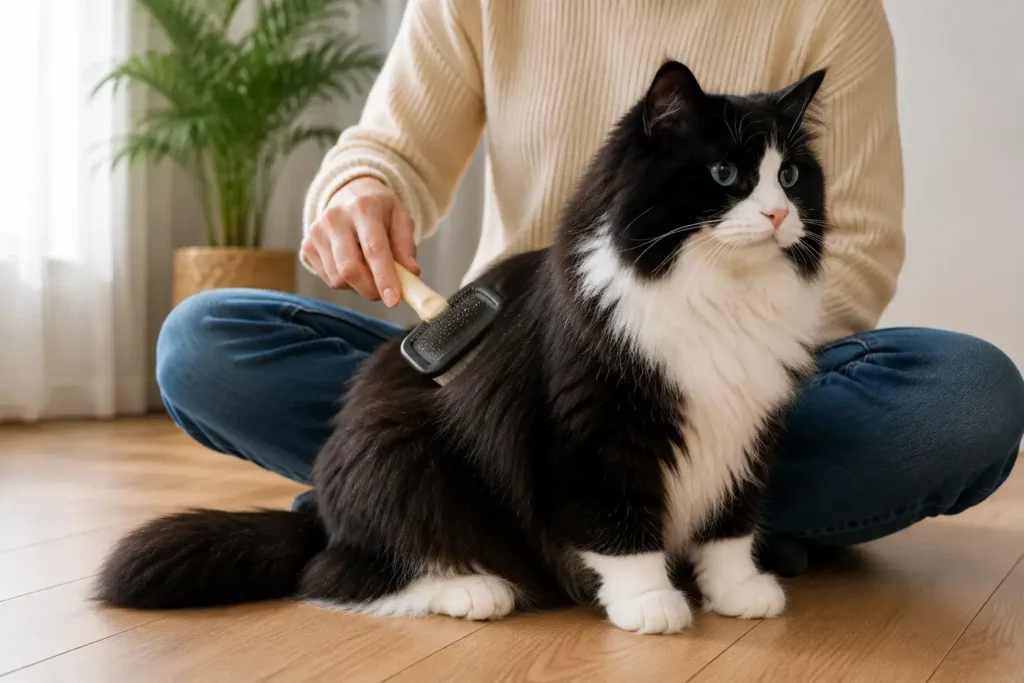
Grooming
Tuxedo Ragdolls need brushing 2 to 3 times per week to keep their semi-long coat tangle-free. A slicker brush works well for daily maintenance; a wide-tooth comb helps with any mats that start forming near the belly and armpits, which are the most common trouble spots.
One practical note specific to the black and white coat: you will see fur on everything. Black fur on white surfaces, white fur on dark surfaces. Consistent brushing cuts down on shedding significantly and is genuinely necessary, not optional.
Beyond Brushing:
- Trim nails every 2 to 3 weeks
- Clean ears gently as needed (check for wax buildup weekly)
- Brush teeth regularly with cat-safe toothpaste, since dental disease is common in all cat breeds
Diet and Nutrition
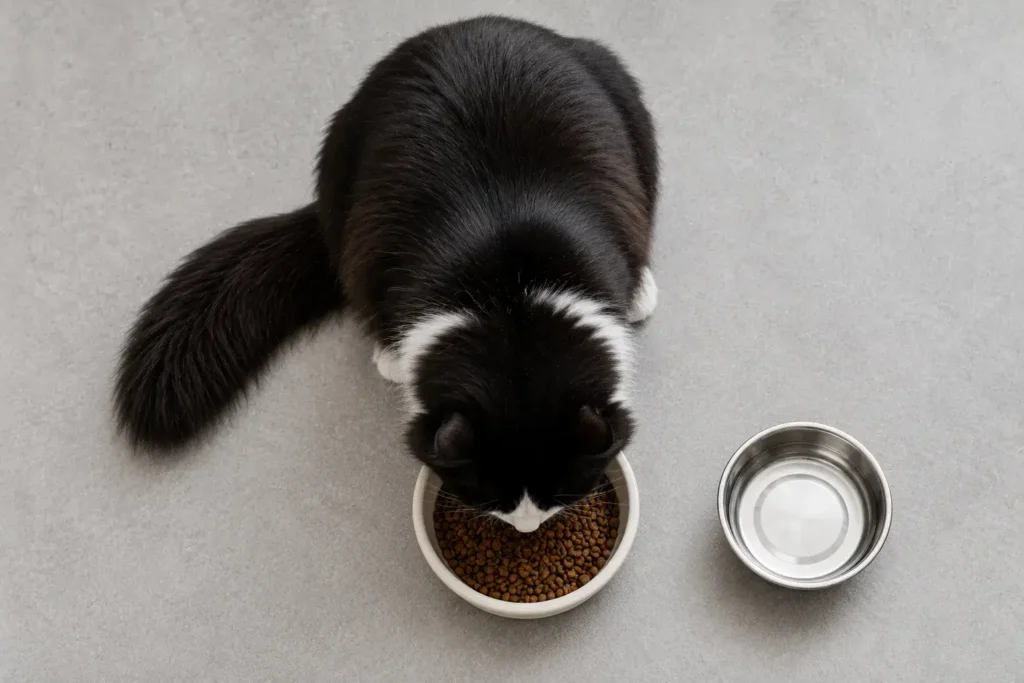
Feed your Tuxedo Ragdoll a high-quality cat food appropriate for their size and life stage. Given their large frame, they need good protein content. Consult your vet on portion sizes because Ragdolls can be prone to weight gain if free-fed.
Fresh water should always be available. Many Ragdolls prefer running water, and a cat fountain can help with hydration, which matters for kidney health over time.
Exercise and Enrichment
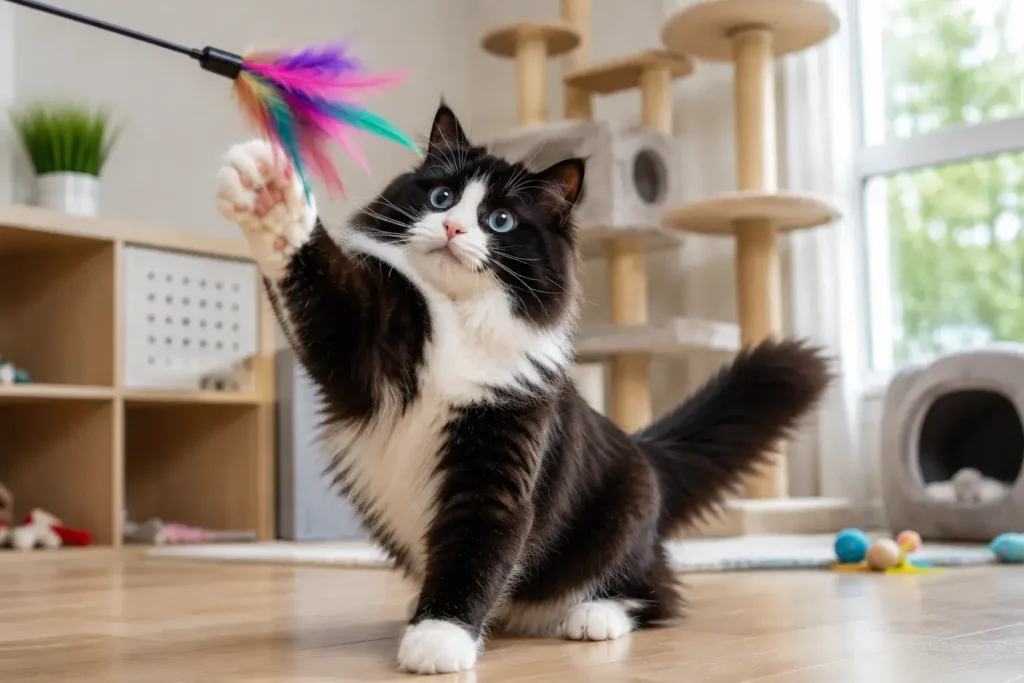
Tuxedo Ragdolls are calm cats, but they still need daily activity. Aim for at least 15 to 20 minutes of active play per day. Wand toys, feather toys, and puzzle feeders all work well. They’re not frantic about it: they play, then they’re done, then they want to sit next to you.
Scratching posts are non-negotiable. These are big, heavy cats who need sturdy vertical scratching structures that won’t tip over.
Health and Veterinary Care
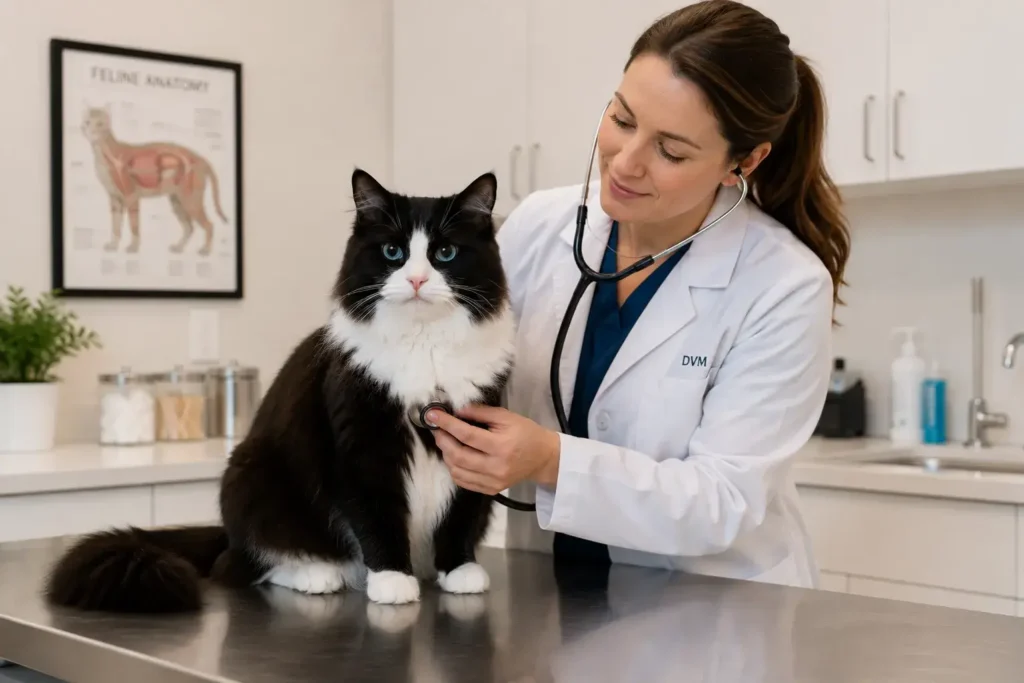
Ragdolls, including Tuxedo Ragdolls, are predisposed to two inherited conditions:
- Hypertrophic Cardiomyopathy (HCM): The most common heart disease in cats and a known concern in the Ragdoll breed. Reputable breeders screen for this. Ask for documentation.
- Polycystic Kidney Disease (PKD): Also worth screening for in Ragdoll-lineage cats.
Annual vet visits, up-to-date vaccinations, and flea/tick/worm prevention are standard. With good care, Tuxedo Ragdolls typically live between 12 and 18 years, which is longer than many breeds.
If you’re interested in other white-coated Ragdoll variations and how they compare in care requirements, the Pure White Ragdoll Cat guide is worth a read.
How Much Does a Tuxedo Black and White Ragdoll Cost?
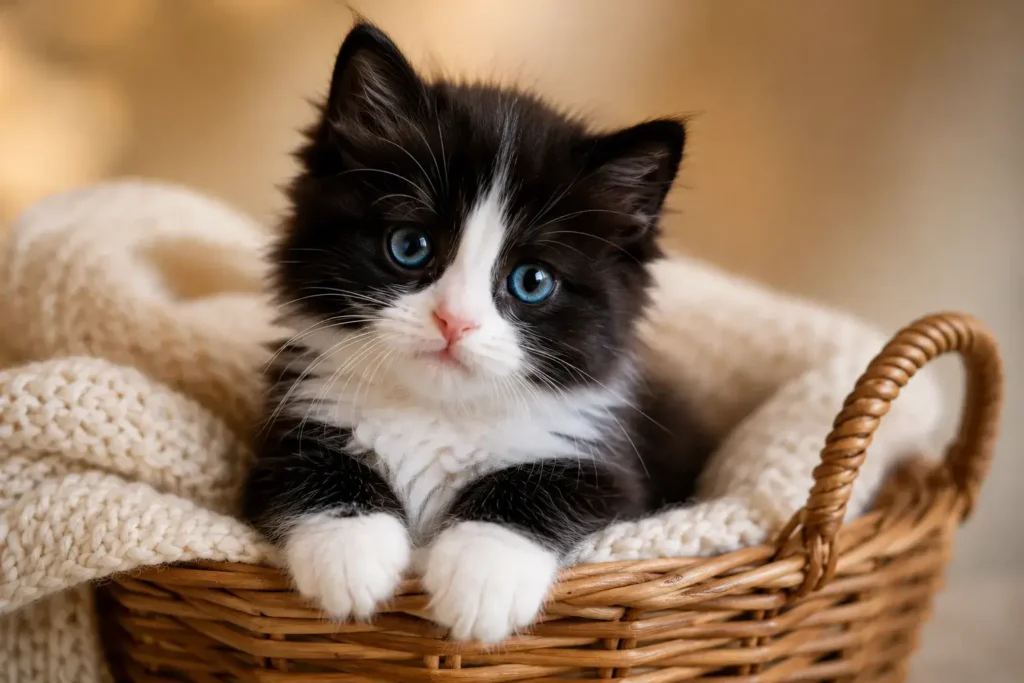
Price varies quite a bit depending on lineage:
| Type | Price Range |
|---|---|
| Purebred lineage from a registered breeder | $2,000 to $5,000 |
| Mixed-breed with Ragdoll lineage | $200 to $800 |
| Shelter/rescue adoption | Under $200 |
Purebred-lineage Tuxedo Ragdolls are priced in line with standard Ragdoll kittens from reputable breeders, sometimes slightly higher due to their rarity. Mixed-breed black and white Ragdoll cats cost significantly less and can make equally wonderful pets.
According to the International Cat Association (TICA), the Ragdoll breed has a documented reputation for its docile, calm temperament, and that personality trait holds whether your cat costs $300 or $3,000.
Where to Find a Tuxedo Ragdoll Cat or Kitten
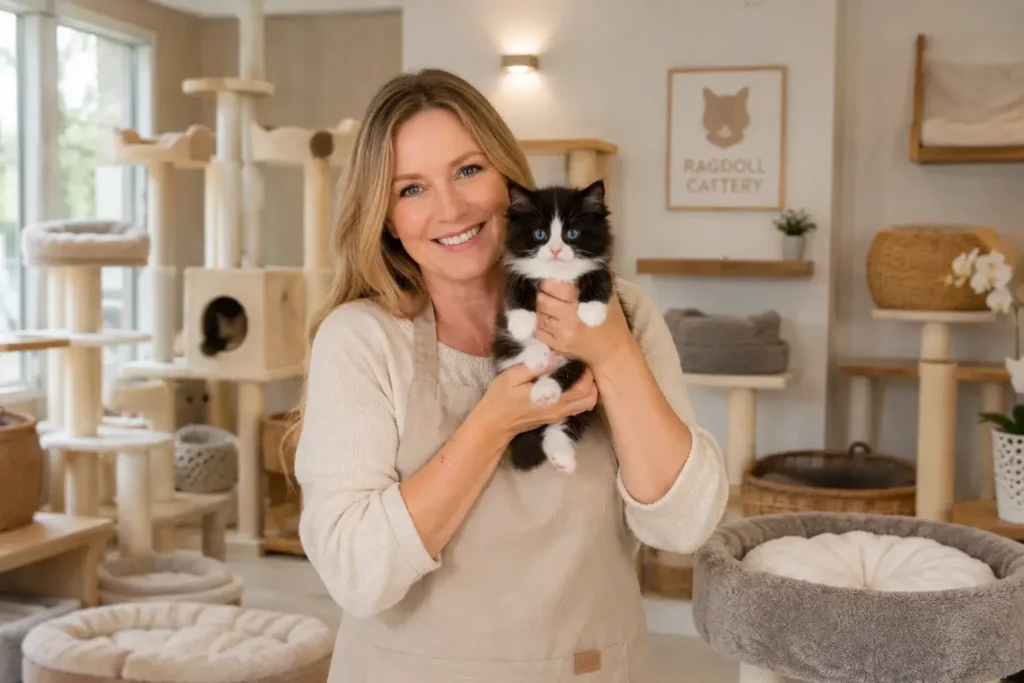
Finding one takes patience. Here’s where to look:
Reputable breeders: Start with breeders registered with TICA or CFA. Not all will produce Tuxedo Ragdolls; most won’t intentionally, but some do work with black and white Ragdoll lineage. Ask directly and ask for health testing documentation.
Ragdoll rescue organizations: Organizations like Ragdoll Rescue USA sometimes have unusual color variations come through. It’s worth checking. According to the Cat Fanciers’ Association (CFA), adoption from shelters and rescues remains one of the most responsible ways to bring a cat home.
Local shelters: Mixed-breed Tuxedo Ragdolls do show up in shelters. If you’re open to a cat with partial Ragdoll lineage rather than pure breeding, this is a genuinely great option.
Key questions to ask any breeder:
- Have both parents been screened for HCM and PKD?
- Can I see registration papers for both parents?
- At what age do you release kittens? (Should be 12-16 weeks minimum)
- What vaccinations will the kitten have before going home?
Tuxedo Ragdoll Cat vs Other Black and White Cats
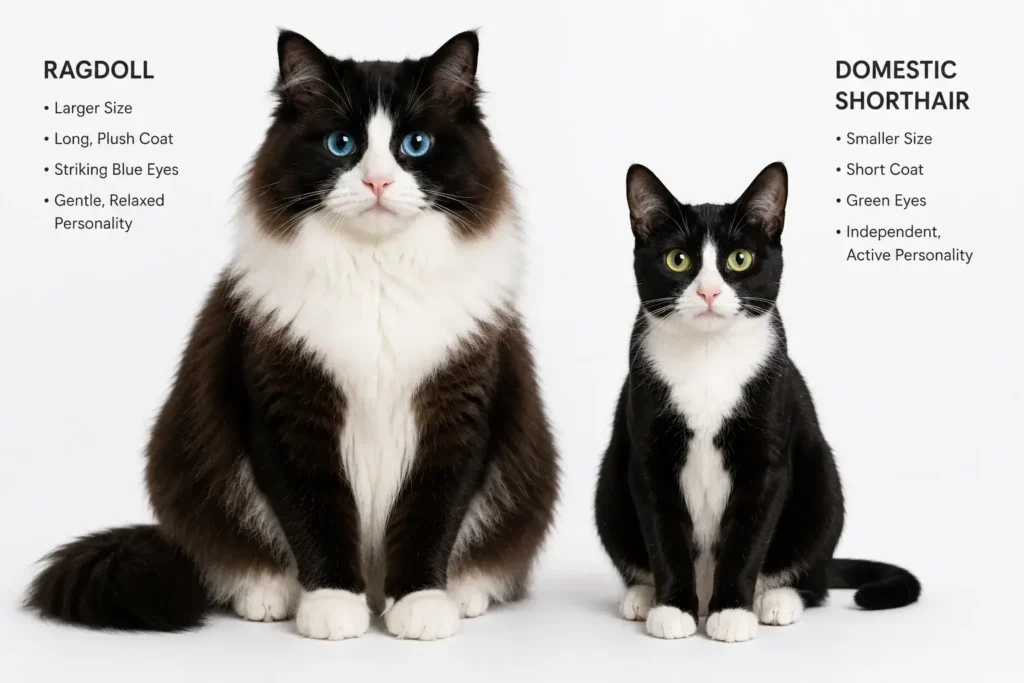
The Tuxedo pattern shows up in many breeds: domestic shorthairs, Maine Coons, American Shorthairs, and others. So what makes the Tuxedo Ragdoll different?
| Feature | Tuxedo Ragdoll | Standard Tuxedo Cat |
|---|---|---|
| Size | 10-20 lbs | Usually 8-12 lbs |
| Coat | Semi-long, silky | Varies (short or medium) |
| Eye color | Often blue (purebred lineage) | Typically green or yellow |
| Personality | Exceptionally calm, floppy, people-bonded | Varies by breed/individual |
| Lifespan | 12-18 years | 12-16 years typical |
| Recognition status | Not recognized as purebred Ragdoll | Tuxedo pattern recognized in many breeds |
The size and temperament differences are real. A Tuxedo Ragdoll is a noticeably larger, calmer, and more people-oriented cat than the typical domestic tuxedo cat.
People Also Ask: Tuxedo Black and White Ragdoll Cat FAQs
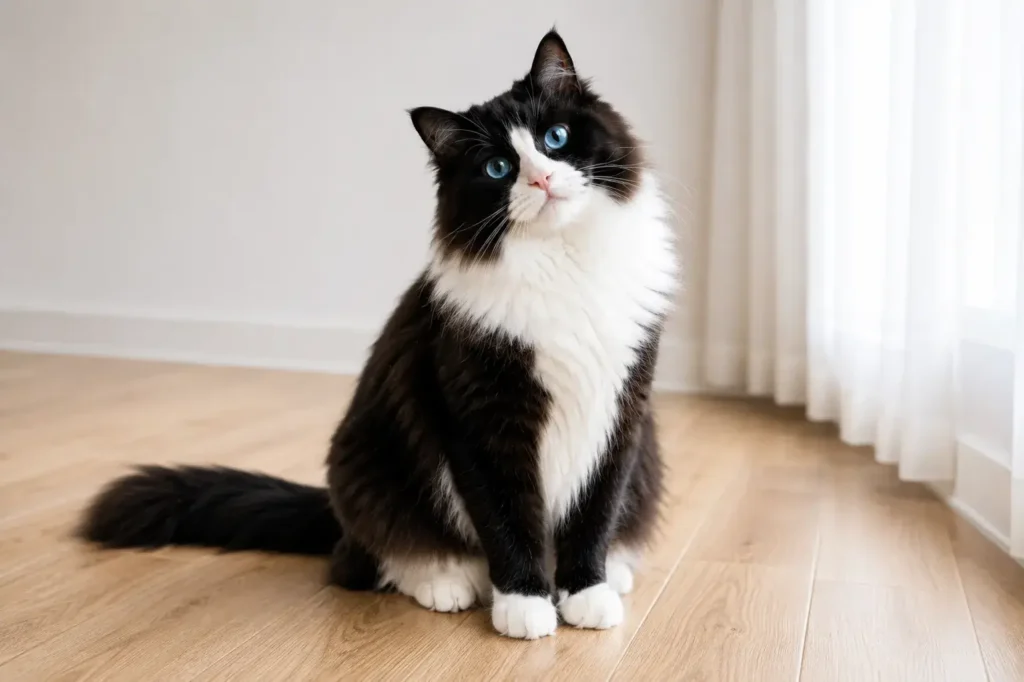
1. Can Ragdoll Cats be Black and White?
Yes. Black and White Ragdoll Cats exist, though they’re rare. The tuxedo pattern isn’t recognized in the official Ragdoll breed standard, but it can appear in cats with genuine Ragdoll lineage when the white spotting gene is present in both parents. It can also appear in Ragdoll-mix cats.
2. Are Tuxedo Ragdoll Cats rare?
Yes. Among registered Ragdolls, the Tuxedo pattern falls outside the accepted breed standard, so reputable breeders don’t intentionally breed for it. It appears occasionally as a genetic surprise in standard litters, or more commonly in mixed-breed Ragdoll cats.
3. What eye color do Tuxedo Ragdoll Cats have?
Purebred-lineage Tuxedo Ragdolls often have blue eyes, since the Ragdoll’s colorpoint gene can influence eye color even in non-standard coat variations. Mixed-breed black and white Ragdolls more commonly have green or yellow eyes. Finding a black and white Ragdoll with blue eyes is genuinely rare and typically indicates strong Ragdoll lineage.
4. How long do Tuxedo Ragdoll Cats live?
With proper care, Tuxedo Ragdoll cats typically live between 12 and 18 years, consistent with the Ragdoll breed’s documented lifespan. Regular vet care, a quality diet, and screening for inherited conditions like HCM all contribute to a longer, healthier life.
5. Are Tuxedo Ragdolls good with children?
Yes. Tuxedo Ragdolls share the Ragdoll breed’s famously gentle, tolerant nature. They rarely extend claws during play, tolerate handling well, and are patient with young children. Supervised interactions are always a good idea with any cat and small kids, but Ragdolls are among the best breeds for family households.
6. Do Tuxedo Ragdoll Cats require a lot of grooming?
More than a short-haired cat, but not as much as some other long-haired breeds. Brushing 2 to 3 times per week is the main requirement. The semi-long Ragdoll coat doesn’t mat as severely as a Persian or Himalayan, but it does shed, especially seasonally. With the black and white coat, you’ll notice fur on furniture more than with a single-colored cat.
7. Are Tuxedo Ragdolls Hypoallergenic?
No. Like all Ragdolls, Tuxedo Ragdolls produce the Fel d 1 protein, which is the primary allergen in cat dander. They’re not hypoallergenic. Some people with mild cat allergies find Ragdolls more tolerable due to their grooming habits and coat texture, but there’s no guarantee.
8. What is the Difference between a Tuxedo and a bicolor Ragdoll?
The bicolor Ragdoll is an officially recognized pattern within the breed standard, typically showing an inverted “V” of white on the face, white paws, and a white belly with colored points. The tuxedo pattern is distinct from this. It involves a black base coat with white spotting, rather than the pointed coloration of standard bicolor Ragdolls. Standard bicolor Ragdolls are not black and white in the tuxedo sense; they have seal, blue, chocolate, or lilac point coloring with white.
9. Where can I find a Tuxedo Black and White Ragdoll Cat for sale?
Start with TICA or CFA-registered breeders who work with black and white Ragdoll lineage. Ragdoll rescue organizations are also worth contacting, since unusual color variations do come through adoption. Local shelters may have Ragdoll-mix tuxedo cats available. Always verify health testing and breeding documentation before purchasing.
10. How much does a Tuxedo Ragdoll Kitten cost?
Purebred-lineage Tuxedo Ragdoll kittens from registered breeders typically cost $2,000 to $5,000. Mixed-breed black and white Ragdolls with partial lineage typically run $200 to $800. Shelter adoption is usually under $200.
11. Do Tuxedo Ragdoll kittens change color as they grow?
Not in the way pointed Ragdolls do. Pointed Ragdoll kittens are born white and develop their points over several weeks because the colorpoint gene is heat-sensitive. Tuxedo Ragdolls work differently: the black and white spotting pattern is set by birth and stays essentially the same for life, though the exact boundary between black and white areas can look slightly more defined as the adult coat comes in around 1 to 2 years of age.
12. Can a DNA test confirm if my black and white cat is part Ragdoll?
Yes, with some caveats. Cat DNA tests like Wisdom Panel Complete for Cats and Basepaws can estimate genetic similarity to Ragdoll and other breeds from a cheek swab, with results in a few weeks. They’re a helpful data point when you have no paperwork, but cat breed databases are less precise than dog ones, so treat the result as a strong indicator rather than a certified pedigree.
Sources and Further Reading
This guide draws on breed registry standards and veterinary health resources rather than breeder marketing copy. For deeper reading:
- The Cat Fanciers’ Association – Ragdoll Breed Standard
- The International Cat Association (TICA) – Breed Standards
- Cornell Feline Health Center – Hypertrophic Cardiomyopathy and Polycystic Kidney Disease
This article is reviewed and refreshed periodically as breed and genetics information evolves. It’s for general informational purposes and isn’t a substitute for advice from a licensed veterinarian, particularly regarding HCM or PKD screening. Last updated September 2026.
Conclusion
The Tuxedo Black and White Ragdoll Cat is one of those rare combinations where the looks and the personality both deliver. You get the drama of a high-contrast black and white coat, sometimes with striking blue eyes, on a large, silky, affectionate cat that will follow you around the house and go limp in your arms.
They’re rare. They’re not officially recognized as purebred Ragdolls. And none of that changes what they actually are: beautiful, gentle cats with one of the best temperaments in the domestic cat world.
If you can find one from a reputable source with proper health documentation, they make extraordinary companions. Do your homework on lineage, ask for health screening records, and go in with realistic expectations on price and availability.
Worth it? Absolutely.